
What would happen if your most private moments suddenly belonged to everyone?
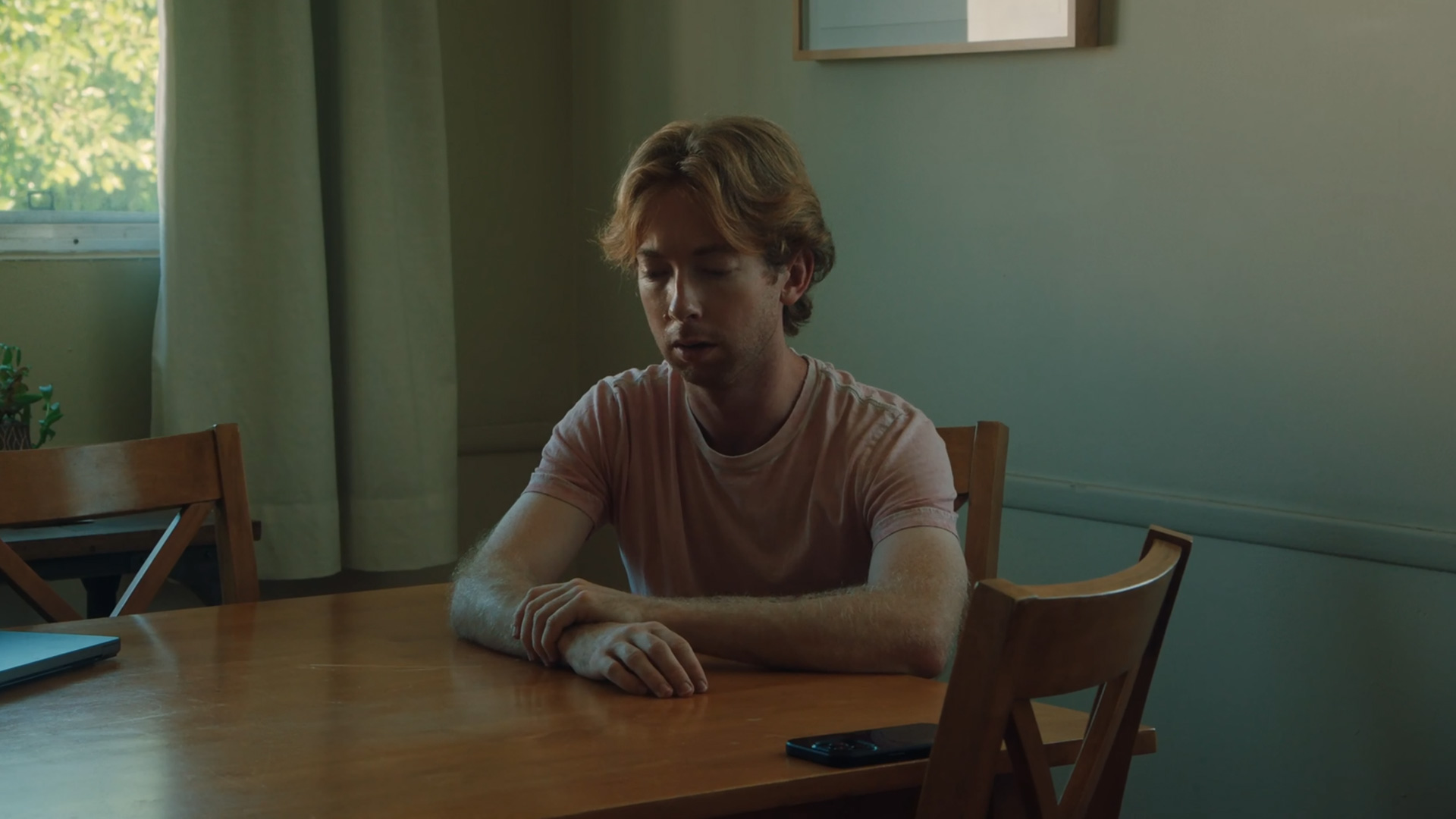
Matt Porter’s See Saw takes that nightmare scenario and turns it into a sharp, uncomfortable comedy about vulnerability. The short follows Glenn, a low-ranking company intern who wakes up to discover that his personal data has been hacked and leaked online. Worse still, the information is spreading rapidly, along with the private data of two company executives.
The premise draws directly from the 2014 Sony Pictures hack, which Porter and his friend Max Azulay initially imagined as the basis for a television project. Years later, Porter returned to the idea and found a more intimate story within it. Rather than focusing on the technology itself, See Saw became a film about what it means to be truly seen.
That distinction is important. Glenn’s situation is wildly extreme, but his emotional predicament feels much more familiar.
From Paranoia to Vulnerability
Glenn begins the film overwhelmed and helpless. His private world has suddenly become public, leaving him with no control over how others perceive him. Yet Porter gradually shifts the focus toward Glenn’s relationship with his girlfriend, Sierra.
Their conversation brings an unexpected honesty to the chaos. Instead of asking whether Glenn can somehow regain control of his exposed life, the film considers whether being completely vulnerable might actually bring people closer.
Porter describes Glenn as guarded and difficult to read. To understand him better, he and actor David Brown filmed scenes of Glenn writing songs, taking selfies, arguing with his mother, and even doing online yoga. Not everything made the final cut, but the process helped build a richer character behind the panic.
Finding the Comedy in the Chaos
The film’s visual language reinforces Glenn’s unease. Cinematographer John de Menil suggested shooting everything on a single zoom lens. The choice was practical, since the entire film was shot in one day, but Porter soon embraced its voyeuristic quality.
That creeping sense of being watched fits perfectly.
The result is a comedy that never loses sight of its emotional core. Porter cites filmmakers such as Charlie Kaufman, Greta Gerwig, and James L. Brooks as influences, and his own instinct for mixing humor with grounded drama is evident throughout.
See Saw ultimately suggests that losing control over how we are seen can be terrifying. However, allowing someone to see us honestly may be worth the risk.