
Anxiety is often described as an invisible burden. In Terminus, it becomes impossible to ignore.
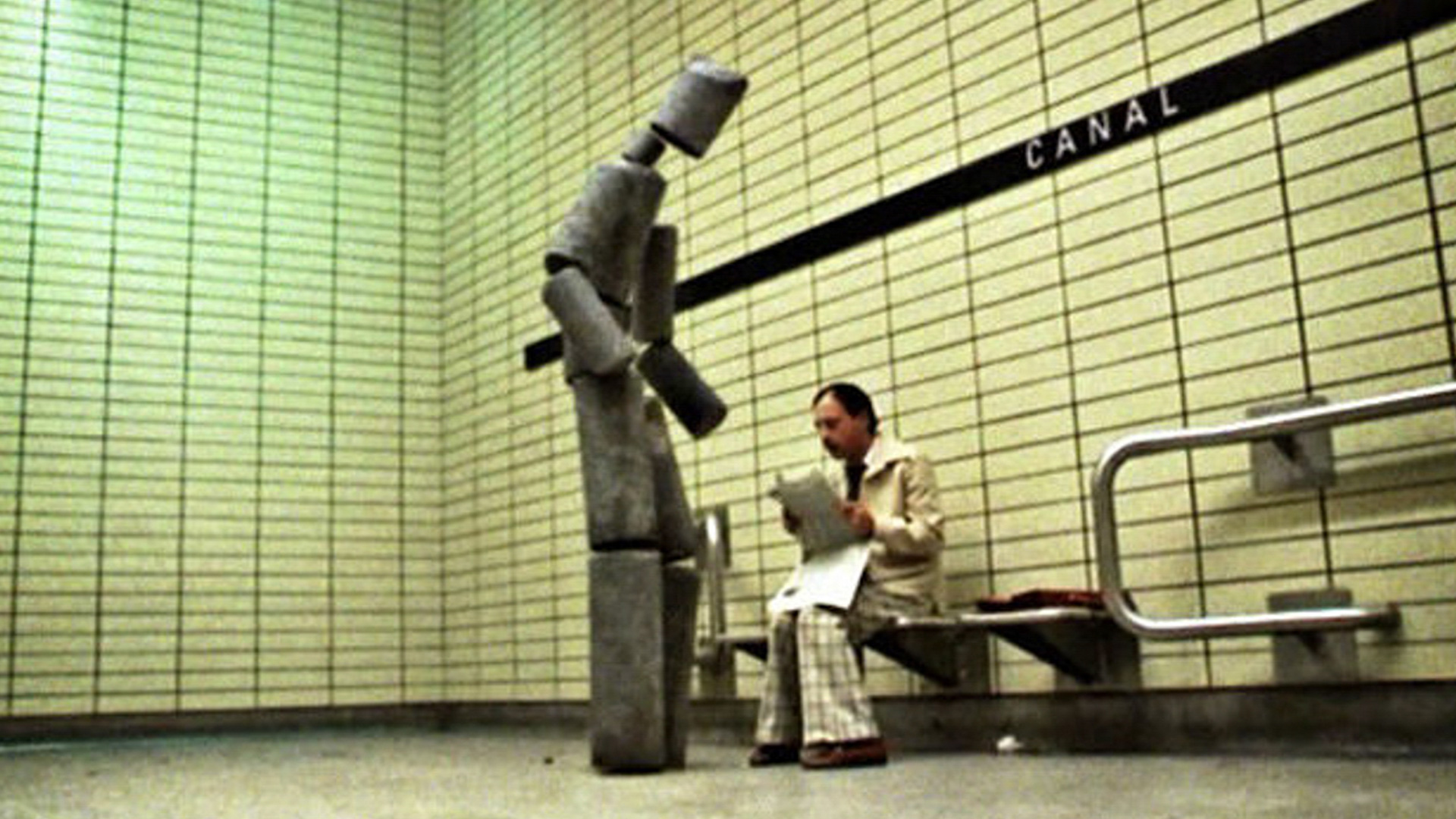
Directed by Trevor Cawood and co-written with Jason Cawood, the 2007 short follows a lonely office worker as he navigates an increasingly hostile urban landscape. Following him through subway stations, waiting rooms, and empty city streets is a towering creature made of concrete pillars—a silent, relentless presence that seems determined to make his life unbearable.
The film never fully explains what the creature is, and it doesn’t need to. As Cawood has described, these strange beings function as metaphors for anxiety, transforming internal struggles into something physical and impossible to ignore.
A City Built on Isolation
What makes Terminus so effective is the way its visual style supports that idea. The city feels cold and distant, filled with imposing architecture and spaces that seem designed to keep people apart. Shot with a gritty, vintage aesthetic that recalls old Super 8 film, the short creates a sense of unease long before anything overtly surreal appears.
The visual effects remain impressive even today. Rather than existing purely as spectacle, the towering concrete figures feel integrated into the world and the story. Their presence becomes an extension of the protagonist’s emotional state, making every encounter feel both absurd and strangely believable.
There’s also a streak of dark comedy running through the film. The concrete colossus often behaves with a kind of deadpan persistence, turning moments of psychological distress into scenes that are as funny as they are uncomfortable.
The Monsters We Carry
What continues to resonate about Terminus is how thoughtfully it approaches mental health. The film never reduces anxiety to a simple explanation or easy solution. Instead, it captures the exhausting feeling of carrying an invisible burden through everyday life.
For all its visual ambition and surreal imagery, Terminus succeeds because it recognizes something deeply human: the struggles that affect us most are often the ones nobody else can see.