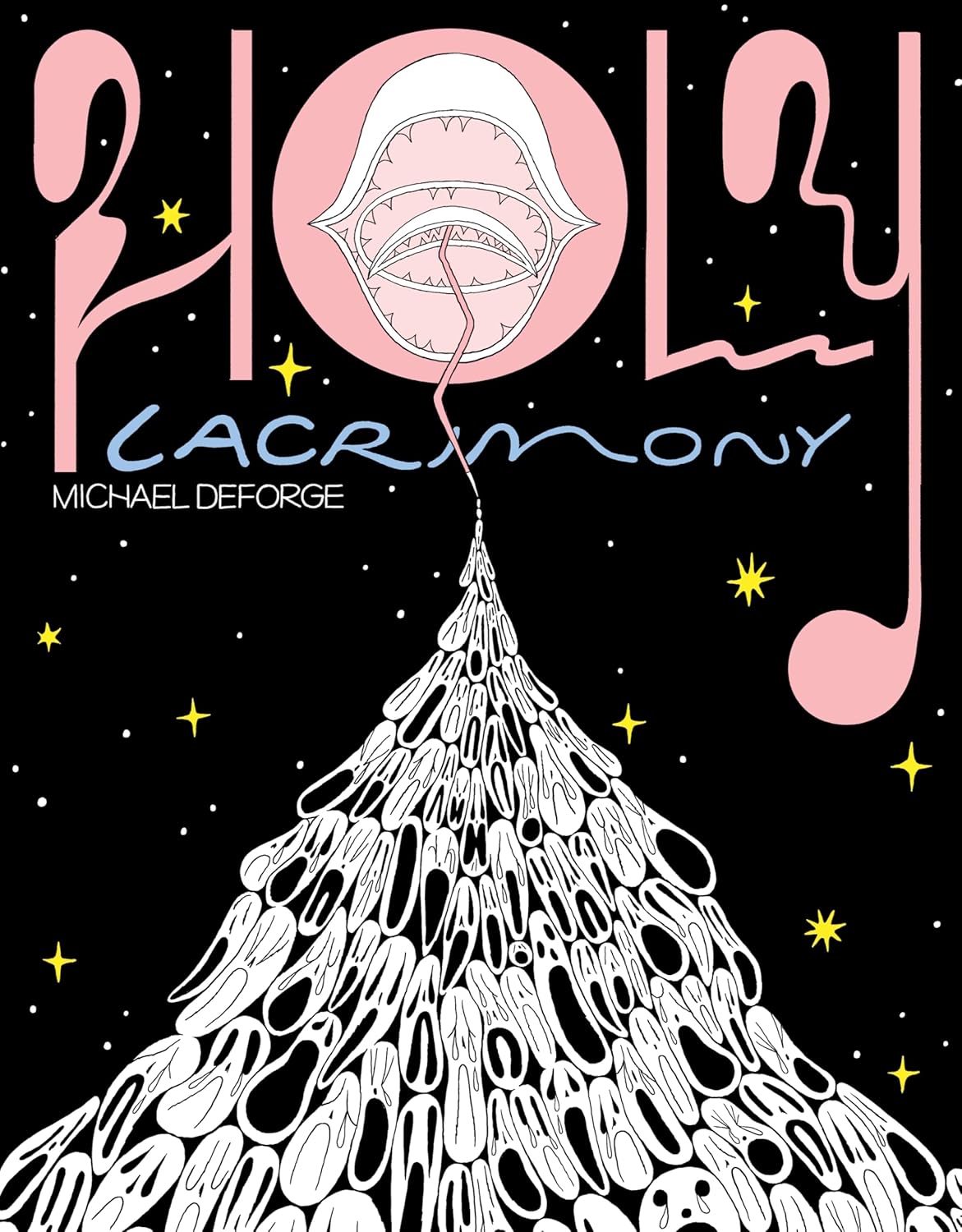

If a comic could feel like a fever dream and a philosophical essay at the same time, it might look something like Holy Lacrimony, Michael DeForge’s latest graphic novel. Equal parts absurdist sci-fi and deeply personal rumination, the book follows Jackie — an emotionally melancholic musician who finds himself abducted by aliens only to be declared the “saddest person in the world.” What unfolds is a bizarre yet quietly poignant exploration of emotion, performance, and how we try to make meaning out of the parts of ourselves we don’t quite understand.
The premise alone is both strange and strangely fitting: aliens study Jackie’s sadness as if it’s a rare species to be catalogued, repeated, and finally performed. In DeForge’s hands this scenario never feels like pure satire — there’s a tenderness to Jackie’s emotional life that resists easy categorization. As the story progresses, the boundary between absurdity and earnest inquiry blurs. What does it mean to feel? To be studied? To be returned to a world where your most intimate experiences have been reduced to something observed and repeated?
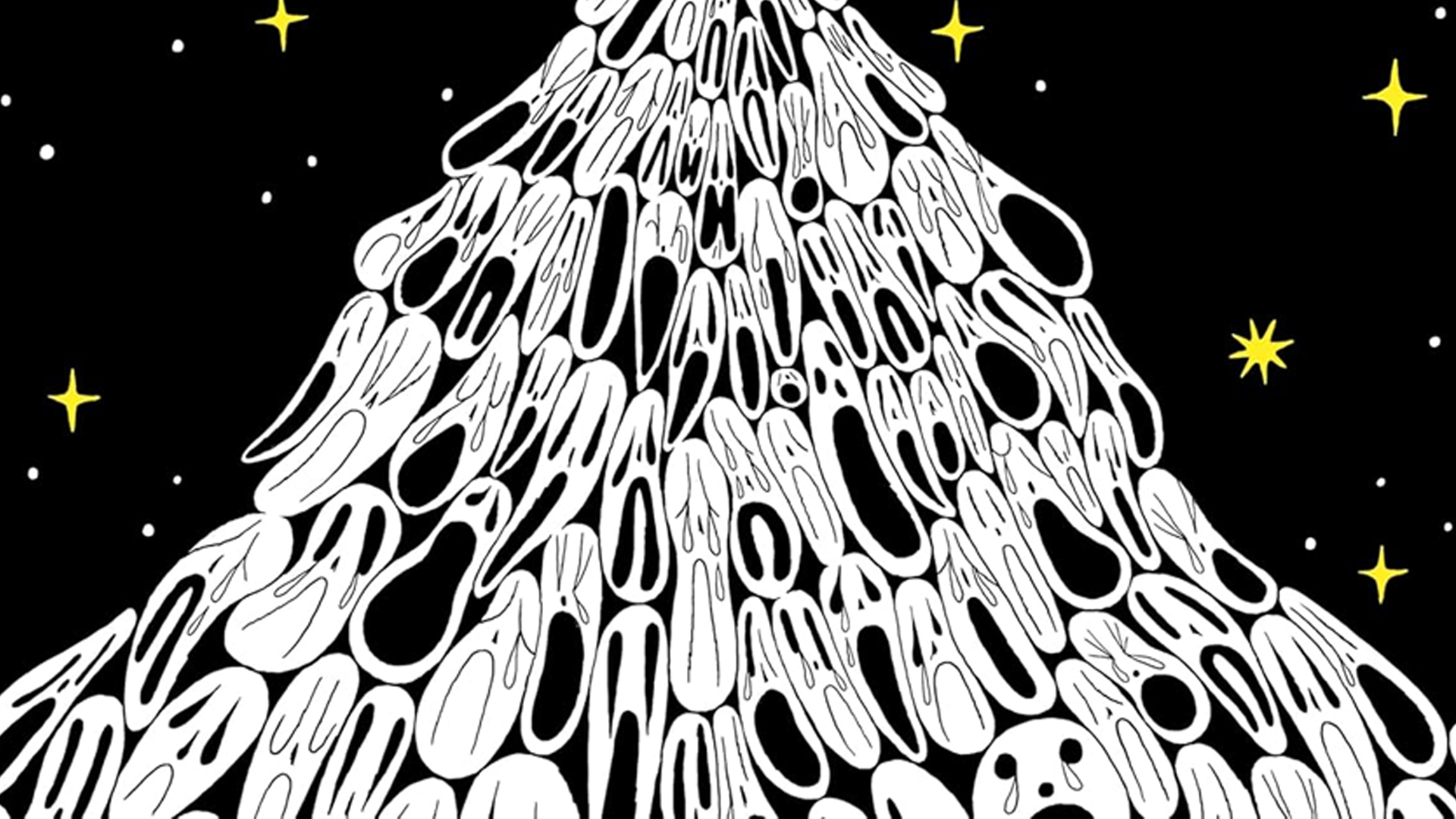
DeForge’s art heightens this effect. On the alien ship, color bursts with eerie intensity and shapeshifting forms feel both surreal and strangely organic. On Earth, the world recedes into black and white, underlining Jackie’s emotional flatness after his return. Characters are both exaggerated and familiar — their thin, shifting bodies gesture toward something elemental about identity and vulnerability. It’s the kind of visual language that makes you reevaluate what cartooning can do: it’s not just storytelling through pictures, but feeling through them.