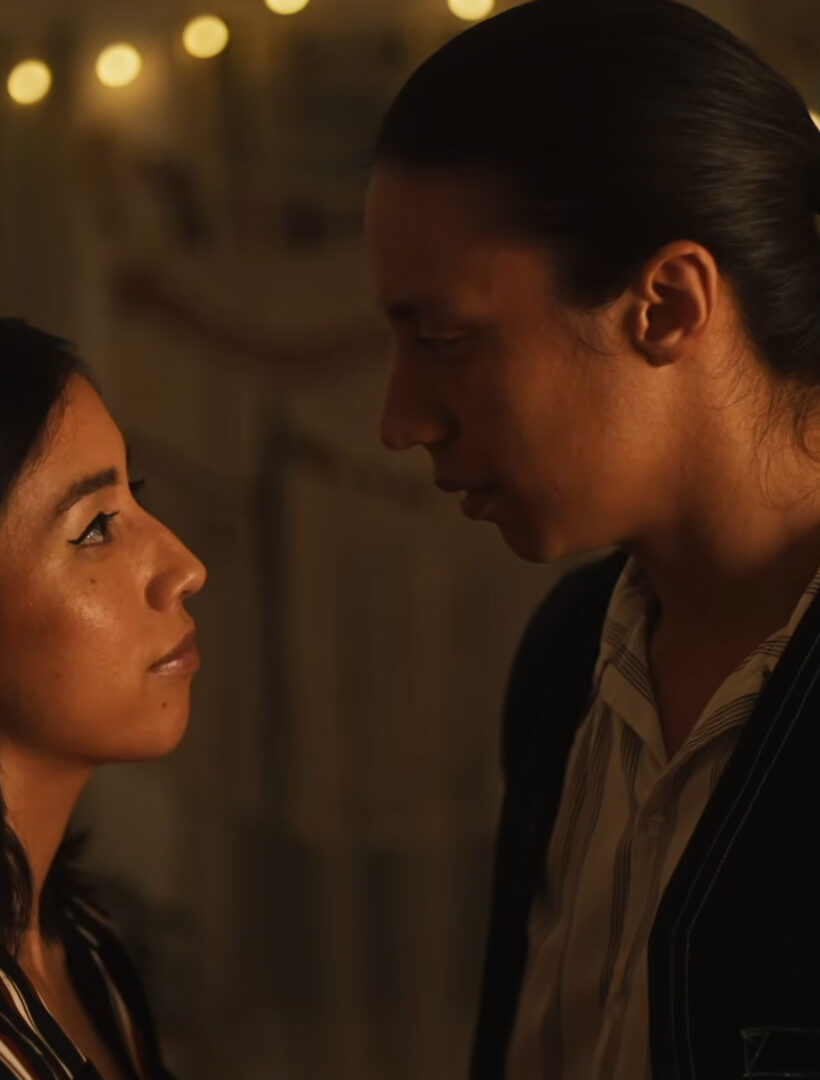

The Most Perfect Perfect Person begins in darkness. Poppy stands alone in a black void, notifications buzzing endlessly around her while fragments of her online identity begin to close in. Directed by Paul Trillo and created in collaboration with Poppy, the short quickly turns into something more unsettling than straightforward sci-fi. It’s less about artificial intelligence itself and more about what constant performance does to a person over time.
The premise is deceptively simple. Overwhelmed by burnout and the pressure of always saying the “right” thing, Poppy agrees to use an AI system called Aura, trained entirely on her own digital presence. The promise is seductive: no more hesitation, no more social anxiety, no more disappointing anyone. The AI will speak for her perfectly.
Identity as Something Manufactured
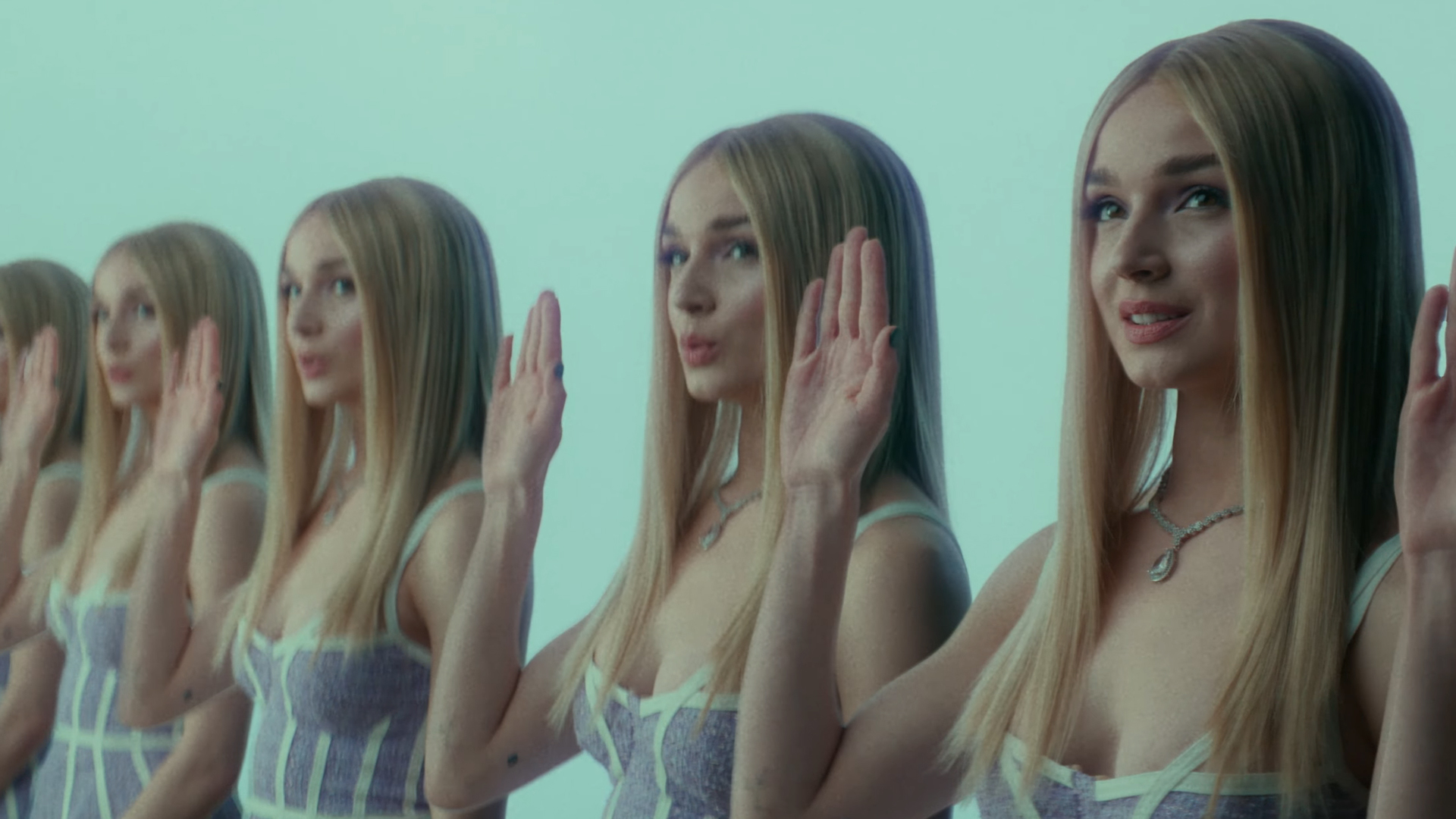
What makes the film so effective is how closely its visual language mirrors that loss of self. Trillo blends glossy corporate imagery with surreal glitches, multiplying versions of Poppy until individuality starts to disappear entirely. Clones repeat old catchphrases, imperfect copies are discarded, and identity slowly becomes something curated and optimized rather than lived.
The short carries clear echoes of Black Mirror, but it feels more personal than cautionary. Poppy isn’t just acting inside the concept, she helped shape it, pulling directly from her long-running exploration of online personas, performance, and digital identity. That layered collaboration gives the film an emotional sharpness that keeps it from feeling like abstract tech commentary.
The Cost of Being “Perfect”
What lingers most is the exhaustion underneath everything. The AI doesn’t erase Poppy’s voice outright, it simply refines it into something smoother, safer, and easier to consume. The result is a version of perfection that feels strangely hollow.
Revisiting The Most Perfect Perfect Person in 2026, the film feels less speculative than uncomfortably familiar. In a culture increasingly shaped by algorithms, branding, and endless self-curation, the film asks a quietly devastating question: if every version of yourself becomes optimized for approval, what part of you is actually left?