Isabelle Menin: Where Flowers Become Feeling
Zoë Marin
Written by Zoë Marin in Beyond the Frame Art & Design Creative Photography

Isabelle Menin: Where Flowers Become Feeling

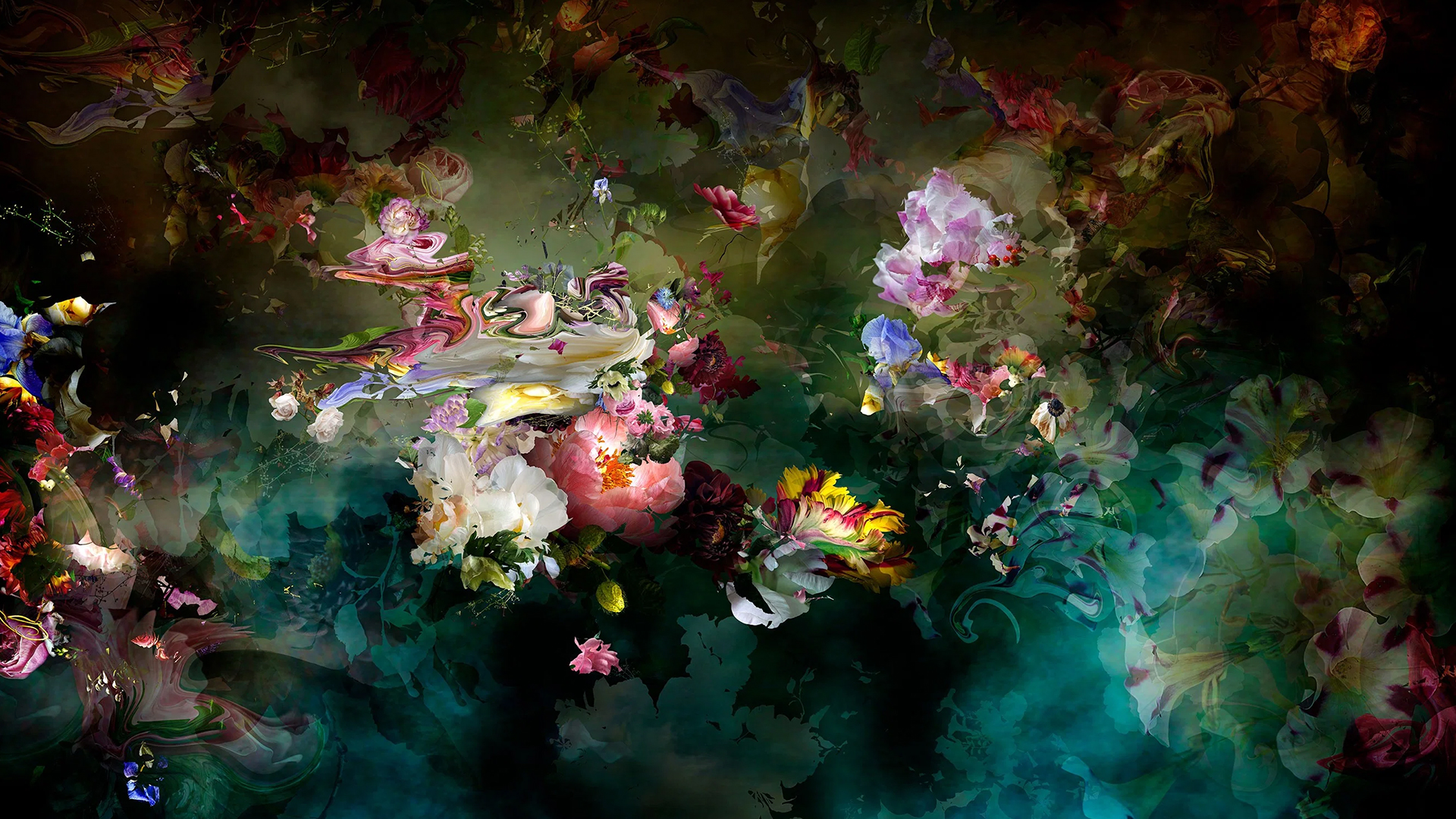
Flowers are often treated as symbols—of beauty, fragility, romance, impermanence. In Isabelle Menin’s work, they become something far less stable. Petals dissolve into texture, colour folds into shadow, and familiar forms drift toward abstraction. What begins as photography gradually transforms into something closer to an emotional landscape.

Presented at Bau-Xi Gallery as part of the 30th anniversary programming of CONTACT Photography Festival, Uncanny and Sublime brings together Menin’s layered digital compositions, where floral imagery becomes the starting point for a much broader exploration of memory, emotion, and perception. The works feel simultaneously lush and unstable, balancing elegance with a sense that everything might still shift beneath the surface.
Building disordered landscapes

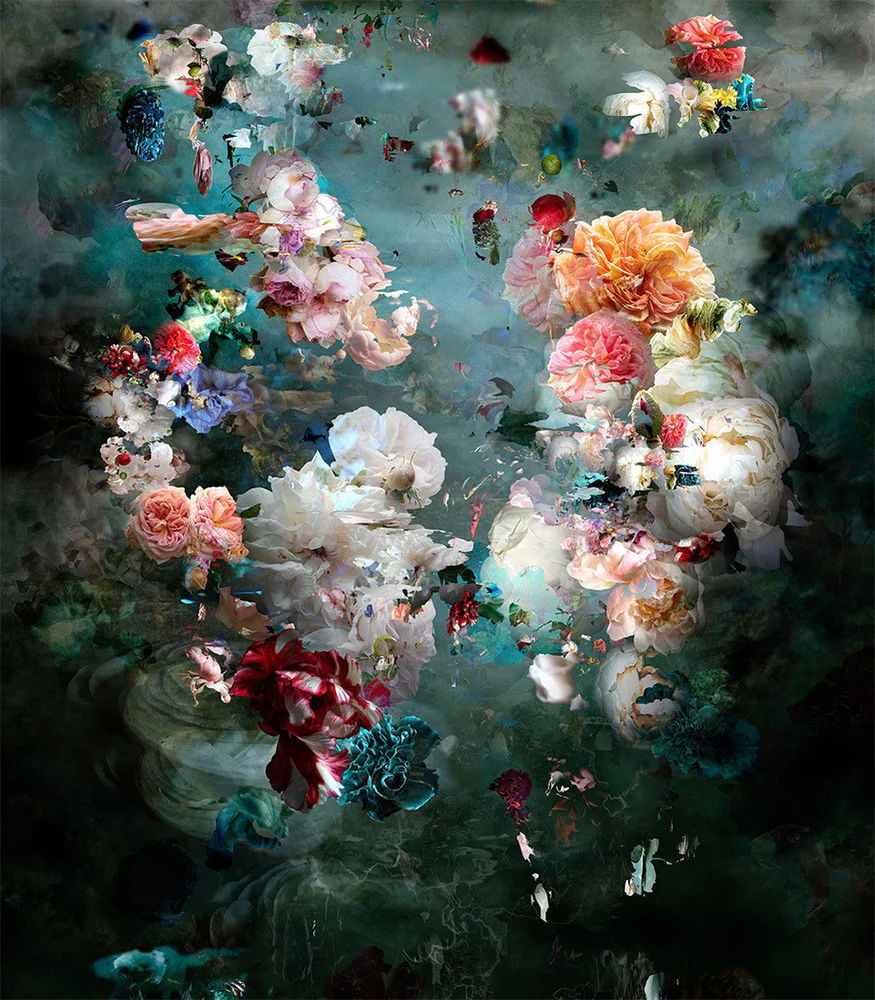
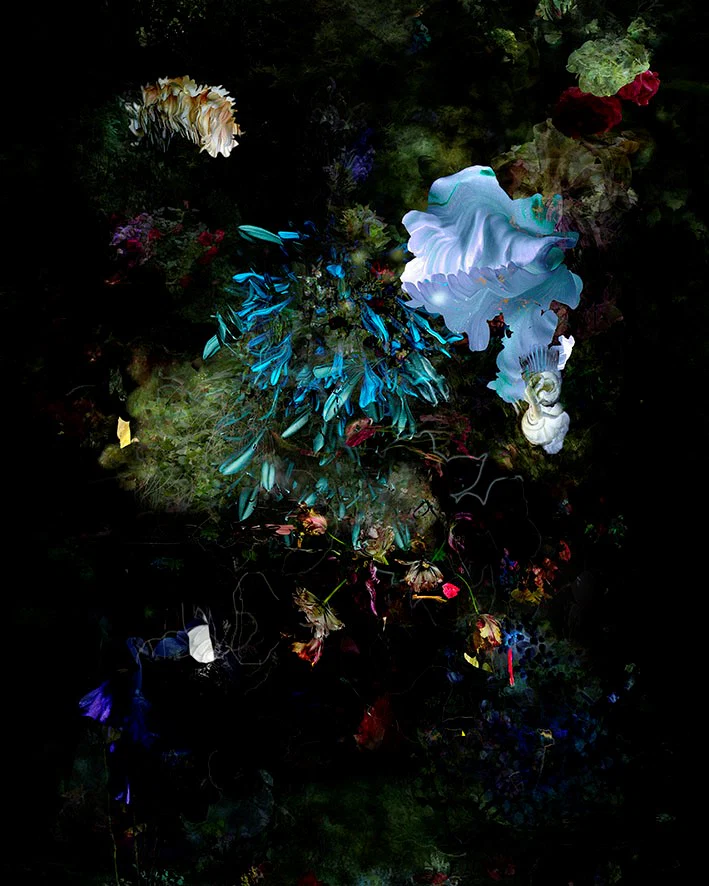
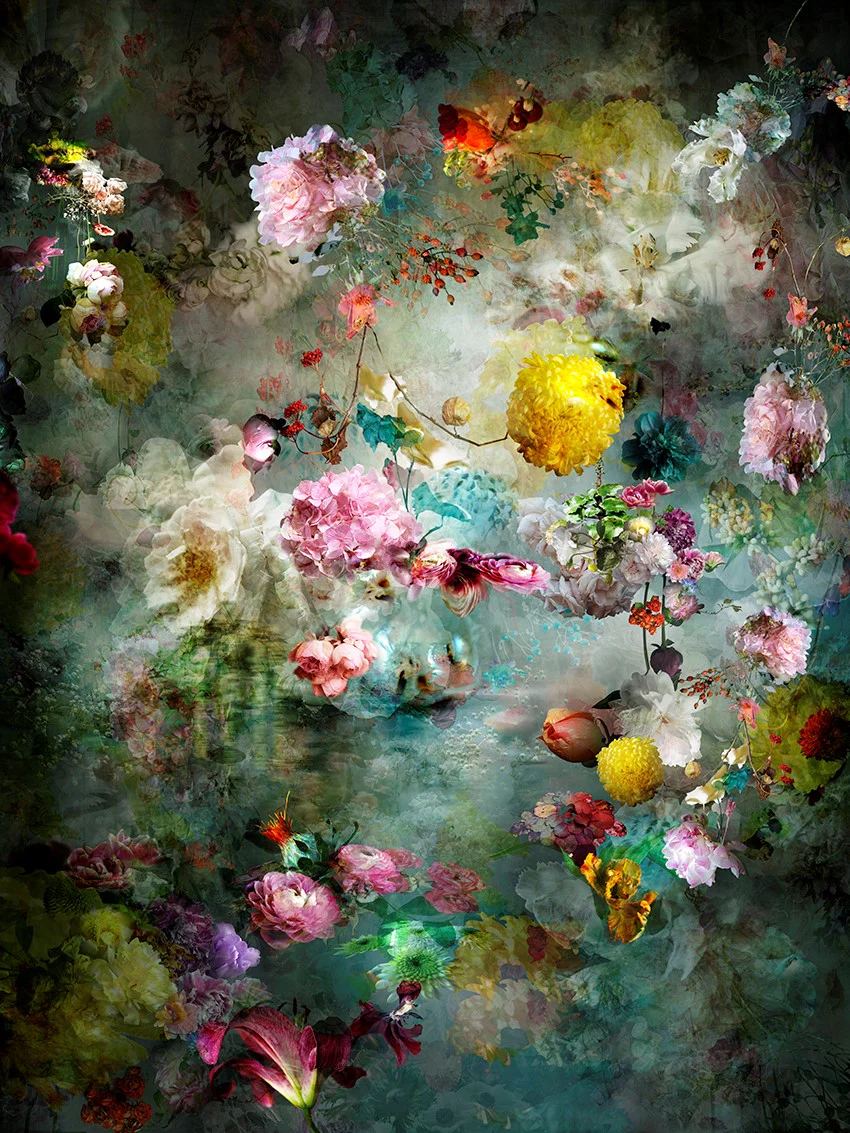
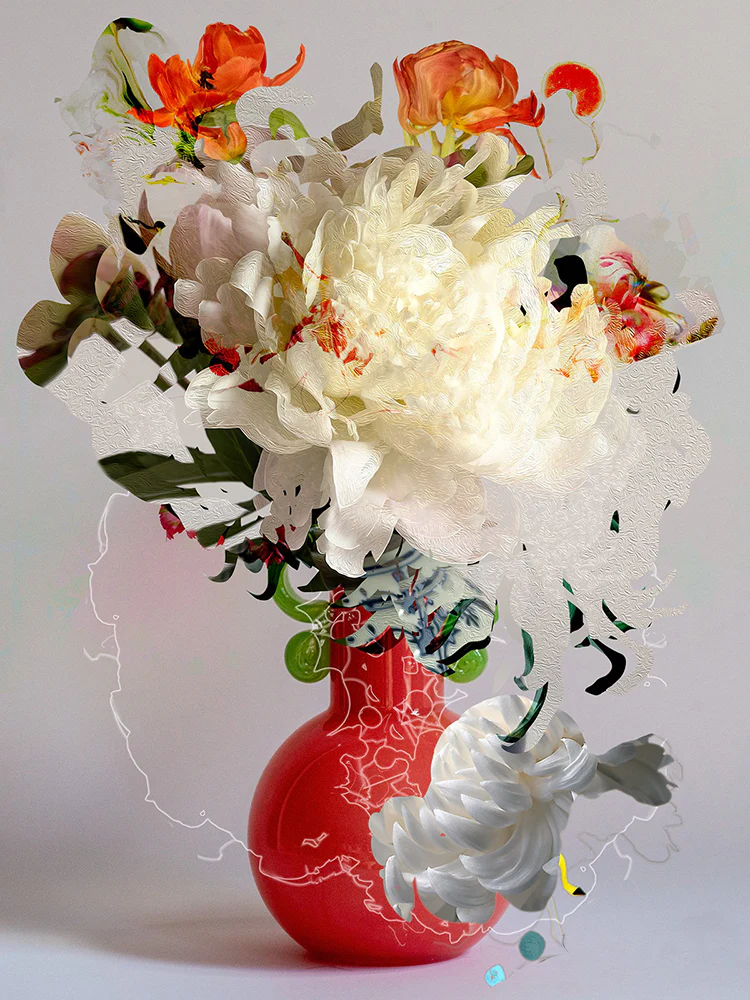
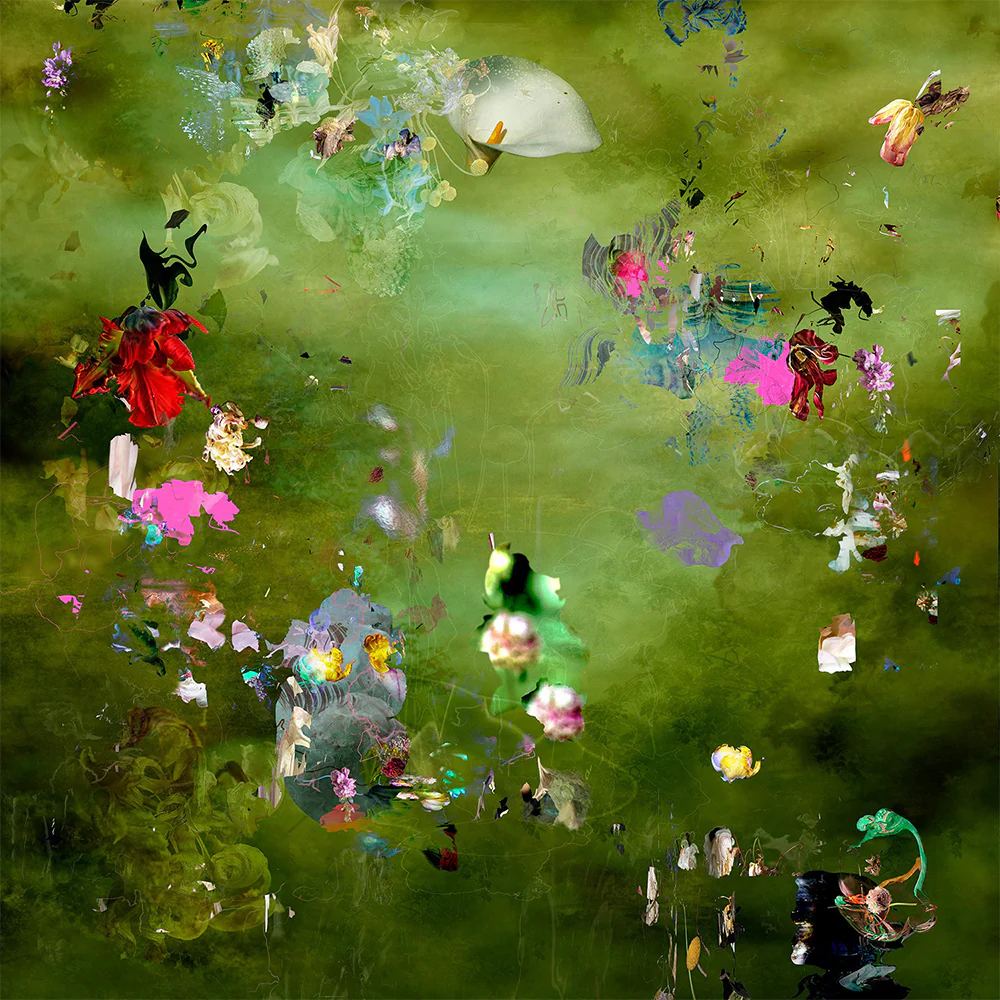
Menin refers to her images as “disordered landscapes,” a phrase that captures both their visual density and emotional complexity. Rather than photographing complete arrangements, she isolates individual flowers—anemones, orchids, stems, petals—capturing them one by one before assembling them digitally into expansive compositions.

The process is intensely layered. Transparencies are adjusted, textures manipulated, colours pushed and pulled until the image begins to reveal itself. Menin has described this approach as a continual act of building and dismantling, where finished works are sometimes broken apart and recombined into entirely new forms. The resulting photographs feel suspended between construction and collapse.

Isabelle Menin. Dear Mrs Dalloway 11
Isabelle Menin. Changing Moods - Apple 01
A painterly approach to photography

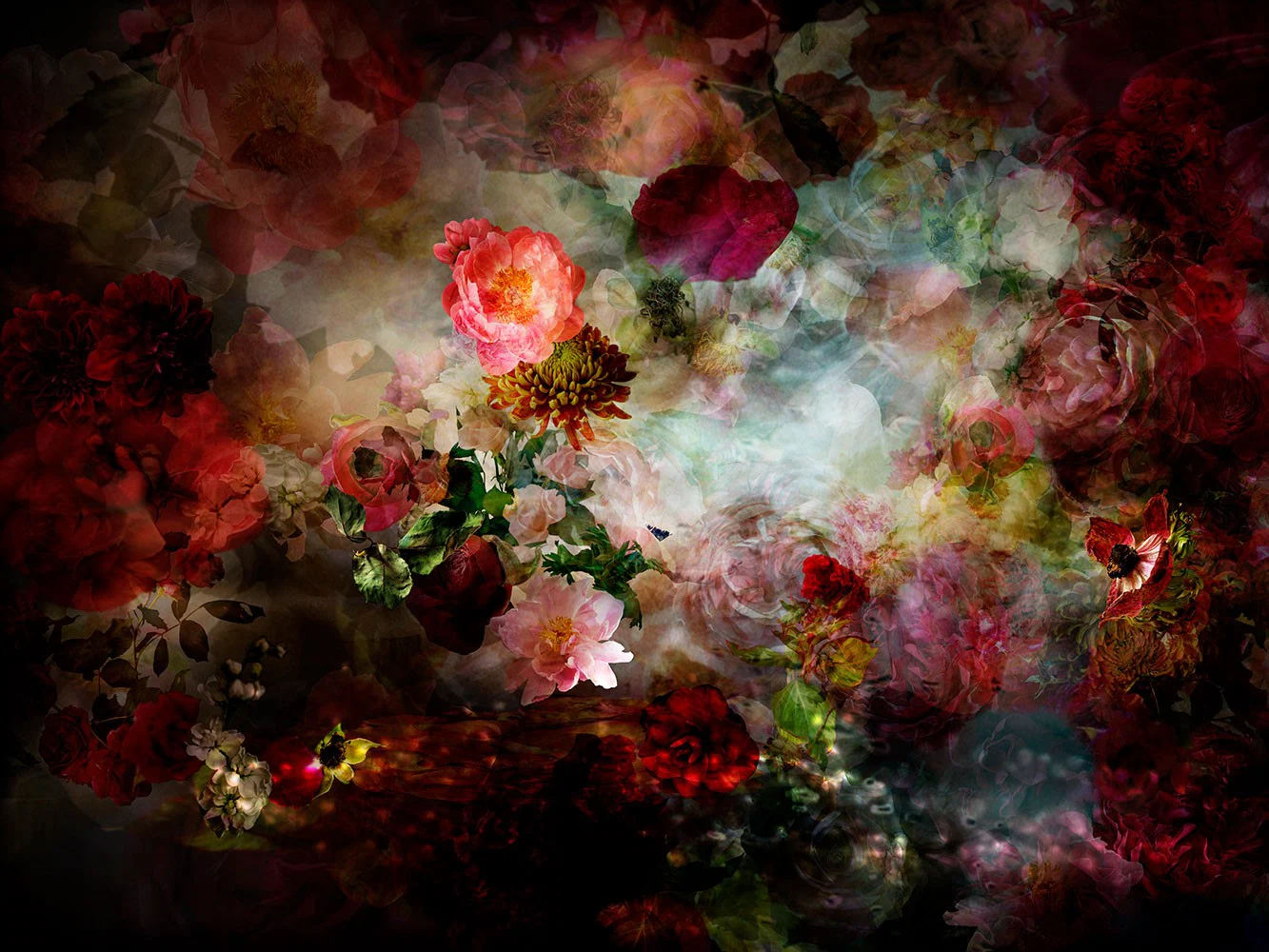
It becomes immediately apparent that Menin’s background is rooted in painting and illustration. Her compositions carry the drama and movement of Baroque painting while remaining unmistakably photographic in their material. Shapes overlap, spill outward, and fold back into the frame with a sense of controlled excess.

That painterly quality is not simply aesthetic, but structural. Menin treats digital photography less as documentation and more as a medium for transformation. Flowers become gestures rather than subjects, functioning as fragments within larger emotional and visual rhythms. The image is never fixed; it remains in motion, constantly negotiating between order and disorder.

Emotion as material

Throughout the exhibition, emotion operates almost like another texture layered into the work. Menin speaks openly about drawing inspiration not only from nature, but from “pain, joy, fear, enchantment, anger and gratitude.” Those emotional states are not illustrated directly, but embedded within the turbulence of the compositions themselves.

Colour plays a central role in that process. Menin describes her relationship with colour as a search for “vibration” and “little explosions,” using intensity and contrast to create images that feel visceral rather than merely decorative. Even at their most beautiful, the works resist settling into pure ornamentation. Beneath the lush surfaces, tension remains present.

Isabelle Menin. I Cherubini II
Isabelle Menin. Living Underground 14
Nature and human complexity

Nature, in Menin’s work, is never passive. Her layered floral environments mirror what she describes as the “interferences” of human experience—complex systems constantly moving between coherence and fragmentation. The dense interweaving of forms begins to resemble thought itself: unstable, emotional, and perpetually shifting.

That relationship between nature and psychology gives the exhibition much of its emotional weight. Flowers bloom, dissolve, and reappear across the compositions like recurring memories. Reflection, transparency, and duplication create images that feel both intimate and elusive, as though they exist somewhere between dream and recollection.

The image as an inner space

Despite the scale and richness of the work, there is something deeply intimate about Menin’s photographs. She has described her process as an “inner conversation with the world of emotions and impressions,” and that inwardness remains present throughout the exhibition. The images invite immersion rather than interpretation.

Rather than offering clarity, Uncanny and Sublime embraces uncertainty—the blurred boundary between beauty and disquiet, order and excess, reality and invention. Menin’s photographs do not attempt to resolve those tensions. Instead, they remain open, allowing feeling, texture, and memory to continue unfolding within the image itself.

For more information about Uncanny and Sublime, visit the exhibition website.

Isabelle Menin. Song for Dead Heroes 11
Isabelle Menin. There's A River In My Head 11
Scroll