

With The Beguiling, ishkwaazhe Shane McSauby isn’t just telling a story, he’s responding to something very real. The film grows out of conversations within Indigenous communities around people falsely claiming Native identity, sometimes even appropriating deeply personal stories of historical trauma for their own gain.
It’s a premise that could easily become heavy or didactic, but McSauby takes a different route. He filters it through genre, blending romantic comedy with dark humor and horror. That contrast feels intentional. The idea itself can feel absurd, but the consequences behind it are anything but. The film lives right in that tension.
What’s especially striking is how deliberate the construction feels. McSauby set clear limitations early on—just a couple of characters, one location—and instead of restricting the film, those choices sharpen its focus. The result is something intimate, controlled, and quietly unsettling.
A Date That Doesn’t Sit Right
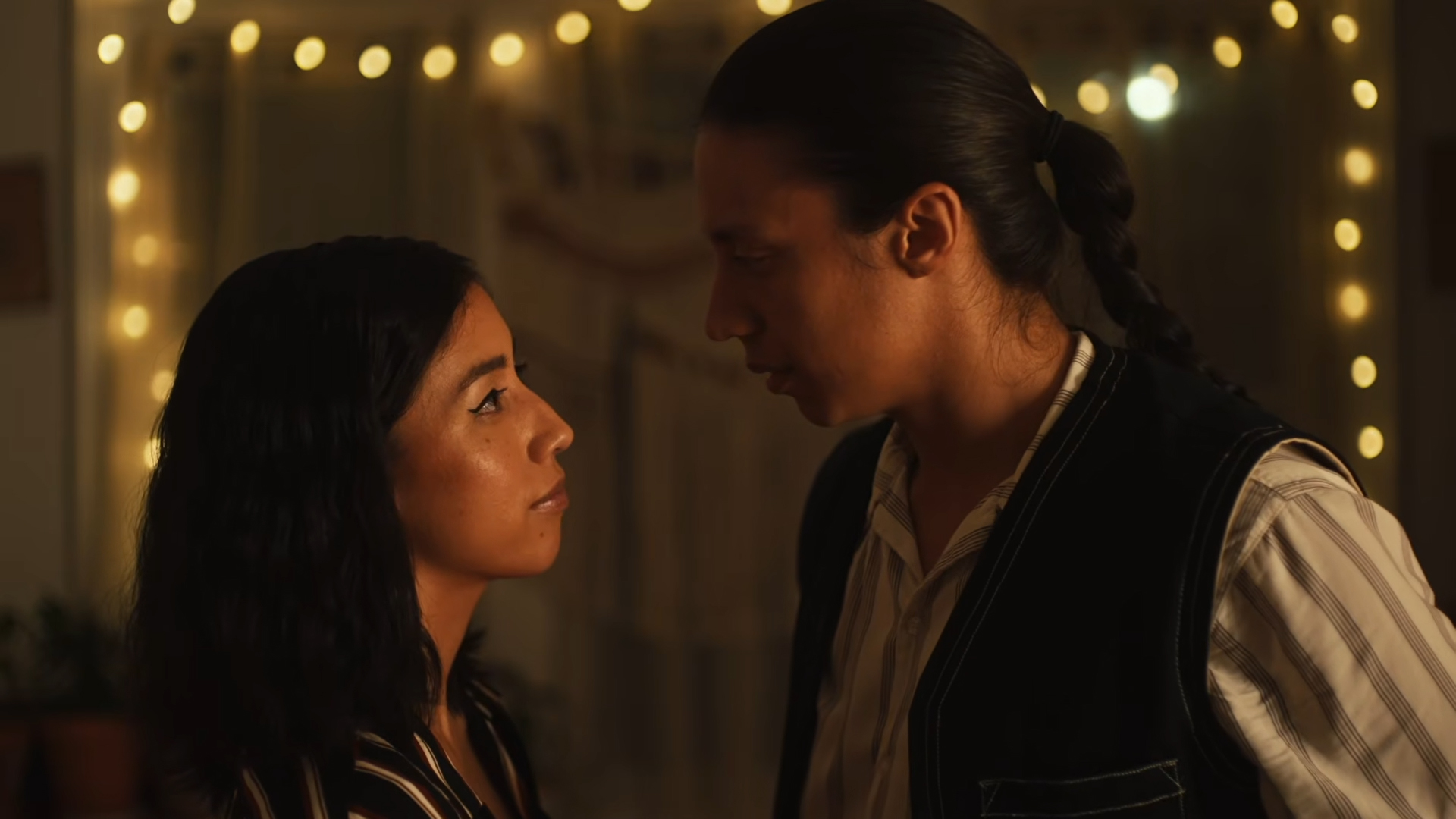
At first, The Beguiling moves with a familiar rhythm. Billy and Riley share an easy connection, the kind that makes a night stretch longer than expected. There’s warmth, humor, and the comfort of feeling understood.
But that comfort begins to shift. Riley’s enthusiasm feels just slightly too precise, especially in how she connects through shared identity. What starts as something genuine slowly takes on a different weight, as if the connection itself is being performed.
Through tight framing and subtle shifts in lighting, we’re placed firmly in Billy’s perspective, experiencing the evening as it moves from charming to quietly disorienting.
Holding the Line
Benairen Kane brings a grounded sincerity to Billy, making his openness feel real and earned. Opposite him, Kim Savarino balances charm with unpredictability, never letting the film tip too far in one direction.
Revisiting The Beguiling, what lingers is that balance between satire and something more unsettling. It’s not just about identity being misrepresented, but about how easily something meaningful can be treated like currency.
The film doesn’t offer easy answers. It simply leaves you with a question—what happens when identity stops being lived, and starts being used?


