Phuong Nguyen Exhibition — A Thousand Cuts at the Art Gallery of Burlington
Elliott Brooks
Written by Elliott Brooks in Dimensions Art & Design Creative

Phuong Nguyen Exhibition — A Thousand Cuts at the Art Gallery of Burlington

A Language of Ornament and Power

Some visual languages arrive wrapped in beauty, only revealing their weight over time. The ornamental world of chinoiserie is one of them. In Phuong Nguyen’s exhibition, delicate patterns and carefully painted figures suggest refinement, but beneath that surface lies a more complicated history shaped by translation, distortion, and control.

In she died a death by a thousand cuts, on view at the Art Gallery of Burlington through May 17, 2026, Toronto-based artist Phuong Nguyen takes that visual language apart and reassembles it into something far more unsettled. The exhibition becomes a space where beauty and violence are no longer separable, and where objects begin to speak.
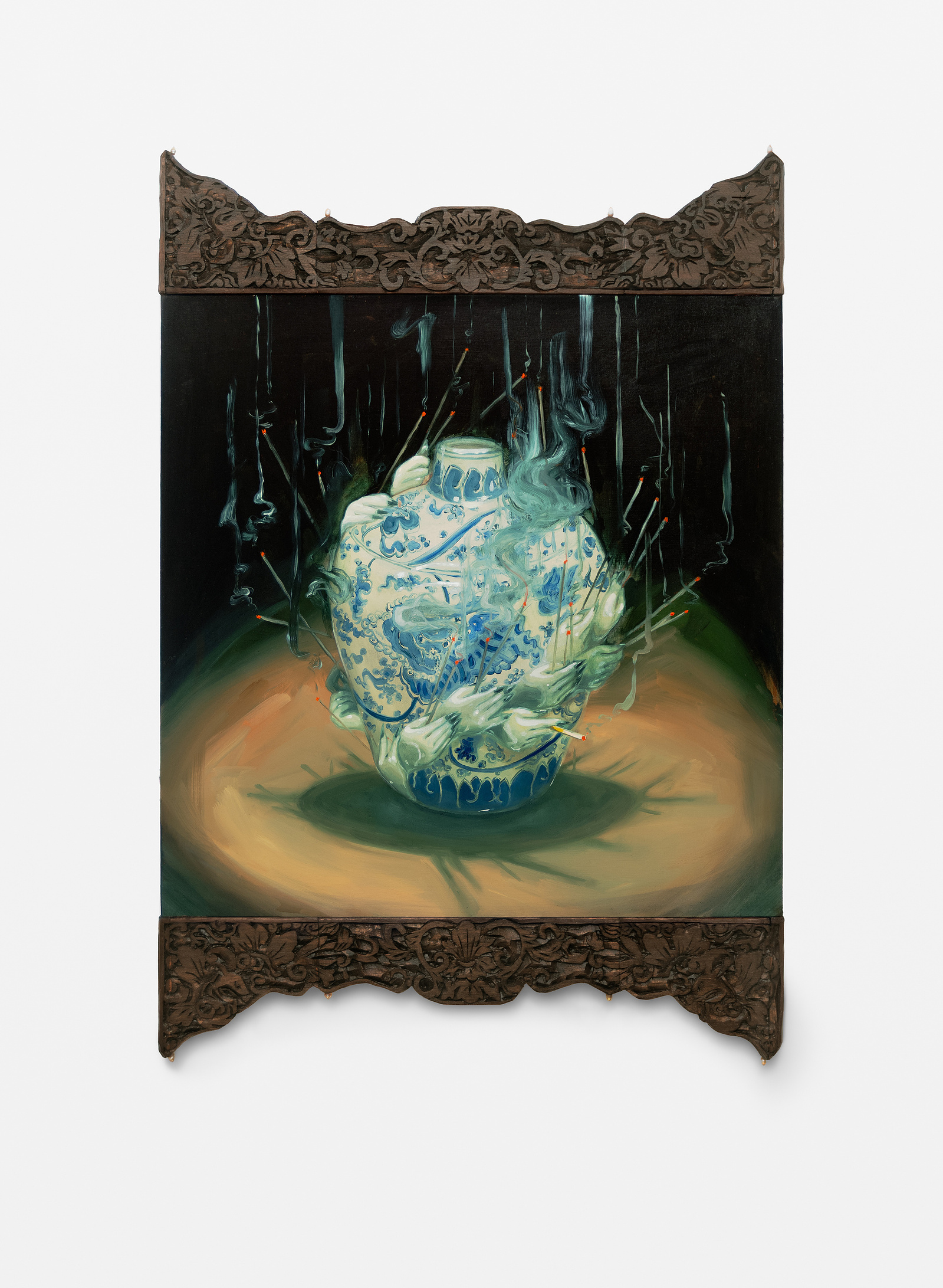
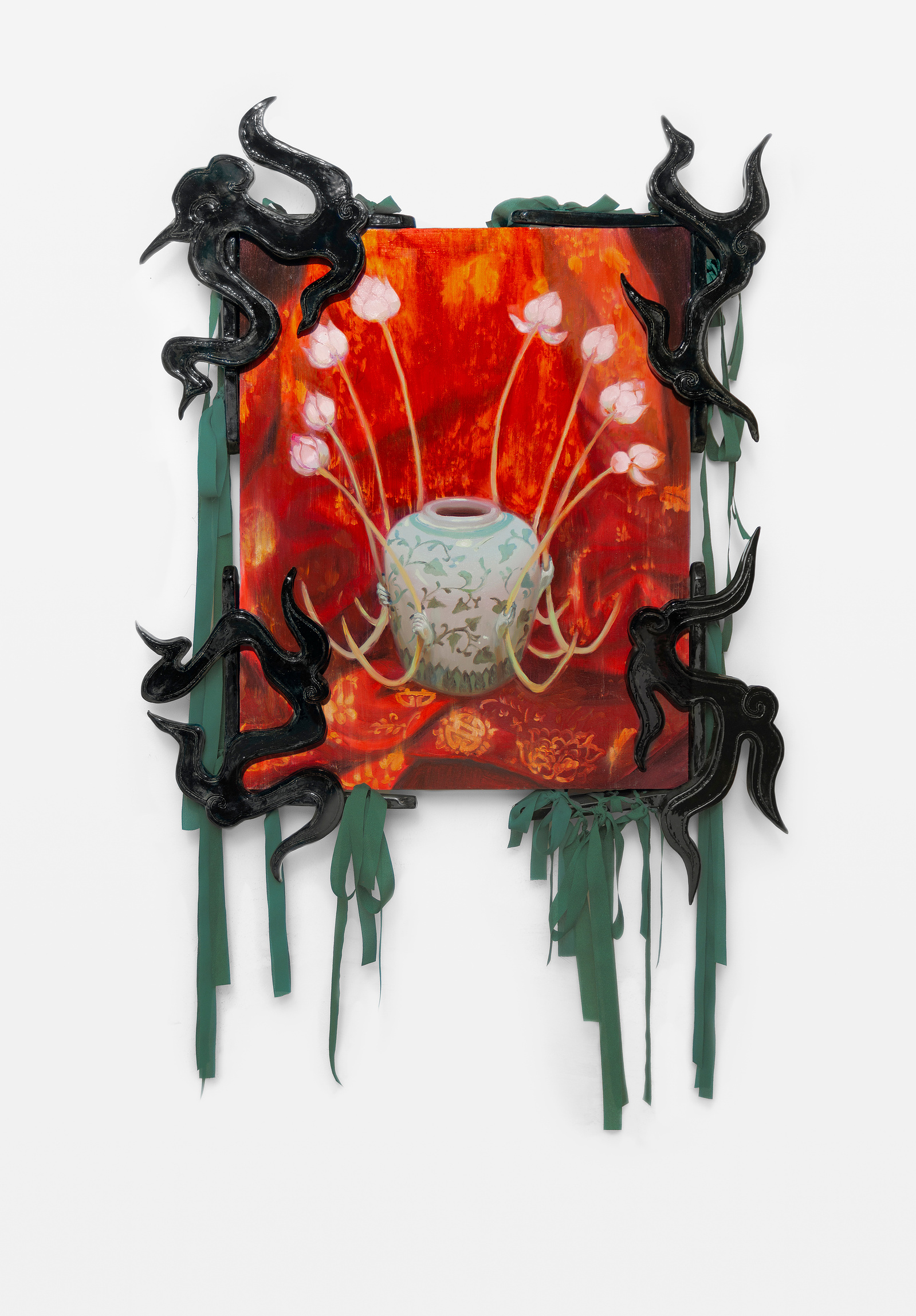
Phuong Nguyen. La Chauve Souris
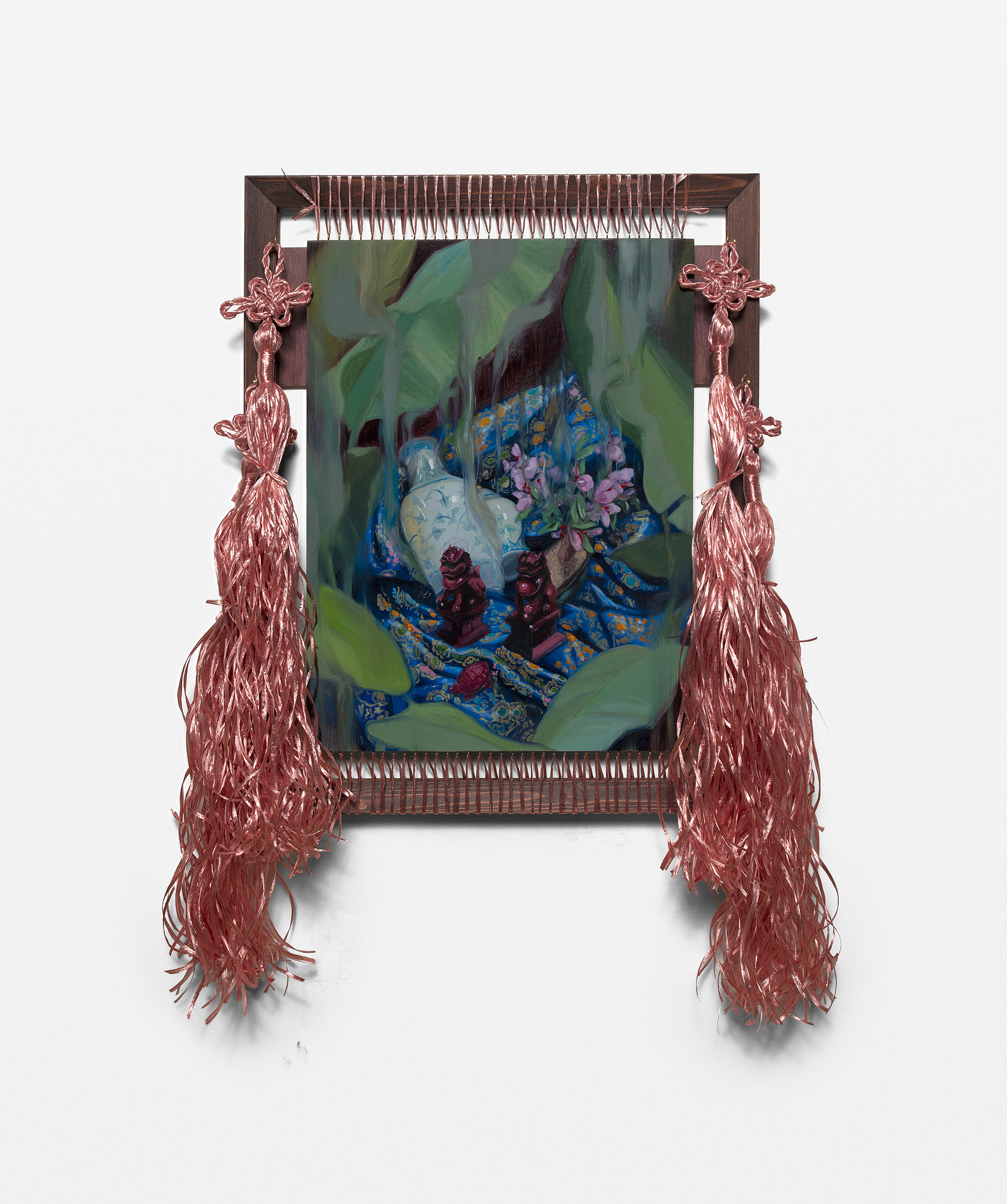
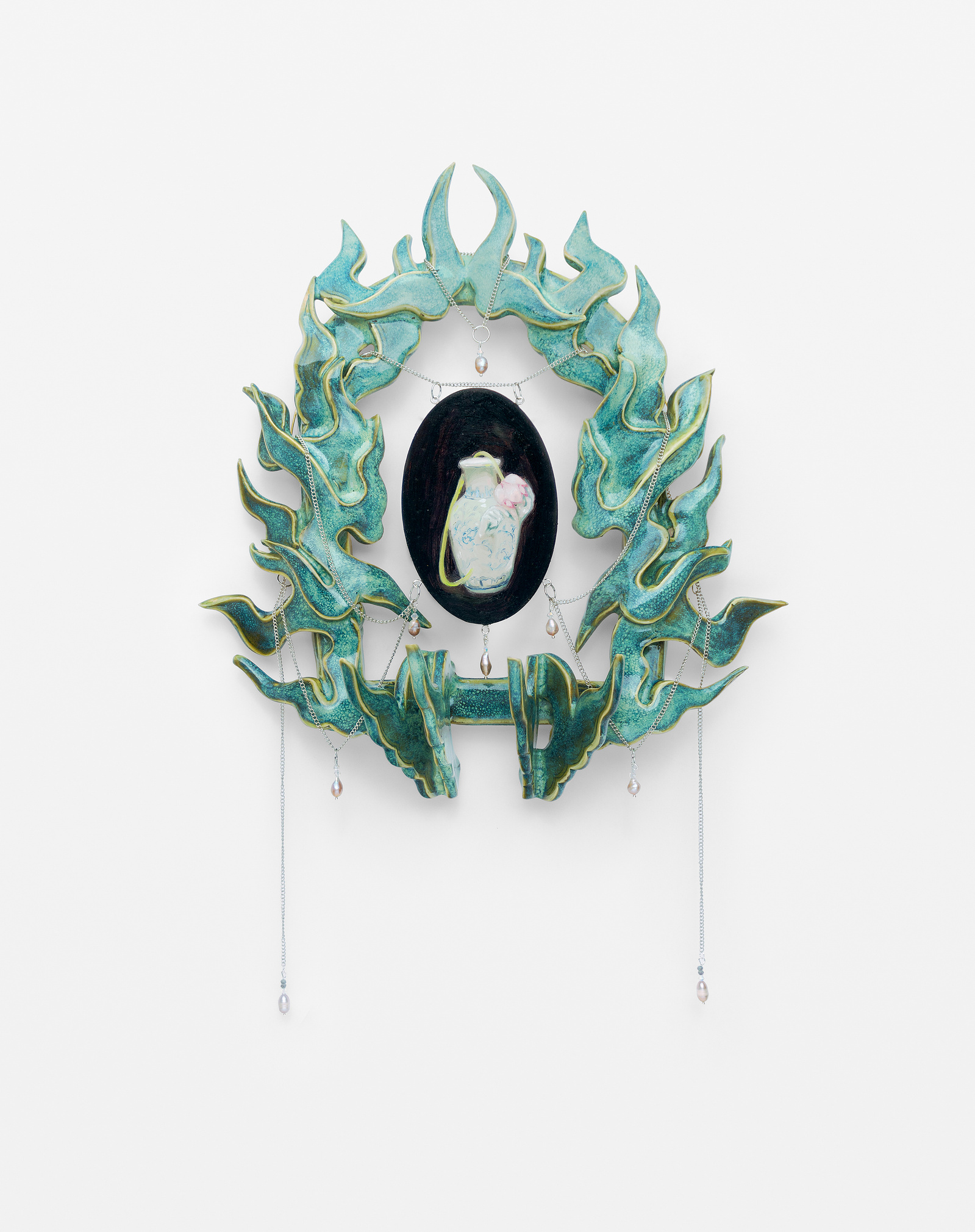
Phuong Nguyen. Planche CXCV
Reworking the Archive in Phuong Nguyen’s Exhibition

Nguyen, who works across oil painting, experimental weaving, and ceramics, builds her practice around the tension between ornament and identity. Rather than rejecting these traditions outright, she engages them directly, examining how these aesthetics have been shaped through a Western, colonial gaze.

At the center of Phuong Nguyen’s exhibition is a dialogue with L’Art à Hué, a 1919 French colonial publication that documented Vietnamese art and architecture through a European lens. Rather than simply referencing it, Nguyen actively reworks its imagery, transforming archival patterns into drawings, carvings, and paintings that resist the fixed narratives the book once imposed.

Objects That Refuse to Stay Still

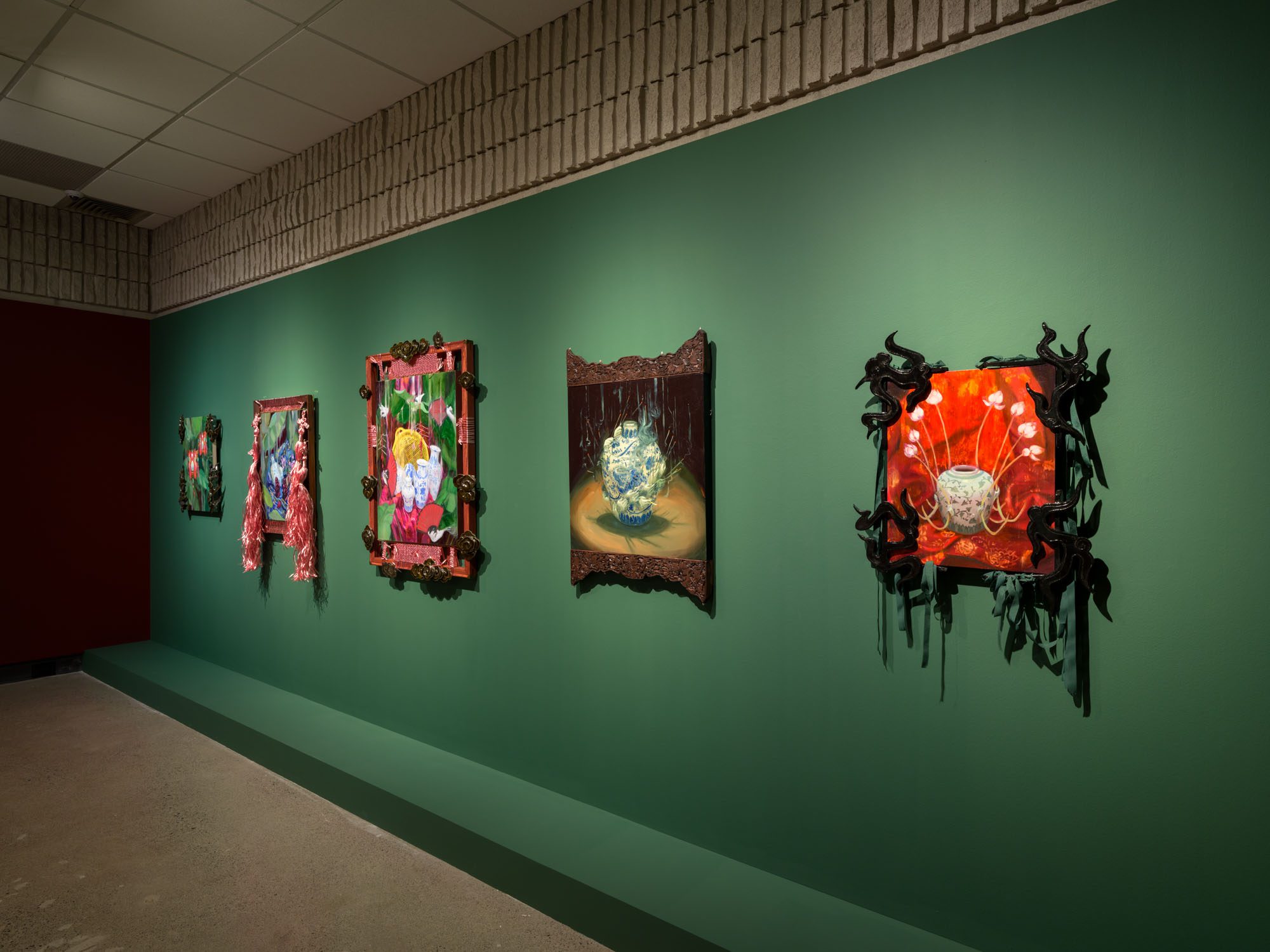
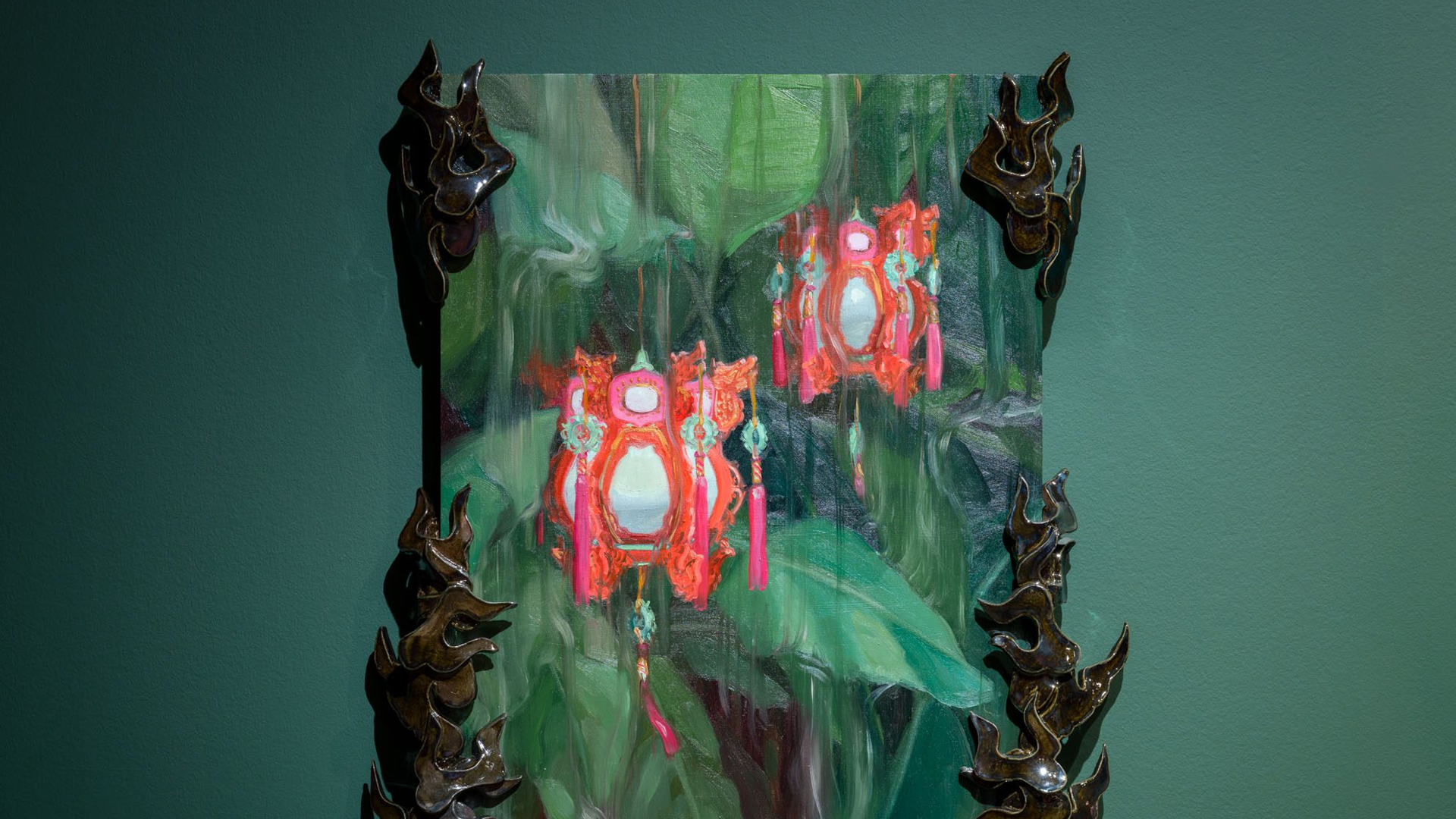
That resistance becomes physical in the works themselves. Nguyen’s paintings extend beyond the canvas into elaborate frames made of carved wood, weaving, ceramics, and cascading decorative elements. These structures don’t just support the image—they become part of it, shifting each piece closer to an object than a traditional painting.

Within these compositions, forms begin to change. Ceramic vessels sprout hands, hair spills from lids, and incense smoke drifts across surfaces, softening boundaries. Figures appear and dissolve at once, existing in a space that feels neither fully human nor entirely object—a state Nguyen describes as “perihuman.”

Phuong Nguyen. Planche LXX
Phuong Nguyen. Planche XCIV v2
Material, Memory, and Transformation

Material plays a crucial role in this transformation. At the same time, found ceramics, thrifted fabrics, and everyday elements like plastic twine introduce lived experience into the work, blurring distinctions between precious and disposable while carrying histories of domestic life, migration, and cultural exchange.

The inclusion of historic chinoiserie objects alongside Nguyen’s works deepens that dialogue. These pieces are no longer distant references; they become active participants, revealing the layered histories of appropriation, displacement, and reinterpretation that the exhibition seeks to confront.

A Tender Form of Resistance

Despite the weight of its themes, the exhibition remains unexpectedly tender. Even so, through careful material choices and subtle gestures, Nguyen suggests that while repair may not restore what was lost, it can open space for transformation. For those interested in experiencing this layered approach firsthand, she died a death by a thousand cuts is on view at the Art Gallery of Burlington through May 17, 2026, with more details available on the gallery’s official exhibition page.

Photo at the top of the page by Darren Rigo.

Phuong Nguyen: "she died a death by a thousand cuts", Art Gallery of Burlington. 2026. Photo Credit: Darren Rigo
Scroll