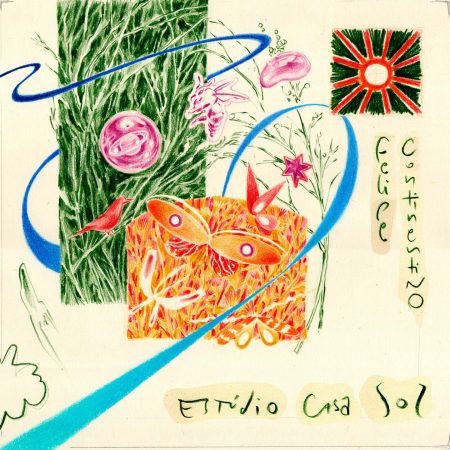
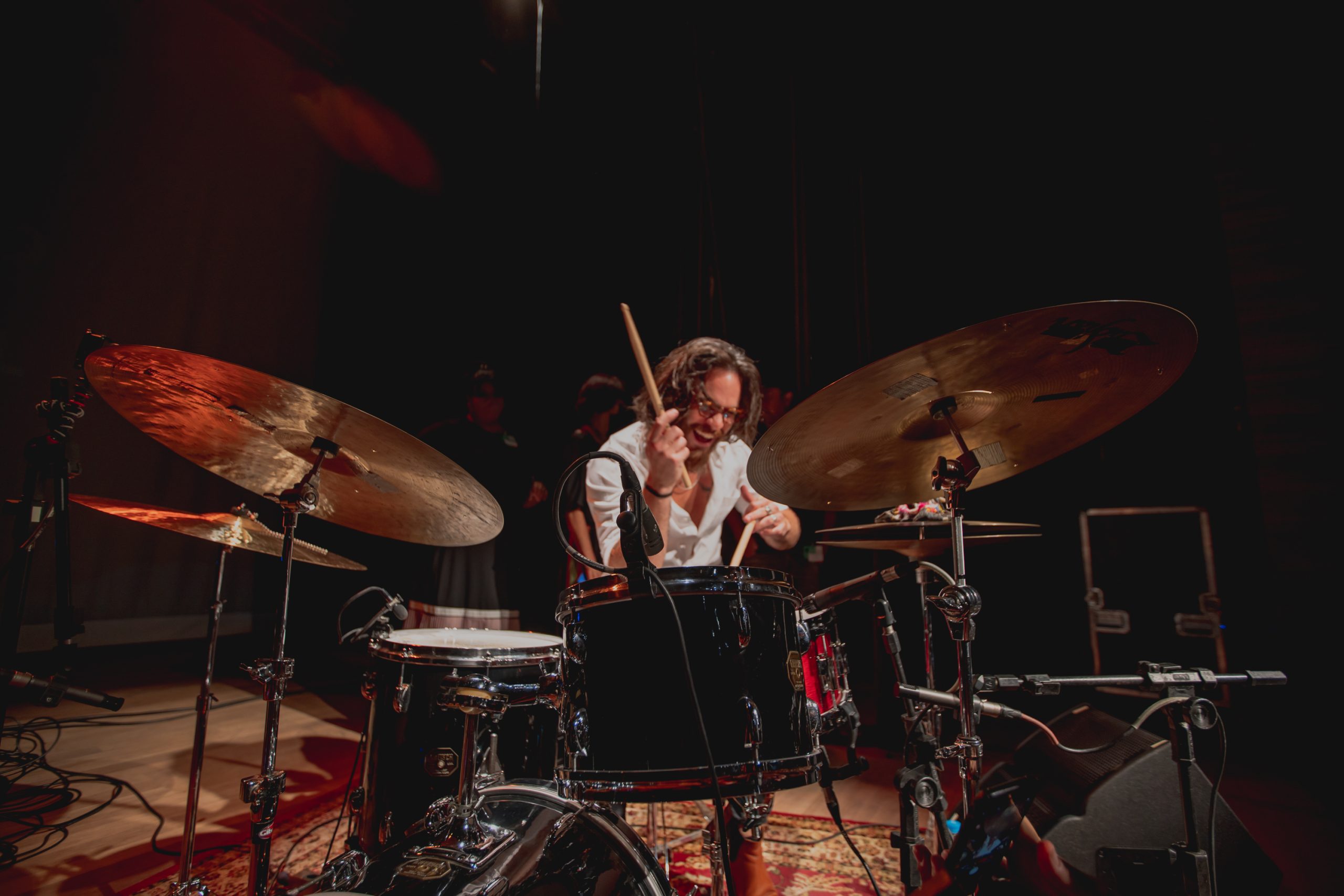
That context matters, because Estúdio Casa Sol sounds like someone stepping out from behind the kit, not leaving it behind but widening the frame around it. This is a drummer’s record in the best sense: attentive to space, dynamics, and flow. But it’s also the sound of a musician allowing himself to sing, to write, to speak plainly, and to let melody carry ideas rhythm alone never could.
Recorded in his own home, the album wears its environment gently. Nature isn’t romanticized here, but observed. Birds, insects, wind, and light move through the songs the way they move through a day. Tracks like “Cidade das Abelhas Solitárias” and “O Banho da Vespa” don’t explain themselves; they invite you to look closer, to imagine the world from another angle, even another species. The writing is restrained, curious, and quietly philosophical, shaped by Continentino’s interest in science, reflection, and the slow work of understanding oneself.
Family and friendship are stitched into the record in ways that feel lived-in rather than symbolic. Voices from siblings surface. Longtime collaborators appear not to embellish, but to extend the conversation. Clarinet, piano, bass, and voice drift in and out with an ease that speaks to years of shared musical language. The production favors warmth over polish, imperfection over rigidity. Sometimes you hear bleed, sometimes silence — and that’s the point.
There’s also a sense of continuity here. Continentino’s first solo album arrived back in 2011. Since then, he’s explored electronic textures under the PLIPP alias, collaborated relentlessly, and slowly gathered ideas across years and cities. Estúdio Casa Sol feels like a moment of arrival rather than a destination, a place where past sketches finally found the right light to become songs.
What makes this record quietly compelling is its refusal to be boxed in. Jazz drummer, rock player, electronic producer, or songwriter, none of those labels fully stick, and Continentino seems comfortable with that. He treats creation like painting in an atelier, returning to the canvas when the moment feels right, adding color without worrying too much about the final frame.
Estúdio Casa Sol doesn’t chase immediacy or certainty. It trusts nuance, presence, and the value of creating more than consuming. In a noisy world, it suggests something quietly radical by being simple: pay attention, stay curious, and let the work grow at its own pace. For those willing to lean in a little closer, Continentino’s world continues beyond the album, unfolding slowly and thoughtfully at felipecontinentino.com.