Bruno Pontiroli and the Elastic Logic of the Impossible
Elliott Brooks
Written by Elliott Brooks in Dimensions Art & Design Creative

Bruno Pontiroli and the Elastic Logic of the Impossible

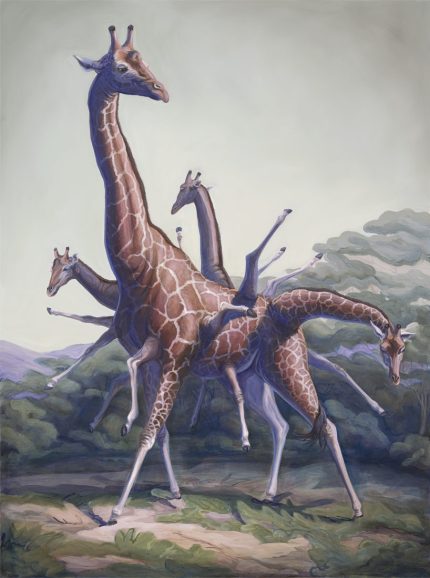
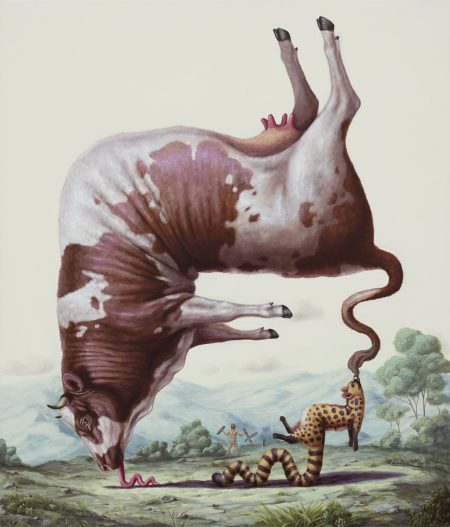
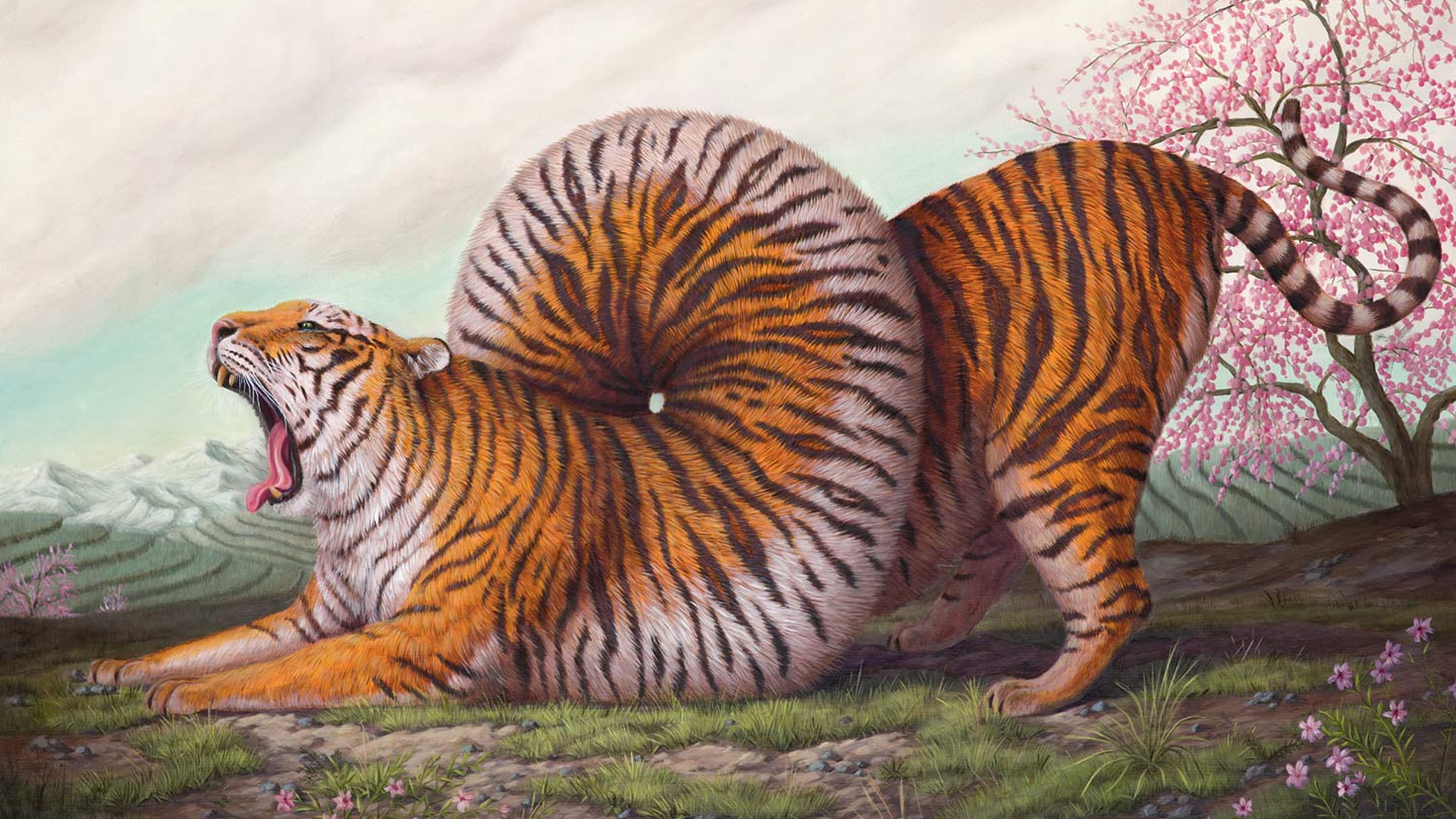
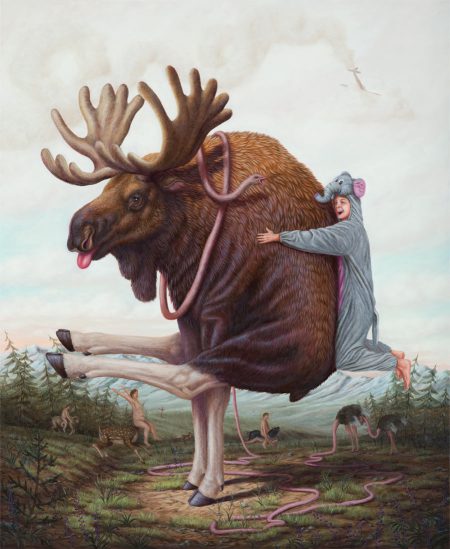
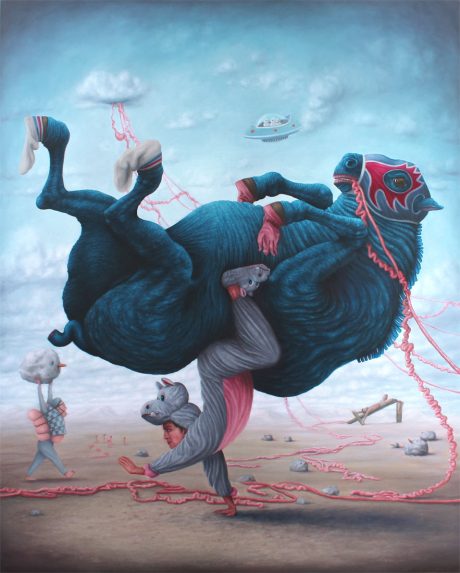
There’s something disorienting about the paintings of Bruno Pontiroli. At first glance they appear grounded in a familiar visual language: carefully rendered figures, animals painted with anatomical precision, landscapes that feel convincingly real. But spend a few seconds longer inside the scene and the world begins to tilt. Bodies stretch beyond natural limits, gravity loses its authority, and animals and humans share a strange, joyful coexistence that feels both absurd and oddly harmonious.

Pontiroli’s paintings live in this space where realism and impossibility meet. The French artist, born in 1981 and now based in Paris, constructs elaborate scenes that resemble fragments of dreams—visions where the logic of the physical world bends just enough to let imagination slip through.

Although many viewers instinctively place his work within the tradition of surrealism, Pontiroli himself tends to resist labels. For him, categorizing the work risks narrowing the open-ended nature of the images. His paintings are meant to operate more like invitations than explanations, offering viewers a starting point for interpretation rather than a fixed narrative.
Les Bons Amis, by Bruno Pontiroli
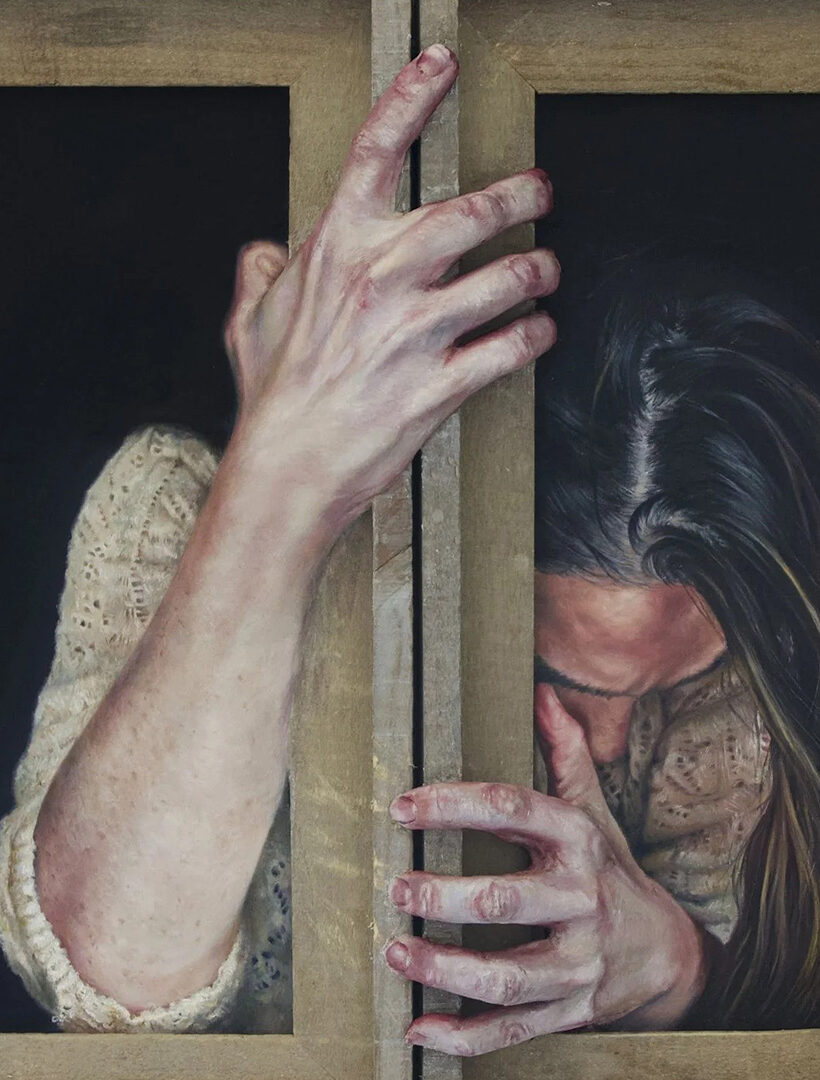
La Main A La Patte, by Bruno Pontiroli

The artist often describes these works as “poem-images.” It’s a fitting term. Like poetry, the scenes suggest meaning without insisting on it. There may be a story unfolding in the distance—a human figure stretching impossibly across a field, an animal moving through a distorted landscape—but the beginning and end remain deliberately unresolved. The image lingers as a question rather than a conclusion.

Central to Pontiroli’s visual language is the relationship between humans and animals. His figures twist, elongate, and intertwine in ways that dissolve the boundaries between species. In some paintings, limbs stretch across the composition like ribbons, connecting bodies and creatures in strange physical symbioses. In others, animals behave with a playful intelligence that feels almost conspiratorial.

Despite the absurdity of these situations, the mood is rarely threatening. Instead, Pontiroli’s universe carries a sense of exuberance—an underlying suggestion that the impossible might actually be liberating. Gravity is optional. Pain seems absent. The characters move through their strange environments with an ease that turns surreal distortion into a kind of freedom.

Technically, Pontiroli’s work reveals a deep respect for classical painting. Though largely self-taught in oil painting, he developed his technique through relentless practice, studying old masters and copying works he encountered in museums such as the Louvre. That discipline shows in the precision of his compositions: the controlled brushwork, the balanced lighting, and the careful construction of depth within the landscape.

Drawing plays an equally important role in his process. Pontiroli often develops ideas through extensive sketching before committing them to canvas. These drawings act as testing grounds, allowing him to refine an idea and determine whether it has the visual strength to become a painting. Only when the concept feels both surprising and compelling does it move to the next stage.

The ideas themselves can come from anywhere. A photograph of an animal, a moment of daydreaming, or a strange visual association may spark the initial concept. From there, the image evolves gradually, layer by layer, until the finished painting emerges as a fully formed fragment of Pontiroli’s peculiar universe.

Lun Dans Lautre, by Bruno Pontiroli
Vacherie #2, by Bruno Pontiroli

That universe is filled with recurring motifs. Snowmen wander through landscapes like silent observers. Clouds sometimes behave like living organisms. Even religious iconography appears unexpectedly, often transformed into playful or surreal roles. These recurring characters allow Pontiroli’s paintings to feel interconnected, as if each canvas belongs to a larger world unfolding piece by piece.

At the heart of his practice lies a simple intention: to disturb our habitual way of seeing. By bending the rules of nature and mixing elements that logically shouldn’t coexist, Pontiroli invites viewers to reconsider the stability of the world around them.

The result is a body of work that feels both playful and philosophical. His paintings amuse, surprise, and occasionally unsettle—but above all they remind us that imagination has the power to reshape reality, even if only for the length of a glance. Those curious to explore more of Pontiroli’s strange and elastic universe can discover additional works on the artist’s website.

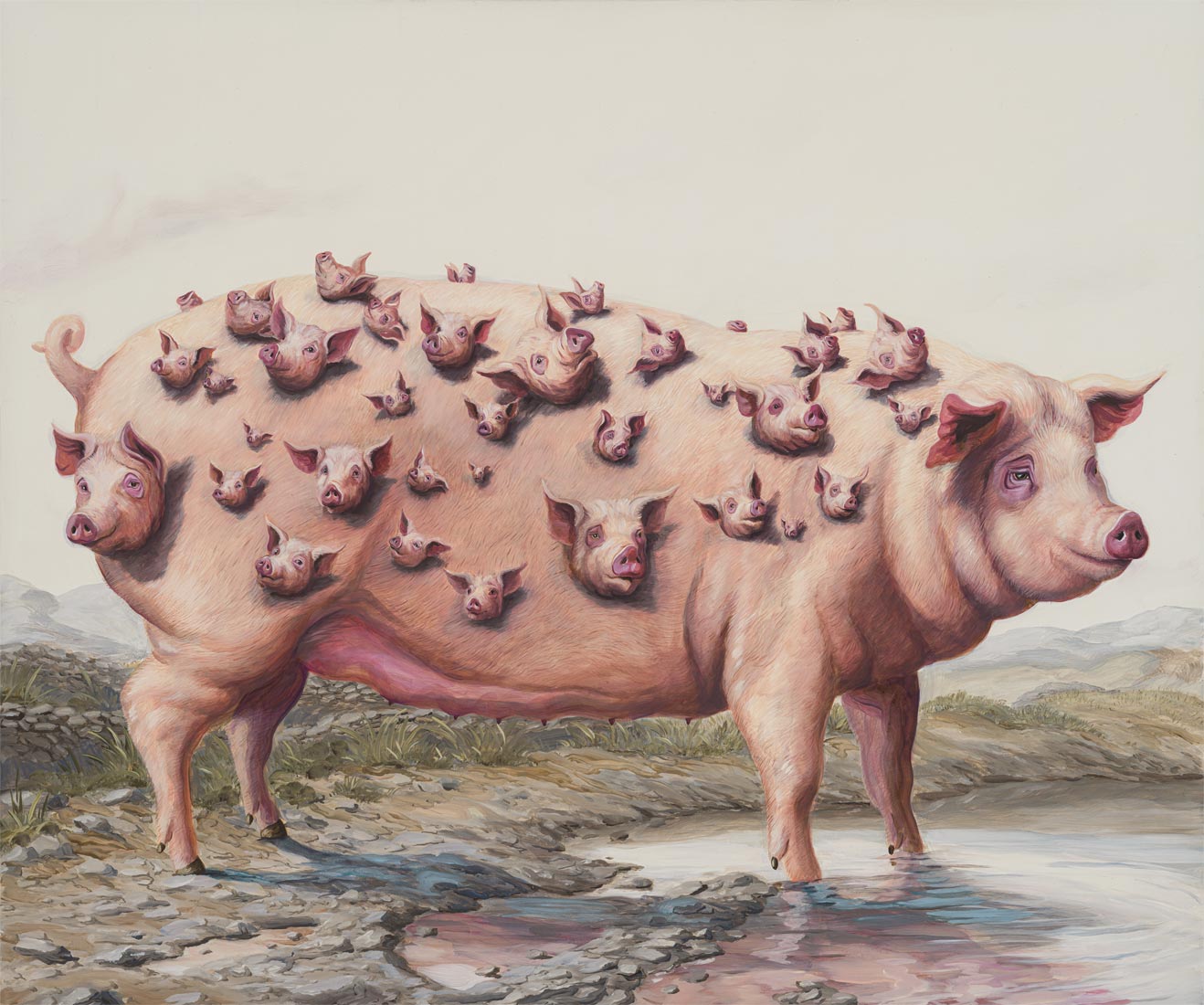
Copains Comme Cochons, by Bruno Pontiroli
Scroll