Melissa Auf der Maur’s ’90s Through the Looking Glass
Zoë Marin
Written by Zoë Marin in Beyond the Frame Music Photography

Melissa Auf der Maur’s ’90s Through the Looking Glass

The 1990s are often remembered through their music, fashion and grainy visual language. But Melissa Auf der Maur remembers them from inside the frame. As the bassist for Hole and The Smashing Pumpkins, the Montreal-born artist carried a 35mm camera alongside her bass. She documented a decade that was about to disappear. Now, more than 200 photographs from her enormous personal archive are on view at the Art Gallery of Ontario in Melissa Auf der Maur: My ’90s Rock Photographs, running until June 6, 2027.

The exhibition follows Auf der Maur’s 2026 memoir, Even the Good Girls Will Cry, which we covered here on The Greatscape. The two projects are closely connected, with the photographs serving as a visual companion to her written memories of the decade. For Auf der Maur, photography was never simply a way to document her increasingly extraordinary life. She had been taking photographs since she was a teenager and studied photography at Concordia University, with dreams of becoming an artist. Joining Hole at 22 changed everything.
Life Behind the Lens

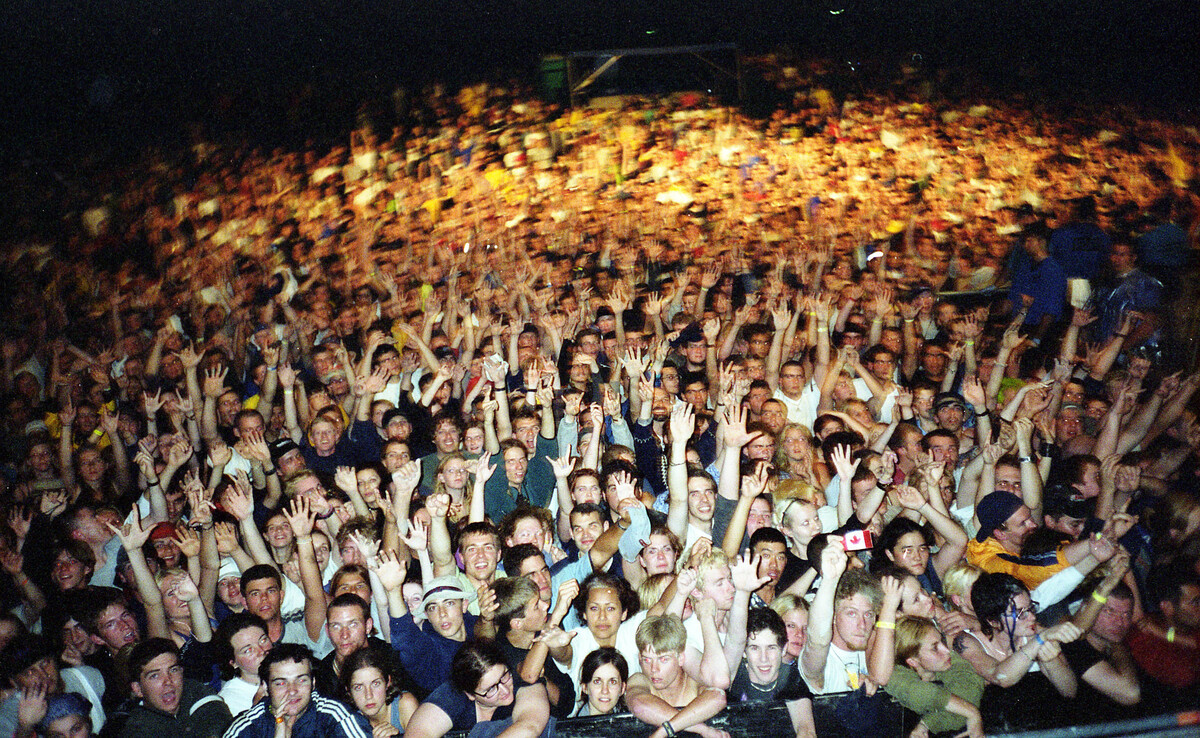
Suddenly, her subjects included packed stadiums, hotel rooms, tour buses, backstage chaos and some of the most recognizable figures in alternative music. The camera became her way of processing a life that had accelerated almost overnight. That dual identity sits at the heart of the exhibition. Auf der Maur was both a musician participating in the scene and an observer standing slightly outside it.

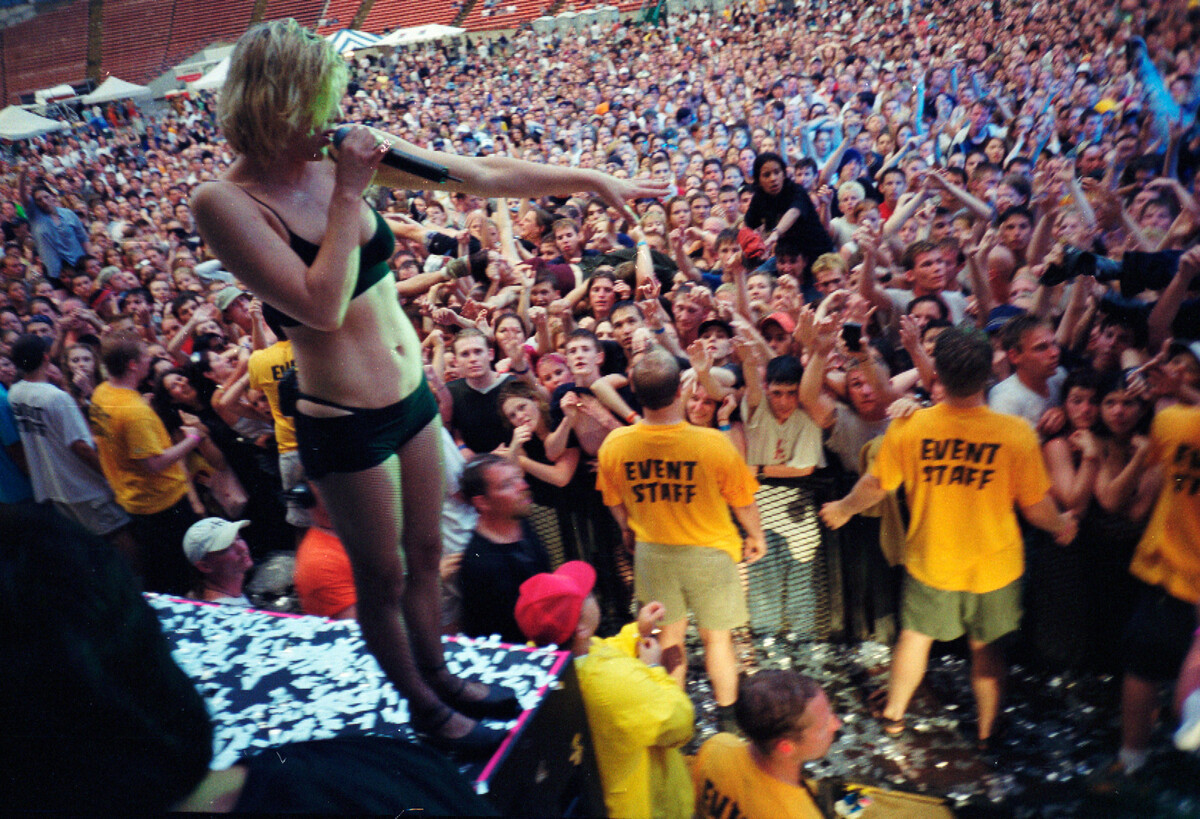
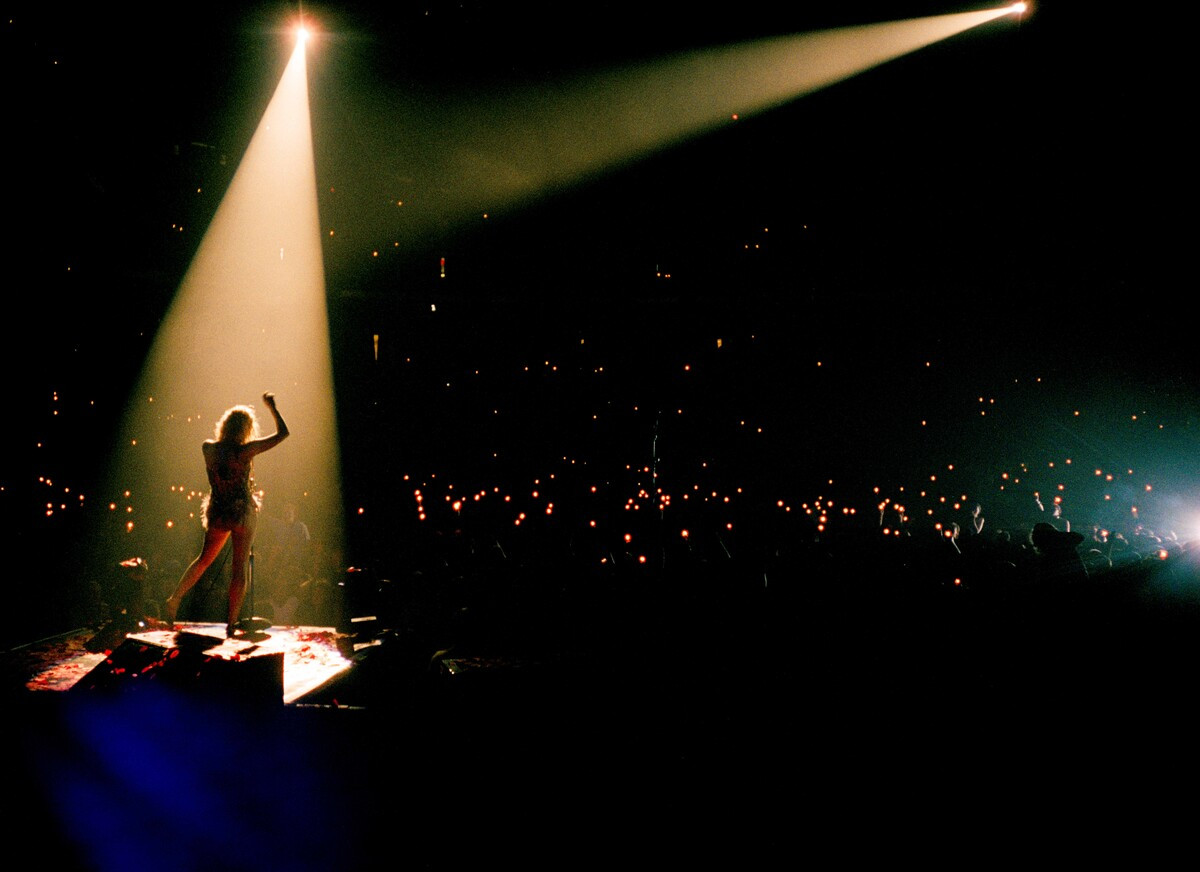
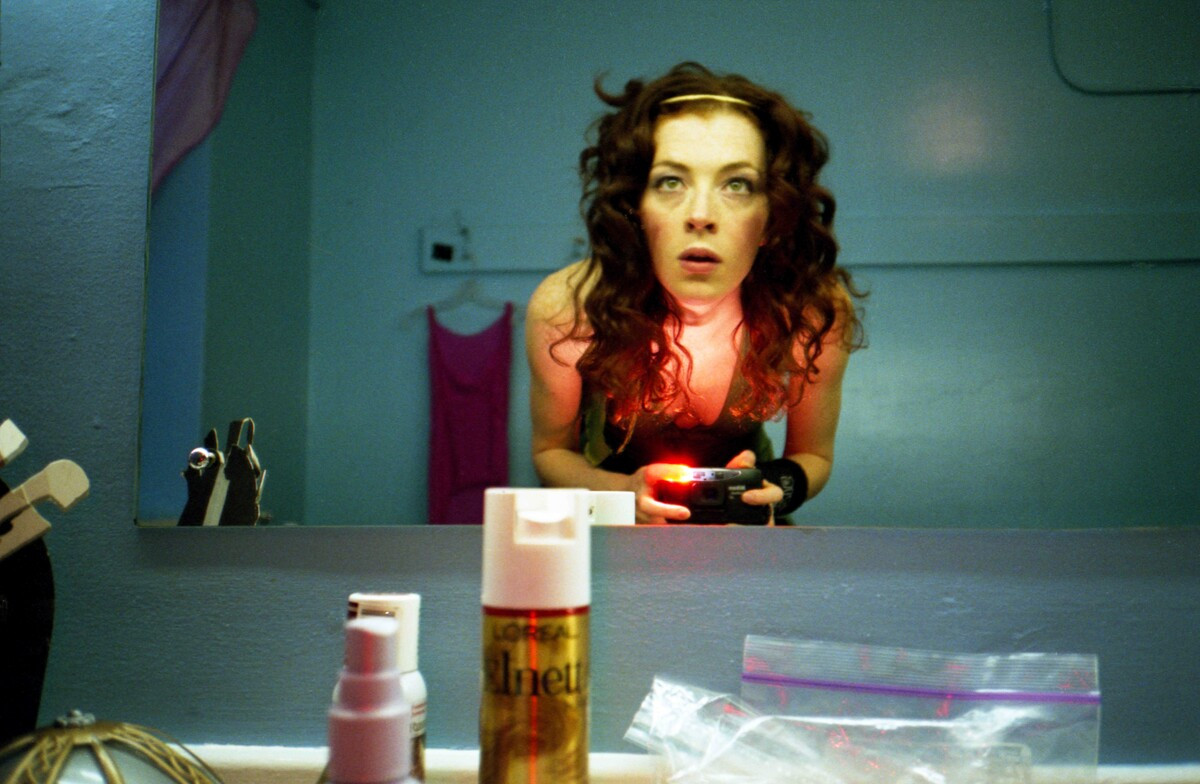
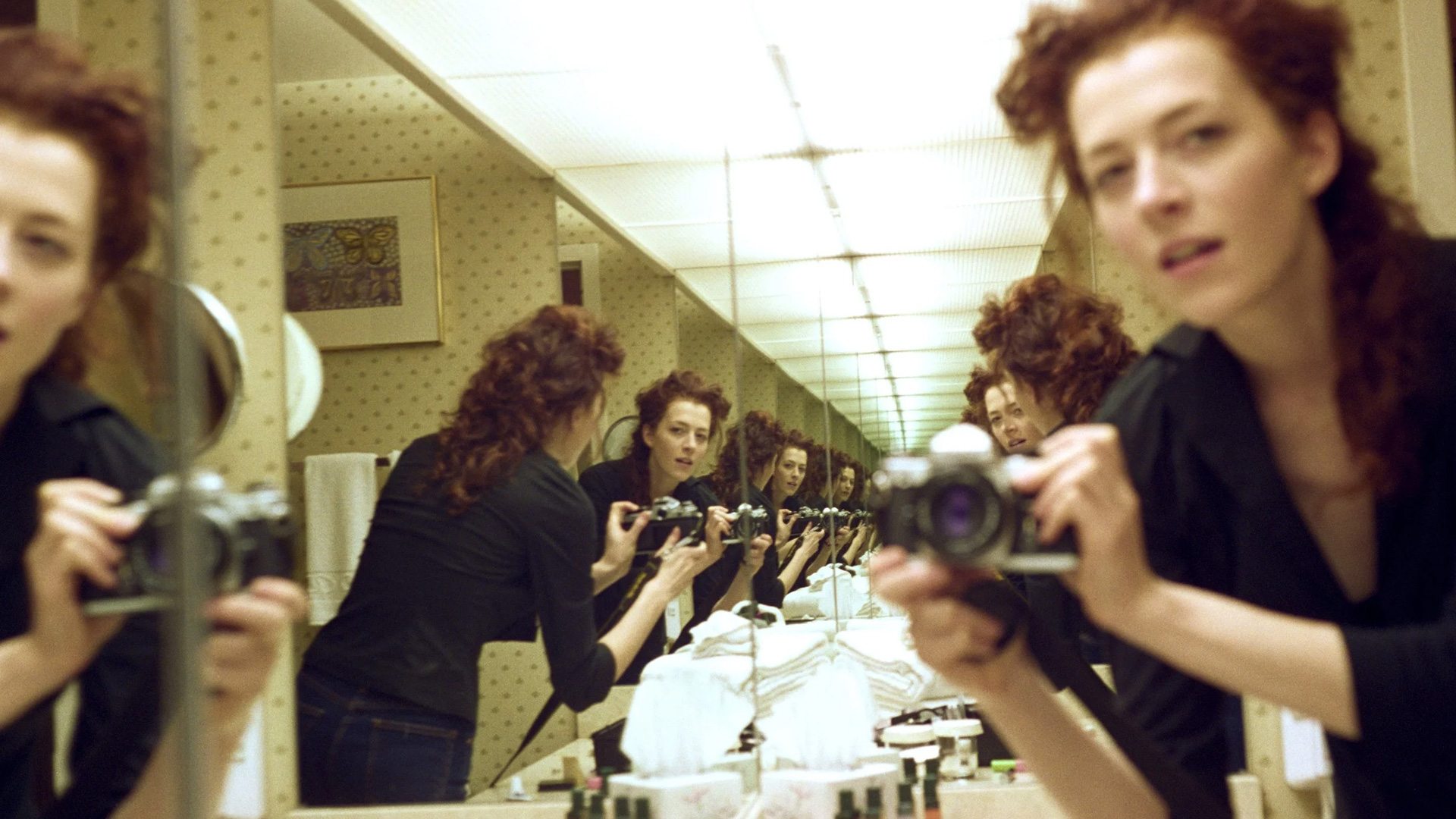
Her photographs move between public spectacle and private moments. Some are POV images taken onstage, while others are self-portraits made alone in hotel rooms. The result feels less like celebrity photography and more like a personal visual diary. There is also an intimacy here that comes from trust. Auf der Maur photographed people who knew her as a friend and bandmate, not simply as someone holding a camera.

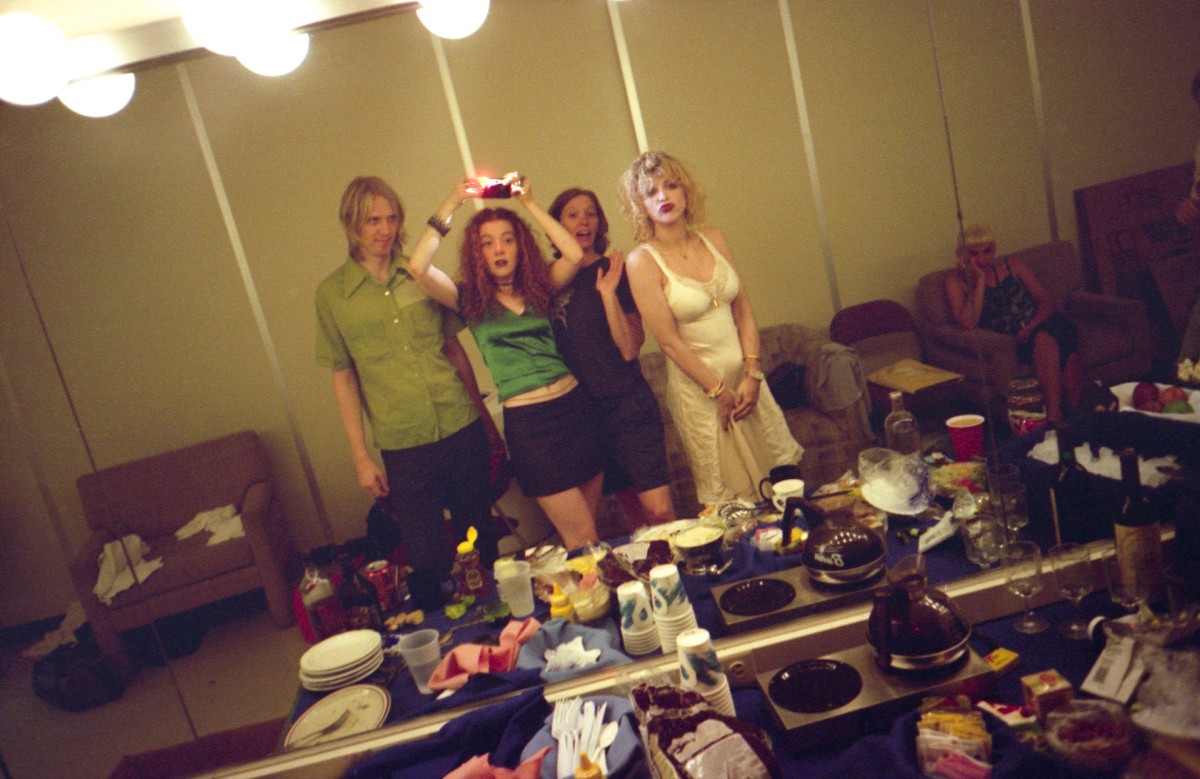
Melissa Auf Der Maur. Self-portrait in mirror with Hole, Lollapalooza backstage
Melissa Auf Der Maur. Crowd at Edgefest, Mini Canadian Flag
The Last Analogue Decade

Images of Courtney Love, Billy Corgan, Drew Barrymore and other familiar faces can therefore feel unexpectedly unguarded. A photograph of Love riding a bicycle backstage, for example, has little to do with the polished mythology of rock stardom. Instead, it feels like a moment that simply happened to be preserved. The exhibition’s title points to something larger than nostalgia.

Auf der Maur describes the period from roughly 1991 to 2001 as the “last analogue decade.” Photography meant film, while music could be recorded on four-track machines. Even documenting a concert required physical limitations. Her archive captures that slower, messier process before smartphones made everyone a potential photographer. Those limitations are also important to her artistic philosophy.

From Grunge to the Gallery

She has spoken about how having fewer tracks, fewer photographs and fewer technological options could actually encourage creativity. Her own images carry that sense of immediacy. They are not designed to look perfect. Instead, they feel lived-in, sometimes rough, sometimes funny and often deeply personal. That quality makes them particularly effective records of their time.

It is tempting to approach these photographs simply as a backstage history of grunge. There is certainly plenty for music fans to discover, with appearances from artists including Pavement, Sonic Youth and Beck. The collection also follows Auf der Maur’s years with Hole and the Smashing Pumpkins. Yet the exhibition becomes more interesting when viewed as the story of one artist finding her place inside a cultural explosion.

Melissa Auf Der Maur. Courtney Love on stage pointing at fans
Melissa Auf Der Maur. Courtney on Stage with Lighters
An Archive Still Becoming

Her perspective matters because she was not an outsider looking in. She was a woman in the band, a musician, a photographer and a participant in a scene that was rapidly changing around her. She could photograph the audience because she had just been onstage herself. Her bandmates were also part of her daily reality. That position gives the archive an unusual sense of proximity.

More than 10,000 photographs sit behind the exhibition, making the 200-plus images on display only a fraction of what Auf der Maur has preserved. Selecting them was understandably difficult. Rather than treating the archive as a finished historical record, she has described it as something living. Other artists, institutions and audiences can still discover new connections within it.

That idea extends beyond the photographs. The exhibition also brings together objects, tour ephemera, video and sound from her archive, creating something closer to a multimedia memory than a conventional photography show. Her album BASS WOMB ROOM adds another layer, combining previously unreleased four-track recordings with field recordings gathered from her years on the road.

There is a bittersweet quality to all this looking back. Auf der Maur’s photographs naturally invite memories of a period when alternative music, DIY culture and independent scenes seemed to be pushing against the mainstream. But her archive also records the moment when those worlds were becoming increasingly absorbed by larger commercial forces and rapidly changing technology. At the AGO, that tension turns the exhibition into more than a trip down memory lane.

These photographs preserve a particular way of being young, creative and connected, while also asking what happens when the tools around us change. My ’90s Rock Photographs is ultimately a self-portrait of an artist who happened to be standing in the middle of cultural history, camera in hand — and who is still figuring out what those photographs have to say.

Melissa Auf Der Maur. Self-portrait in Mirror, Backstage
Scroll