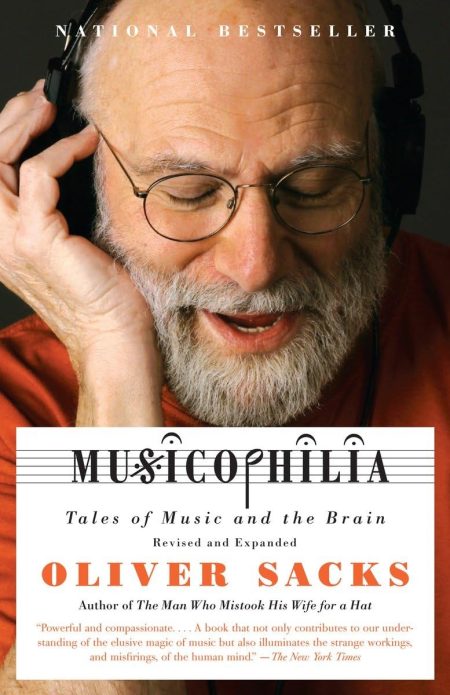

Every once in a while, you read a book that makes something familiar feel mysterious again. For me, Musicophilia: Tales of Music and the Brain by Oliver Sacks does exactly that. Music is such a constant presence in our lives—background playlists, headphones on the subway, a song suddenly looping in your mind while you’re making coffee—that we rarely stop to wonder what’s actually happening inside our brains when we hear it.
Sacks, a neurologist with a storyteller’s instinct, explores that question through an unforgettable series of real-life cases. The book sits somewhere between science writing and human storytelling, and that combination is what makes it so compelling. Rather than explaining music purely through theory or neuroscience, Sacks invites us into the lives of people whose relationships with music are extraordinary, sometimes beautiful, sometimes unsettling.
The stories in Musicophilia range from curious to astonishing. One man, struck by lightning, suddenly develops an overwhelming passion for classical music and begins composing piano pieces inspired by Frédéric Chopin. Another person hears vivid music playing constantly in her mind after losing her hearing—her brain, in a strange act of compensation, generating melodies of its own. Elsewhere, Sacks describes people who experience seizures triggered by specific types of music, a condition known as musicogenic epilepsy.