Marion Wagschal: Cyclops and Other Tales
Elliott Brooks
Written by Elliott Brooks in Dimensions Art & Design

Marion Wagschal: Cyclops and Other Tales

Marion Wagschal has spent more than six decades painting the human figure. Yet her subjects have never been simply bodies on a canvas. For the Montreal-based artist, the figure carries memory, desire, fear, inheritance and contradiction. Born in Trinidad and Tobago in 1943 to Jewish parents who fled Europe during the Second World War, Wagschal arrived in Canada at nine. Her practice has since been shaped by movement between cultures, generations and emotional worlds. Marion Wagschal: Cyclops and Other Tales, now at the National Gallery of Canada, brings five decades of that practice together and explores what a body can remember.

Organized by the National Gallery of Canada in partnership with Centre d’art CAB, the exhibition runs until January 17, 2027. Curated by Anaïs Castro and Roxanne Arsenault, it combines major paintings with drawings, sketches, notebooks, photographs and other personal archival materials. Many of these materials are being shown publicly for the first time. Together, they offer an intimate view of an artist whose paintings have always treated observation as both a creative act and a way of understanding the world.
A Figure Beyond the Ideal

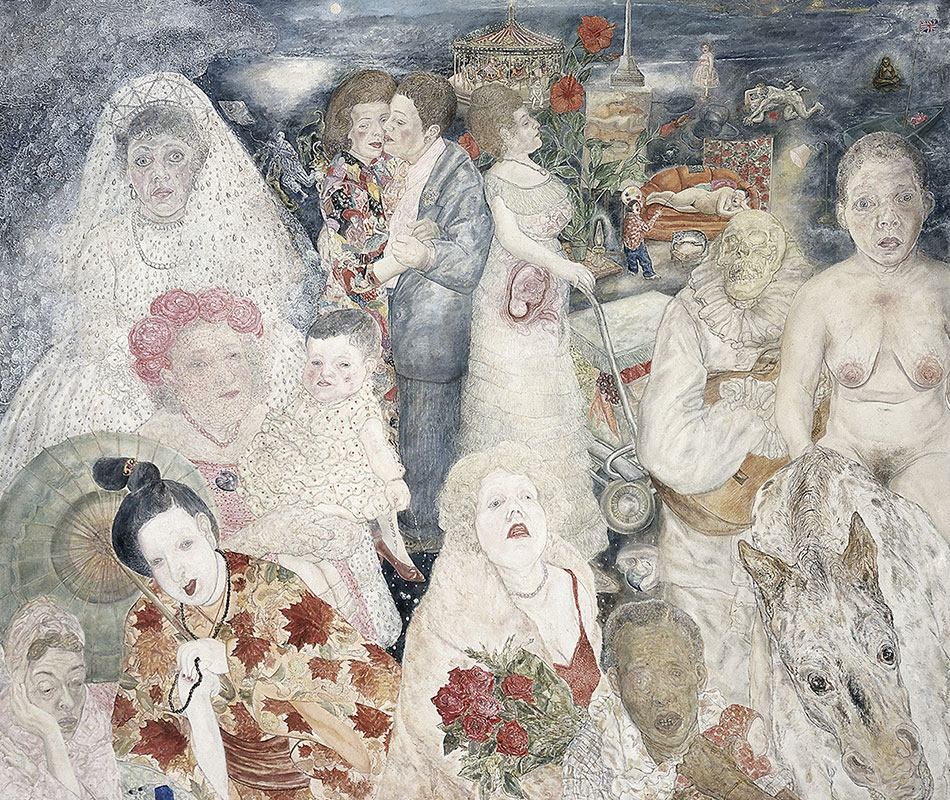
The female body has often been idealized or objectified throughout art history. Wagschal takes a different approach. Her figures can be awkward, sensual, exposed, aging or vulnerable. They are never required to fit an ideal of beauty. Instead, the body becomes a place to explore identity, mortality, belonging and experience.

Wagschal established herself in Montreal during the 1960s, when abstraction was transforming the city’s art scene. She admired artists such as Guido Molinari, Claude Tousignant and Yves Gaucher, but abstraction could not express everything she wanted to explore. She remained committed to figuration, finding inspiration in artists such as Suzanne Valadon, whose frank depictions of women demonstrated how painting could approach the body without reducing it to an object.

Marion Wagschal. Cyclorama
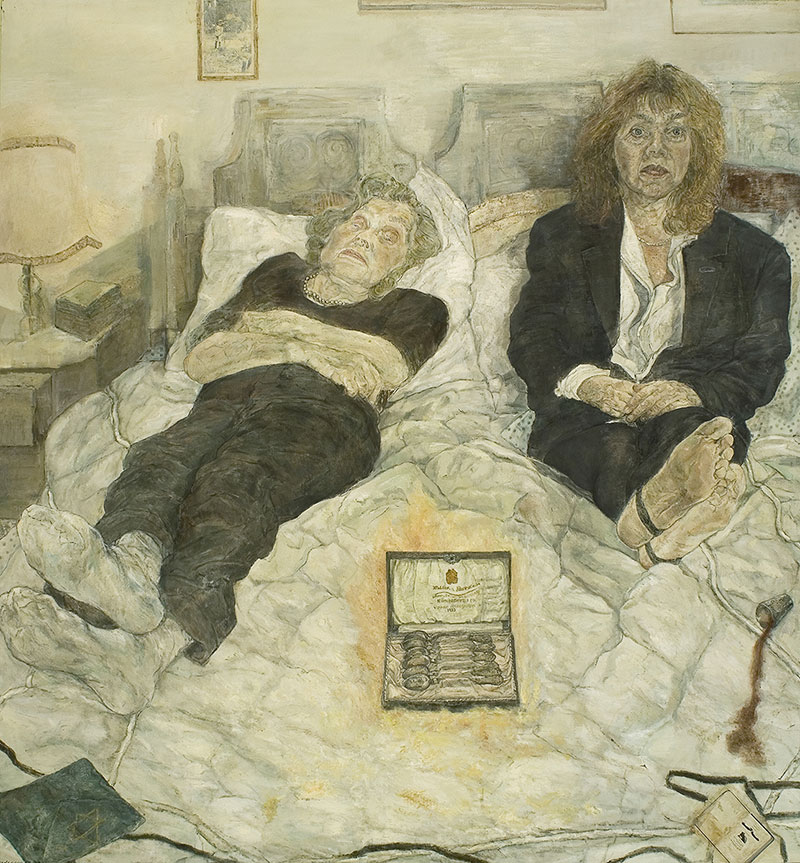
Marion Wagschal. Burning Spoons
Memory in the Body

Wagschal’s family history gives her work another emotional dimension. Her parents were Jewish refugees from Germany and Lithuania, while her mother’s family was devastated by the Holocaust. At the same time, Wagschal remembers her childhood in Trinidad as a period of curiosity and freedom, surrounded by relatives and tropical landscapes. Those seemingly opposing experiences helped shape her sensitivity to memory and contradiction.

Drawing was part of her life from an early age. Wagschal has recalled making images as naturally as learning to read and write, describing her artistic vocation as something that was simply always inside her. Her mother became a recurring presence in her paintings. In Burning Spoons, Wagschal depicts herself beside her mother, with a box of spoons between them. The spoons were the only family heirloom her mother carried when she fled Europe, transforming an everyday object into a powerful symbol of displacement and memory.

Looking Back at Herself

Portraiture allows Wagschal to explore the complicated relationship between artist and subject. She has painted friends, family members, students, models and herself, approaching each sitter with attentiveness and empathy. Rather than searching for a definitive likeness, she attempts to capture something of the person’s emotional and psychological presence.

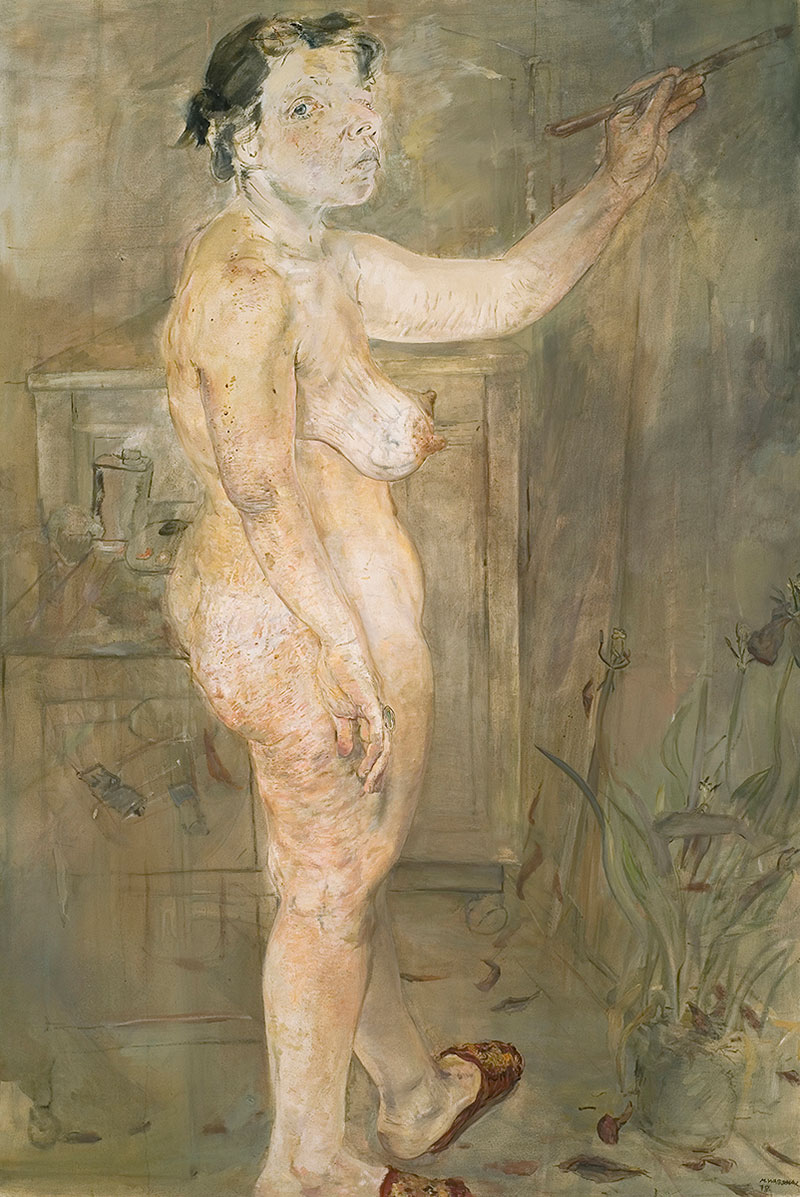
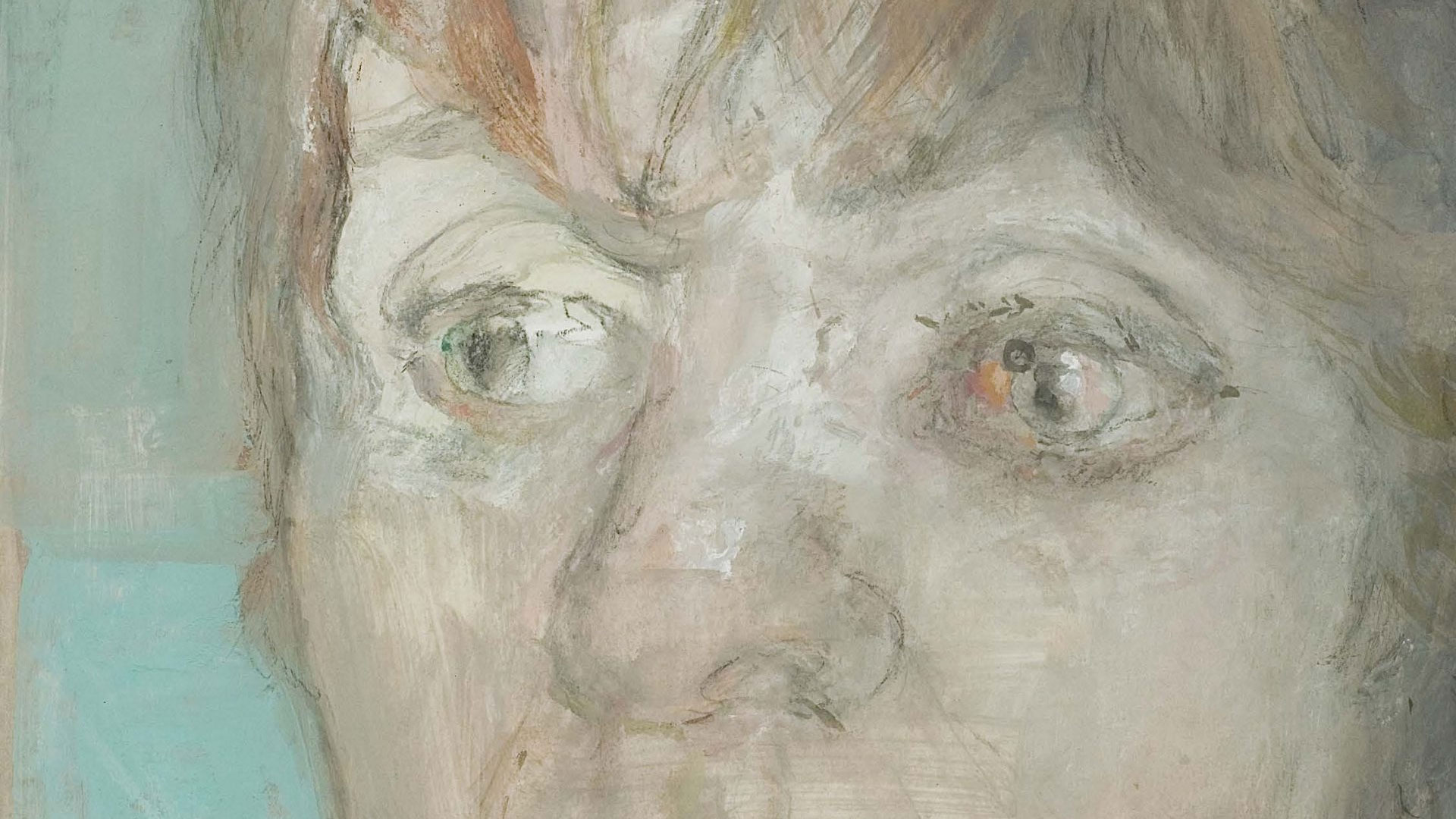
Her self-portraits take this idea further. Across the decades, Wagschal has painted herself aging, showing a body that can be exposed, exhausted, amused, defiant and desirous. By refusing to hide the aging female body, she challenges expectations about who gets to be visible. She also becomes both observer and observed, turning self-portraiture into an intimate record of changing experience.

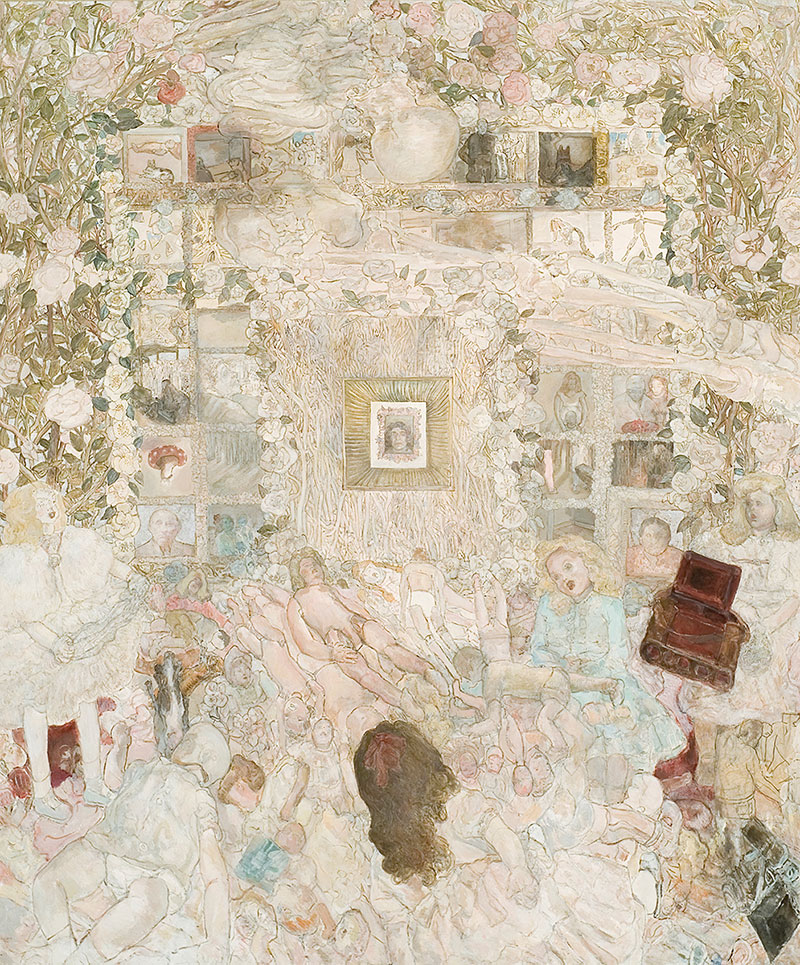
Marion Wagschal. Tales from the Schwarzwald as Told by My Mother
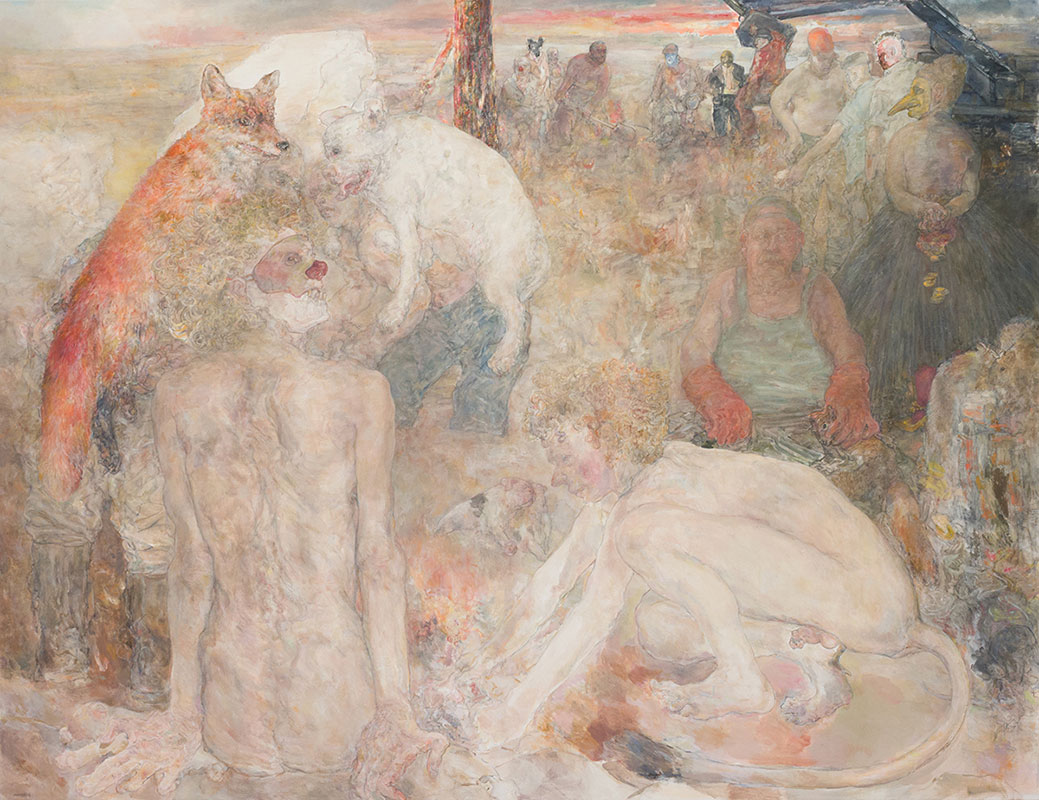
Marion Wagschal. The Melancholy of Carnivores
Desire, Discomfort and Contradiction

Wagschal’s work does not always offer comfortable viewing. In The Melancholy of Carnivores (2014), she examines her conflicted relationship with eating meat. Appetite, violence and consumption become intertwined, reflecting a larger interest in the uncomfortable connections between pleasure and suffering. Her paintings often suggest that beauty and discomfort can occupy the same space.

Those contradictions are central to Cyclops and Other Tales. The exhibition takes its name from Cyclops (1972), an early painting that helped establish Wagschal’s visual language, and Tales from the Schwarzwald as Told by My Mother (1980–2013). It also includes Wave (2017), Pariah (2008) and Untitled (2017), all being shown for the first time. Across these works, imagination and observation, personal history and collective experience continually intersect.

The archival material adds another dimension to the exhibition. Drawings, sketches, notebooks and photographs appear alongside Wagschal’s paintings, offering glimpses into the process behind the finished works. They reveal an artist who has always treated observation as more than looking. For Wagschal, it is a way of understanding people, relationships and the world around her.

Her influence also extends into art education. Wagschal taught painting and drawing at Concordia University’s Faculty of Fine Arts for 37 years and introduced feminism into her department through a seminar titled Women and Painting. Marion Wagschal: Cyclops and Other Tales brings together the many sides of that legacy. At its centre is an artist who has spent decades using the human figure to ask difficult questions about memory, identity, vulnerability and what it means to live in a body.

Marion Wagschal. Cyclops
Scroll