Amelie Satzger: Between Reality and Imagination
Zoë Marin
Written by Zoë Marin in Beyond the Frame Creative Photography

Amelie Satzger: Between Reality and Imagination

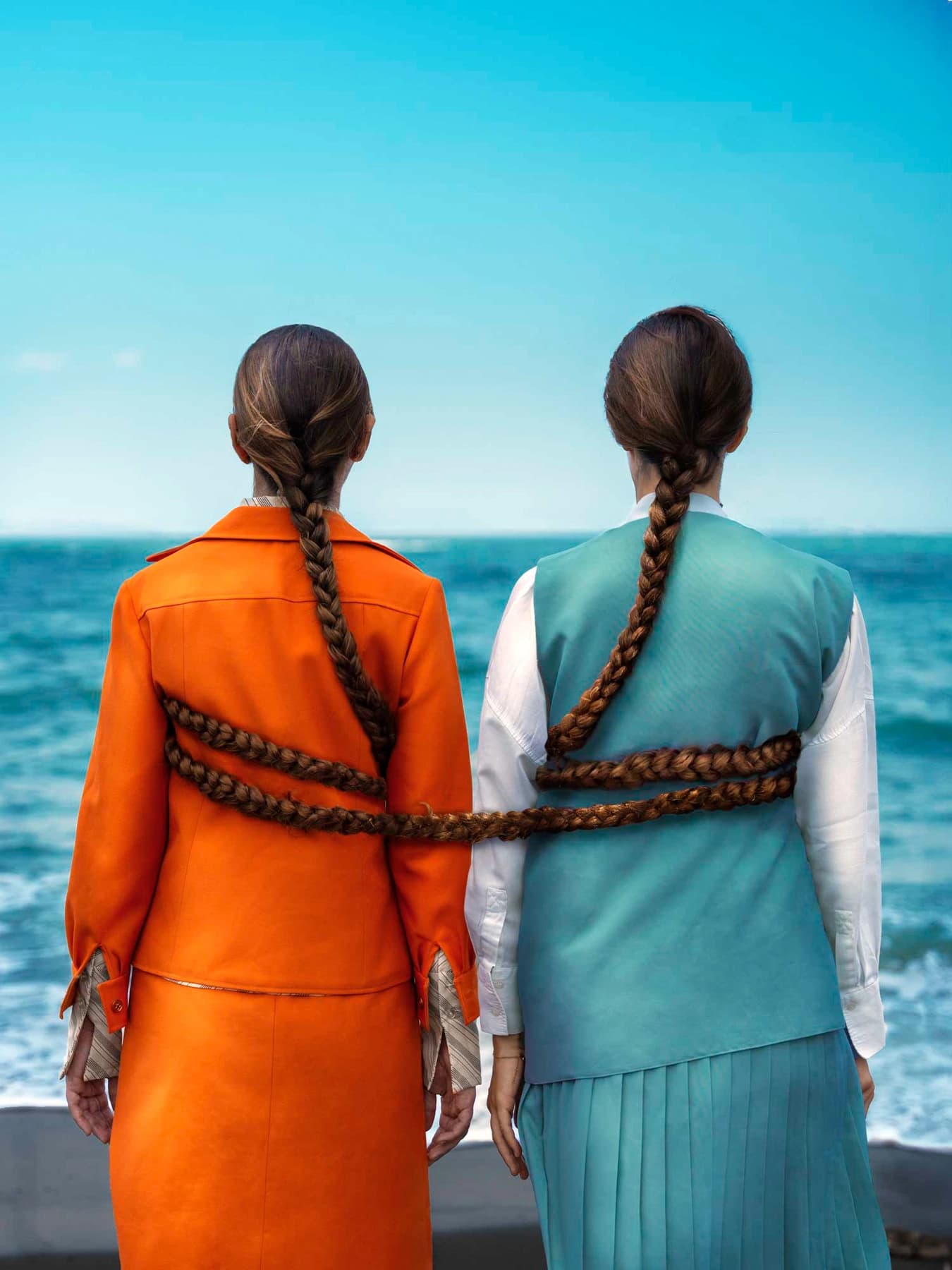
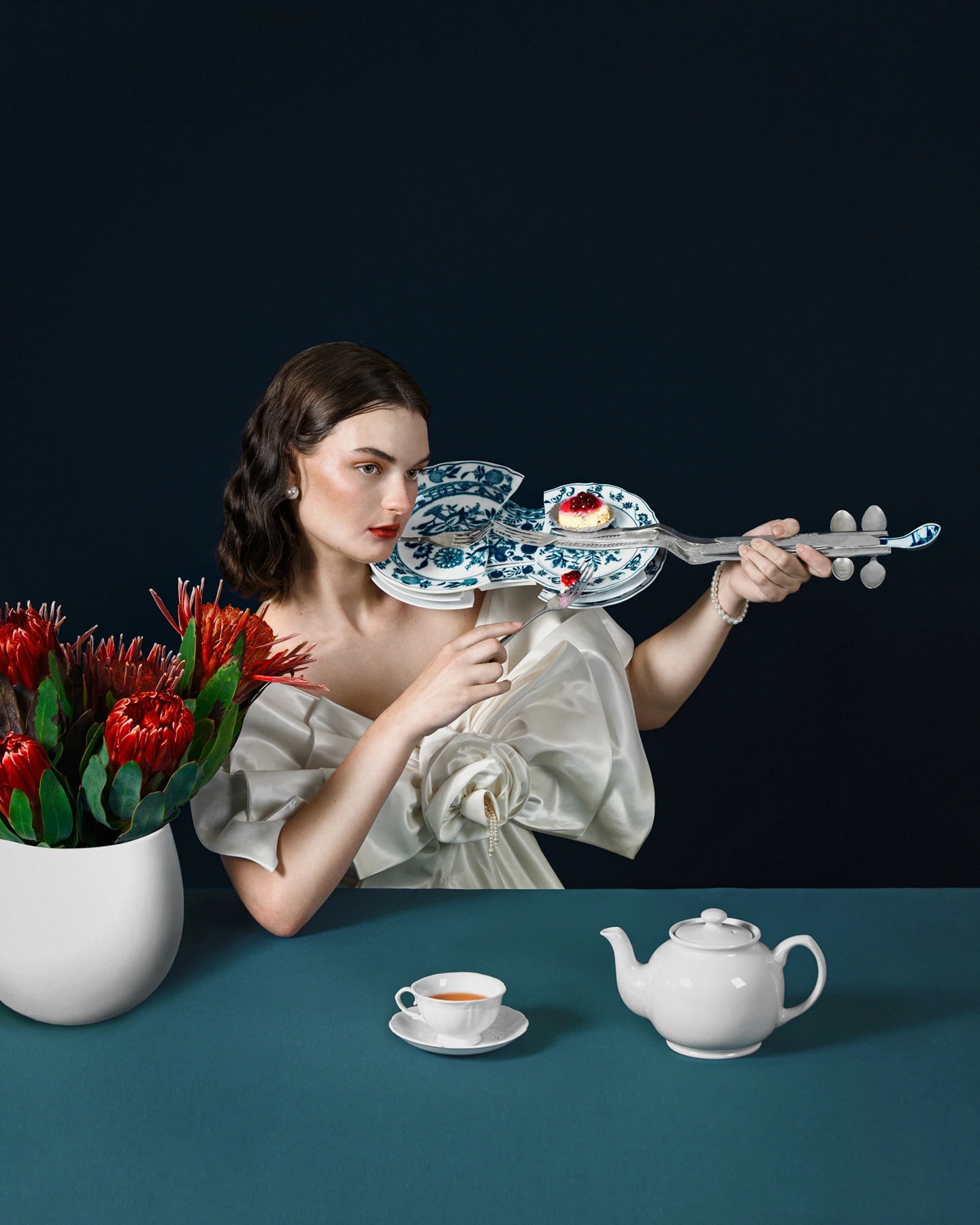
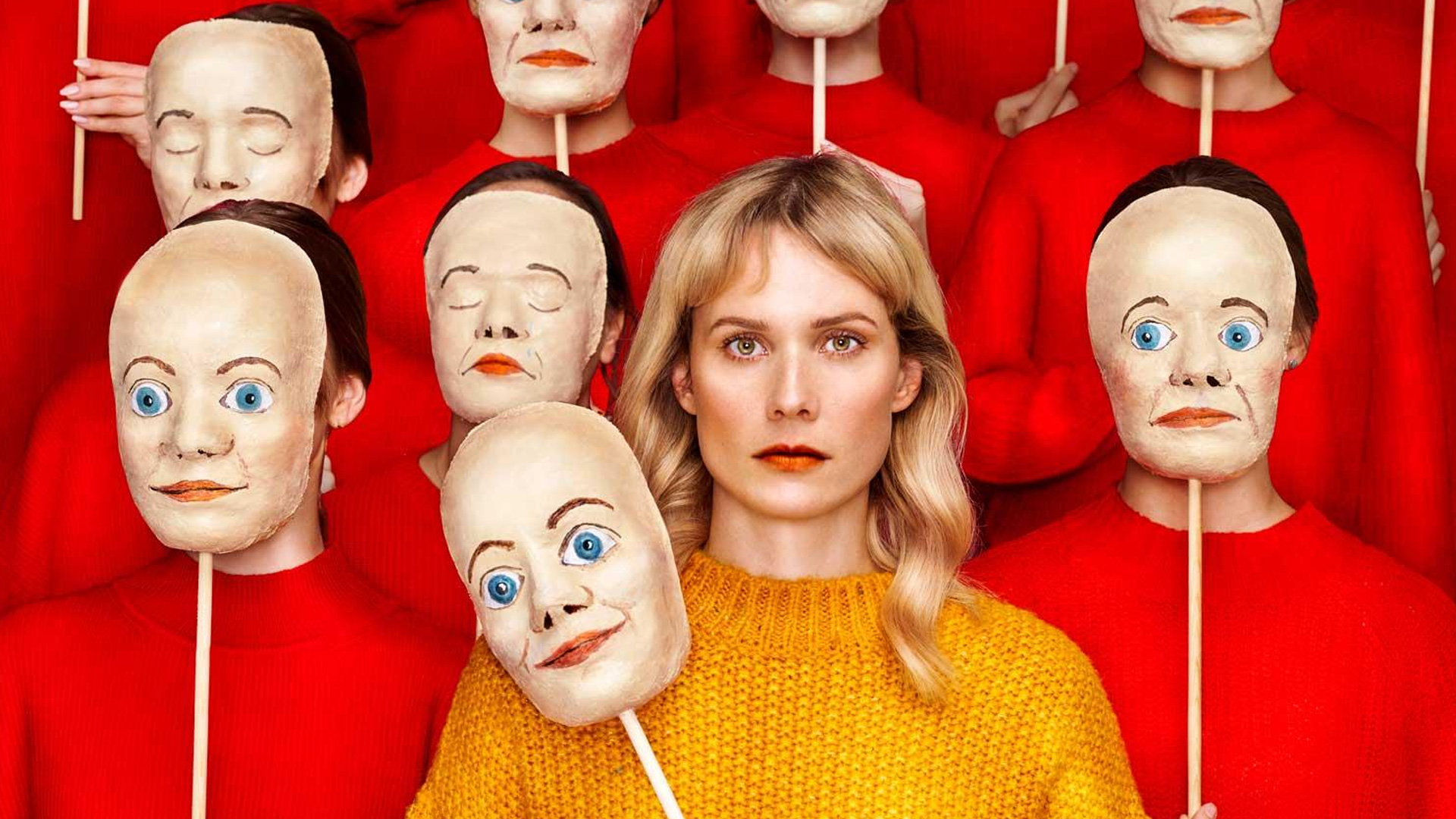
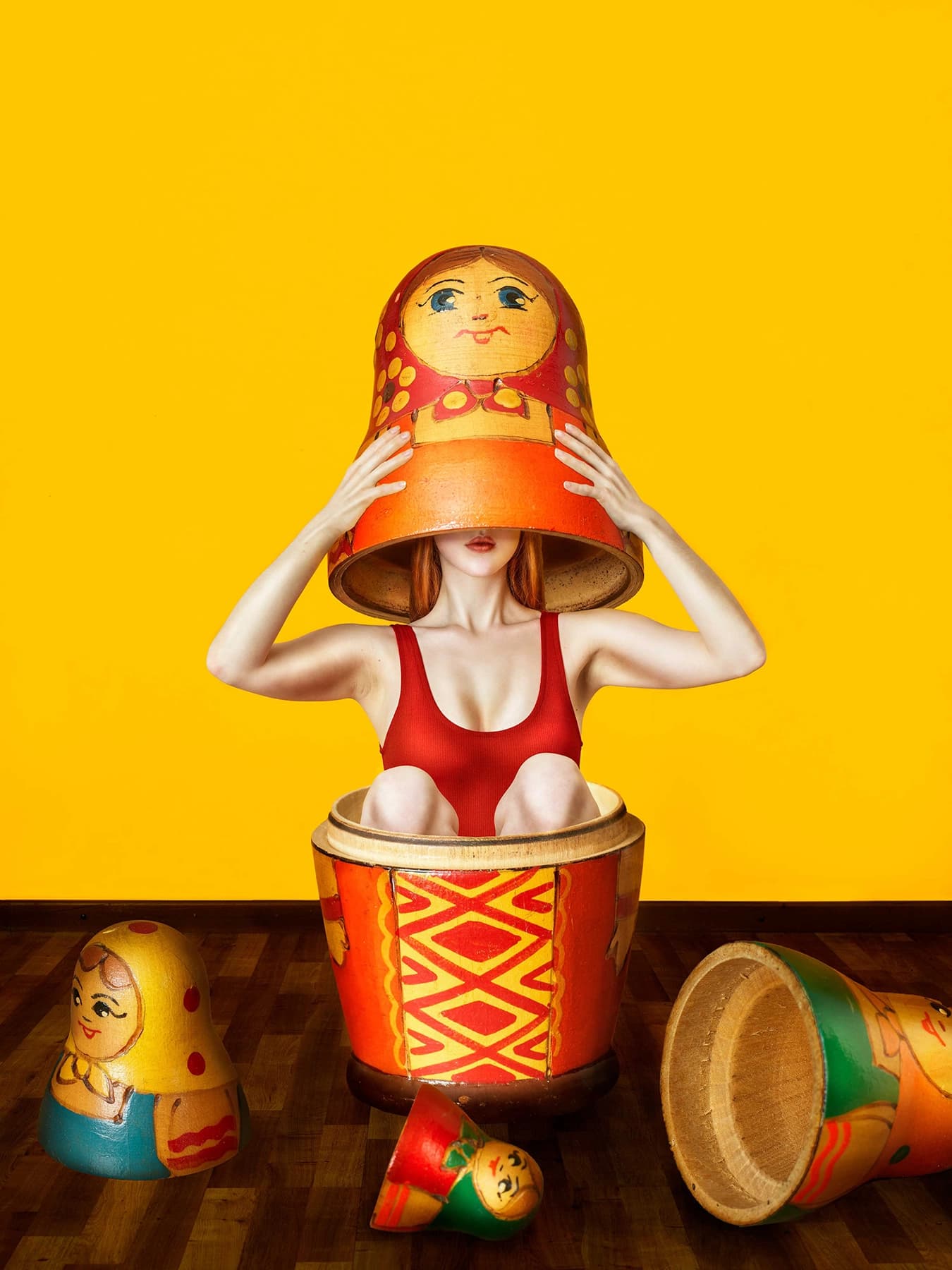
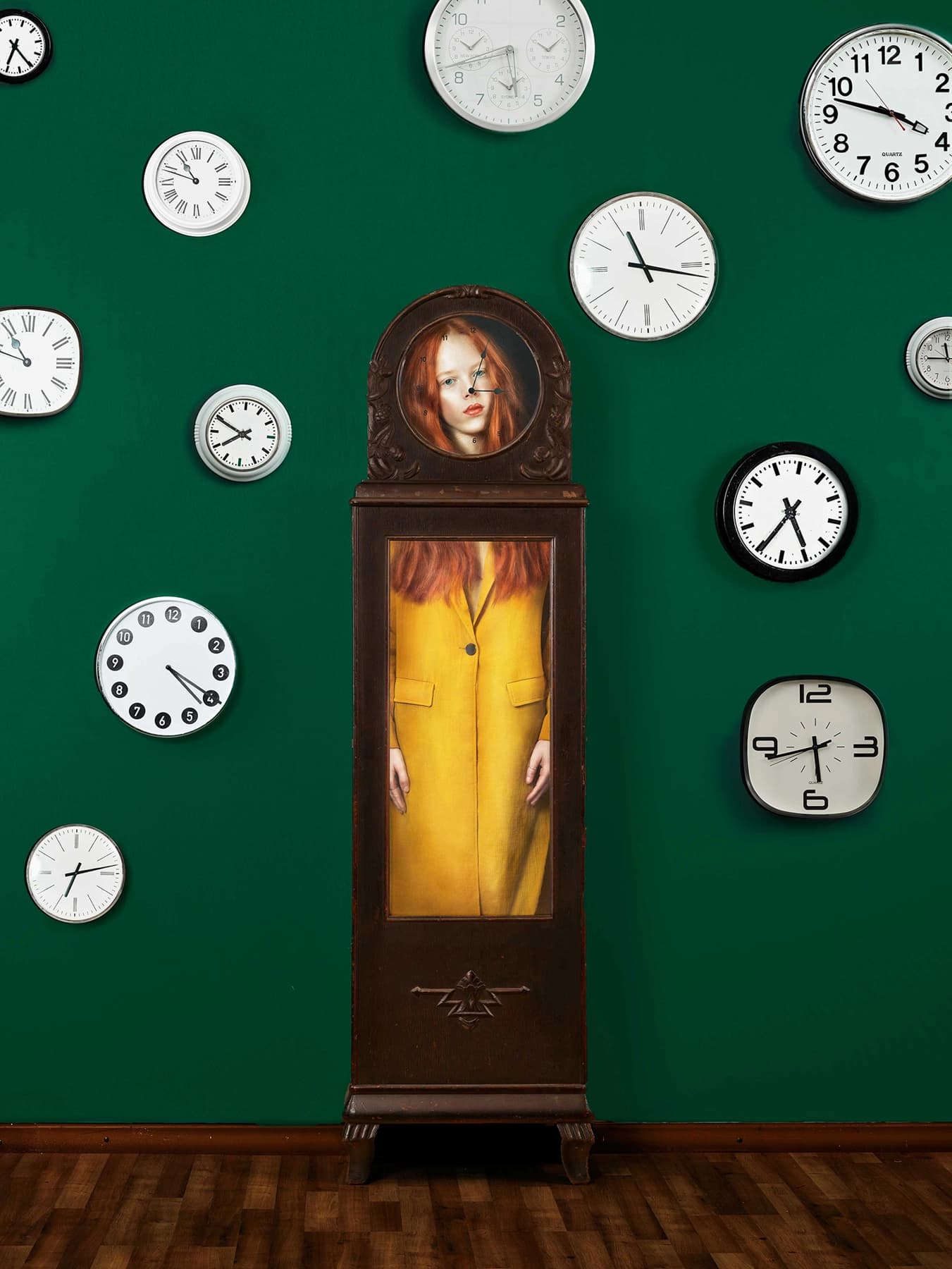
Amelie Satzger’s photographs occupy a strange space between the familiar and the impossible. Bright colours, carefully arranged objects and surreal transformations turn ordinary settings into dreamlike scenes, while the artist herself often appears at the centre of them. The result feels playful at first glance, yet many of the images begin with something deeply personal.

Based in Australia after years of moving between countries, Satzger has built a visual language around this tension. Her retouched photographs combine photography and Photoshop to construct worlds that could never quite exist in front of a camera. Mirrors, fruit, geometric spaces, doppelgangers and unexpected objects become pieces of a visual vocabulary that allows her to explore experiences that are difficult to express with words.
The Self as a Starting Point

For Satzger, self-portraiture is not simply a way of placing herself inside her photographs. It grew from a period of uncertainty after high school, when friendships were changing and the direction of her life felt unclear. Making images became a way to process what she was experiencing. Over time, that personal practice developed into one of the defining characteristics of her work.

Her images still begin with real experiences, feelings and questions. However, Satzger rarely translates those experiences literally. Instead, she turns them into visual metaphors. A familiar emotion can become a surreal scene, allowing viewers to approach something personal from a different angle. In that sense, her photographs remain intimate without being closed off. She hopes that people might recognize something of themselves in them, and perhaps feel a little less alone.

Amelie Satzger. Dimensions
Amelie Satzger". Time Dilation
Twenty Four Days of Creativity

Satzger discovered another side of her creative process during a 24-day challenge in which she created a new image every day. The project began during her year as an Adobe Creative Resident, when she had almost complete freedom to pursue her own ideas. That freedom eventually became difficult to navigate. Without restrictions, she found herself overthinking her work and becoming too attached to perfection.

The challenge changed that relationship with creativity. Instead of planning elaborate productions, she started with whatever happened to be around her. Objects in her studio could become inspiration, while her own image could be photographed and combined with other elements in Photoshop. The limited time also meant there was no opportunity to endlessly refine every detail. For Satzger, that became an important lesson: creativity can benefit from constraints, and an image does not have to be perfect to be successful.

A Studio Without Borders

Travel has become another important part of Satzger’s life. She has lived in more than a dozen countries and has called places including Italy, South Africa and Spain home. Now based in Australia, she approaches each new environment less as a fixed source of inspiration and more as a collection of possibilities and limitations. Safety, location restrictions and the cost of materials have all created obstacles at different points. At the same time, those obstacles can force new creative solutions.

Her nomadic lifestyle is therefore carefully balanced. Long-term client collaborations, personal projects, educational content and licensing provide different sources of income, allowing her to work from different parts of the world. Yet constantly moving also means rebuilding her surroundings from scratch. Everything she owns can fit into one suitcase, so she tends to stay in one place for several months. A good workspace, a creative community and reliable internet can matter just as much as the landscape outside.

Amelie Satzger. The Bond
Amelie Satzger. From the series "Tunes of Mundane
Keeping the Human in the Picture

Satzger is also creating at a time when photography is being reshaped by artificial intelligence. She understands the uncertainty surrounding AI-generated imagery, but she sees an opportunity in the growing importance of the human presence behind an artwork. Process, effort and personal perspective can become increasingly meaningful when images themselves can be produced almost endlessly.

For Satzger, that human element cannot simply be generated on demand. AI may create an image, but it cannot reproduce an artist’s lived experiences, intuition or individual voice. Perhaps that is also what makes her self-portraits so compelling. They are not only carefully constructed visual fantasies. They are records of an artist using photography to understand herself, her surroundings and the strange space between the life she experiences and the worlds she imagines.

Her approach has already taken her work to exhibitions including Fotofever in Paris, United Photo Industries Gallery in New York and Galerie Courcelles Art Contemporain in Paris. Yet social media remains an important part of that exhibition space too. Satzger began showing her work on Instagram during her photographic design studies and continues to share both finished images and the process behind them. For an artist who once struggled with too much freedom, that openness feels fitting: the work keeps moving, changing and finding new ways to turn an inner world into something others can see.

Scroll