Ryn Clarke Turns Nature Into Fantastical Worlds
Zoë Marin
Written by Zoë Marin in Beyond the Frame Art & Design Creative Photography

Ryn Clarke Turns Nature Into Fantastical Worlds

A walk through the woods can be many things. For Ryn Clarke, it became the beginning of an entirely new visual language. During the pandemic lockdown, as spring arrived in Ohio and everyday life narrowed to long walks around her neighborhood and nearby woods, Clarke began paying closer attention to the world around her. Trees were leafing out, flowers were blooming, and landscapes she had passed countless times suddenly seemed filled with possibilities.

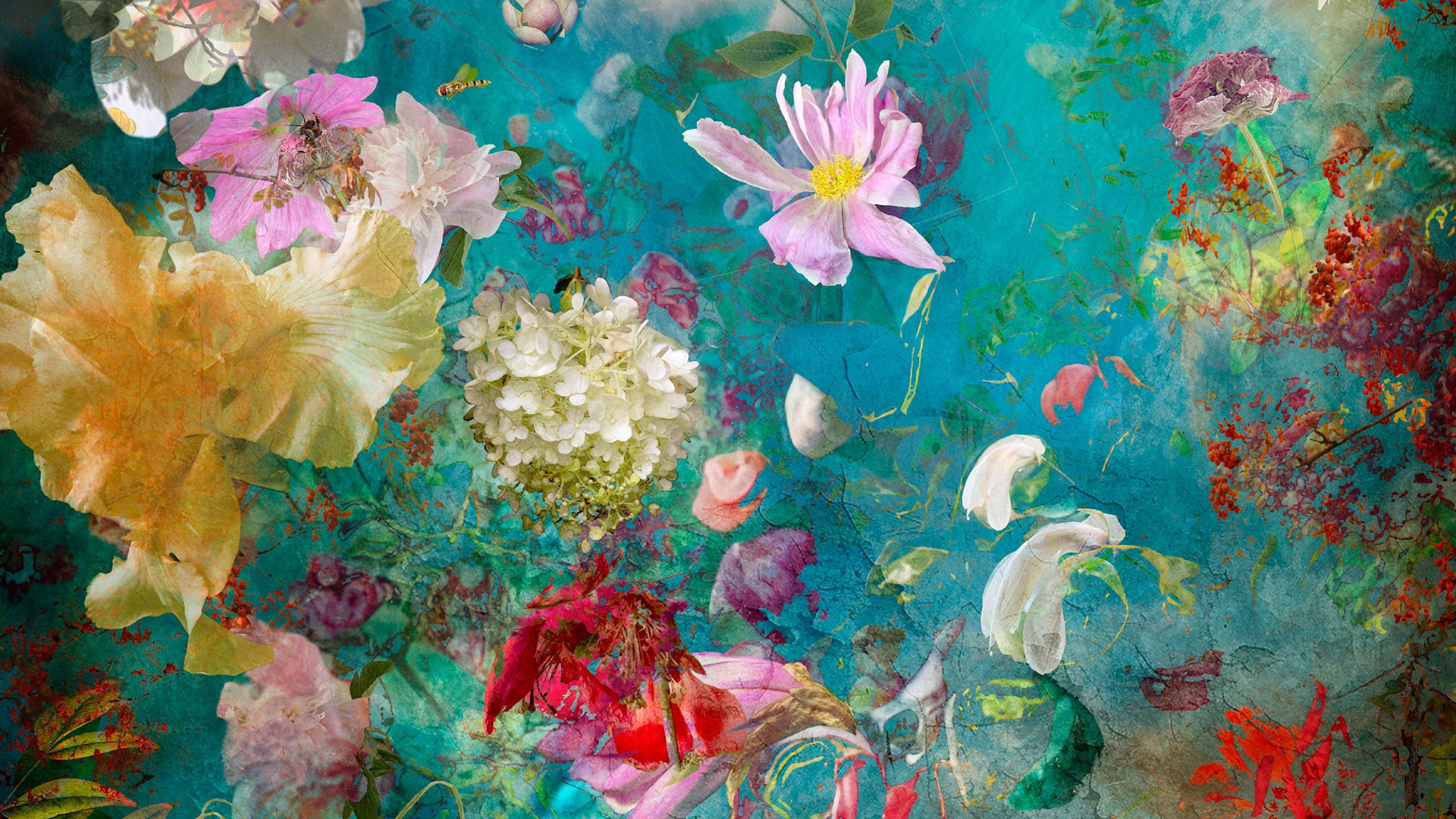
From these observations emerged her Fantastical Botanicals, an ongoing series of elaborate photographic composites that blend flowers, landscapes, insects, birds, and other fragments of the natural world into dreamlike scenes. Rather than simply documenting what she sees, Clarke deconstructs nature and reconstructs it according to her imagination, creating images that invite viewers to look longer and discover stories hidden among the details.
From Photography to Possibility

Photography has been part of Clarke’s life for as long as she can remember. Her grandfather and father were both enthusiastic photographers, each with his own wet darkroom. She recalls watching her father develop black-and-white family photographs before hand-coloring them with thinned oil paint, an early introduction to the idea that a photograph could become something more than a straightforward record of reality.

Her own creative path initially moved through graphic design, commercial photography, and traditional landscape and macro photography. Along the way, workshops introduced her to hand-coloring, gold and silver leaf, hand-stitching, encaustic, and other techniques. Clarke became increasingly interested in combining different processes, searching for the one that would truly ignite her imagination.

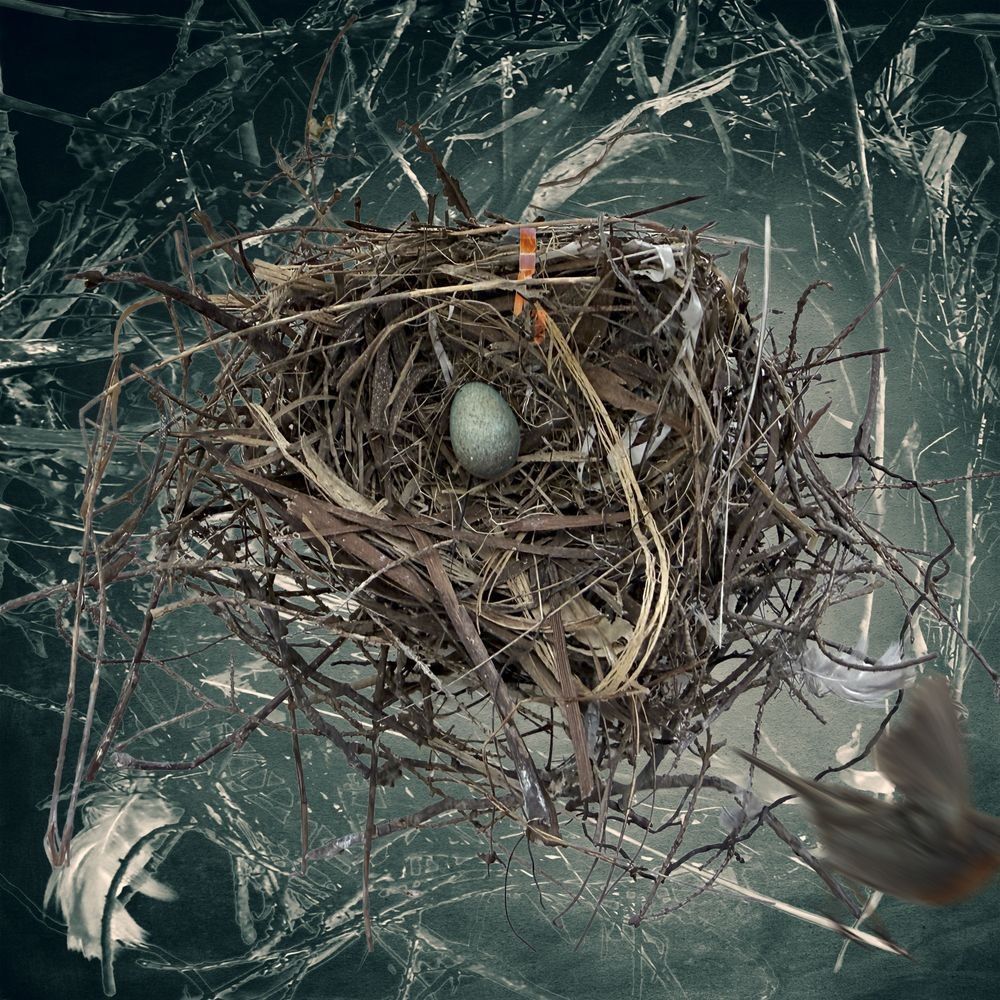
Ryn Clarke. Robin's Egg in Nest #1
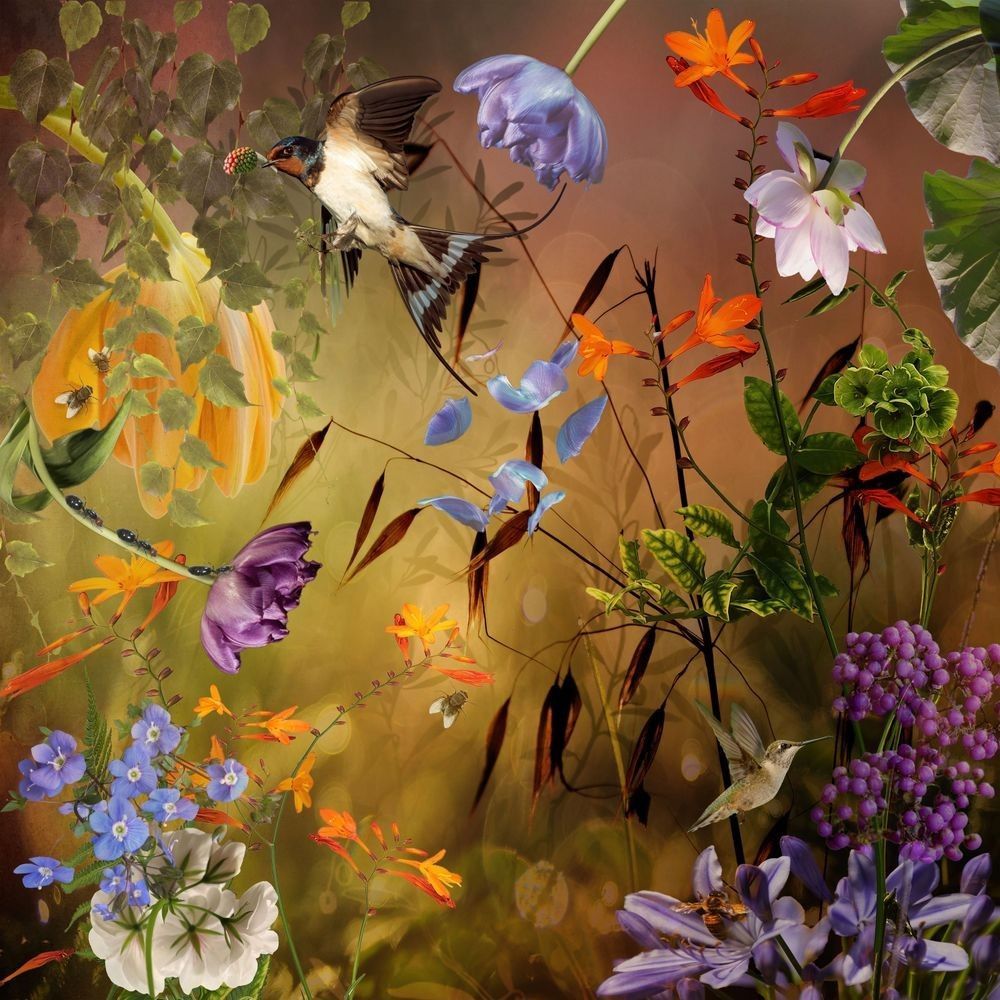
Ryn Clarke. 2 Humminbirds
The Birth of Fantastical Botanicals

Flowers eventually provided the key. After years as a member of the Garden Club of America, Clarke had developed a particular affection for botanical subjects. Nearly a decade ago, she began creating composite floral photographs as gifts, including a project in which she photographed the individual elements of a friend’s bridal bouquet and digitally reconstructed them into a new image.

The idea took on a much larger life during the pandemic. With travel suspended and long walks becoming one of the few available escapes, Clarke began photographing the changing landscape around her. She then combined those new photographs with images from her extensive archive, bringing flowers and other botanical details into scenic landscapes. What began as an experiment became her Fantastical Botanicals, with each seasonal change providing the beginning of another visual story.

When Scale Stops Behaving

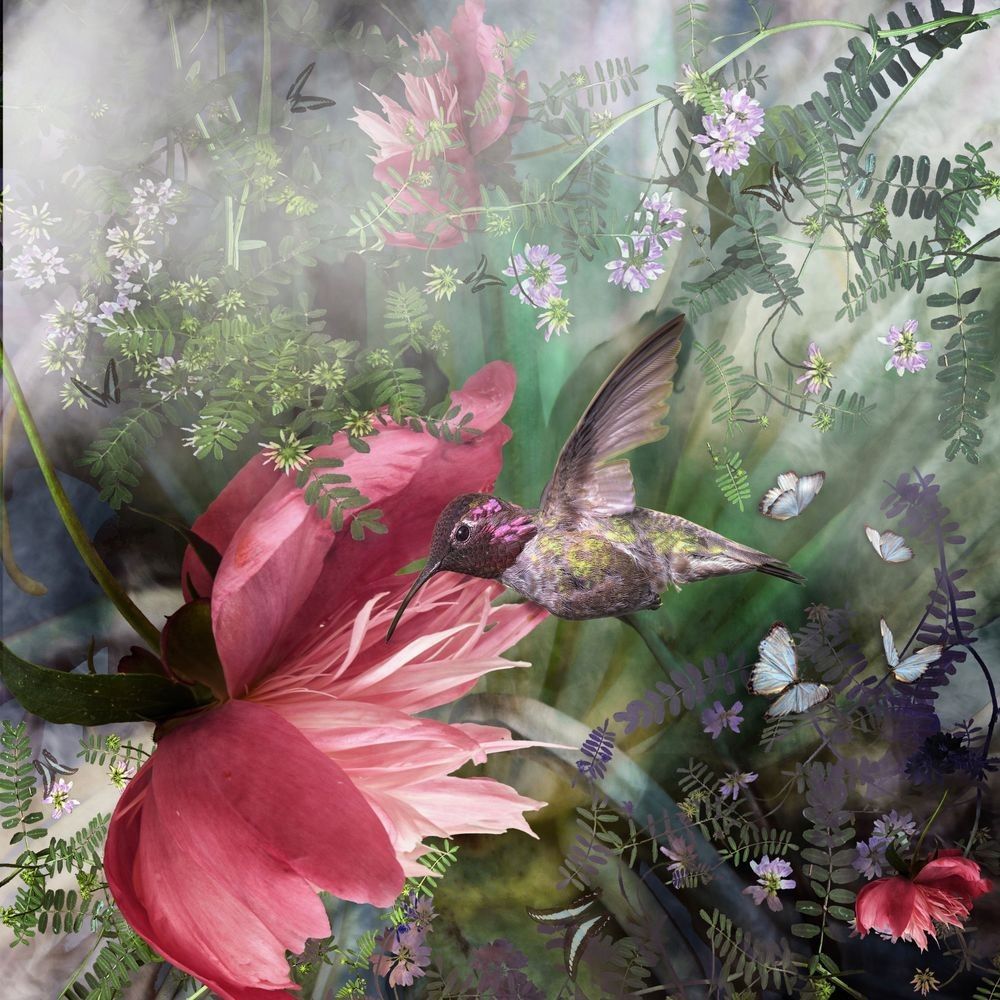
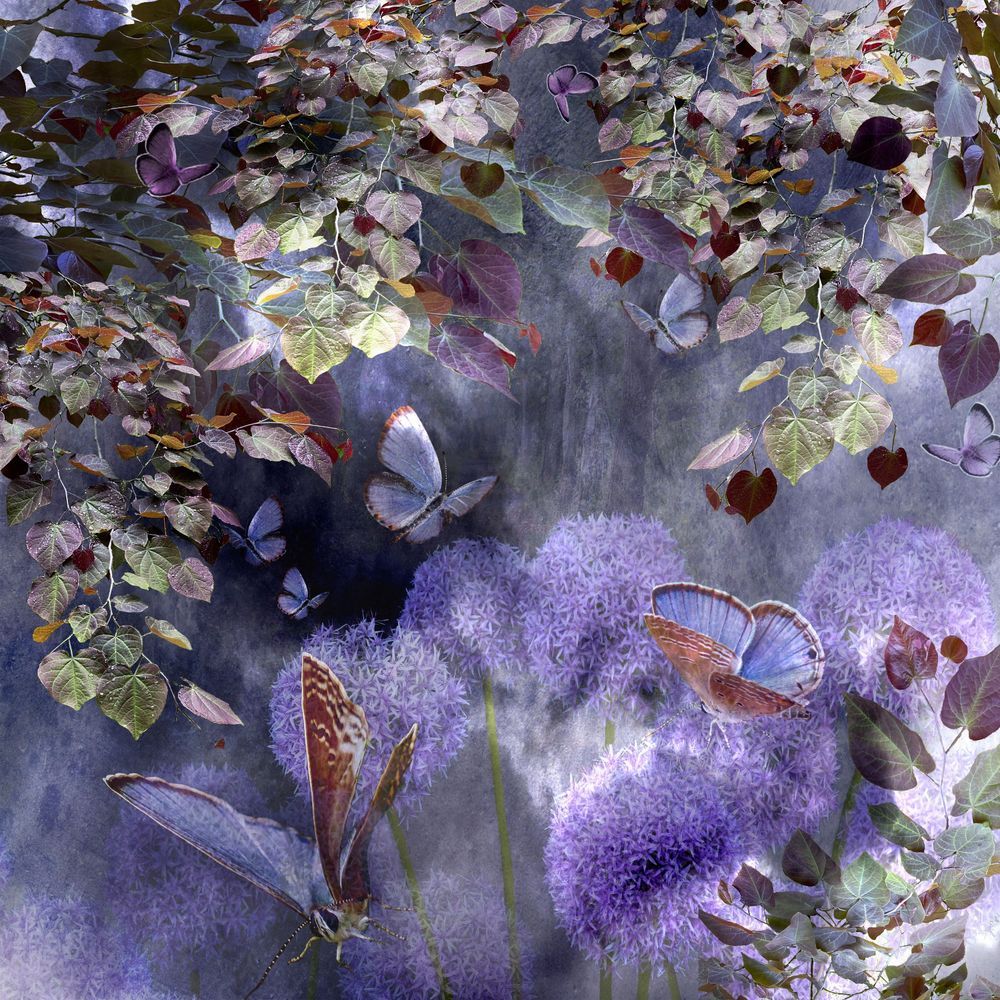
Clarke’s composites are convincing precisely because they don’t behave like ordinary photographs. Flowers can become monumental, butterflies can appear unexpectedly large, and distant elements can be reduced to almost miniature details. By manipulating scale, focus, depth, and perspective, she creates environments that feel recognizable yet subtly impossible, encouraging us to experience familiar pieces of nature from an entirely different point of view.

That transformation is part of what gives Clarke’s work its sense of wonder. Each element begins as something real that she has encountered and photographed, but once separated from its original context, it becomes part of a new visual narrative. The result sits somewhere between photography and collage, allowing the ordinary to become fantastical without completely losing its connection to the natural world.

Ryn Clarke. Peony And Humminbird
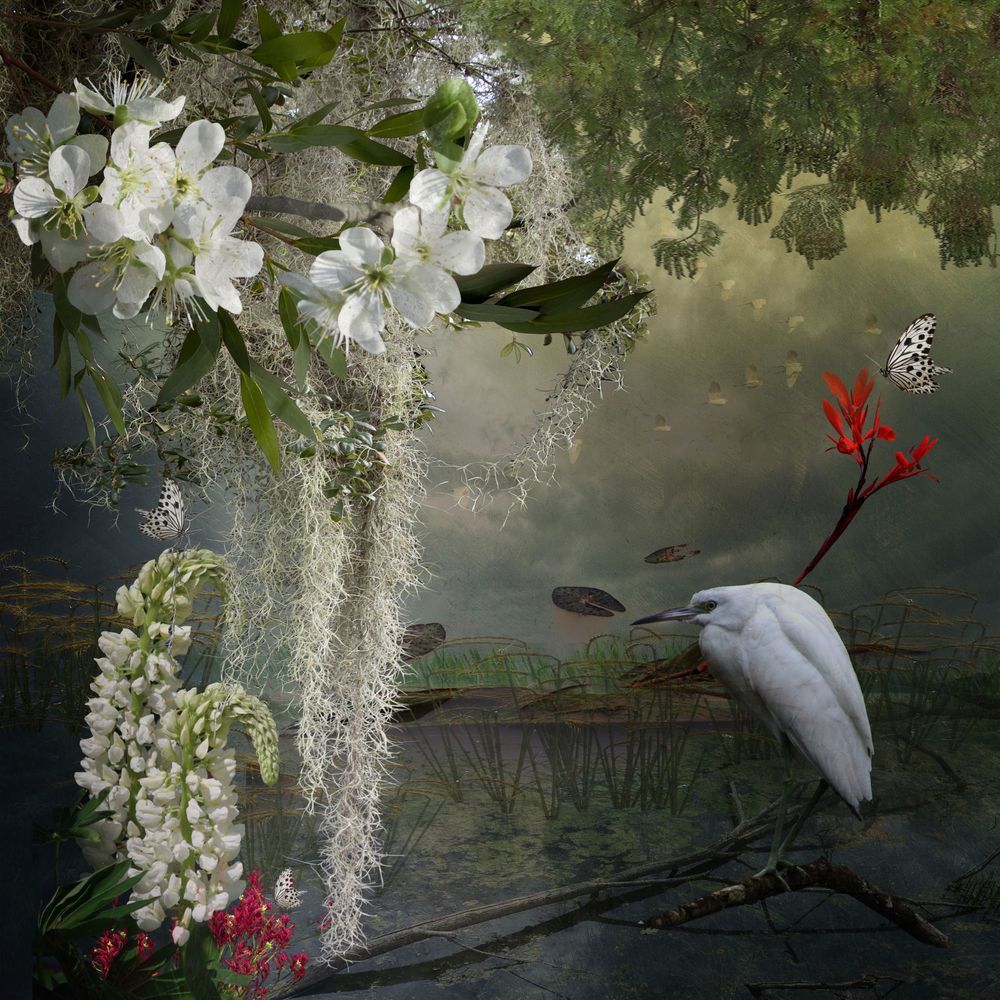
Ryn Clarke. Baby White Egret
Finding Stories in the Details

This sense of discovery is central to Clarke’s work. In Baby White Egret, a misty landscape inspired by the Cuyahoga River Valley becomes a stage for an egret, flowers, butterflies, and hanging moss. The restrained white and gray palette gives the scene an atmospheric quality, while flashes of red flowers create visual accents that guide the eye through the composition.

The image also reveals Clarke’s willingness to alter reality in service of the story. Elements can be resized, relocated, or introduced from somewhere else entirely. The hanging moss, for example, isn’t native to the region. Yet its presence feels natural within the finished image. Clarke isn’t trying to convince us that these scenes exist exactly as shown. Instead, she asks us to accept their internal logic and explore what might be hiding inside them.

Clarke describes herself as a visual artist, photographer, and educator, and her curiosity extends beyond composite photography. She embraces both digital SLR cameras and the iPhone, leads mobile photography workshops, and continues to experiment with processes such as photopolymer gravure, encaustic, and hand-colored photographic prints. She has also begun exploring AI, primarily as a research tool within her Medusa series, where she is considering the possibilities of combining flowers with the tragic stories of women from Greek mythology.

Yet technology is ultimately secondary to the way Clarke sees. Her hope is to draw viewers into mysterious lighting and emotional atmospheres, allowing them to notice nuances and discover their own interpretations. That may be the most enchanting quality of her work: the photographs don’t simply show us nature. They give us permission to enter it, wander around, and invent a story of our own.

Ryn Clarke. Miami Blue Butterflies
Scroll