Afrobeat Meets Magical Realism
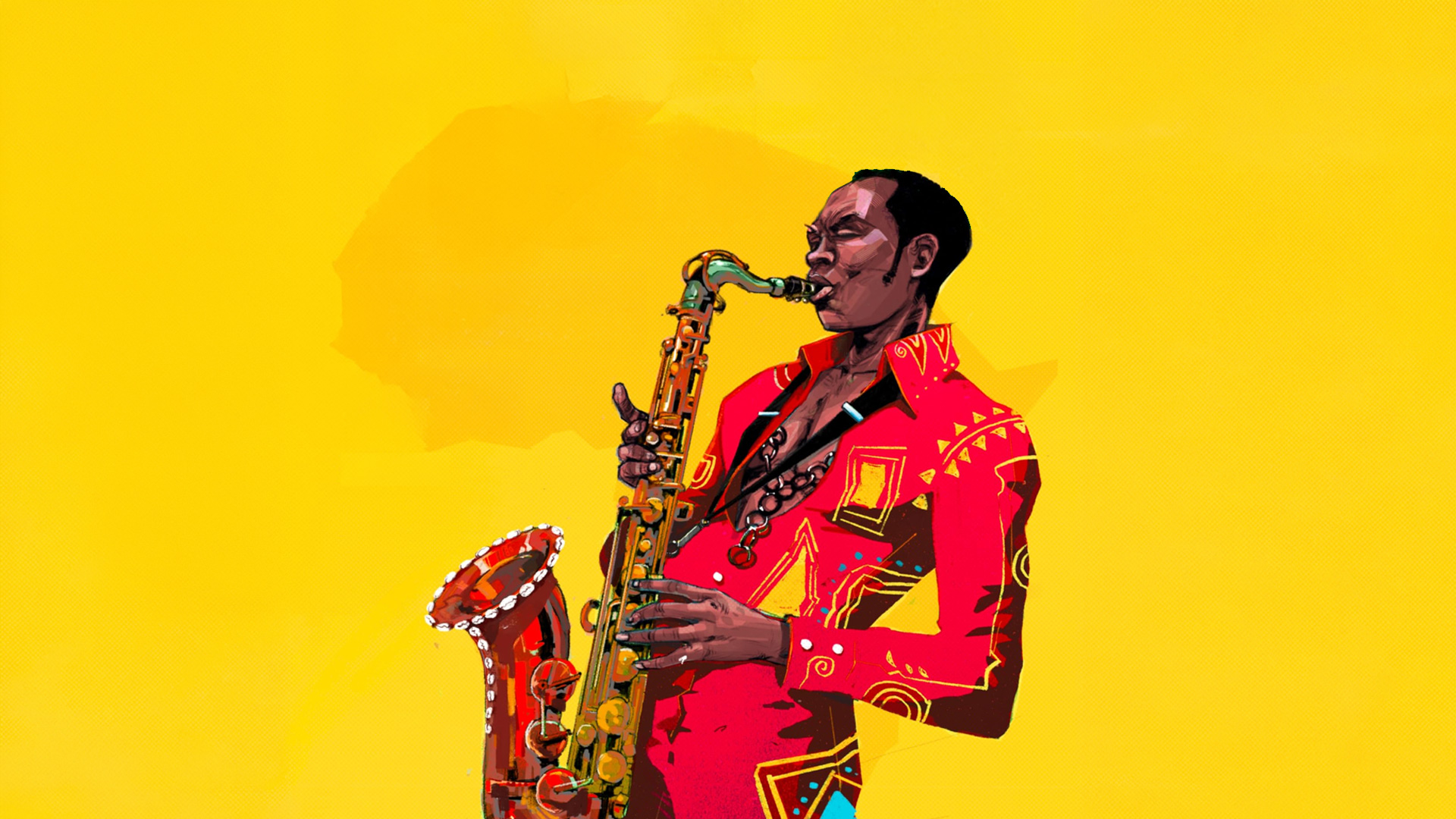
Fagbamiye and McCreery could have approached Kuti’s life as a conventional music biography. Instead, they embrace the surreal. Dream sequences, spiritual visions, Afro-futurist imagery, and elements of Yoruba mythology weave through the historical narrative, creating a world that feels as unconventional as its subject.
The artwork plays an equally important role. Fagbamiye combines digital illustration, traditional painting, graphic design, and influences from African history and propaganda art. His color palette evolves with Kuti’s story, while expansive panels capture the movement and energy of performances that might otherwise be difficult to translate into static images.
A Life of Resistance
The book’s pivotal moments include the brutal 1977 attack on Kalakuta Republic, when Nigerian soldiers invaded the commune, beat Kuti and his collaborators, burned his studio, and threw his mother from a second-floor window. Her death would later inspire one of Kuti’s most powerful songs.
Yet Fela: Music Is the Weapon is not simply a story of suffering. It is also about cultural identity, Pan-Africanism, artistic freedom, and the refusal to accept oppression as inevitable. By placing Kuti’s contradictions alongside his convictions, McCreery and Fagbamiye create a portrait that feels human rather than mythological.
Decades after Kuti’s death, his music and message continue to resonate. This graphic biography understands why. Sometimes art does more than reflect the world around us. Sometimes it pushes back.