Volker Hermes Reveals What Portraits Conceal
Elliott Brooks
Written by Elliott Brooks in Dimensions Art & Design Creative

Volker Hermes Reveals What Portraits Conceal

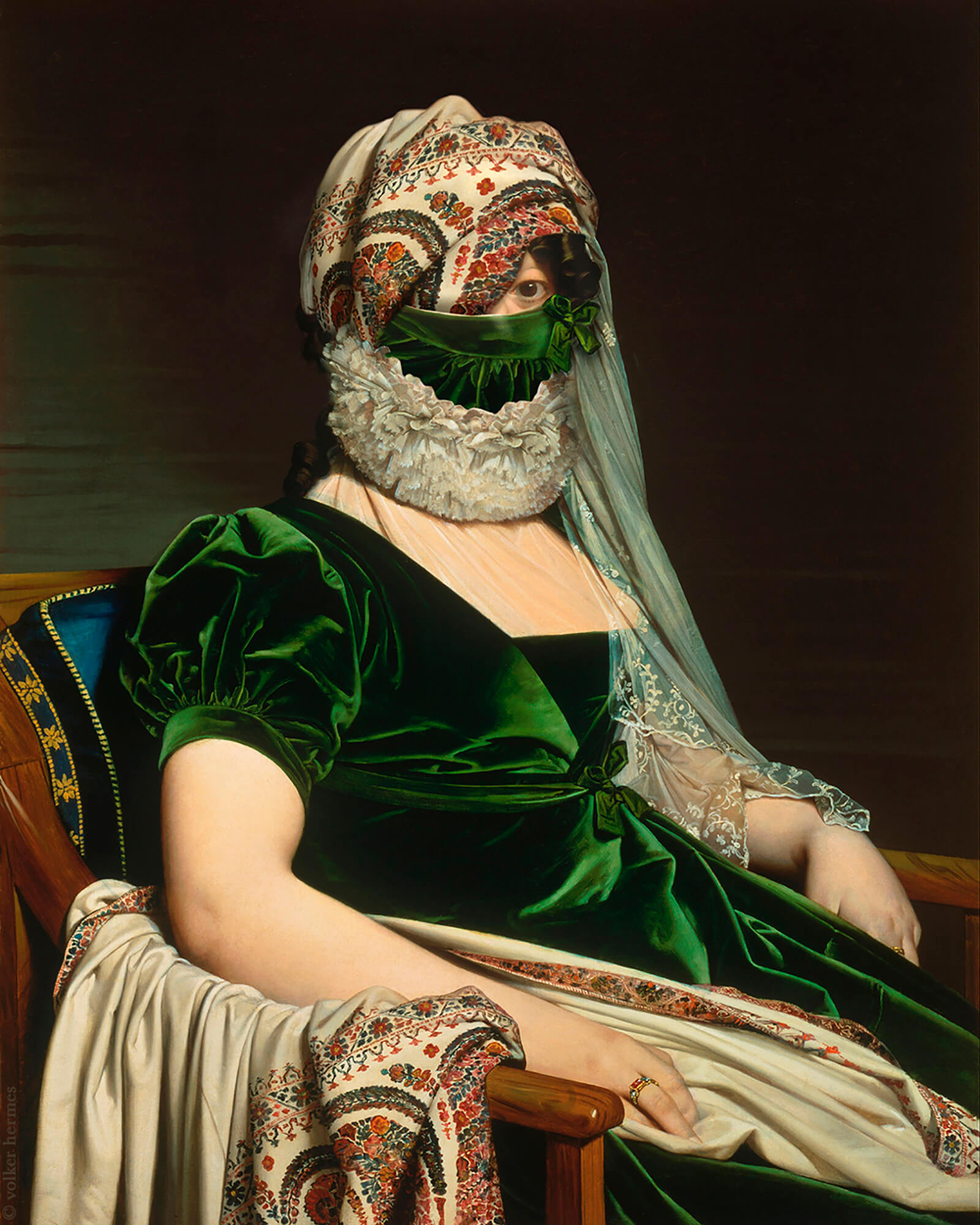
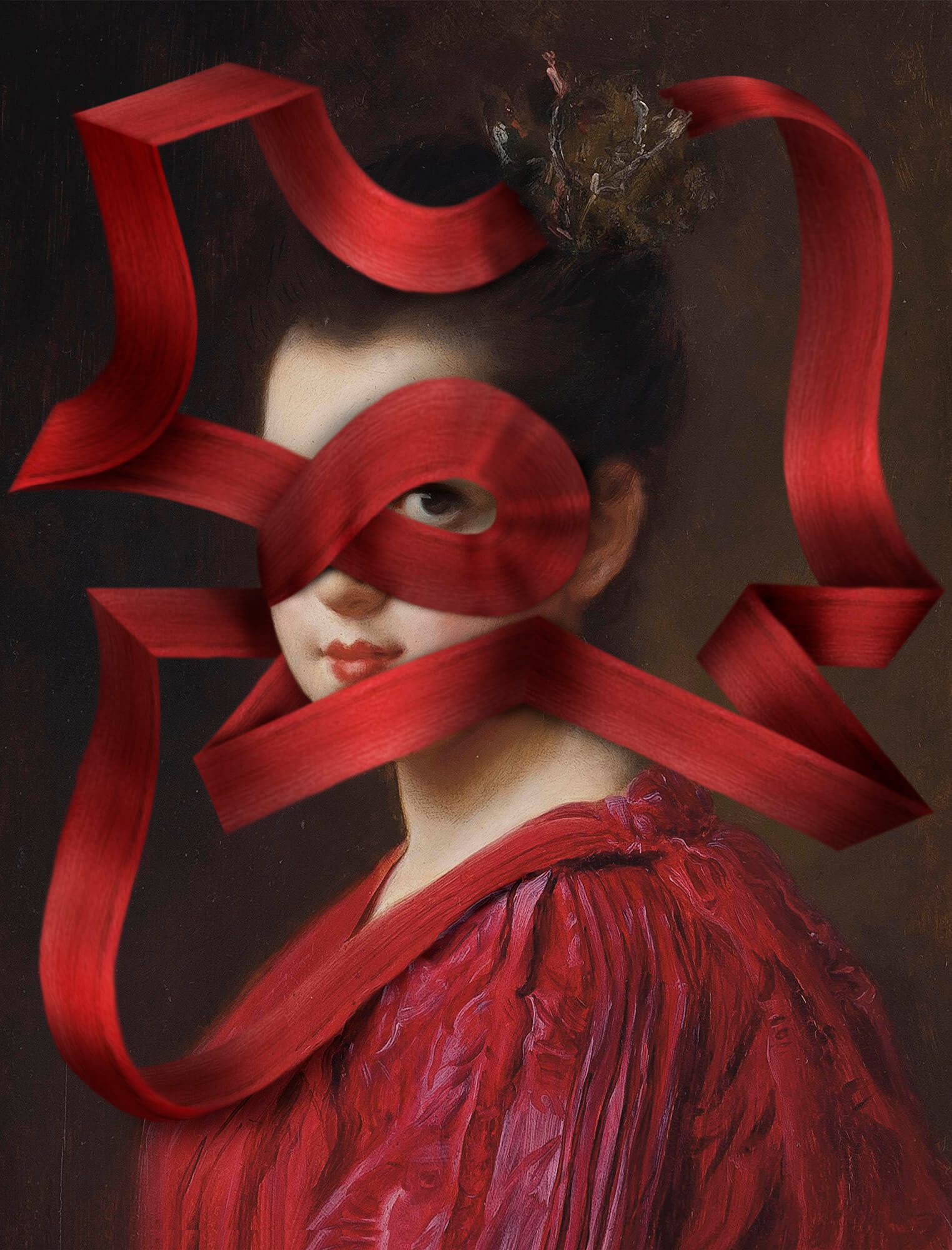
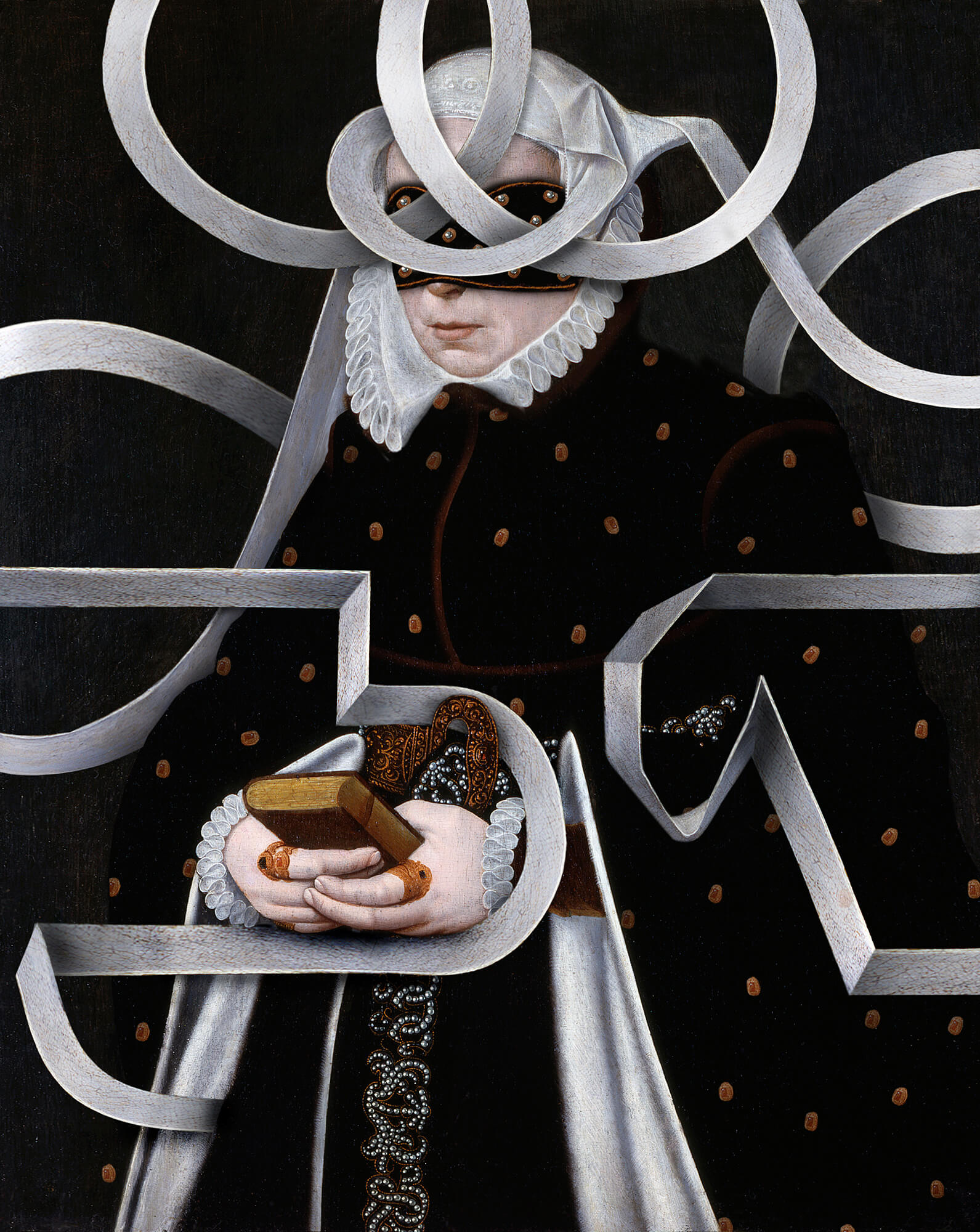
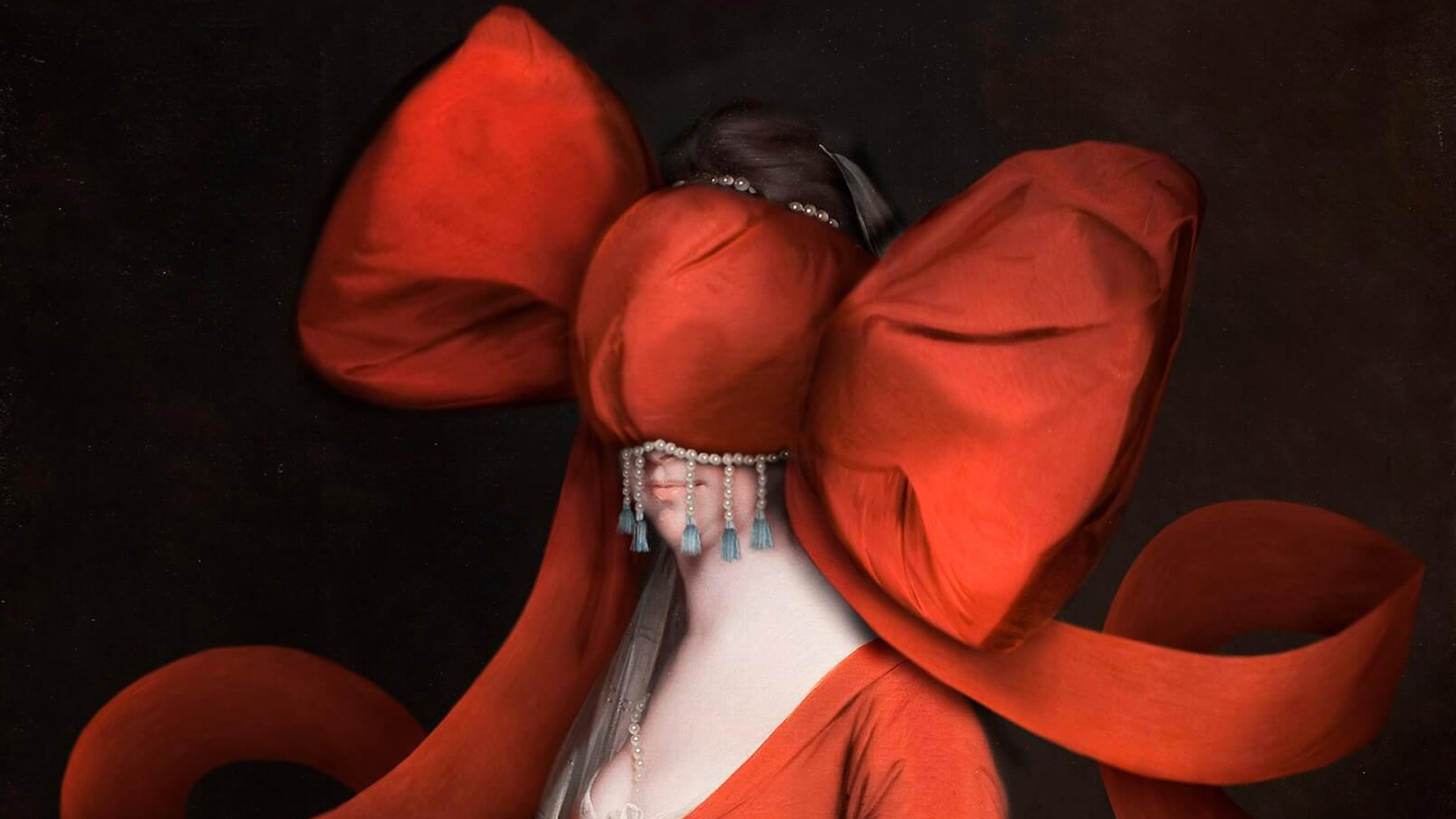
At first glance, the portraits of the Old Masters seem familiar. Then ribbons twist across a face, elaborate collars expand into impossible sculptures, and embroidered fabrics bloom into theatrical masks. With a few carefully considered additions, German artist Volker Hermes transforms centuries-old paintings into entirely new conversations about identity, status, and the art of portraiture.

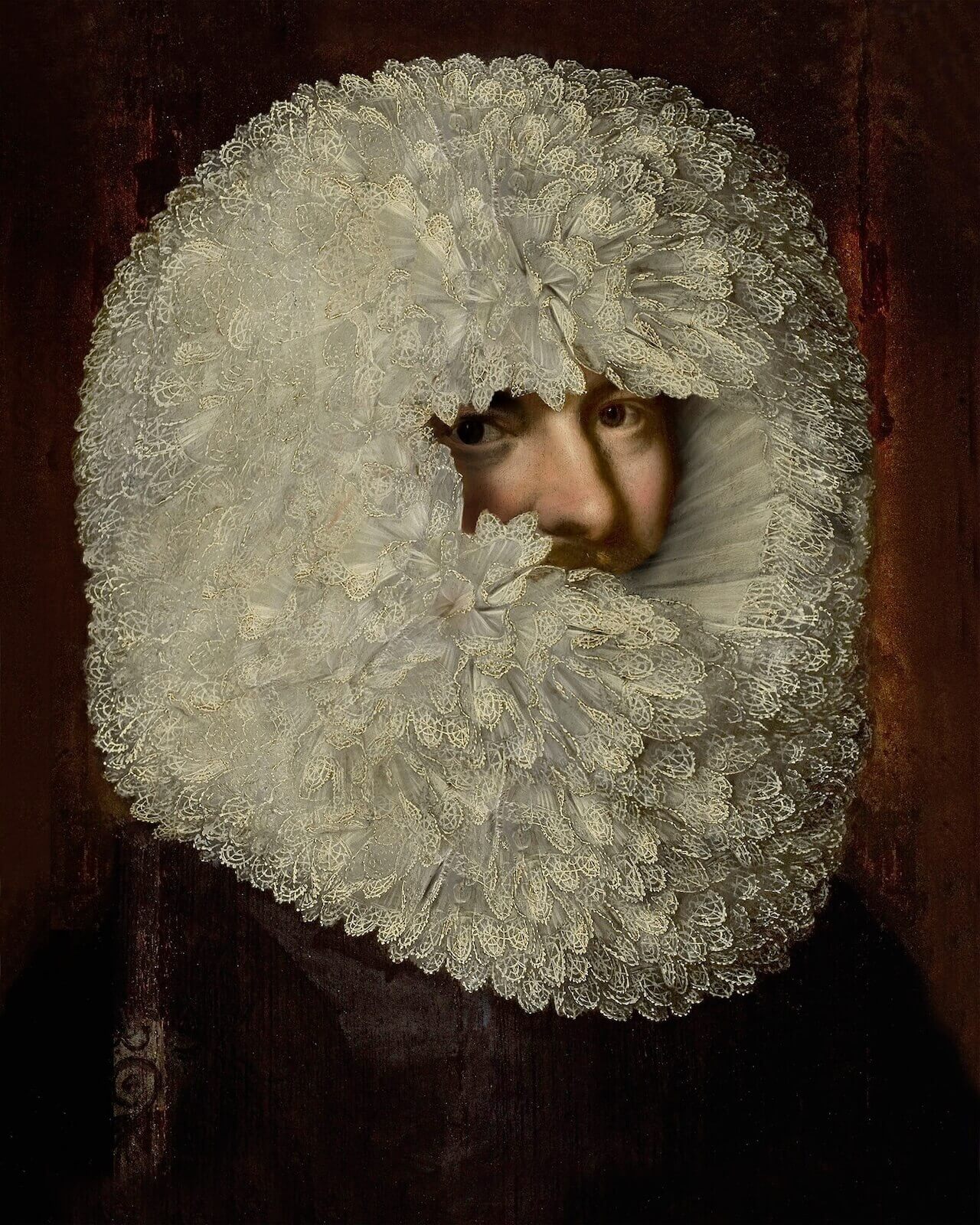
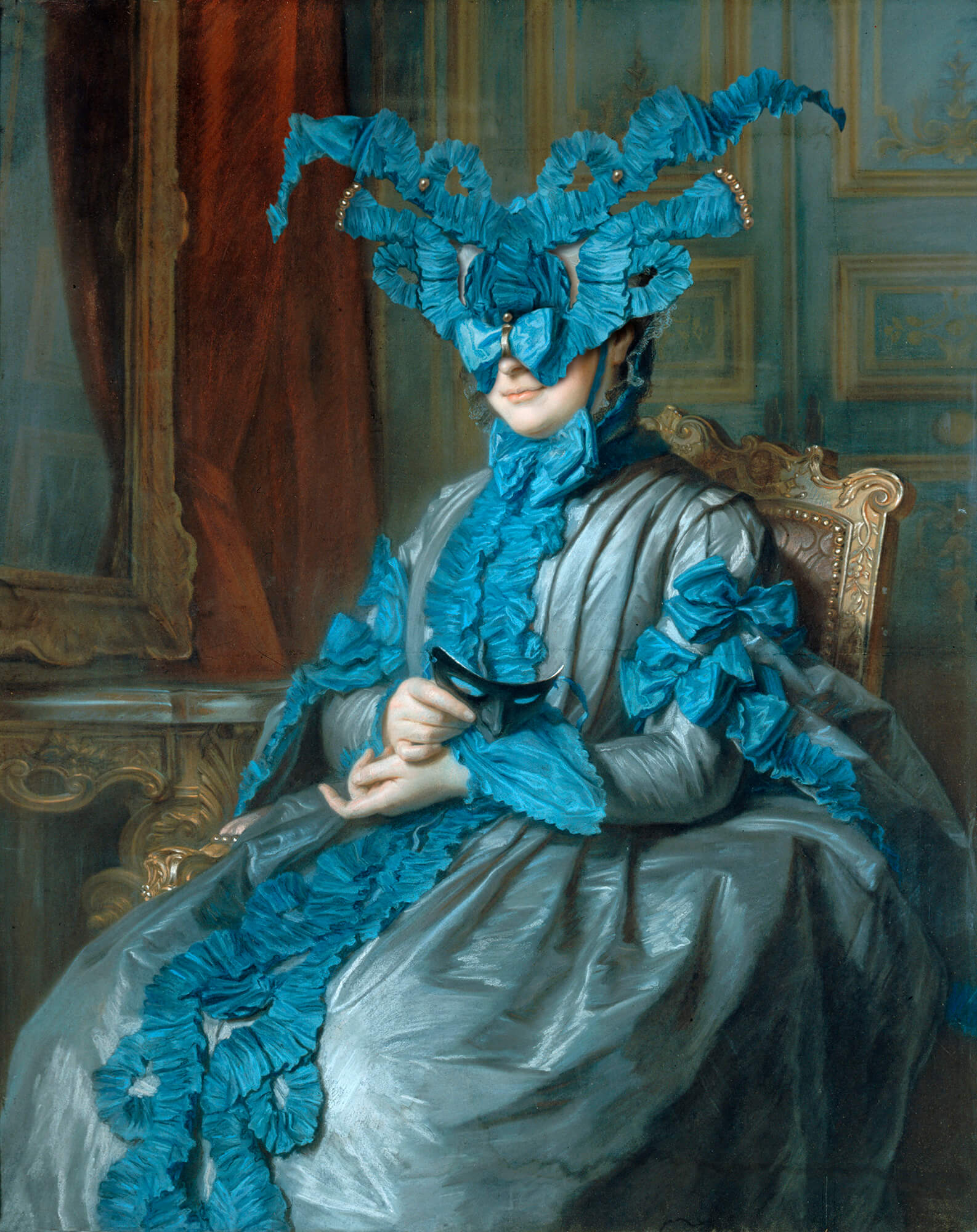
Best known for his ongoing Hidden Portraits series, Hermes digitally reimagines historical paintings without altering their essential character. Instead of replacing the original works, he builds upon details that were already there, extending hats, veils, lace, jewelry, and textiles until they partially or completely obscure the sitter’s face. The result is playful, surprising, and remarkably thought-provoking.
Looking Beyond the Face

Portraits have traditionally been understood as windows into a person’s identity. Hermes challenges that assumption by asking a deceptively simple question: does a portrait really need a visible face? Once the features disappear, viewers instinctively begin searching elsewhere for clues about the sitter.

Attention shifts toward clothing, posture, gesture, and ornamentation. Elements that once served as supporting details suddenly become the main subject, revealing how power, wealth, fashion, and social position have always shaped the language of portraiture. In many ways, Hermes encourages us to see these familiar masterpieces as if for the very first time.

Volker Hermes. Hidden van Miereveld IV
Volker Hermes. Hidden de la Tour VIII
A Conversation Across Centuries

Although the series feels distinctly contemporary, Hermes approaches the Old Masters with genuine admiration rather than irony. His interventions are carefully researched and always rooted in the original compositions. Every extravagant flourish grows from materials, fabrics, or decorative motifs already present in the historical painting.

That respect for the source material allows the works to function as conversations across time instead of revisions. Renaissance, Baroque, and Rococo portraiture become living traditions that continue to inspire new interpretations, proving that great works of art are never truly finished but remain open to fresh ways of seeing.

Humour Meets Art History

One of the reasons Hidden Portraits has resonated with audiences around the world is its balance of scholarship and humour. Hermes’ images often provoke an immediate smile, but they also reward closer attention. Behind their playful appearance lies a sophisticated understanding of historical costume, symbolism, and visual culture.

The artist has described his process as an exploration of perception itself. By interrupting our expectations of portraiture, he encourages viewers to question the habits they bring to looking at art. What information do we rely on first? What do we overlook? And how much of identity is constructed through appearance rather than personality?

Volker Hermes. Hidden Ingres
Volker Hermes. Hidden Jacquet
Building a New Visual Language

Working digitally has allowed Hermes to develop an artistic language that feels entirely his own. While rooted in centuries-old paintings, his interventions belong unmistakably to the present, demonstrating how digital tools can engage with art history in thoughtful rather than purely technological ways.

His work also reflects the visual culture of our own time. In an era shaped by social media, fashion, avatars, and carefully curated identities, the extravagant coverings of Hidden Portraits feel unexpectedly relevant. They remind us that people have always communicated through appearance, even if the forms of self-presentation continue to evolve.

Perhaps the greatest achievement of Volker Hermes’ work is that it changes how we experience paintings we thought we already knew. Rather than competing with the Old Masters, his interventions invite us to return to them with renewed curiosity and sharper attention.

By concealing faces, Hermes ultimately reveals something more enduring about portraiture itself. Identity has never existed solely in facial features. It lives equally in gesture, clothing, craftsmanship, symbolism, and the countless visual choices that artists have used for centuries to tell the stories of the people before them.

Volker Hermes. Hidden Bruyn the Younger II
Scroll