Matthew Simmonds Reveals Hidden Worlds in Stone
Elliott Brooks
Written by Elliott Brooks in Dimensions Art & Design Creative

Matthew Simmonds Reveals Hidden Worlds in Stone

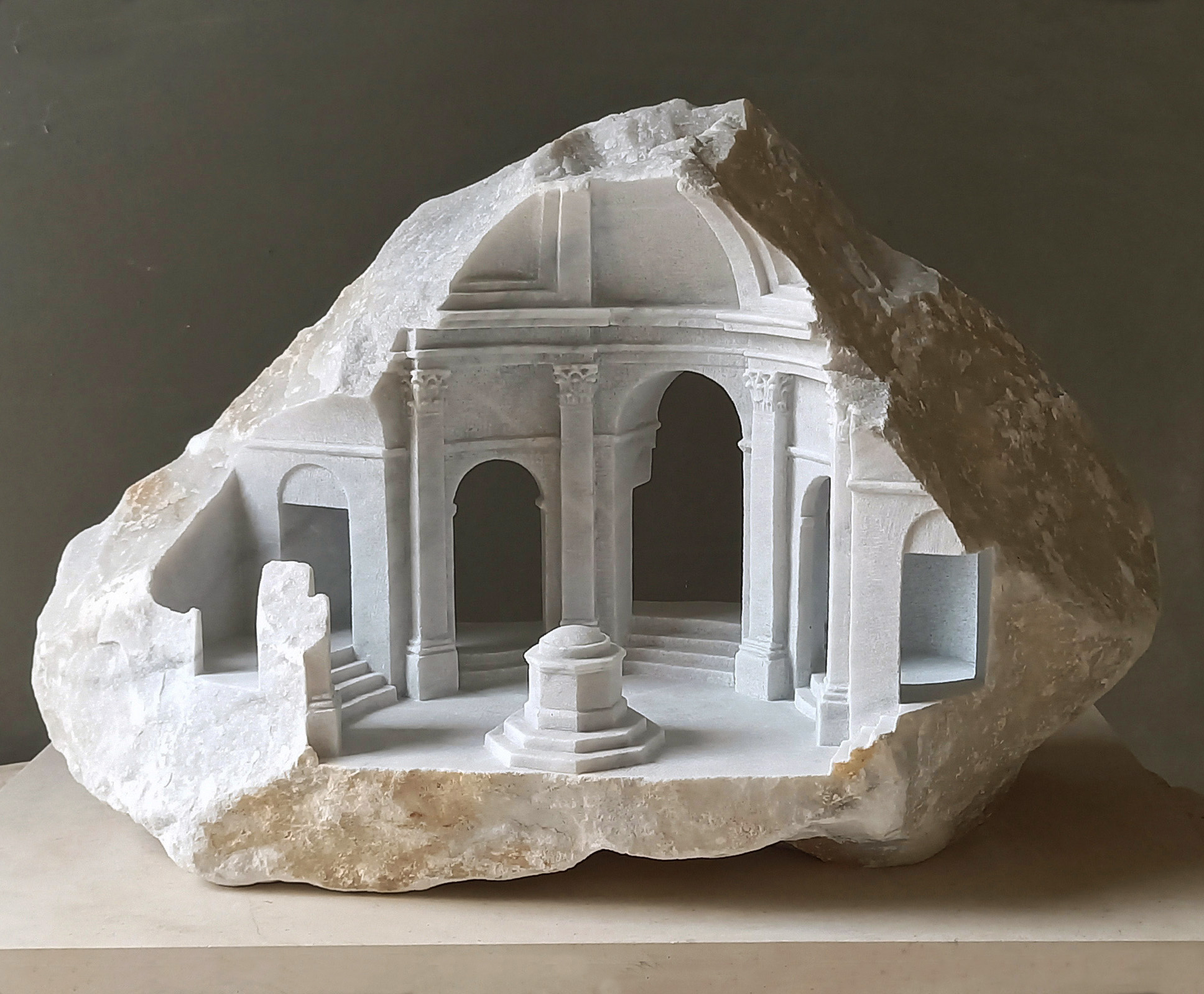
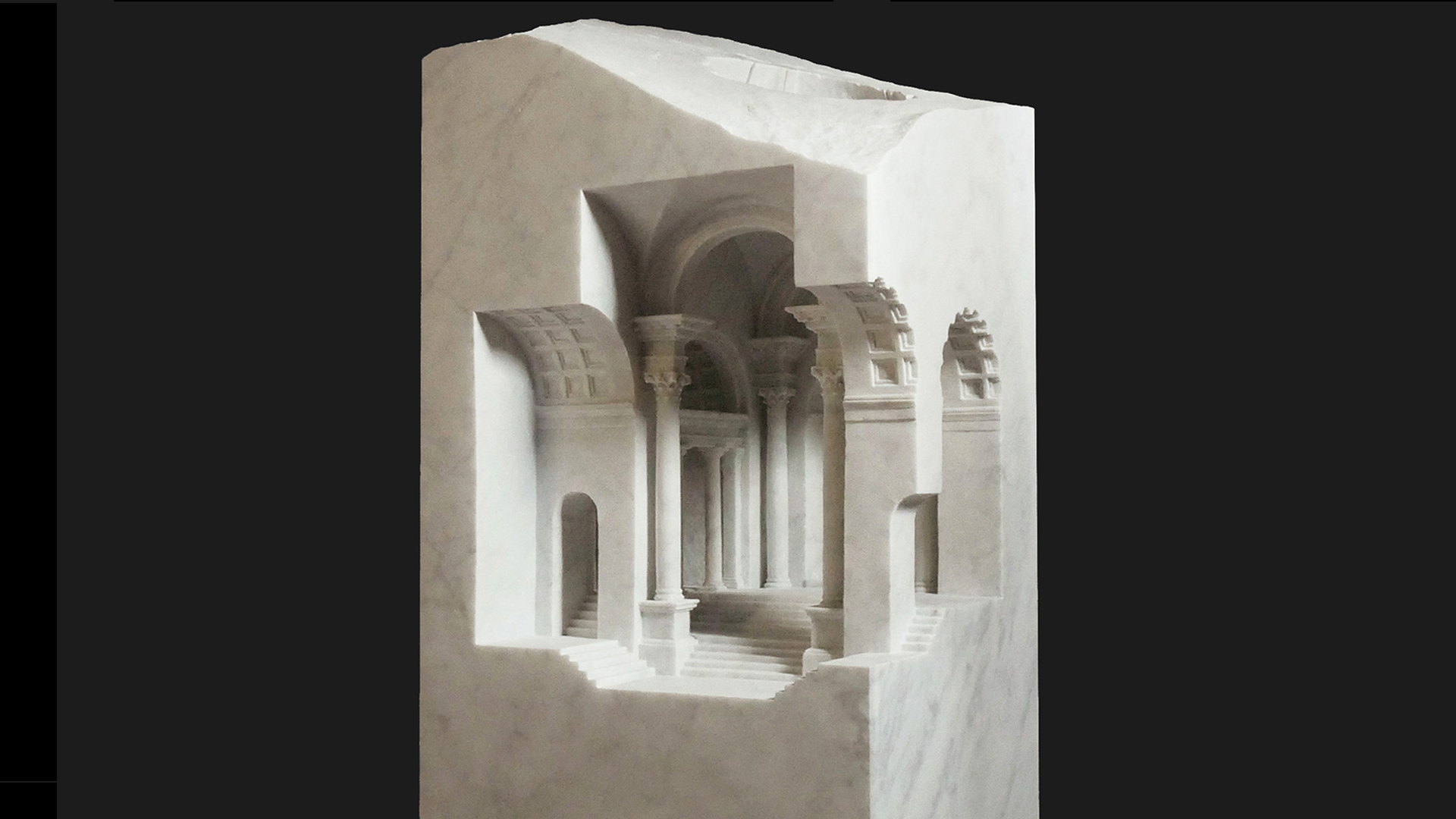
At first glance, Matthew Simmonds’ sculptures appear to be ordinary pieces of limestone or marble. Then the eye discovers an archway, a vaulted ceiling, or a staircase disappearing into shadow, and the stone begins to feel less like a solid object than the entrance to another world.

Based in Copenhagen, Simmonds combines the precision of an architectural stonemason with the imagination of a sculptor. Inspired by centuries of sacred architecture, his miniature creations invite viewers to slow down, look closer, and explore spaces that seem both ancient and entirely new.
Architecture Hidden Within Stone

Long before he became known for his sculptures, Simmonds trained as an architectural stonemason, working on restoration projects that included Westminster Abbey and Ely Cathedral. That hands-on experience gave him an intimate understanding of historic buildings, while his studies in art history deepened his appreciation for the architectural traditions that continue to shape his work.

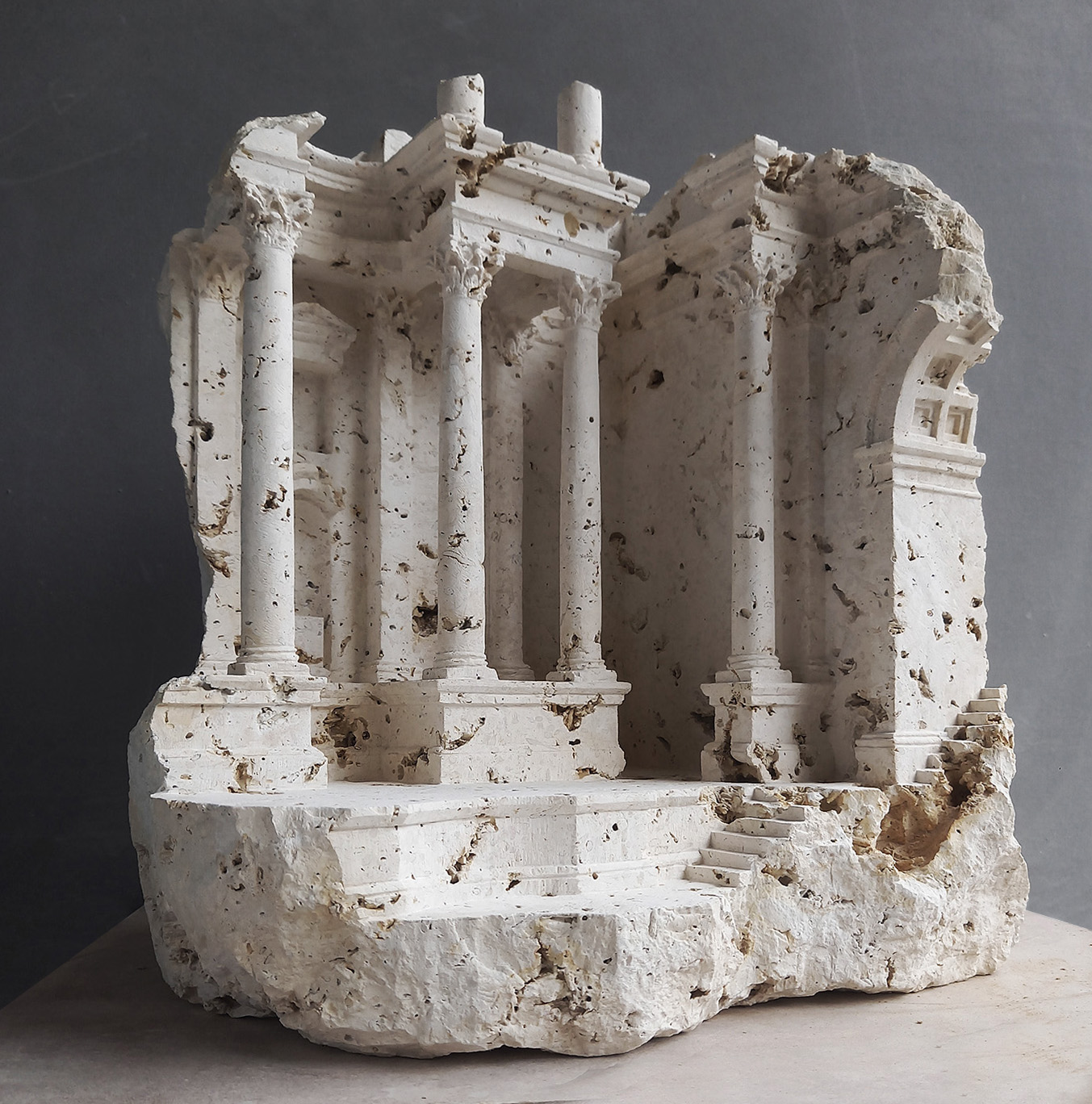
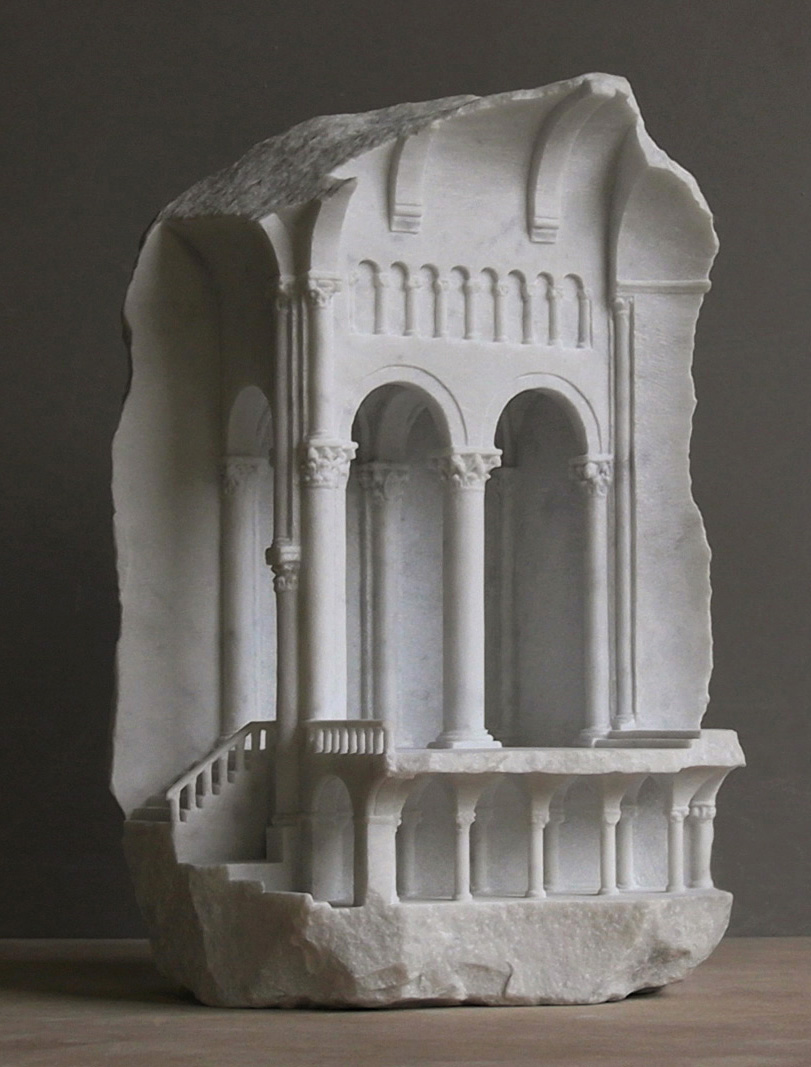
Rather than reproducing famous monuments, however, Simmonds creates imagined interiors inspired by Romanesque churches, Gothic cathedrals, Classical temples, and medieval architecture. Columns, arches, domes, and vaulted ceilings emerge from the stone as though they had always been waiting to be discovered beneath its surface.

Matthew Simmonds. Cities of Tuscany: Arezzo
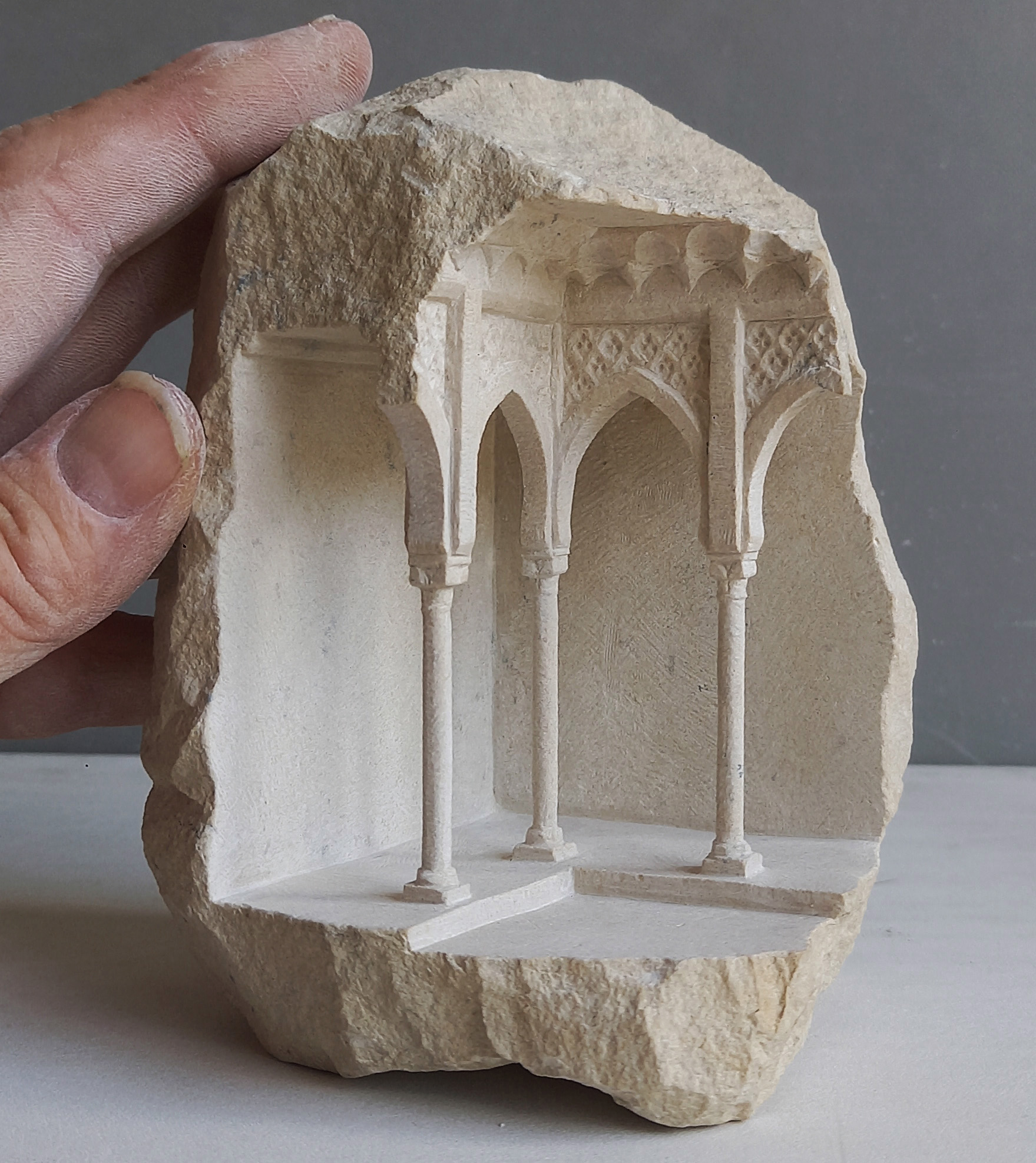
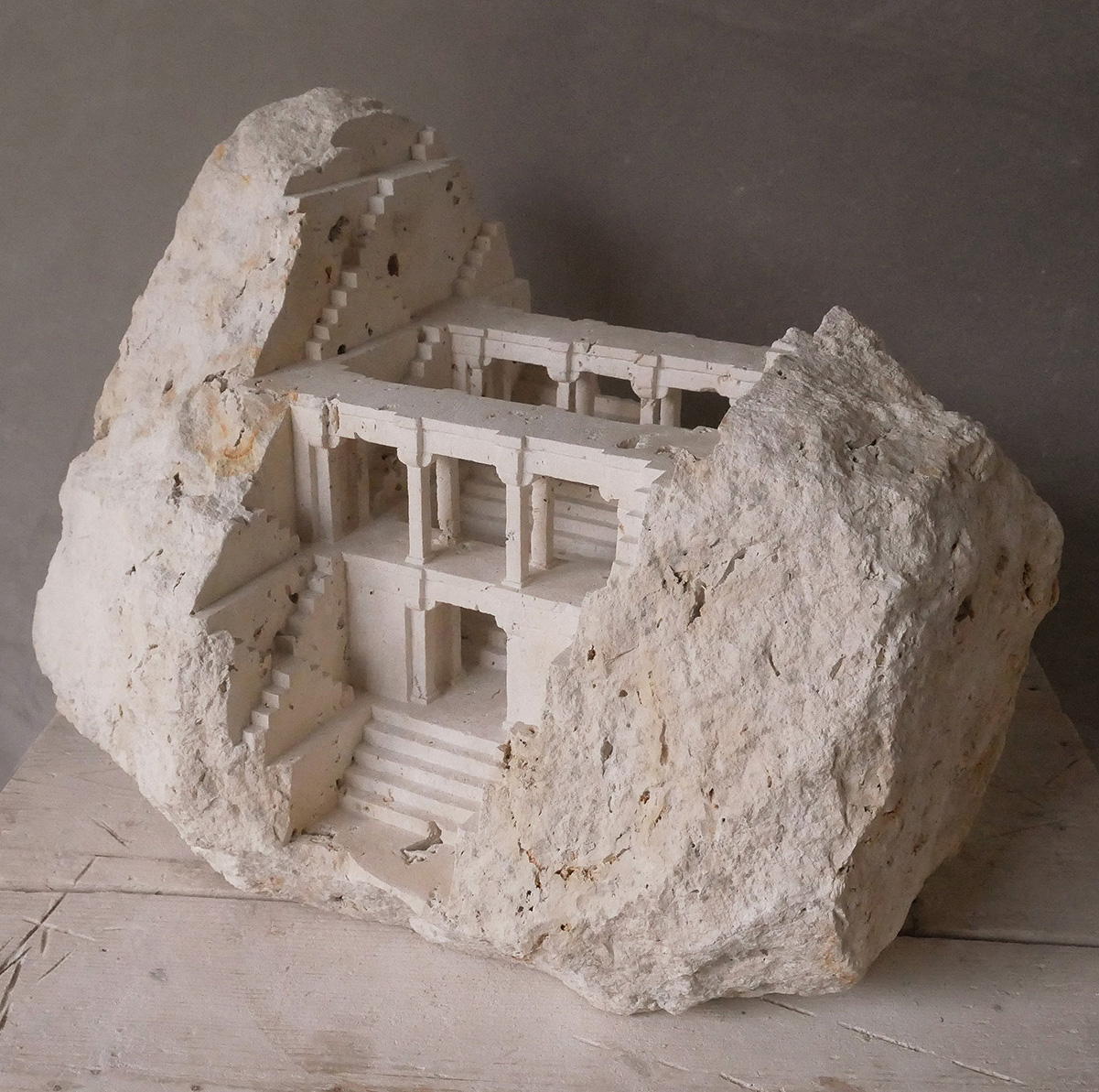
Matthew Simmonds. Stepwell
The Dialogue Between Nature and Design

One of the most fascinating aspects of Simmonds’ practice is the relationship between the carved interior and the untouched exterior. He deliberately preserves much of each stone’s natural form, allowing rough textures to surround spaces defined by remarkable precision and symmetry.

That contrast lies at the heart of his work. Nature provides the raw material, while human craftsmanship introduces order, proportion, and geometry. Neither dominates the other. Instead, the sculptures become conversations between geological time and human imagination, reminding us that beauty often emerges through collaboration rather than control.

Light, Shadow, and the Invisible

Although the sculptures are carved from solid stone, Simmonds often describes himself as working with space as much as with material. Every archway, opening, and chamber is carefully considered so that light can travel through the sculpture, creating changing patterns of shadow throughout the day.

This approach transforms each piece into more than a miniature building. The spaces encourage viewers to imagine what lies beyond the visible surfaces. Some interiors feel like forgotten chapels, others resemble hidden theatres or underground crypts, while many exist somewhere between memory and invention. Their mystery is part of their appeal.

Matthew Simmonds. Rotunda III
Matthew Simmonds. Proscaenium
A Craft Built on Patience

Creating these sculptures demands extraordinary technical skill. Working inside confined spaces requires custom-made tools and careful planning, since a single mistake can permanently alter weeks of work. Even before carving begins, Simmonds studies each block of stone to understand how its natural shape can guide the final composition.

That willingness to respond to the material rather than impose a predetermined design reflects the artist’s broader philosophy. Every sculpture develops through an ongoing dialogue with the stone itself, allowing unexpected possibilities to emerge as layers are gradually removed.

Despite their modest scale, Matthew Simmonds’ sculptures possess a remarkable sense of grandeur. They invite us to imagine vast architectural spaces hidden within objects that could comfortably sit on a tabletop, collapsing the distance between monument and miniature.

Perhaps that is what makes his work so captivating. Instead of asking us to admire technical mastery alone, Simmonds encourages us to think differently about architecture, history, and the spaces we inhabit. Within every carefully carved opening lies the suggestion that even the most solid objects can contain entire worlds waiting to be explored.

Matthew Simmonds. Colomnade VI
Scroll