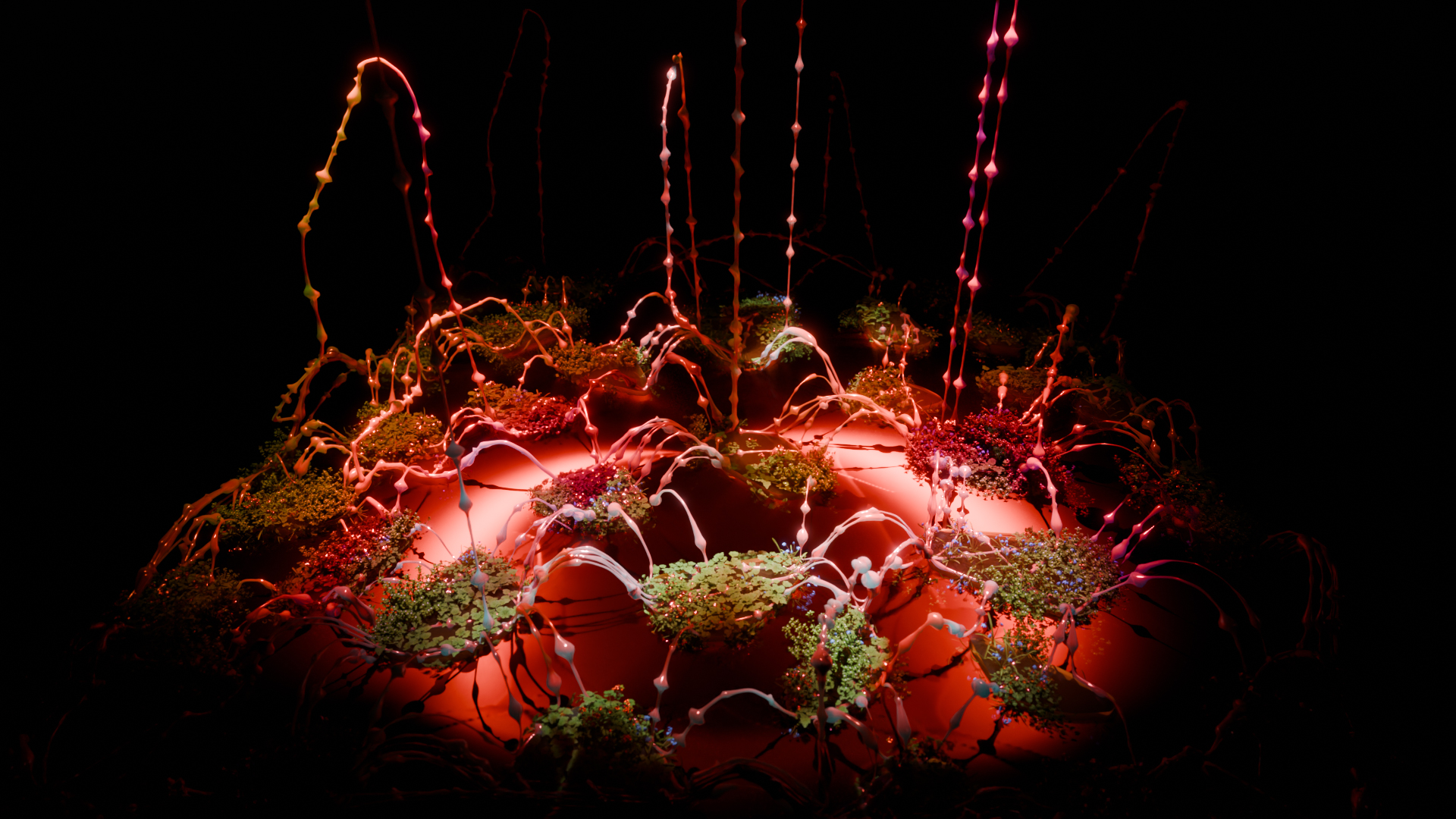
There’s a particular kind of calm that settles in when you spend time with Sabrina Ratté’s work. Not silence exactly—more like a low, electronic hum. Her images feel lived-in, like abandoned architectures still dreaming long after the lights have gone out. Ratté has built a practice around that in-between state, where physical space, digital simulation, and speculative ecology overlap. It’s not about predicting the future so much as listening closely to the present and imagining what might quietly grow from its cracks.


Written by
Elliott Brooks
in
Dimensions
Art & Design
Creative
Sabrina Ratté and the Poetry of Digital Ruins
Based in Montreal, Ratté works across video, 3D animation, sculpture, and installation, often blending analog processes with digital tools. She’s known for environments that feel simultaneously technological and organic—CRT monitors, pixelated landscapes, synthetic plants, and virtual ruins that pulse with life. Her art doesn’t rush to impress; it invites you to slow down, observe, and drift.
A recurring theme in Ratté’s work is transformation. Architecture dissolves into data. Screens become ecosystems. Natural forms mutate through digital logic, creating speculative worlds that feel fragile but persistent. There’s a strong sense that nature doesn’t disappear in the face of technology—it adapts, absorbs, and reconfigures itself. Ratté treats digital space not as something artificial or cold, but as another terrain where life can evolve.
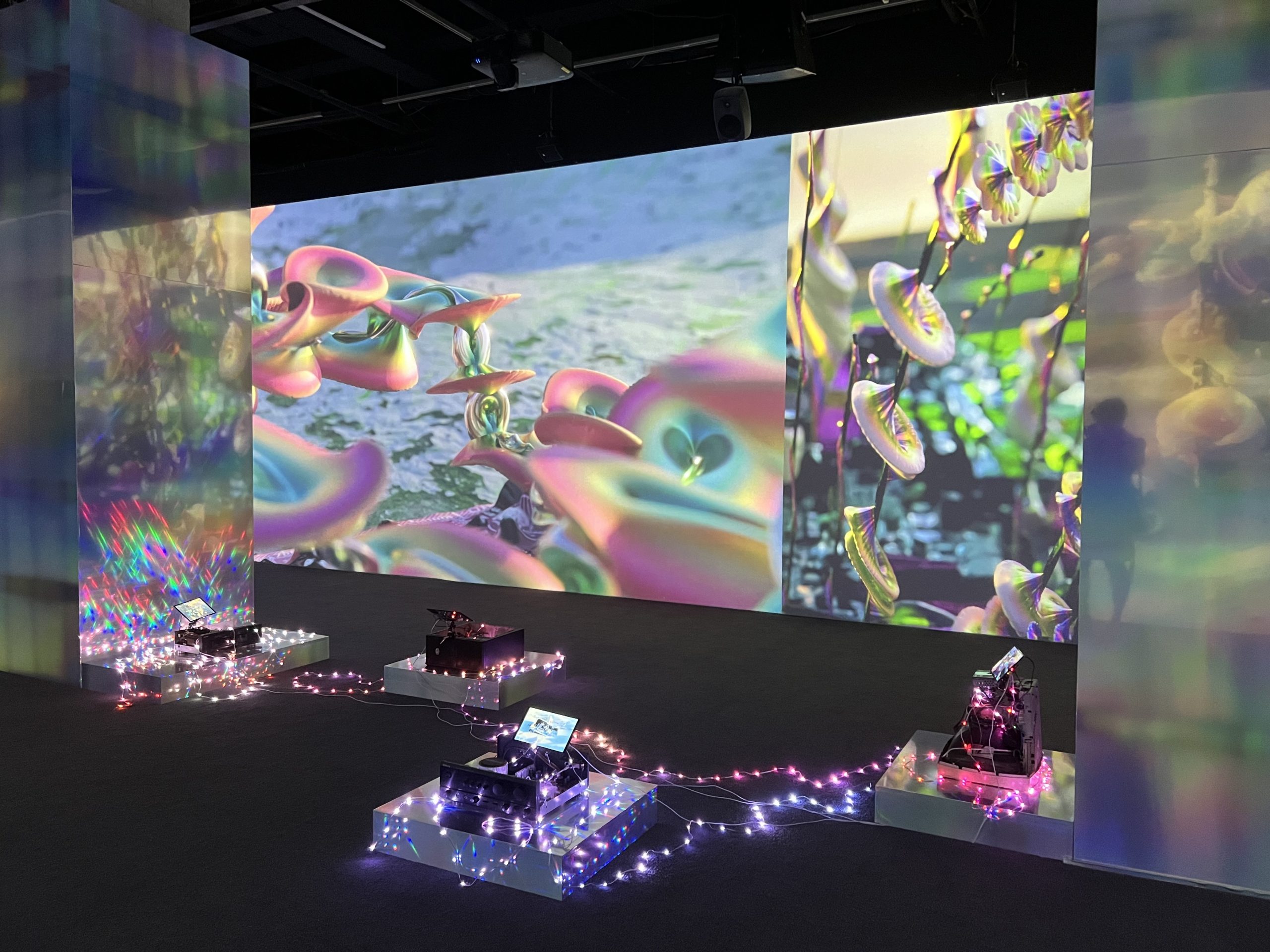
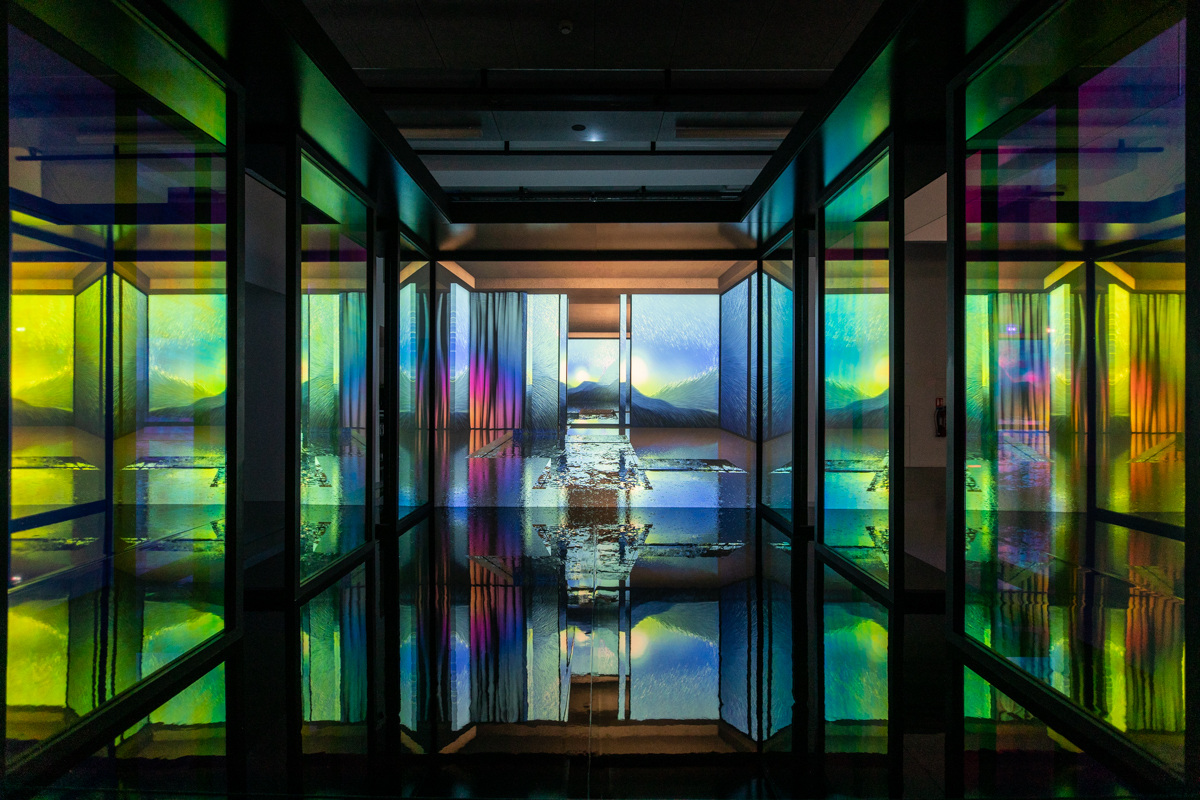
What makes her work especially compelling is how tactile it feels, despite its technological backbone. She often incorporates physical objects—plants, rocks, sculptural elements—into her installations, grounding the digital in the material world. Old televisions and analog signals recur as visual motifs, suggesting a fascination with obsolete technologies and their emotional residue. These aren’t nostalgic gestures so much as archaeological ones, digging through media history to see what still resonates.
There’s also a strong environmental undercurrent running through her practice. Without being overtly didactic, Ratté’s work hints at ecological imbalance, climate anxiety, and the ways human systems reshape the planet. Her landscapes feel post-human but not post-life. Something always survives. Something always grows back—sometimes stranger, sometimes more beautiful.
Visually, her palette leans toward muted tones punctuated by glowing digital color: mossy greens, soft purples, electric blues. Motion is slow and deliberate. Time stretches. You don’t watch her videos so much as inhabit them. That pacing is crucial—it allows space for reflection, for the viewer to project their own anxieties and hopes into these hybrid worlds.
In the broader context of contemporary digital art, Ratté stands out for her sensitivity. Where some tech-driven work chases spectacle, she prioritizes atmosphere and mood. Her installations feel like places you might stumble upon rather than destinations you were meant to reach. That sense of quiet discovery is part of their power.
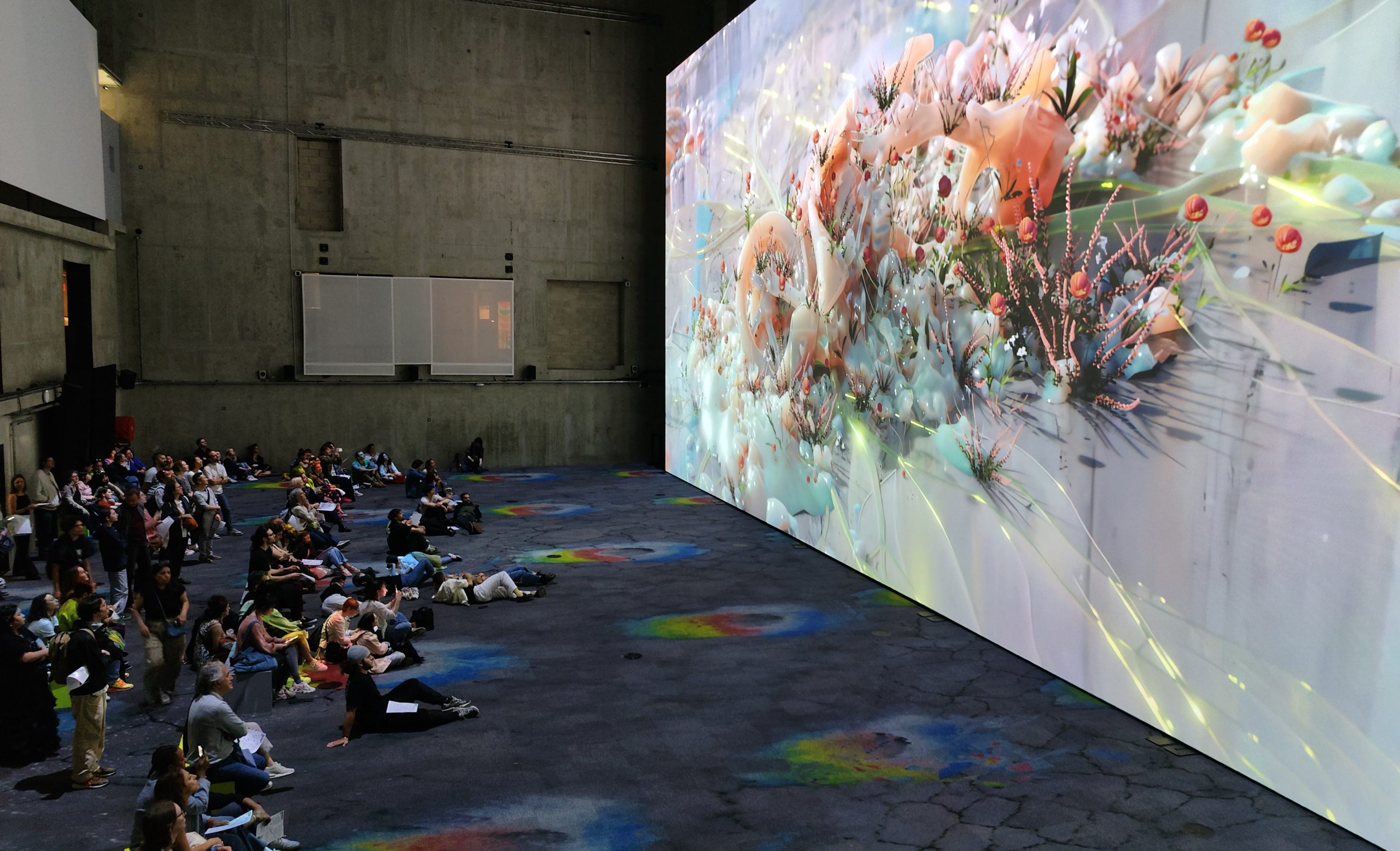
Sabrina Ratté’s work reminds us that the future doesn’t arrive all at once. It seeps in slowly, through screens, through architecture, through the ecosystems we build and neglect. Her art sits right at that threshold, asking us to pay attention—not just to what technology can do, but to how it feels to live alongside it. To explore her evolving body of work and step deeper into these digital ecosystems, visit her website at sabrinaratte.com.
You may also like