Where the Water Stands Still: Maria Svarbova
Zoë Marin
Written by Zoë Marin in Beyond the Frame Creative Photography

Where the Water Stands Still: Maria Svarbova

Certain photographs seem to exist outside ordinary experience. Their subjects appear familiar, yet something about them feels slightly removed from reality. Maria Svarbova has built an entire photographic language around that sensation, creating meticulously composed images that transform everyday spaces into environments of quiet mystery.

Born in Slovakia in 1988, Svarbova originally studied restoration and archaeology before turning to photography. Since 2010, her work has gained international recognition through exhibitions, publications, and awards, including the Hasselblad Masters Award. Yet beyond the accolades, it is her unmistakable visual style that has made her one of the most recognizable voices in contemporary photography.
The architecture of calm

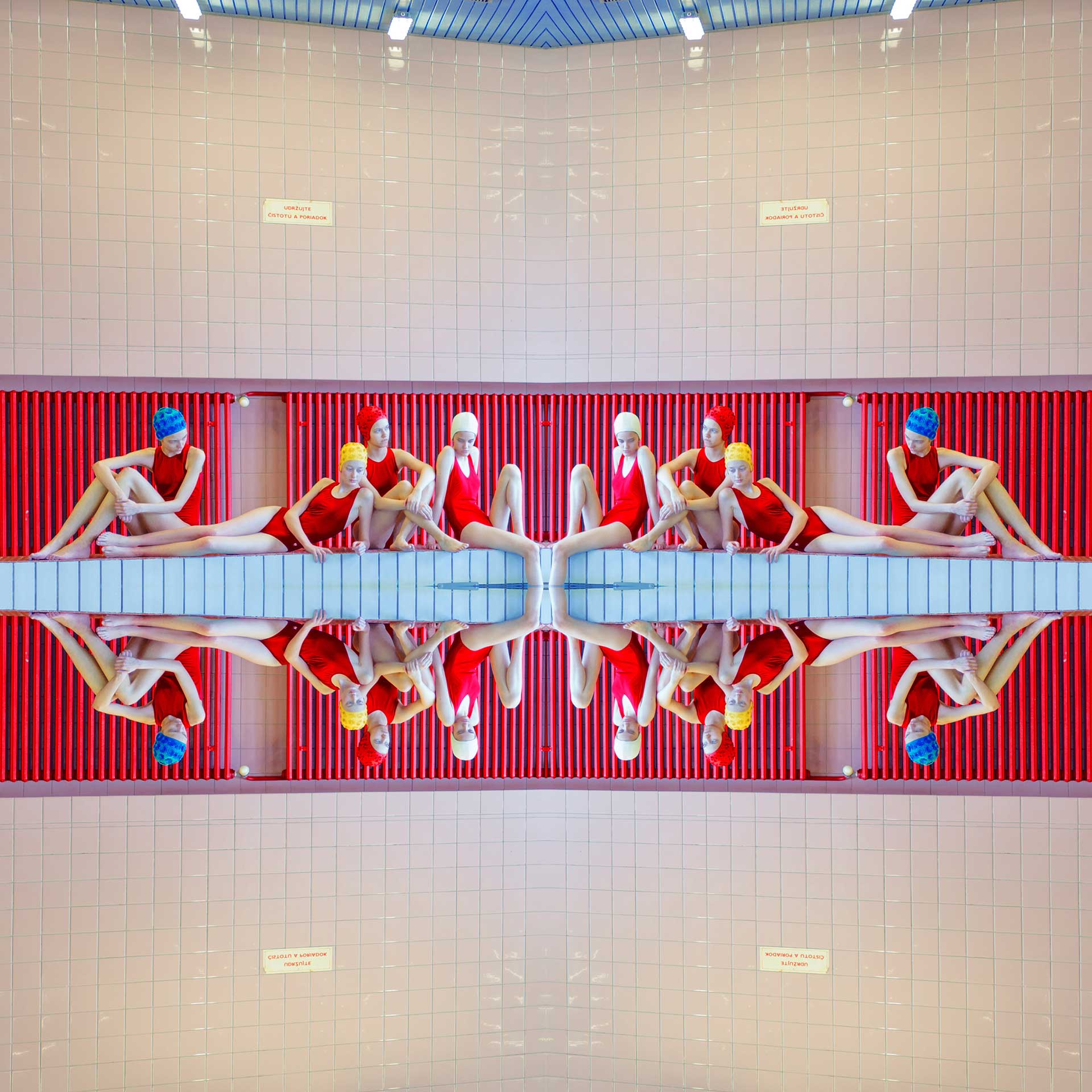
Svarbova’s photographs often begin with architecture. Drawn to the public spaces and modernist structures of the former Eastern Bloc, she finds inspiration in swimming pools, clinics, gymnasiums, and civic buildings whose geometric forms provide the foundation for her carefully orchestrated compositions.

Rather than treating these locations as simple backdrops, she allows them to shape the emotional atmosphere of each image. Clean lines, tiled surfaces, pastel colours, and symmetrical arrangements create a sense of order that feels both soothing and slightly unsettling. The result is a visual language that balances nostalgia with a distinctly contemporary perspective.

Swimming Pool and the making of a signature style

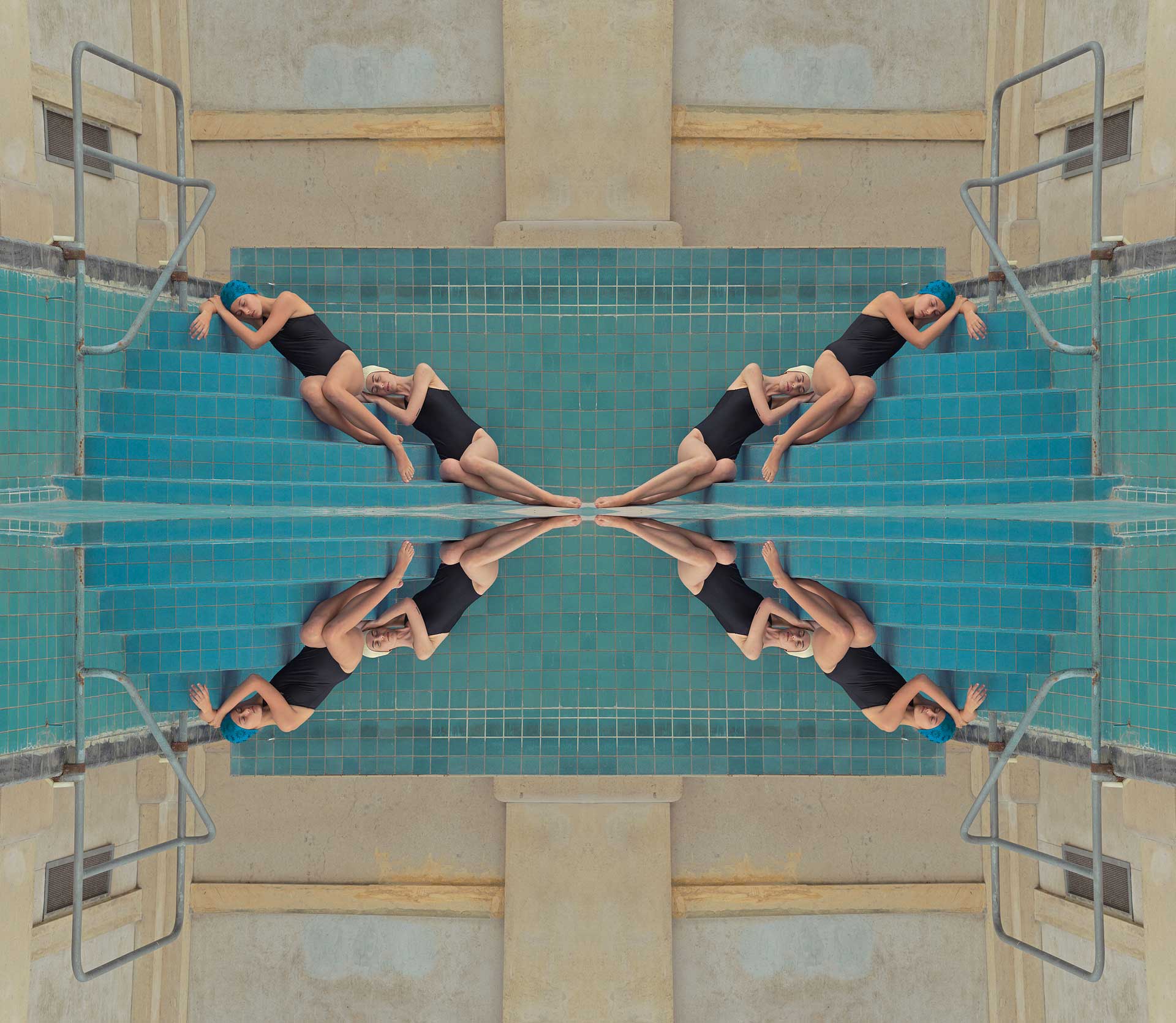
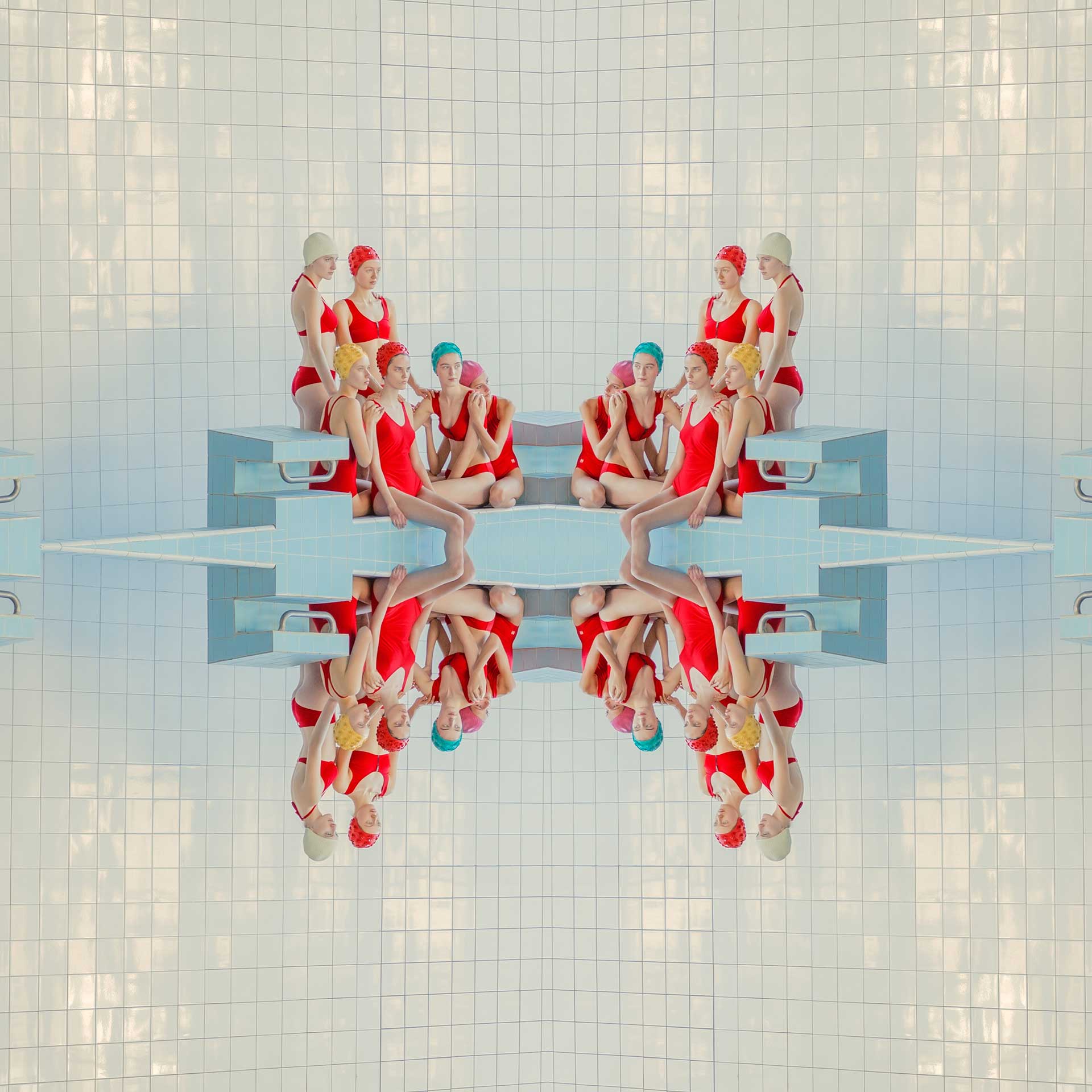
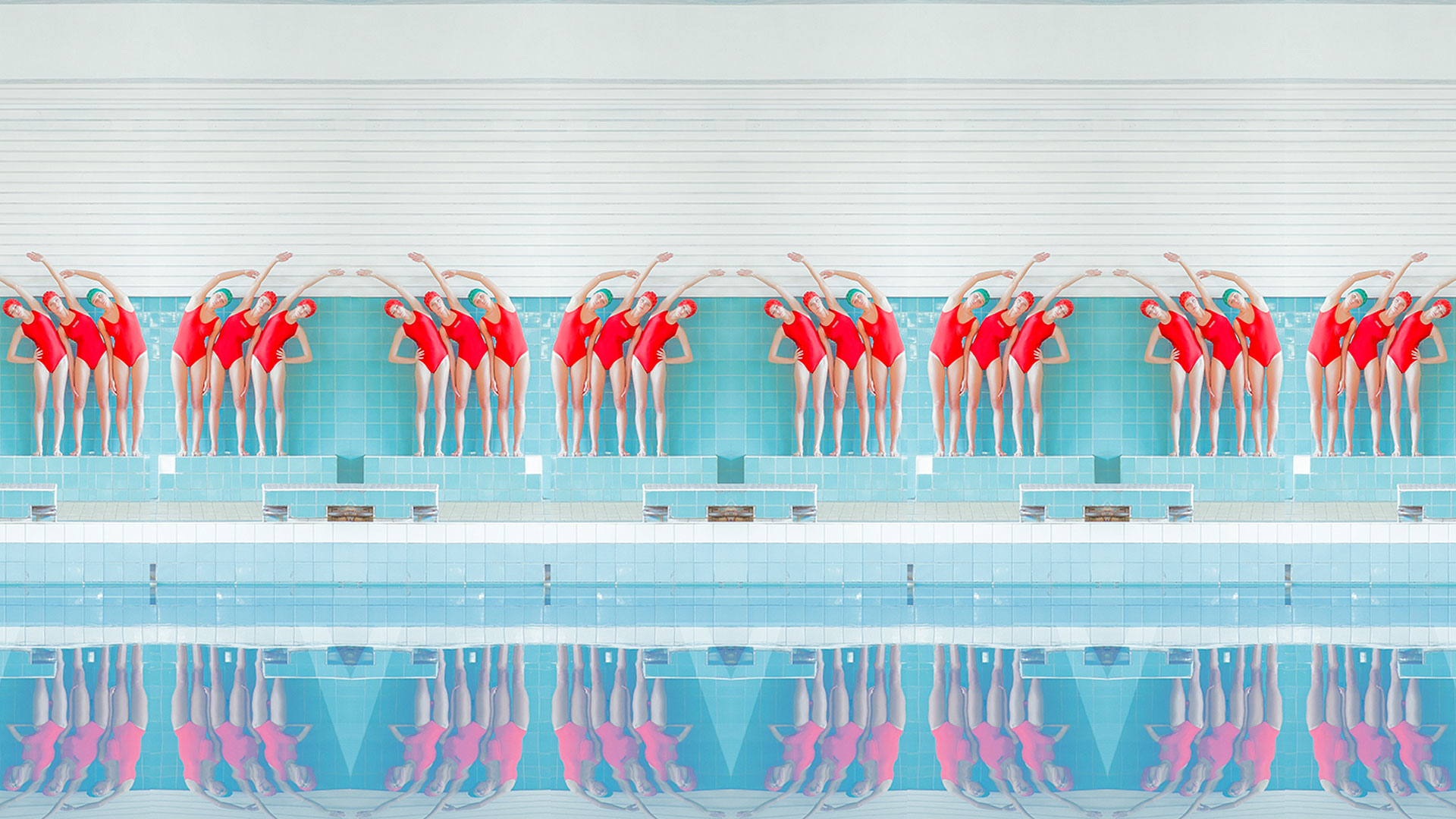
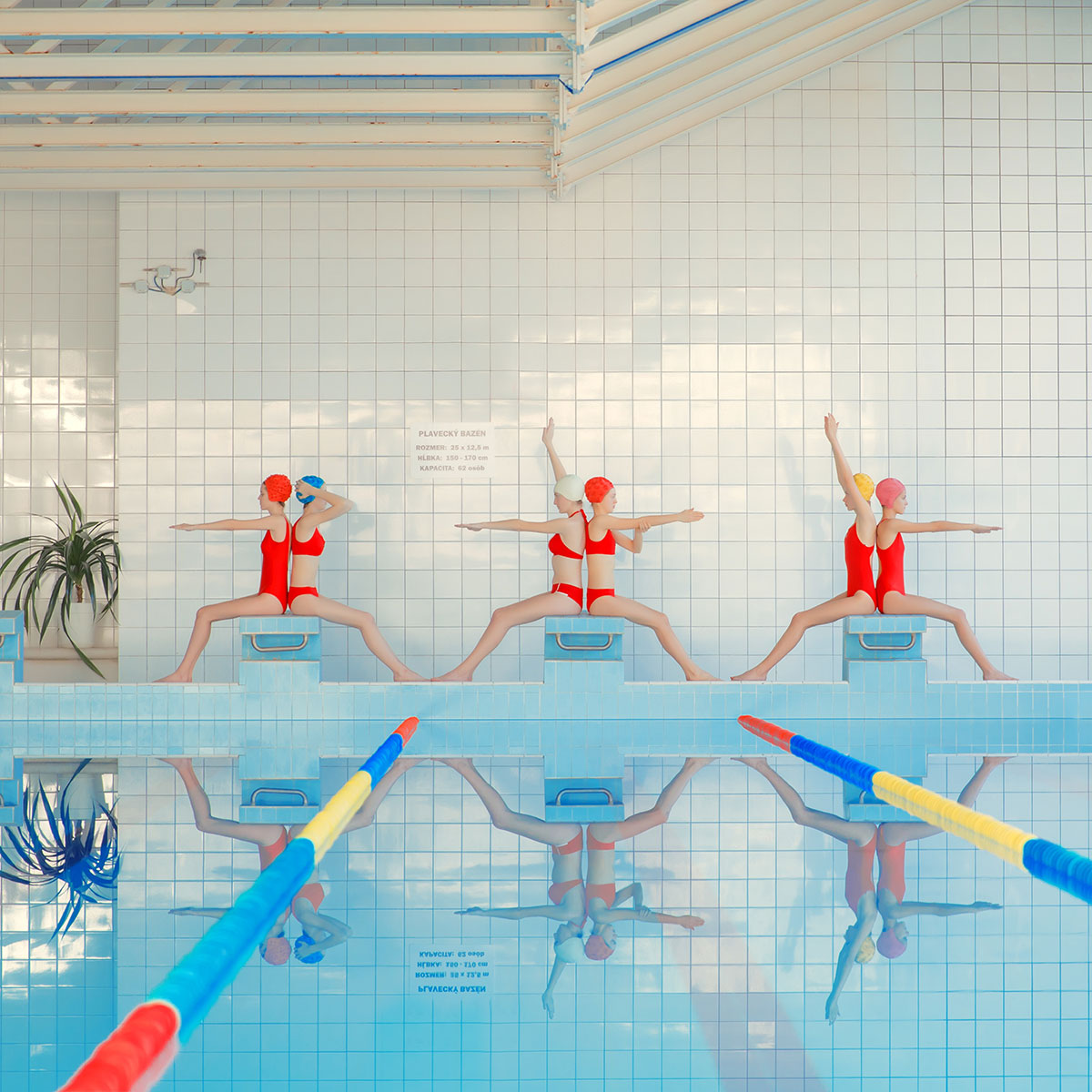
No project is more closely associated with Svarbova than Swimming Pool, the ongoing series she began in 2014. Set within socialist-era swimming facilities across Slovakia, the photographs transform spaces designed for movement into scenes of remarkable stillness. Swimmers stand motionless, gather in carefully arranged groups, or appear frozen in moments that seem detached from ordinary time.

What makes the series so compelling is the tension between activity and restraint. Swimming is inherently dynamic, yet Svarbova removes nearly all traces of motion. Figures become part of the architecture itself, contributing to compositions defined by symmetry, repetition, and visual precision. Despite their retro settings, the images often feel unexpectedly futuristic, as though they belong to a world that exists just beyond the present.

People as elements of composition

Throughout Svarbova’s work, the human figure occupies an unusual role. Her subjects rarely function as traditional portraits. Expressions remain restrained, individuality is minimized, and emotions are often left deliberately ambiguous.

Instead, people become part of a larger visual system. Carefully positioned bodies interact with architecture, colour, and space in ways that reinforce the structure of the image. This approach creates a sense of emotional distance. Yet beneath that cool surface lies a subtle exploration of loneliness, isolation, and the ways individuals navigate shared environments.

Beyond the pool

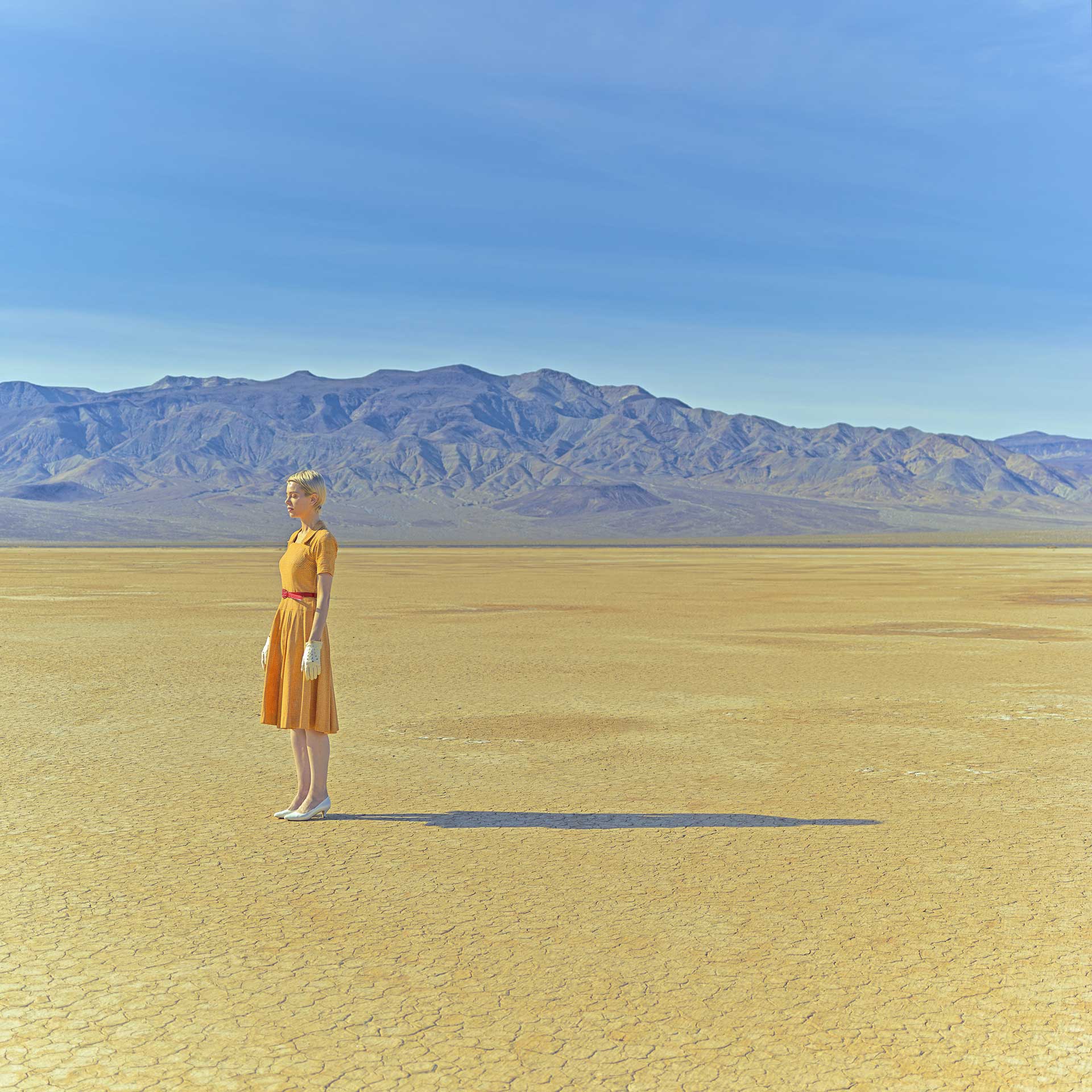
While Swimming Pool remains her best-known body of work, Svarbova has continued to expand her visual universe through projects such as Futuro Retro, Lost in the Valley, and collaborations that apply her distinctive aesthetic to new settings. Whether photographing the stark landscapes of Death Valley or creating colourful commissions for the Museum of Ice Cream, she consistently transforms familiar environments into carefully constructed worlds.

Across these projects, her interests remain remarkably consistent. Space, colour, atmosphere, and repetition continue to shape her imagery, while each new location offers an opportunity to explore different variations of the visual language she has developed over the past decade.

In a culture saturated with speed, movement, and constant visual stimulation, Svarbova’s photographs invite a different kind of attention. They encourage viewers to pause, observe, and spend time within moments that seem suspended between past and future.

That lingering quality may be what makes her work so memorable. Beneath the pastel surfaces, geometric order, and immaculate compositions lies a meditation on human experience itself. Maria Svarbova transforms ordinary spaces into stages where silence, distance, and beauty coexist, reminding us that stillness can be just as expressive as movement.

Scroll