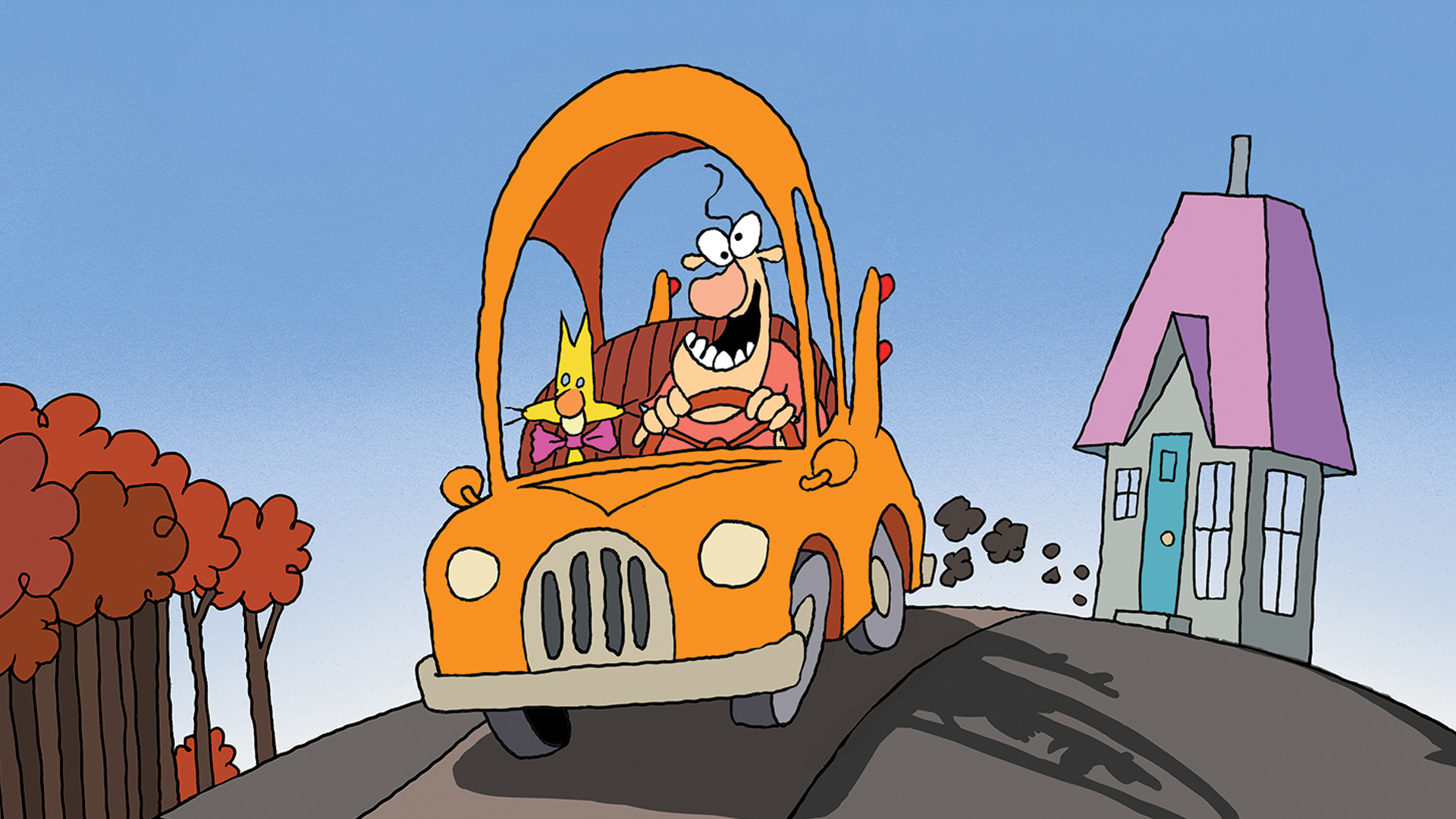

Few animated shorts embrace pure chaos as confidently as The Cat Came Back. Released in 1988 and directed by Cordell Barker for the National Film Board of Canada, the film transforms Harry S. Miller’s 1893 comic folk song into a relentlessly escalating piece of slapstick comedy.
The setup is beautifully simple. Mr. Johnson discovers a yellow cat in his home and becomes increasingly desperate to get rid of it. Every attempt fails spectacularly. The farther he travels, the more disastrous the outcome becomes, and the cat always finds its way back. What begins as mild annoyance quickly spirals into obsession, destruction, and complete psychological collapse.
Animation Driven by Rhythm
What makes the short so memorable isn’t just the humor, but its rhythm. Barker structures the film almost musically, pushing each gag faster and further than the one before it. The exaggerated sound design, sharp editing, and constantly accelerating pacing make the entire film feel like it’s moving on instinct alone.
There’s also something timeless about the animation itself. Barker worked entirely by hand, creating thousands of drawings that give the film a loose, expressive energy digital animation often struggles to replicate. Every movement feels elastic and slightly unpredictable, which only adds to the comedy.
Visually, the film carries echoes of classic cartoons like Tom and Jerry or Looney Tunes, but the dynamic is inverted. Here, the cat isn’t chasing chaos, it is chaos.
When Comedy Becomes Endless
Part of what makes The Cat Came Back endure is how completely it commits to escalation. Mr. Johnson’s frustration grows so extreme that the film eventually abandons logic altogether, drifting into surreal territory without losing its comedic momentum.
Revisiting the short in 2026, it still feels remarkably fresh. The humor remains sharp, the timing is almost perfect, and Barker’s understanding of visual comedy never really ages.
For all its explosions, destruction, and absurdity, the film ultimately succeeds because of something simple: it understands that the funniest jokes are often the ones repeated just one more time than they should be.