Kriss Munsya’s photographs are born from a collision between memory and identity — crafted at the intersection where the past insists on being felt and the future insists on being imagined. His work doesn’t simply depict lived experience; it reverberates with the weight of what has been internalized, shrouded, or quietly endured. In his carefully composed images, we encounter not just bodies and spaces, but the echoes of history, trauma, and transformation woven into every frame.


Written by
Zoë Marin
in
Beyond the Frame
Creative
Photography
Rewriting Memory: The Poetic Reckoning of Kriss Munsya
Munsya was born in Kinshasa in the Democratic Republic of Congo and raised in Brussels, Belgium — a trajectory that placed him early on at the margins of dominant cultural narratives. The racism and violence he encountered as a young Black man in predominantly white environments left deep imprints, shaping his visual language and artistic inquiry. That encounter between self and other, between personal memory and collective structures of supremacy, informs much of his photography.
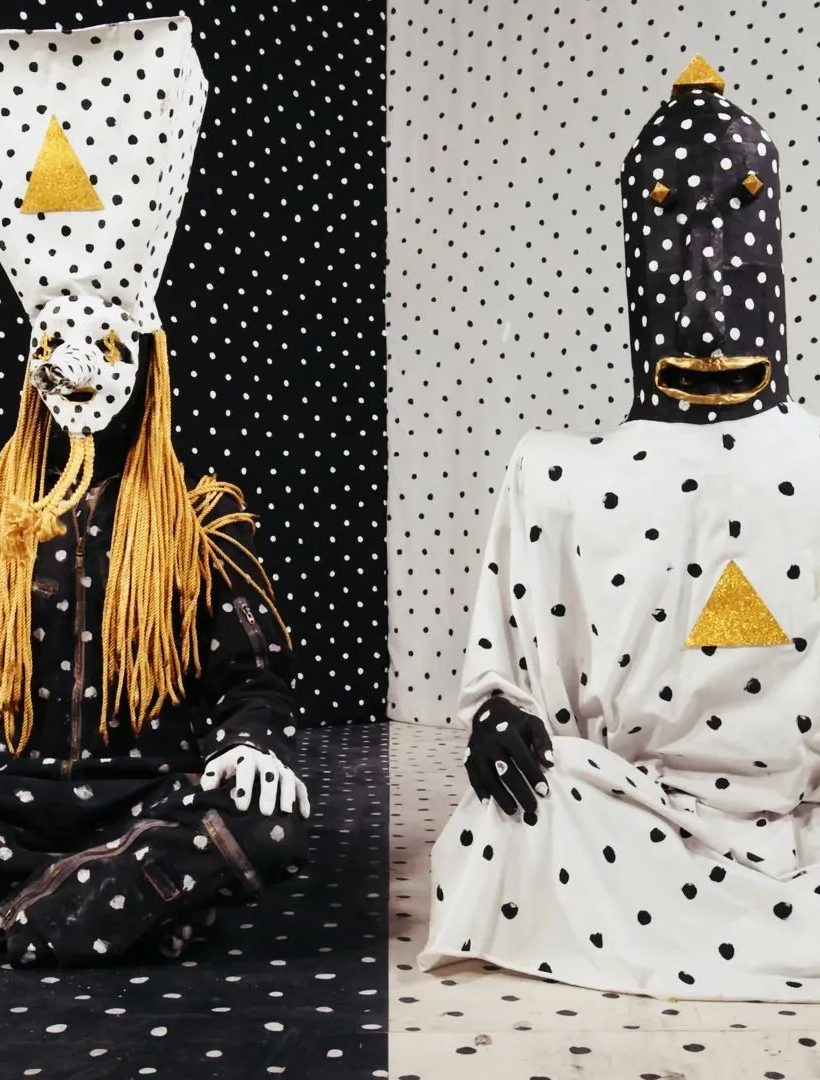
His project The Eraser stands as one of the most intimate expressions of this work — a series that revisits personal experiences of discrimination, internalized supremacy, and the longing to reimagine one’s own past. Rather than offering literal reenactments, Munsya uses theatrical compositions and richly hued tableaux to evoke the emotional landscape of memory. Through vivid colours, patterned props, and carefully staged figures, he explores what it means to carry both the burden and the beauty of one’s history.
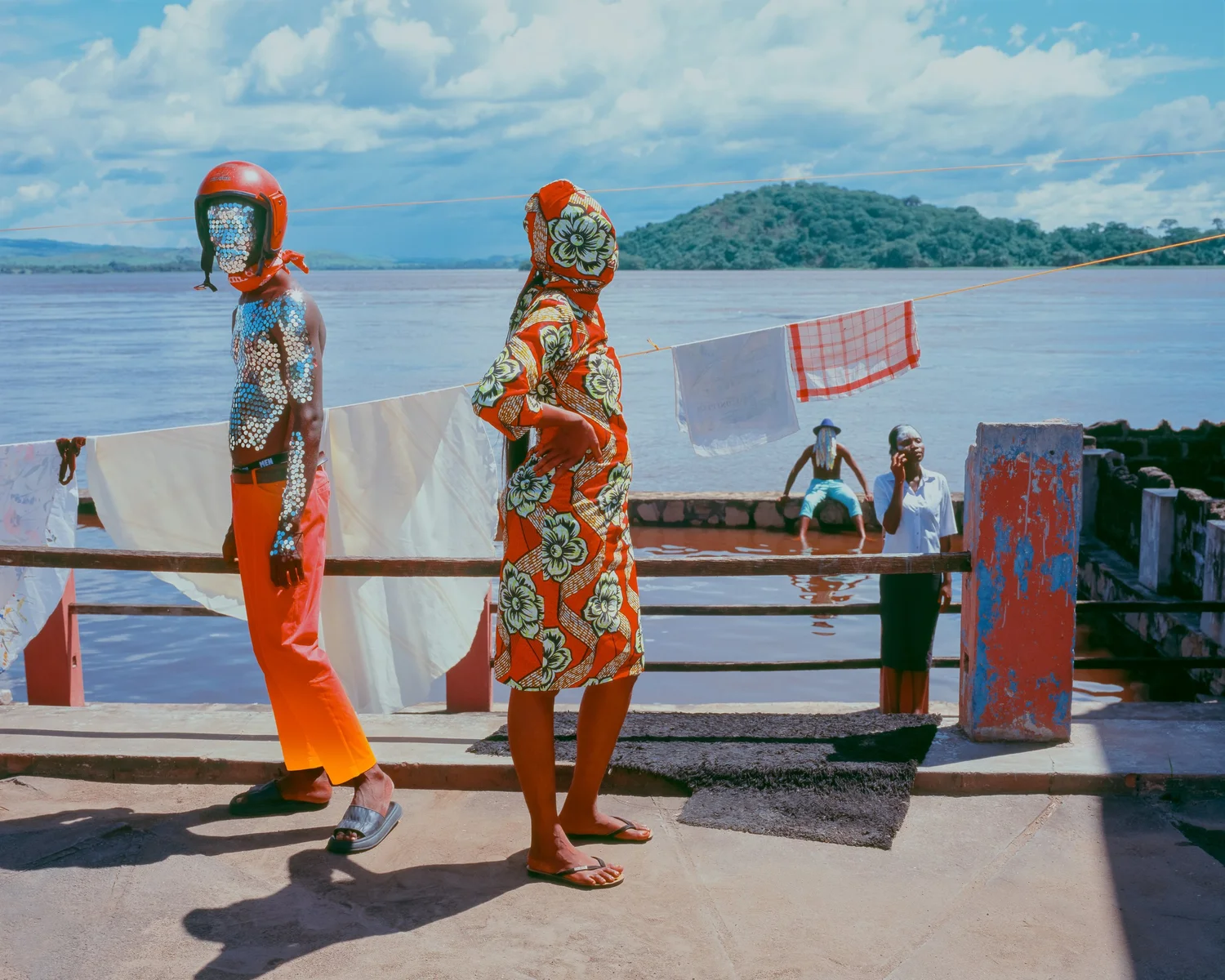
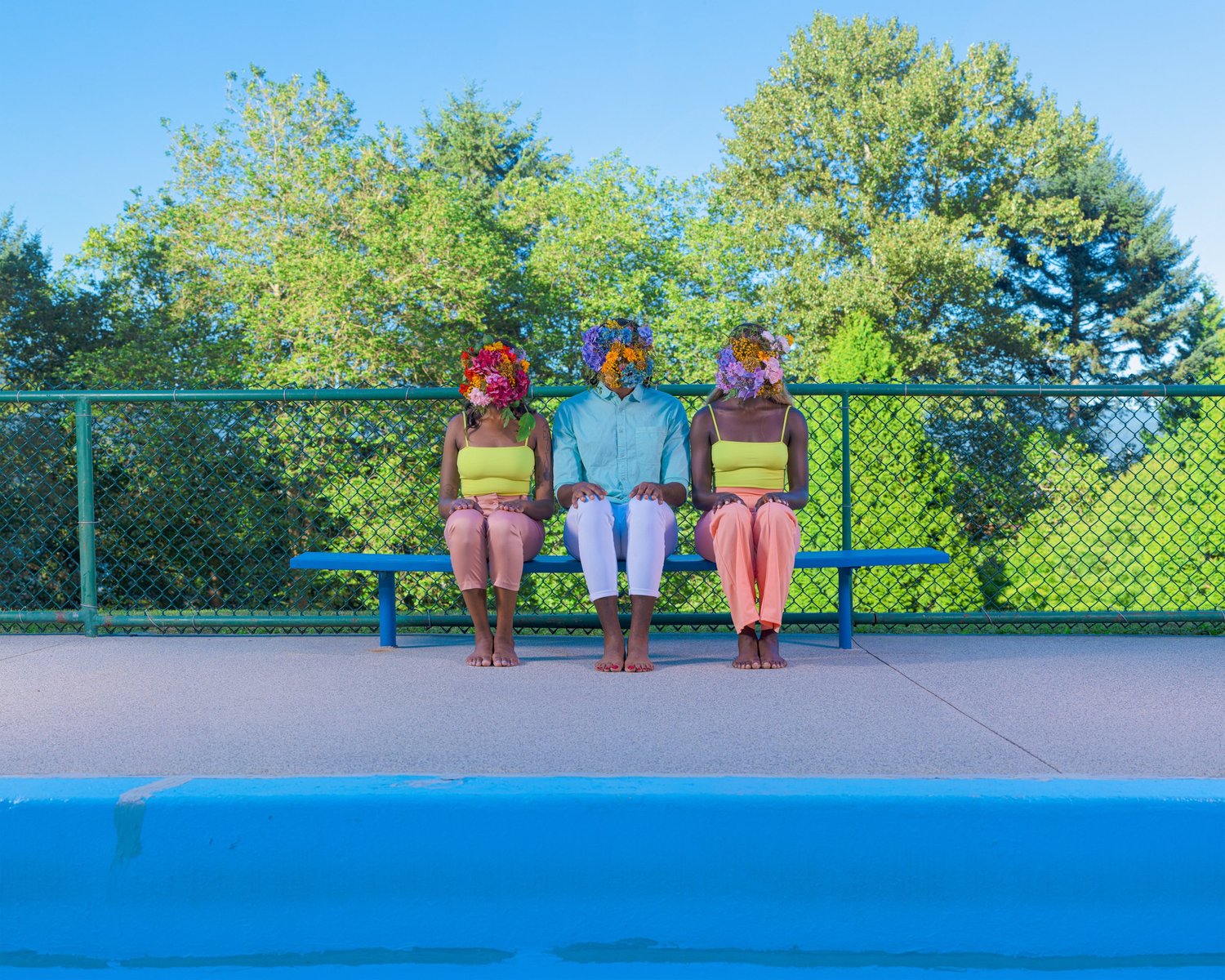
In these photographs, faces are often obscured or partially hidden: mirrored glitter, vibrant ribbons, or draped fabrics become shields and masks, inviting the viewer to sit with ambiguity. This isn’t a retreat from identity; rather, it’s a deliberate recalibration of how identities are seen, remembered, and understood. By refracting silhouettes and obscuring conventional sightlines, Munsya asks us to consider how much of ourselves remains unseen — even in the most familiar reflections.
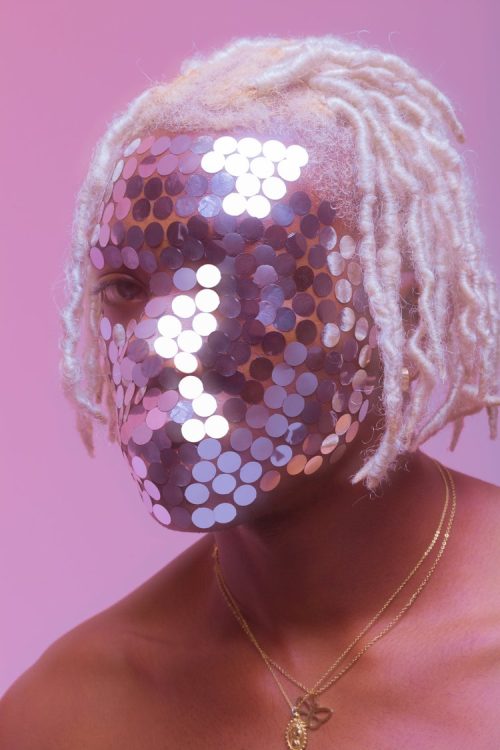
There is a profound narrative tension in this work. The images become meditation rooms where past wounds are not denied but rearranged — examined, held, and gently reclaimed. The Eraser doesn’t seek to obliterate memory but to revise its emotional grammar, acknowledging the fractures that constitute selfhood while also opening spaces for healing and transformation. It is a visual language that holds complexity rather than resolves it, that allows uncertainty to be felt rather than quickly explained.
Beyond this seminal series, Munsya’s broader practice is expansive and multidisciplinary. Before focusing on photography, he explored drawing, video and filmmaking — including a feature film born of a hitchhiking journey from New York to Rio de Janeiro that shifted his gaze on race, mobility and belonging. His multidisciplinary roots infuse his photographic compositions with cinematic tension and a rhythmic sense of narrative staging. This blending of media speaks to an artist deeply interested in the interstices of experience — where memory, movement, and image intersect.
Munsya’s recent work Genetic Bomb takes these concerns into a broader social context. Here, he interrogates the roots of freedom, resistance and transformation, asking how the struggle for change alters us on a genetic, psychological and societal level. It is not a didactic project, but a poetic proposition — an invitation to reflect on how histories of colonialism, racism and displacement continue to shape collective futures.
What ties these bodies of work together is a deep humanity — a willingness to let images sit long enough to reveal what they cannot quite say yet. His photographs are theatrical without being performative; they are intimate without being self-enclosed. They hold contradictions, invite reflection and insist that we linger in the emotional spaces between what we see and what we feel.
Kriss Munsya’s work stands as a testament to the power of art that doesn’t shy away from complexity. These are images that ask us to look again, to question what we carry with us, and to consider how memory and identity can be gently, fiercely reimagined.
If his questions resonate with you — the way his compositions quietly unsettle and invite contemplation — there’s more to discover. Visit krissmunsya.com and step into his world, where each image is both a reckoning and an opening.