Between Matter and Method: Arnaud Maggs & Spring Hurlbut
Zoë Marin
Written by Zoë Marin in Beyond the Frame Art & Design Creative Photography

Between Matter and Method: Arnaud Maggs & Spring Hurlbut

A shared space, two distinct ways of seeing

At Stephen Bulger Gallery, two exhibitions unfold side by side, each shaped by a different approach to photography. One works through material—intimate, physical, and charged with meaning. The other moves through systems—structured, methodical, and analytical. Yet despite these differences, both practices return to a similar gesture: repetition.

Across Spring Hurlbut’s and Arnaud Maggs’s serial works, images are built through variation rather than singular moments. Forms reappear, shift, and accumulate—whether in the divided symmetry of ash-filled circles or in the repeated framing of a subject across time. We’ve previously featured both artists before, here, and here. Seen together now, their work opens into a shared rhythm, where meaning emerges not from a single image, but from what unfolds between them.
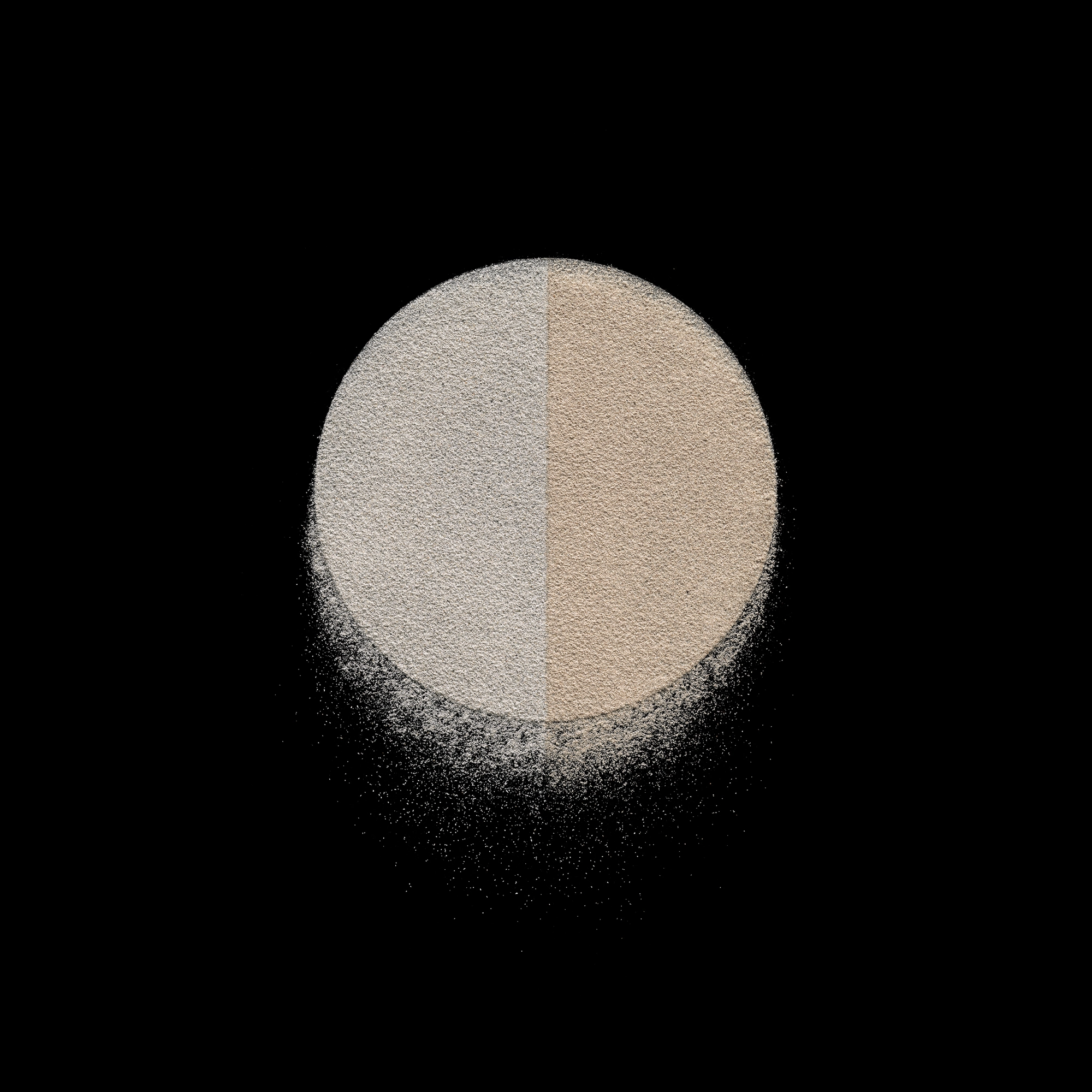
Spring Hurlbut — Dyadic Circles (Gallery 1)
Matter as memory

Spring Hurlbut’s work begins from a place few artists are willing to enter. Since the 1990s, she has worked with cremated ashes—material that carries both physical and emotional weight. In Dyadic Circles, that material is transformed into something at once minimal and deeply charged.

Each photograph presents a circle divided into two halves. The structure repeats across the series, steady and precise, yet never entirely the same. At first, the compositions feel almost abstract—balanced, contained, quietly controlled. But the knowledge of what the images are made from shifts that perception. These are not symbolic forms imposed onto neutral matter, but compositions built from remains entrusted to the artist.

Spring Hurlbut. Otis and Barley (canines), 2019
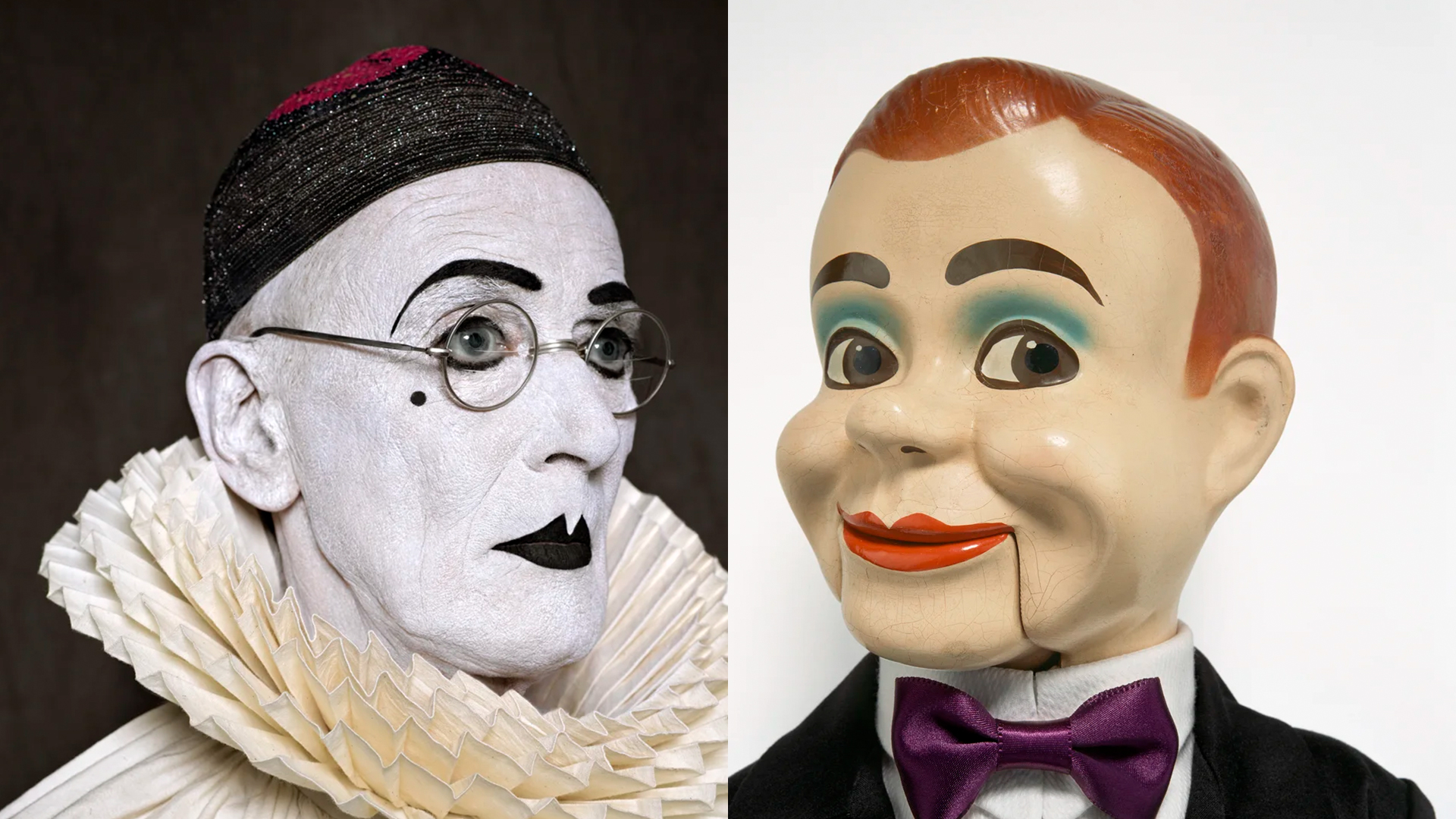
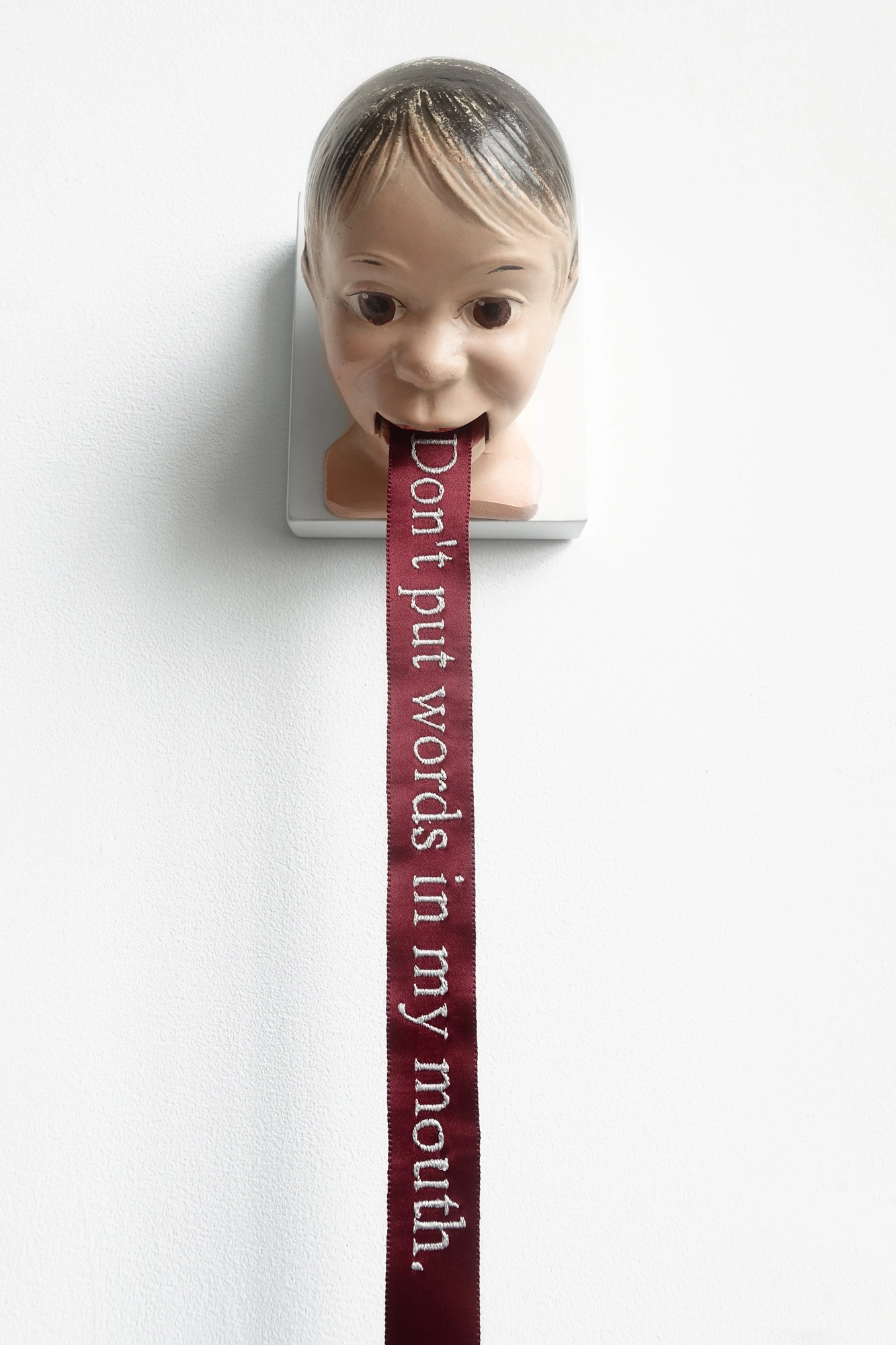
Spring Hurlbut. Don’t put words in my mouth (dummy head), 2015
Duality within a whole

The division of the circle introduces a tension that runs through the entire series. In some works, both halves come from the same individual; in others, they represent two different beings—human or animal. The distinction is not always visible, yet it lingers within the repeated structure, quietly shaping how each image is read.

Alongside these works, pieces from Shut Up – Automatonophobia and La Bouche extend Hurlbut’s exploration of presence and absence through variation and sequence. The ventriloquist dummy’s head, photographed in rotation, reveals subtle shifts that expose its unsettling autonomy, while La Bouche explores repetition through gesture—language pressed, again and again, into a surface. Across these works, the body—whether human, animal, or surrogate—remains central, even as it moves between stillness and animation.

Arnaud Maggs — Selections from the Archive (Gallery 2)
Systems of looking

If Hurlbut’s work begins with material, Arnaud Maggs starts with structure. His practice is rooted in systems—grids, repetitions, and serial forms that examine how identity and meaning are constructed through variation. Rather than isolating a single image, he builds sequences that unfold across time.

Originally trained as a graphic designer, Maggs brought a precise sense of order to his photographic work. His images often take a single subject and repeat it under controlled conditions, allowing subtle differences to emerge. The result is less about the individual frame and more about what happens through accumulation.

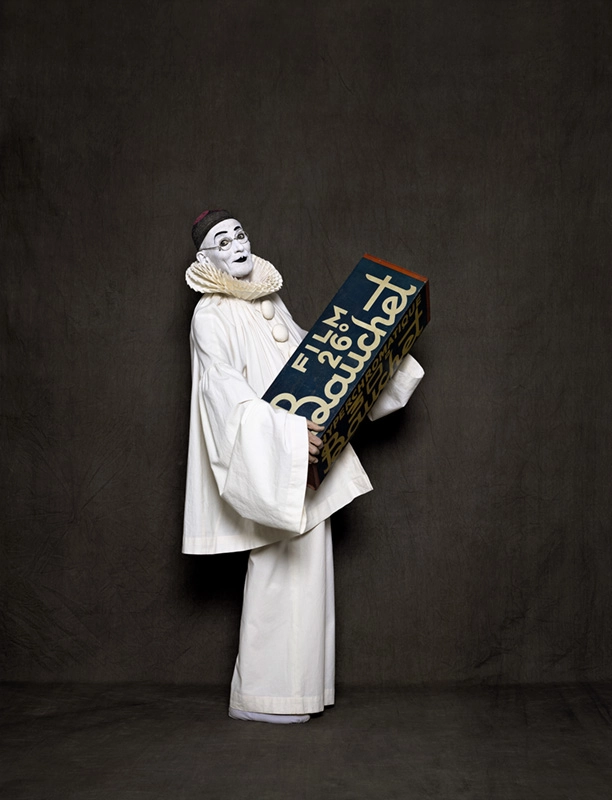
Arnaud Maggs. After Nadar: Pierrot and Bauchet, 2012
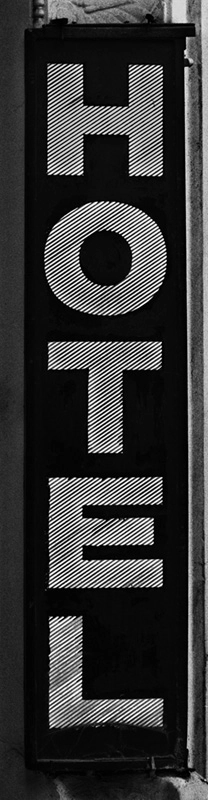
Arnaud Maggs. Hotel, 77 Avenue de St. Ouen, 17e, 1991
Repetition as revelation

In After Nadar, Maggs turns toward photographic history, inserting himself into an existing visual lineage. Recreating and reinterpreting earlier portraits, he adopts the figure of Pierrot while referencing nineteenth-century images by Nadar and his contemporaries. The gesture is repeated across the series, each variation shifting slightly, positioning Maggs within a continuum where past and present begin to overlap.

In Hotel, his attention moves outward to the streets of Paris, where he photographed hundreds of vertical hotel signs. What begins as documentation becomes a form of accumulation, where repetition allows differences to surface. Variations in typography, wear, and placement emerge gradually, transforming the images into a quiet archive of a disappearing visual culture.

Two approaches, one conversation

Moving between the two galleries, the contrast is immediate—but so is the connection. Hurlbut’s images hold the weight of material and memory; Maggs’s work unfolds through repetition and order. One draws inward, the other expands outward, yet both rely on recurrence as a way of seeing.

Together, they suggest that photography is not only about capturing a moment, but about returning to it—again and again—until something else begins to emerge. Meaning is not fixed in a single image, but shaped through variation, accumulation, and time.

For more information about the exhibitions, visit the exhibition websites here and here.

Scroll