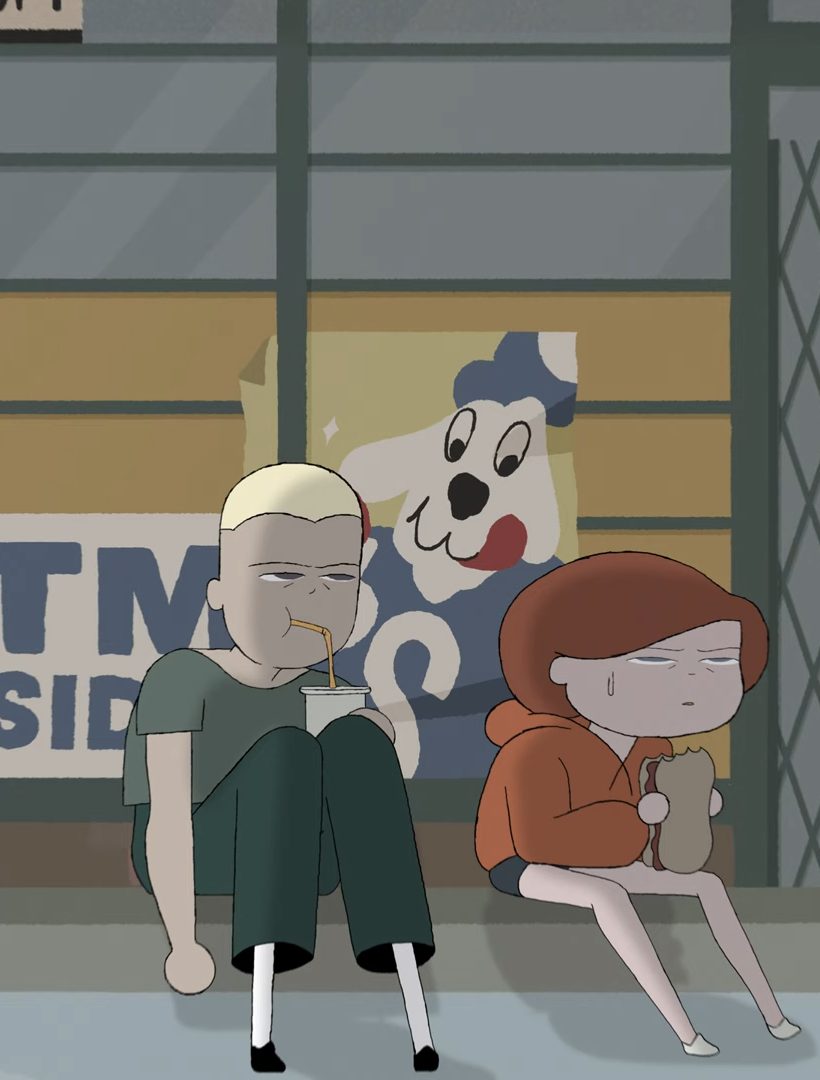
Angine de Poitrine approach sound like something that can be reshaped at will. On their latest release, familiar notes start to feel unstable, as if the ground beneath them has shifted just slightly out of place.



Written by
Nate Kline
in
Sonic Journeys
Creative
Music
Angine de Poitrine Bend the Rules on Every Level
Bending the Instrument Itself
The band leans into microtonality in a way that feels less like a technical exercise and more like a natural extension of their identity. Guitars don’t sit neatly inside familiar scales. Instead, notes land slightly off-center, creating a constant sense of tension that never quite resolves, but never fully breaks either.
Part of that comes down to how the music is built. This isn’t a band working within the usual constraints of their instruments. In fact, at one point, they literally took a saw to a guitar to carve additional frets, opening up new intervals that standard tuning simply doesn’t allow. It’s the kind of detail that tells you everything about their approach. If the structure doesn’t exist, they’ll make it.

Letting the Weirdness Breathe
Because of that, you can hear this mindset across the record. Chords feel unstable in a deliberate way, as if they’re shifting under your feet. Meanwhile, melodies twist just enough to keep you guessing. Even when a groove settles in, there’s always something slightly off in the phrasing or pitch, like the song is refusing to fully align itself.
Still, it never comes across as cold or academic. Instead, there’s a rawness to it, a sense that the band is following instinct as much as theory. The microtonal elements don’t distance the listener. On the contrary, they pull you in, forcing you to adjust your ears, to meet the music where it lives instead of expecting it to come to you.
That might be where the weirdness of Angine de Poitrine really lands. Not just in the altered instruments or unusual tuning systems, but in the way they treat music as something flexible, something that can be bent, stretched, and redefined without losing its emotional core.
It’s not always comfortable. It’s not always easy to follow. But it feels alive in a way that more familiar sounds sometimes don’t.
And once your ears adjust, it’s hard to go back to hearing things the same way again.
Image at the top by Constantin Monfilliette.