Muybridge, or How Motion Was Born
Lila Monroe

How do you capture a changing world in the blink of an eye?

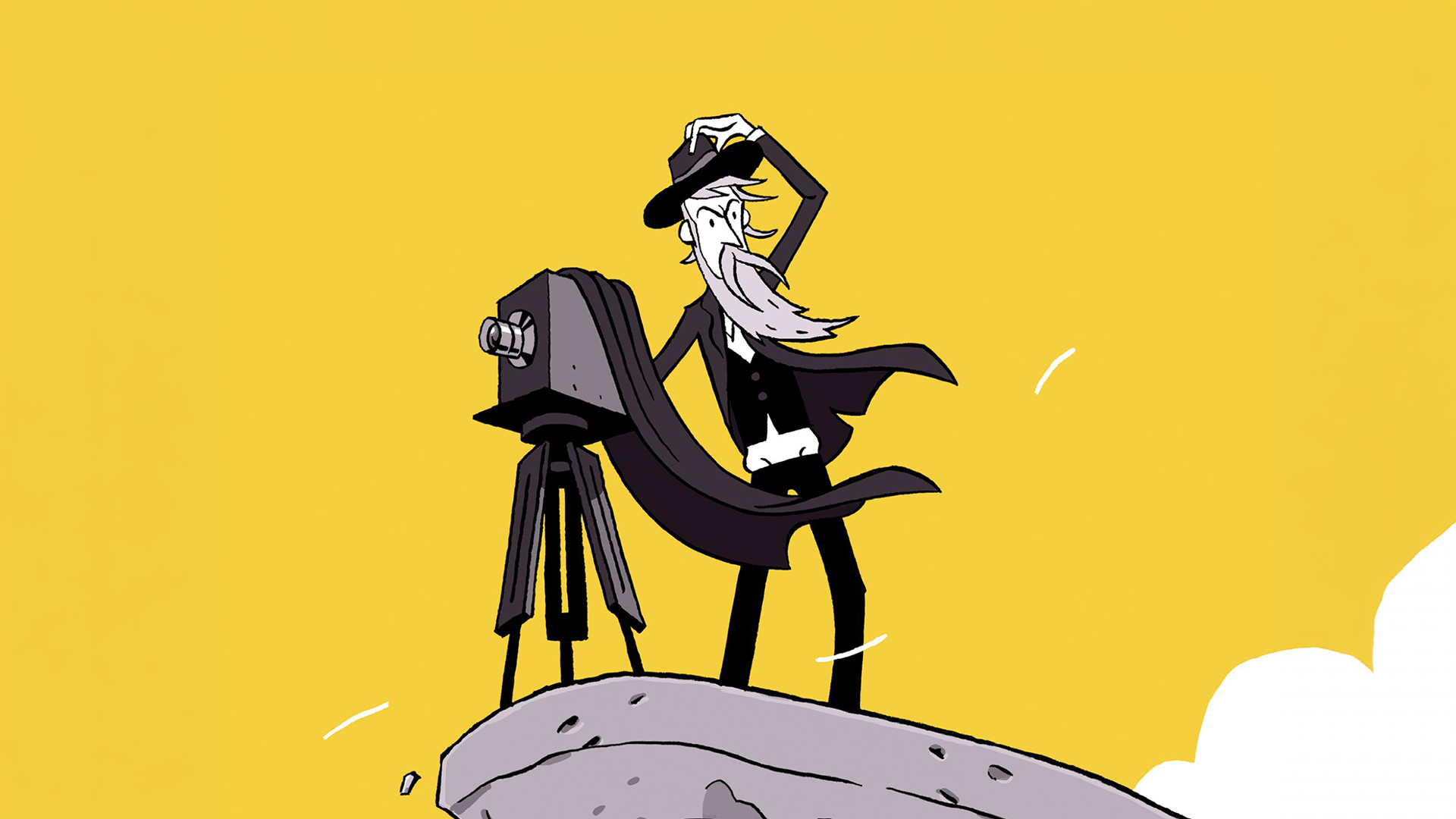
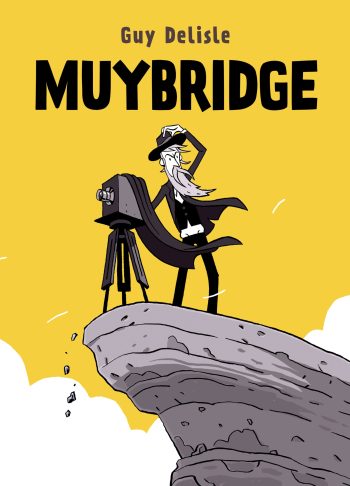
In Muybridge, Canadian cartoonist Guy Delisle turns his attention to one of photography’s most restless pioneers: Eadweard Muybridge — adventurer, innovator, and, at one point, killer. The result is less a tidy historical tribute and more a vivid excavation of ambition in all its brilliance and darkness.

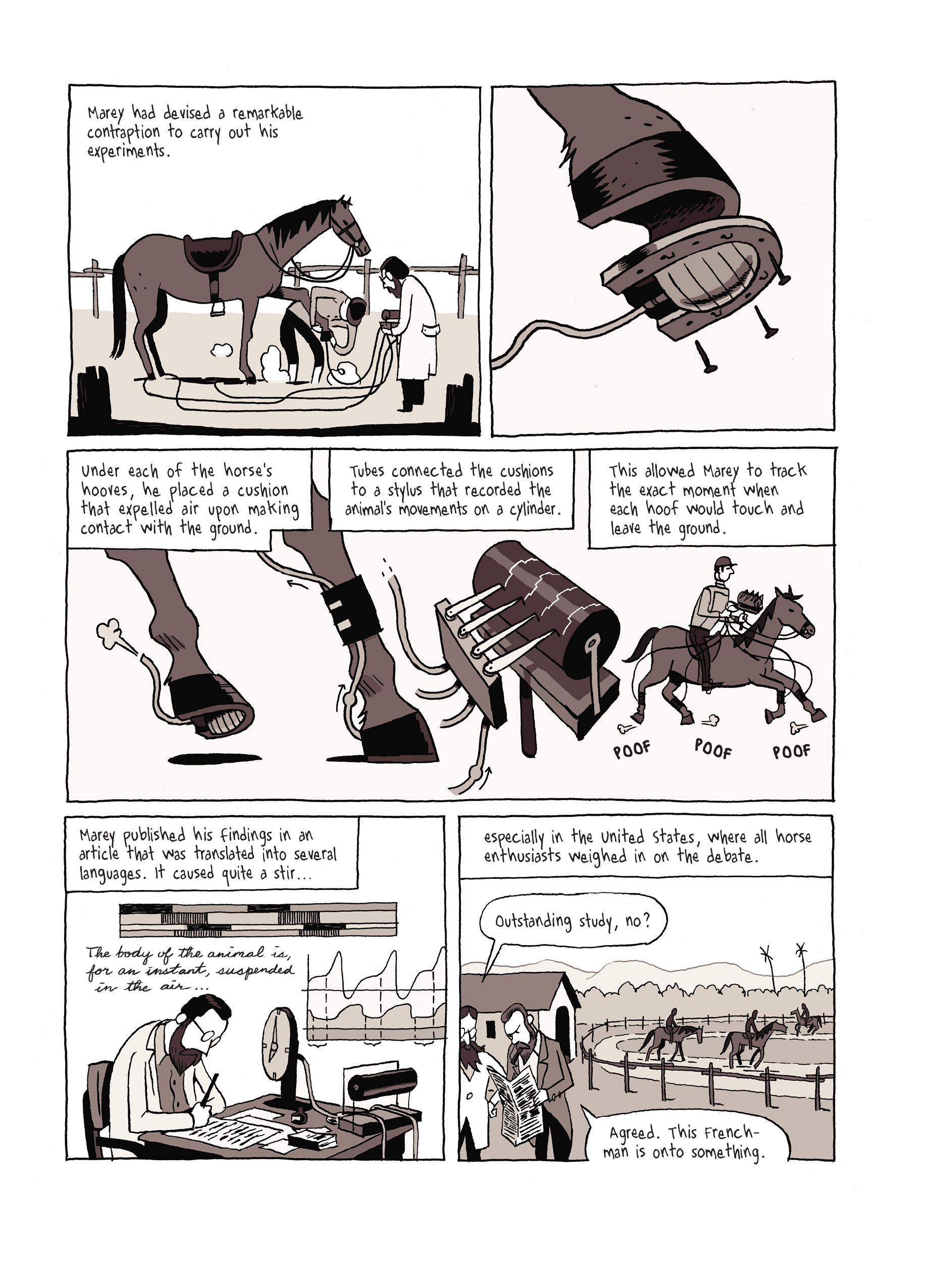
The 19th century was obsessed with progress. Railroads carved through landscapes. Industry redefined wealth. And in California, industrialist Leland Stanford — “the Elon Musk of his day,” as Delisle describes him — became consumed by a question that feels oddly poetic: does a galloping horse ever lift all four hooves off the ground at once? Painters guessed. Debates raged. Muybridge answered — not with words, but with light.

By devising photographic techniques fast enough to freeze motion, Muybridge didn’t just settle an argument. He altered the trajectory of visual culture. His sequential images of horses in motion would eventually lead to the zoopraxiscope, a device that prefigured cinema itself. In Delisle’s hands, this breakthrough feels electric — part scientific inquiry, part artistic revolution.
Click to see motion begin

But what makes this graphic biography compelling isn’t just innovation. It’s contradiction. Delisle refuses to polish his subject into a saint of progress. We see Muybridge’s near-fatal stagecoach accident, his obsessive drive, and the infamous murder of his wife’s lover — depicted in a chilling motion-study sequence that mirrors his photographic experiments. The man who made images move lived a life propelled by extremes.

Delisle, known for works like Pyongyang and Hostage, approaches biography with the same quiet precision he brings to travelogue and memoir. His clean lines and measured pacing allow the era’s technological fever to unfold without spectacle. There’s a subtle dialogue here between old and new mediums: photography challenging painting, cinema emerging from stillness, and now comics retelling it all — by hand.

What lingers after the final page is a reminder that progress rarely arrives cleanly. It is fueled by ego, rivalry, obsession, and sometimes violence. Yet it also carries wonder. Muybridge’s images still feel alive — fragile frames that contain the first heartbeat of cinema.

In telling the story through drawn panels, Delisle performs a quiet sleight of hand: he uses one of the oldest artistic tools to chronicle the birth of moving images. And in doing so, he suggests something reassuring — that even in an age of relentless technological acceleration, the human hand still matters.

A page from "Muybridge, by Guy Delisle
Scroll