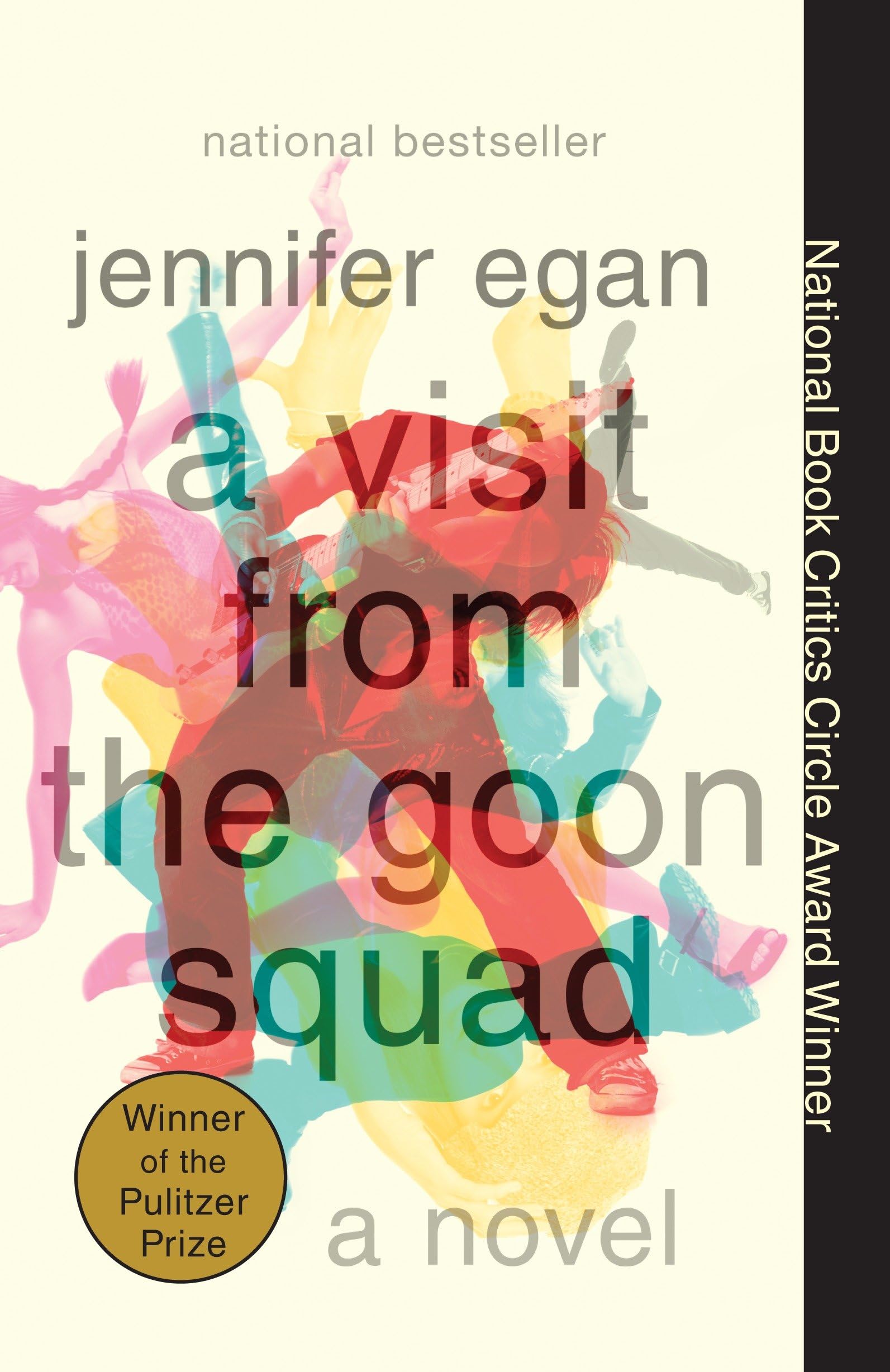

There are novels that move in straight lines, and then there are novels that drift, rewind, leap forward, and quietly rearrange you while you’re trying to understand them. A Visit from the Goon Squad belongs to the second category. It doesn’t unfold so much as it ricochets — across decades, across voices, across the music industry and the lives orbiting it.
Jennifer Egan builds the book like a mixtape. Each chapter feels like its own track, told from a different perspective: a disgraced music executive, his punk-rooted assistant, a teenage girl navigating privilege and insecurity, a washed-up publicist, a safari guide, even a PowerPoint presentation that somehow becomes one of the most emotionally precise chapters in the novel. It shouldn’t work. But it does — because the throughline isn’t plot. It’s time.
The “goon” of the title is time itself. Time as erosion. Time as reinvention. Time as the quiet force that reshapes careers, friendships, bodies, and entire industries. Egan sets much of the novel inside and around the music business — record labels, PR spin, aging rock stars trying to stay relevant — but what she’s really tracing is how identity shifts under pressure. How we edit ourselves to survive.
For anyone interested in creative culture, the book feels especially sharp. It captures that strange tension between authenticity and performance that runs through music scenes — the hunger to be original, the fear of being forgotten. And yet, it never romanticizes the industry. There’s humor here, yes, but also melancholy. Characters chase relevance, love, escape, control — and often find something messier instead.