Cara Barer | Wandering: Books, Maps, and Memory at Bau-Xi Gallery
Zoë Marin
Written by Zoë Marin in Beyond the Frame Art & Design Creative Photography

Cara Barer | Wandering: Books, Maps, and Memory at Bau-Xi Gallery

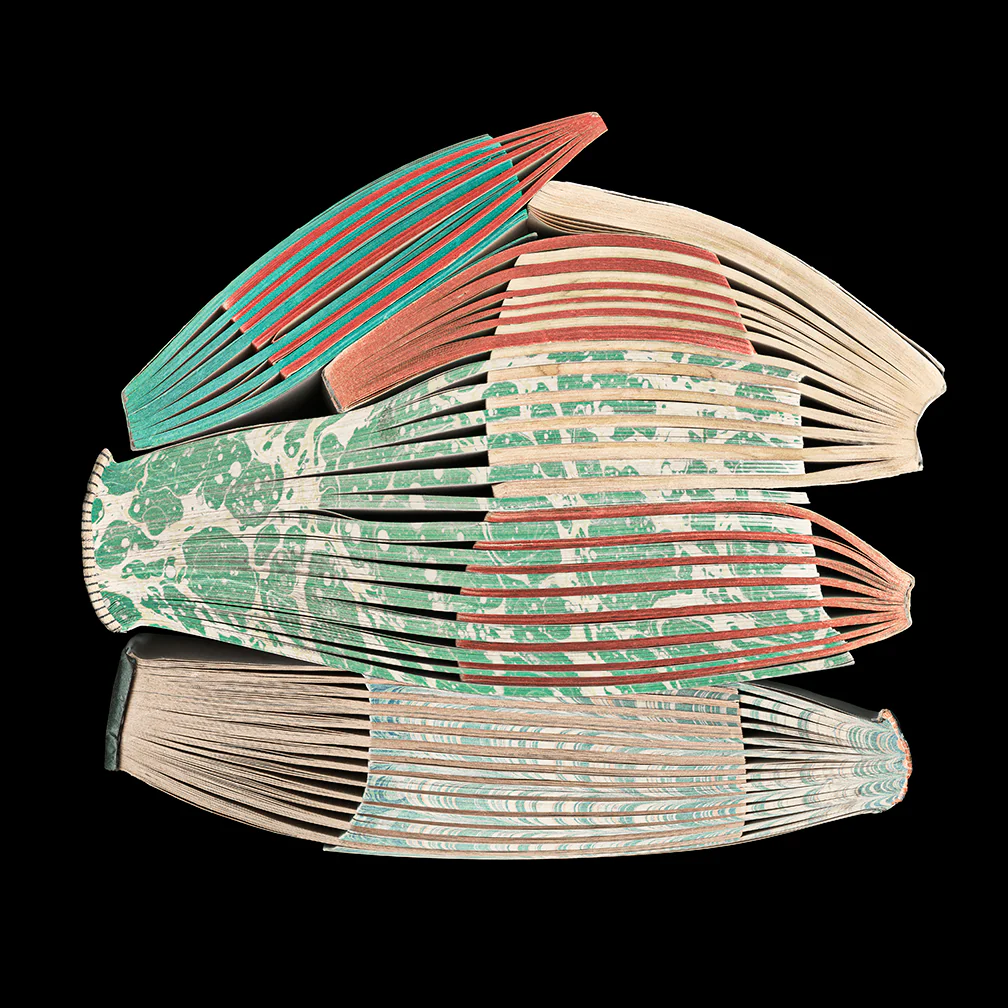
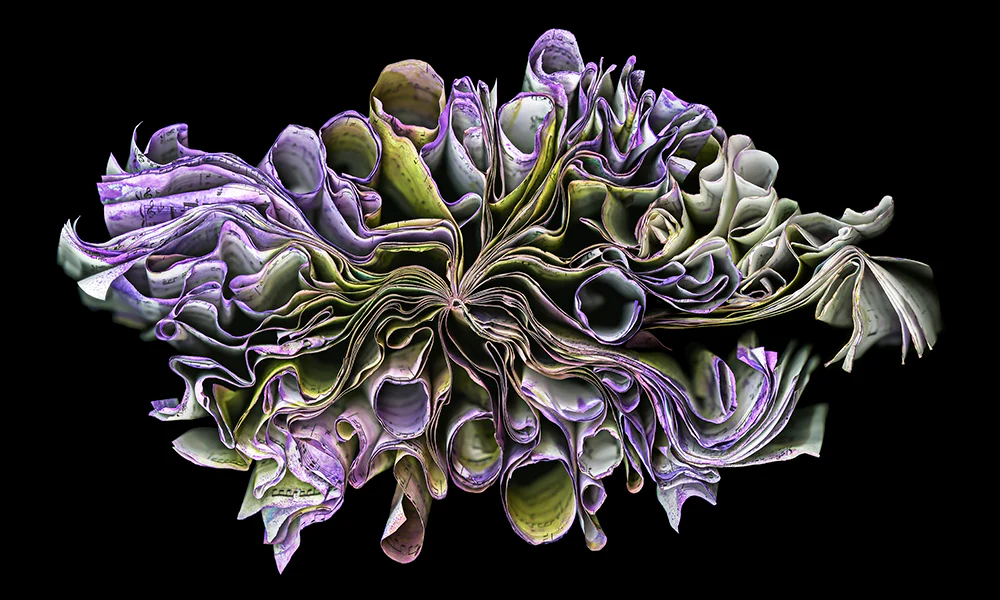
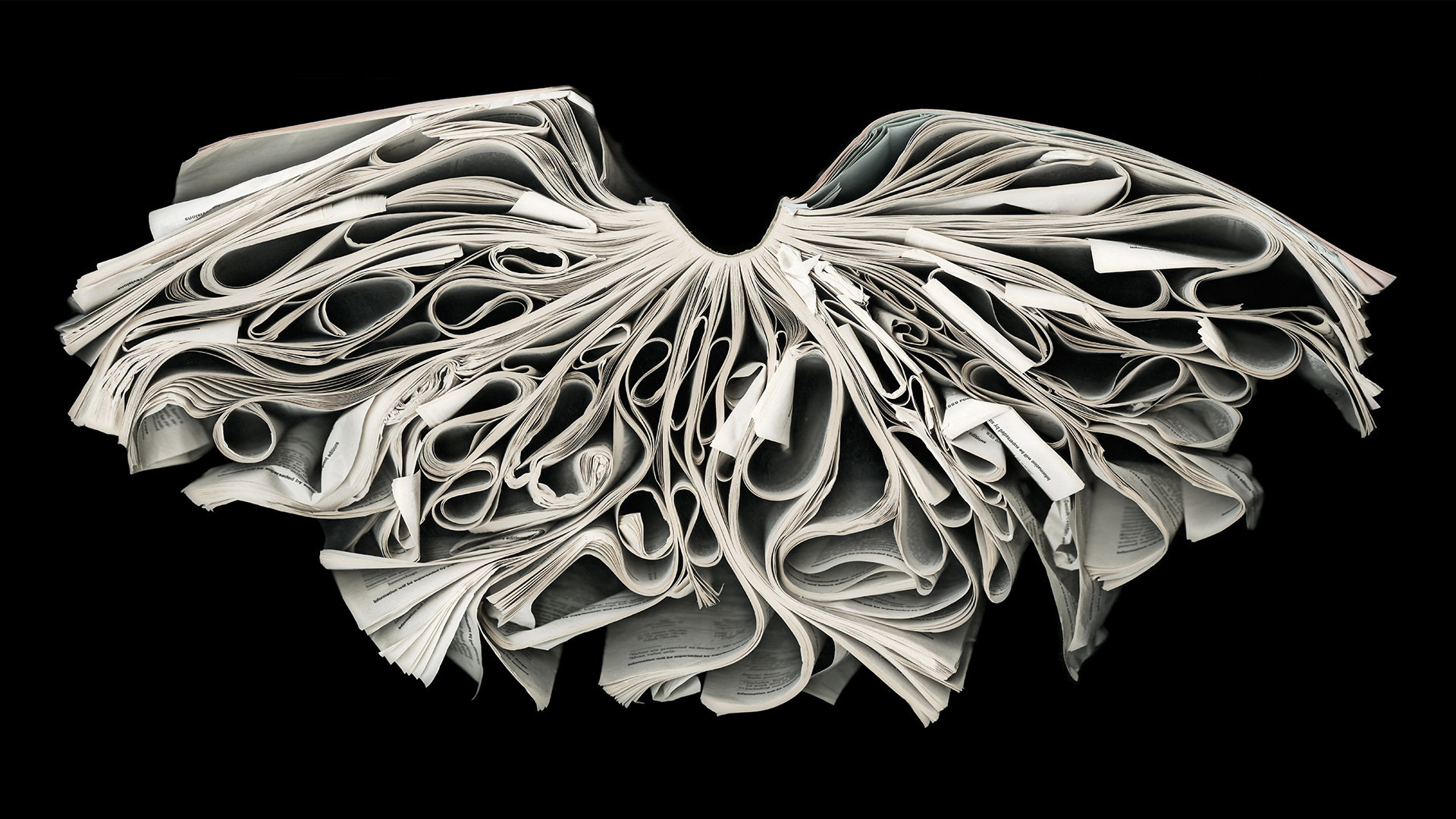
At first glance, Cara Barer’s photographs feel playful — vibrant abstractions of books, maps, and printed matter transformed into sculptural forms. Look closer, and they reveal a meditation on information, impermanence, and our growing shift from physical to digital worlds. Barer bends and reshapes reference books, atlases, and maps into coiled, compressed forms, then photographs them with careful attention to balance and texture. The result invites us to reconsider these once-essential objects and how their meaning has shifted in the 21st century.

Barer’s process begins long before the camera, with her hands and stacks of obsolete printed materials. She soaks, folds, dyes, and compresses discarded books and paper, transforming them into sculptural forms that challenge the idea of books as fixed vessels of knowledge. Each volume becomes fragile and fluid, reflecting her ongoing concern with how information can erode in a world increasingly dependent on digital systems. Photography then preserves these temporary forms, capturing a precise moment of physical and conceptual transformation.
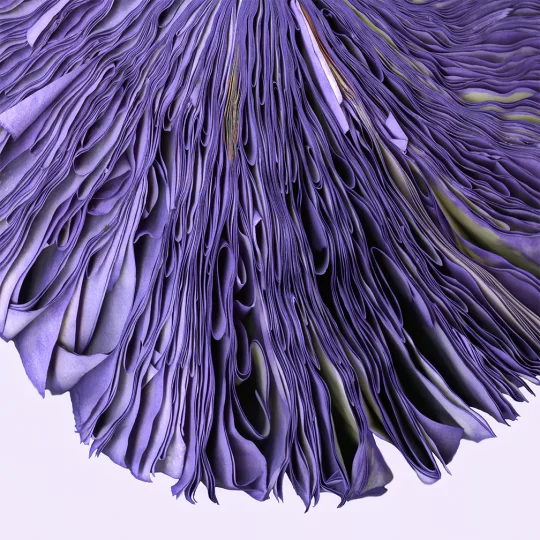
Violet, by Cara Barer
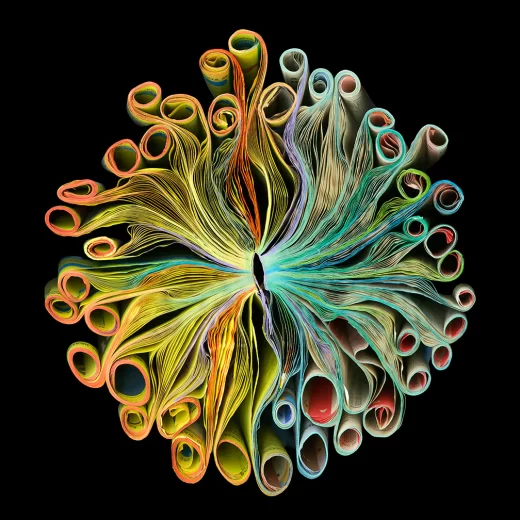
Dawn and Dusk, by Cara Barer

Bau-Xi Gallery presents Wandering, on view February 5 through March 2, 2026, at its Dufferin Street space in Toronto. The exhibition focuses on printed materials once meant to guide us — maps, journals, and travel books — reimagined as contemplative objects rather than practical tools. Through soaking, folding, and reshaping these sources, Barer highlights their physical presence while dissolving their original function, inviting viewers to reconsider how we navigate knowledge and our place in an ever-shifting world.

The photographs in Wandering emphasize the tension between presence and erosion. In one composition after another, spirals of paper and maps unfurl like organic forms — reminiscent of shells, waves or topographical curves — suggesting movement even in stillness. These images gesture toward the history carried within printed matter and the fragility of that history in an era dominated by screens and digital navigation. In Barer’s thoughtful hands, books and maps become both memory and metaphor, making tangible the intangible transitions between eras and technologies.

Barer’s interest in formal balance — a preference for symmetry and composed structures — further amplifies the quiet poetry of these works. Each piece plays with shape and tension, inviting viewers to notice how light, shadow and curve interact to make a static object feel alive. Her use of archival pigment prints and careful photographic framing underscores the significance of the original material, transforming the previously overlooked into objects of beauty that honor, rather than erase, their past lives.

Throughout her career, Barer has exhibited extensively across North America and internationally, and her work has appeared in publications and collections that reflect its broad appeal and intellectual depth. Despite her international recognition, her newest body of work continues to foreground fundamental questions about how we access and accumulate information, and what physical remnants of human knowledge mean in the age of digital navigation.

To explore Barer’s evocative world of sculpted books and reimagined maps in person, visit Bau-Xi Gallery for exhibition details and hours. For a deeper look into her practice and ongoing explorations, head to her website.

Victorian Pulp, by Cara Barer
Dreamscape, by Cara Barer
Scroll