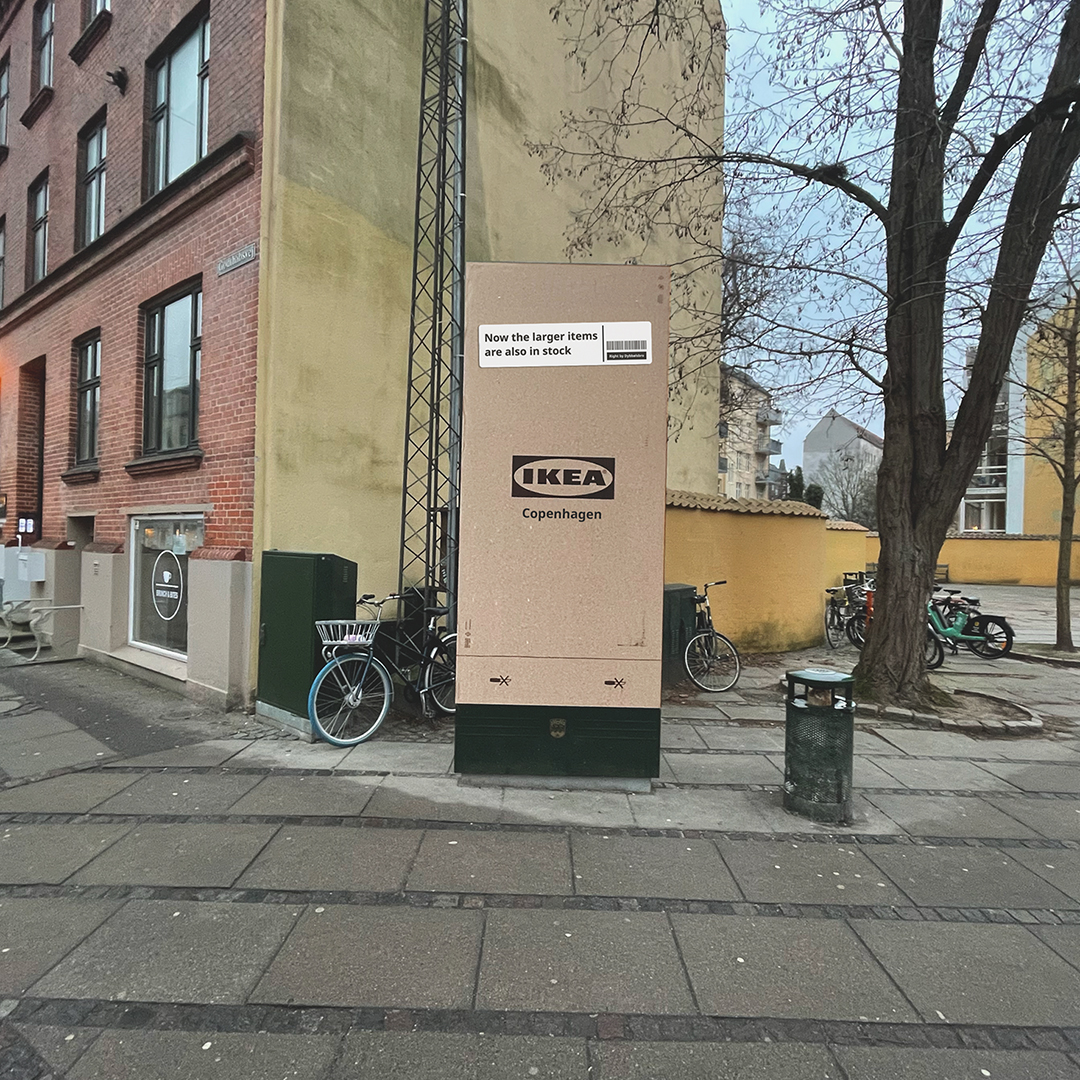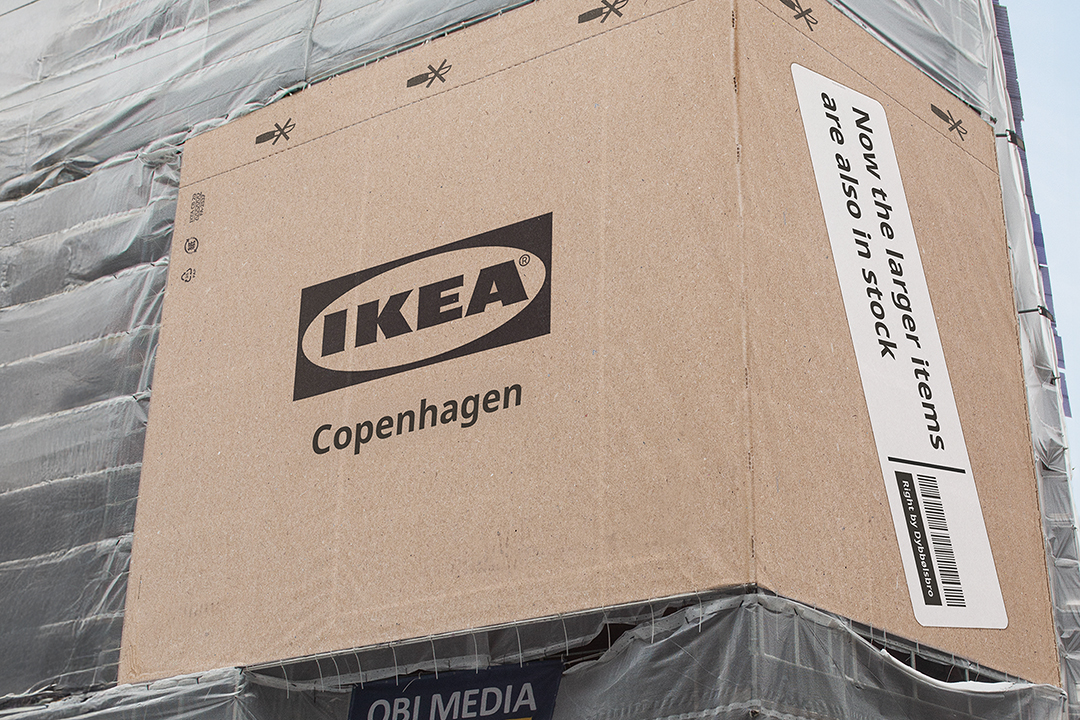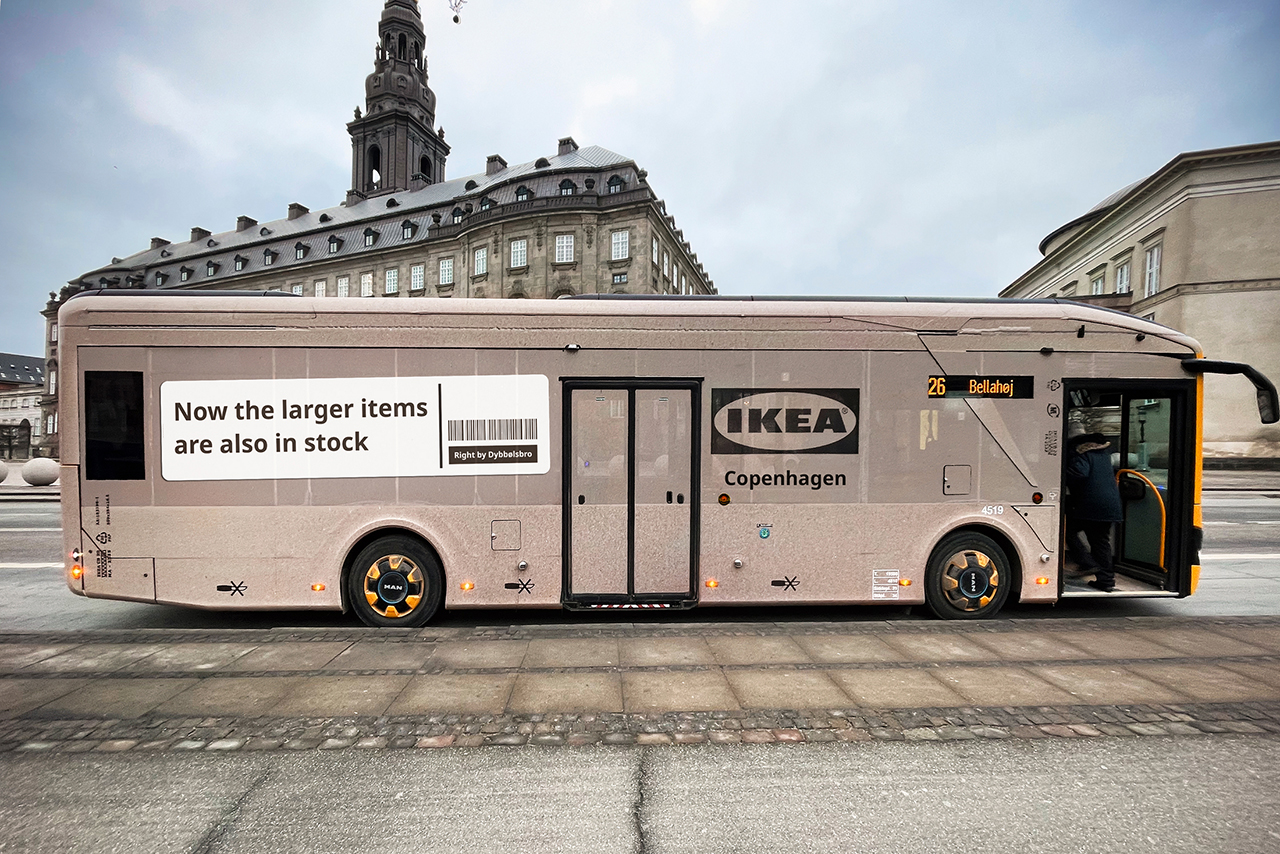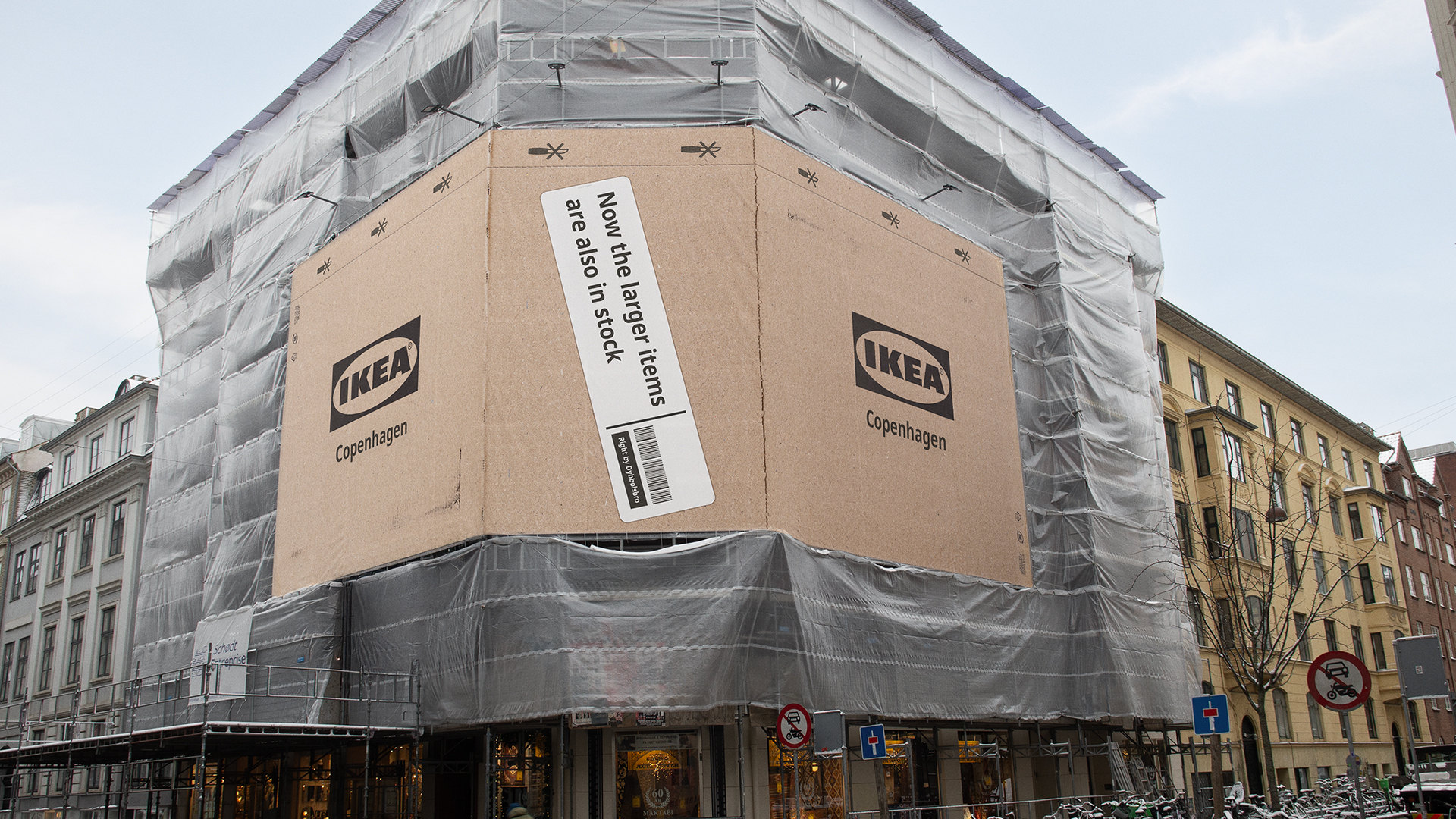

In a world where most ad campaigns shout benefit lists and price tags at you, IKEA Copenhagen went in a refreshingly literal direction: it wrapped the city in giant flat-pack graphics to say one simple thing — big items are now in stock right in the city centre. No buzzwords. No product carousel. Just cardboard logic turned public art.
The challenge? Many Copenhagen locals treated the city-centre IKEA like a showroom — great for inspiration, less great when it came to buying a sofa, a wardrobe, or anything bulky and wanting to take it home today. IKEA has since expanded its warehouse capacity so that larger items are available for immediate pick-up — and to make sure everyone actually knows that, the brand transformed everyday urban touchpoints into oversized versions of its iconic packaging. Buildings, buses, shelters and scaffolding all got the flat-pack treatment, bringing IKEA’s visual world into the streets in a way that feels playful, practical and unmistakable.
The campaign — titled “IKEA – Flatpack CPH” — was created in collaboration with Danish agency Marketsquare, and executed in partnership with Dentsu Denmark. The idea plays brilliantly on one of IKEA’s strongest brand codes: its simple brown cardboard boxes and distinctive labels. When you see them, you instantly think furniture, accessibility, and that satisfying “aha” of a design that just works.