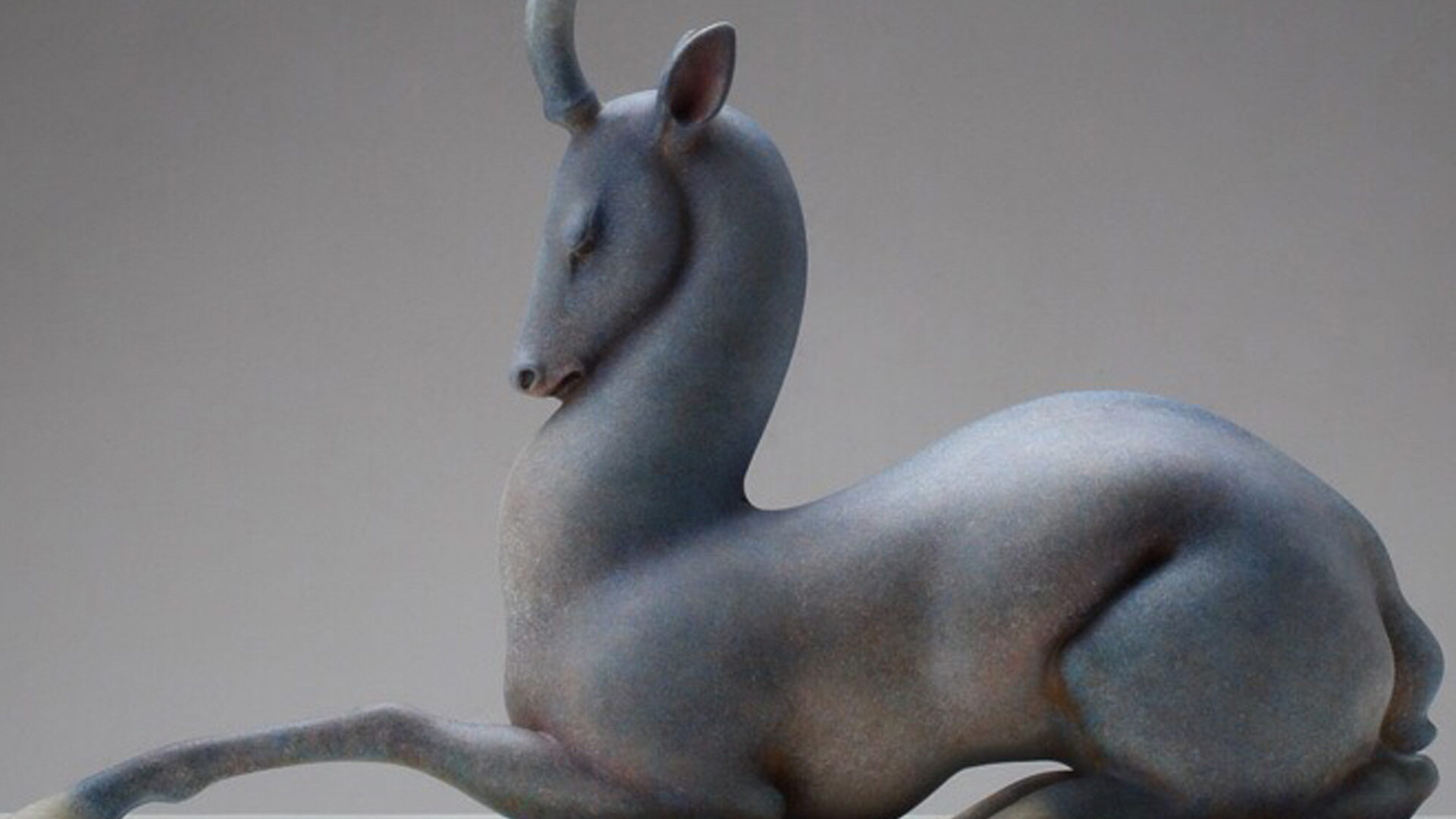
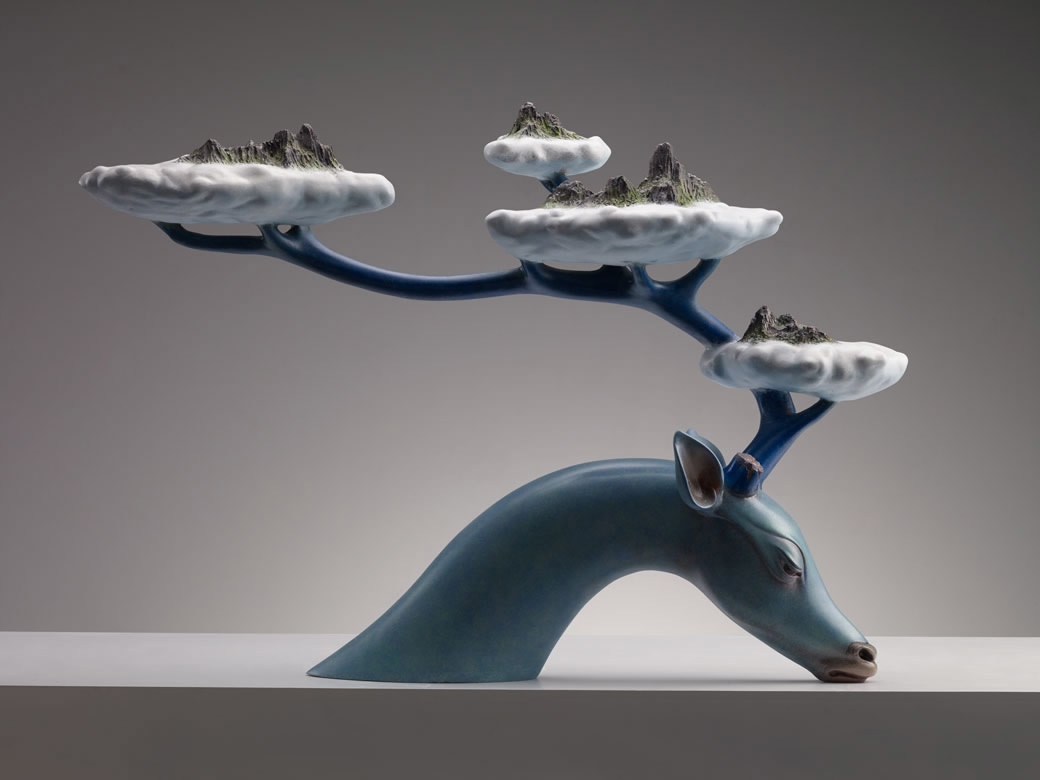
What fascinates me about Ruilin is how seamlessly he merges the natural world with mythology. His influences range from Chinese folklore to surrealism, but his execution feels distinctly personal. Each sculpture suggests weight and presence, yet somehow remains poetic—like visual haikus cast in metal. There’s a reverence for both animal form and geographical mass that makes you pause. These aren’t just works of art. They’re meditations.
As someone obsessed with blending analog textures and digital precision, I find his approach grounding. Ruilin works primarily with bronze, a medium that practically screams “tradition.” But he uses it to create pieces that feel timeless in a different way—not rooted in history, but in dreams, archetypes, and the space between waking and sleeping. There’s no tech gimmick here, no flashy effects. Just raw form and feeling. And in a world saturated with digital noise, that kind of purity hits hard.
Let’s talk about the storytelling baked into his sculptures. When you look at a Ruilin whale cresting with a mountain range on its back, it’s hard not to feel like you’re seeing a visual myth unfold. There’s something ancient in that image—like you’ve stepped into a story that’s been waiting centuries to be told. And honestly? That’s what good art should do. It should feel both familiar and new. Grounded and elevated. Symbolic but tactile.
What really hooks me is the balance he strikes. His animals are stoic—silent, still—but never cold. They hold an emotional weight that’s tough to articulate. Maybe it’s the way they seem to carry the world, or how their postures suggest endurance without struggle. There’s no drama in these forms, just presence. It’s like they’ve accepted their role in the grand cosmic order and found peace in it. That kind of serene strength is rare in sculpture, and Ruilin captures it with grace.
And here’s the kicker: even though his work is rooted in personal vision and cultural memory, it speaks universally. You don’t need to know Chinese folklore to be moved by a mountain-elephant hybrid. You don’t need to study sculpture to recognize that you’re looking at something sacred. That’s the mark of a master—someone who communicates without over-explaining, who shapes silence into meaning.
Wang Ruilin reminds me why I fell in love with visual storytelling in the first place. His sculptures are reminders that art doesn’t have to shout to be powerful. Sometimes, it’s the quietest voices—the most elemental forms—that echo the loudest.
So next time you’re racing through your feed, chasing the next dopamine hit of bright colors and flashy designs, stop for a second. Look at one of Ruilin’s whales or oxen. Let it pull you in. Let it slow you down. Because sometimes, the most surreal thing we can do is reconnect with the natural world—and see it not just as it is, but as it could be.