William Gibson’s Pattern Recognition opens in a world that feels uncannily familiar, even though it was written before social media hardened into daily ritual. The novel moves through airports, cafés, anonymous offices, and half-remembered streets with the quiet tension of someone constantly scanning their surroundings. Not for danger exactly — but for meaning. For what feels real, and what doesn’t.



At the center of it all is Cayce Pollard, a woman whose relationship with branding borders on allergic. Logos make her physically uneasy. Certain designs repel her, others calm her, and she navigates the world through these visceral reactions. It’s a strange gift, one that turns everyday environments into emotional landscapes. Billboards, product names, typography — nothing is neutral. Everything communicates, whether it wants to or not.
Gibson’s genius isn’t in predicting specific technologies, but in capturing a mindset. Pattern Recognition understands what it feels like to live surrounded by manufactured signals, to sense that culture is being shaped invisibly, faster than anyone can fully process. The novel moves at the speed of intuition rather than exposition. You don’t read it so much as drift through it, following hunches, half-formed ideas, and fragments that slowly begin to align.
Threaded through the story is the mysterious footage — short, haunting clips circulating online, stripped of context and origin. People obsess over them, dissect them, form communities around them. Long before algorithms learned how to feed obsession, Gibson recognized the pull of unfinished narratives. The footage isn’t just content; it’s a mirror, reflecting the audience’s hunger to believe that something untainted still exists out there.
What makes the book linger is its sensitivity to atmosphere. Pattern Recognition is less interested in plot twists than in perception itself. Cayce’s way of moving through the world — cautious, observant, emotionally calibrated — feels increasingly relatable. Taste becomes instinct. Attention becomes currency. Knowing when to disengage is as important as knowing when to lean in.
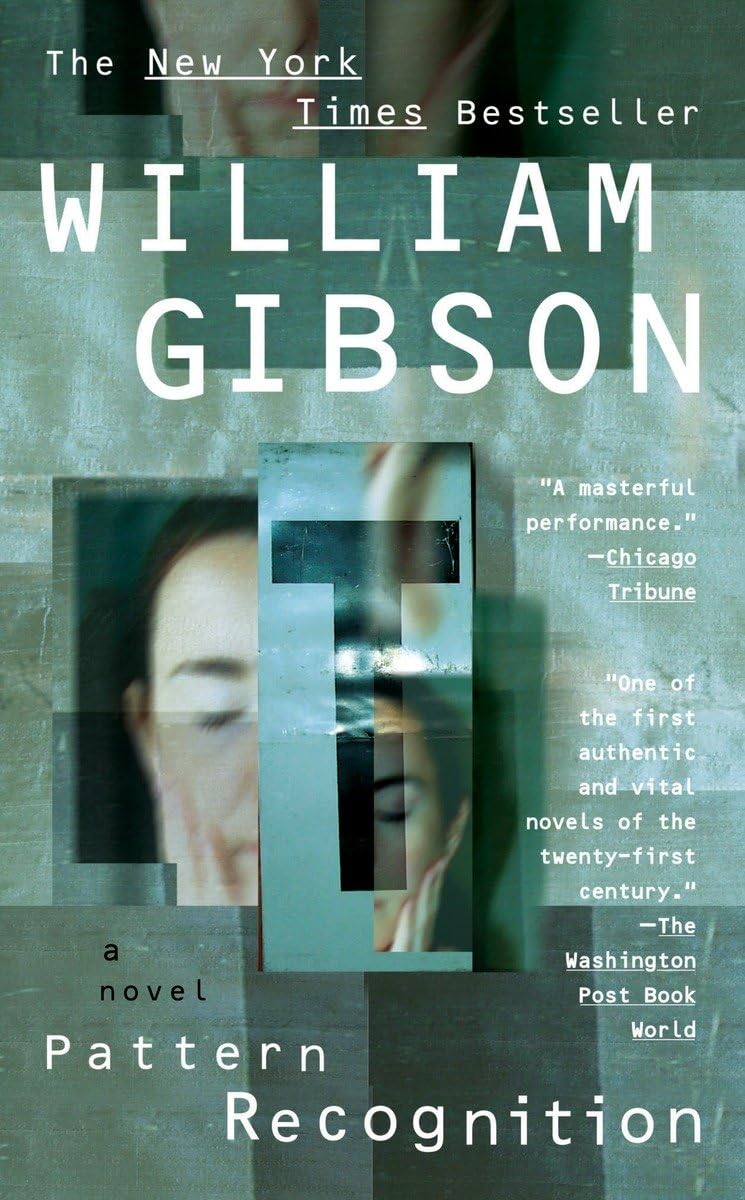
There’s also a quiet melancholy running beneath the novel. A sense that originality is fragile, that sincerity is rare, and that even resistance can be co-opted. Yet Gibson never tips into cynicism. Instead, he suggests that awareness — noticing patterns before they harden — might still offer a way through.
Reading Pattern Recognition now feels like opening a time capsule that somehow predicted the present without naming it. It doesn’t shout its ideas. It trusts the reader to feel them. And once you do, it’s hard to look at the world — or its signals — quite the same way again.