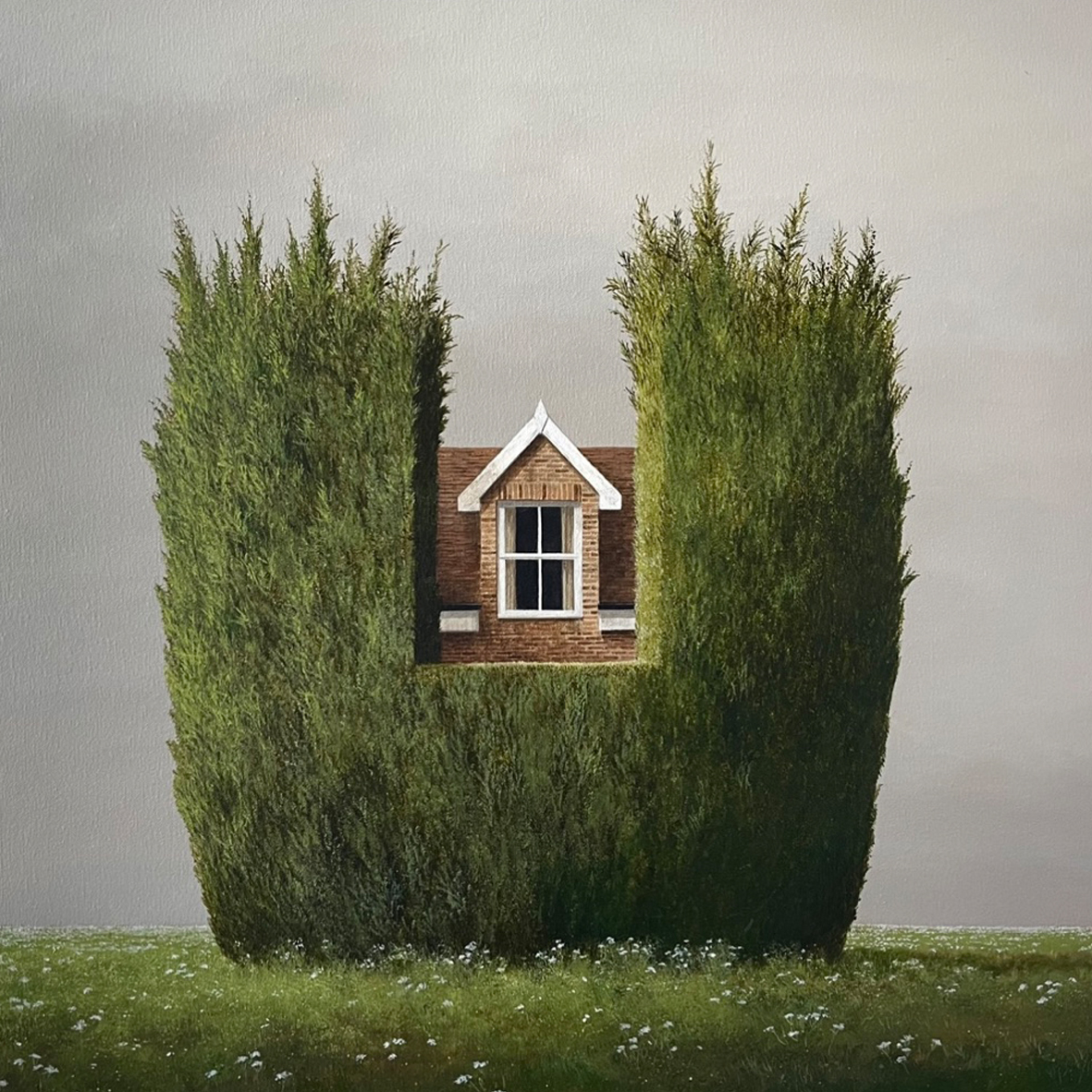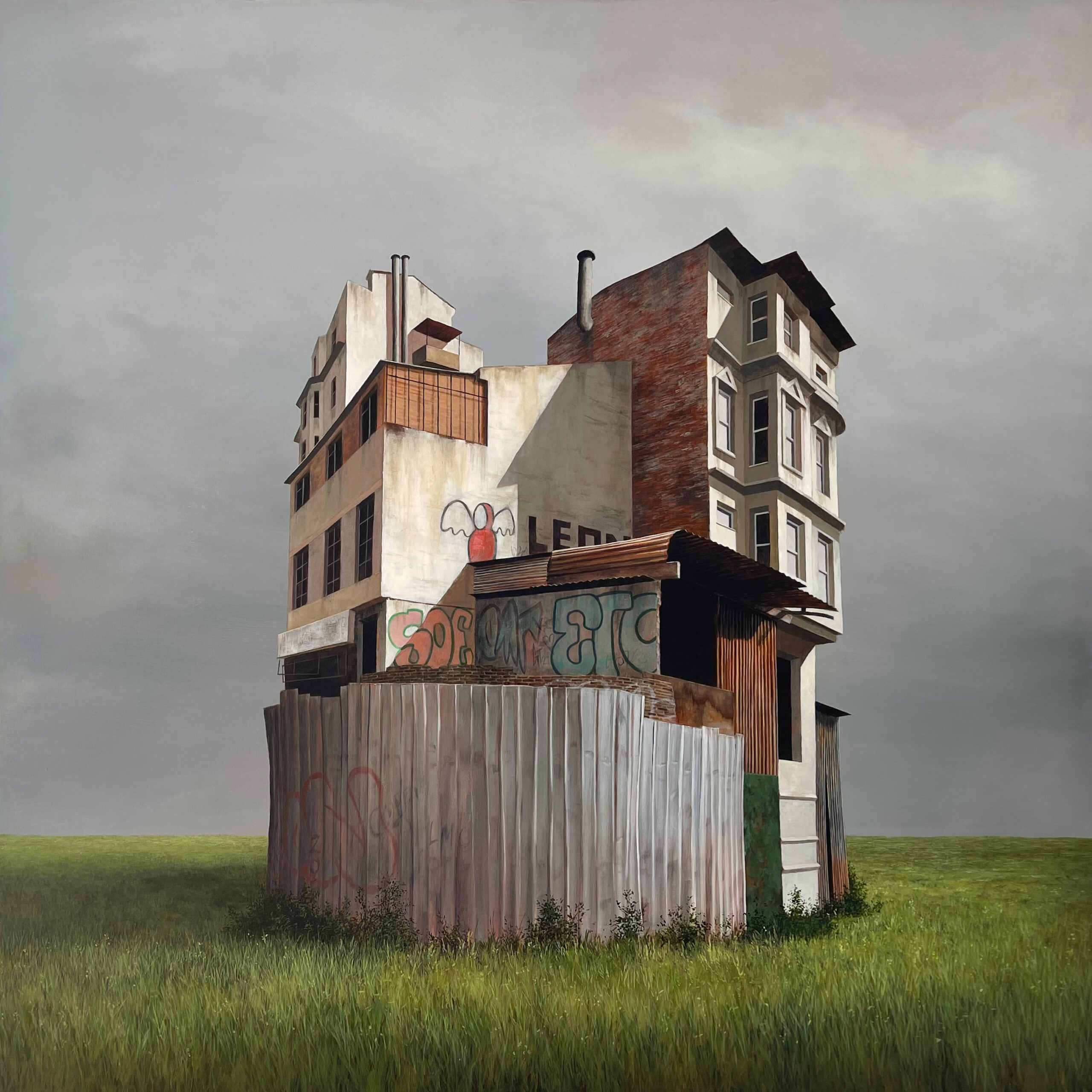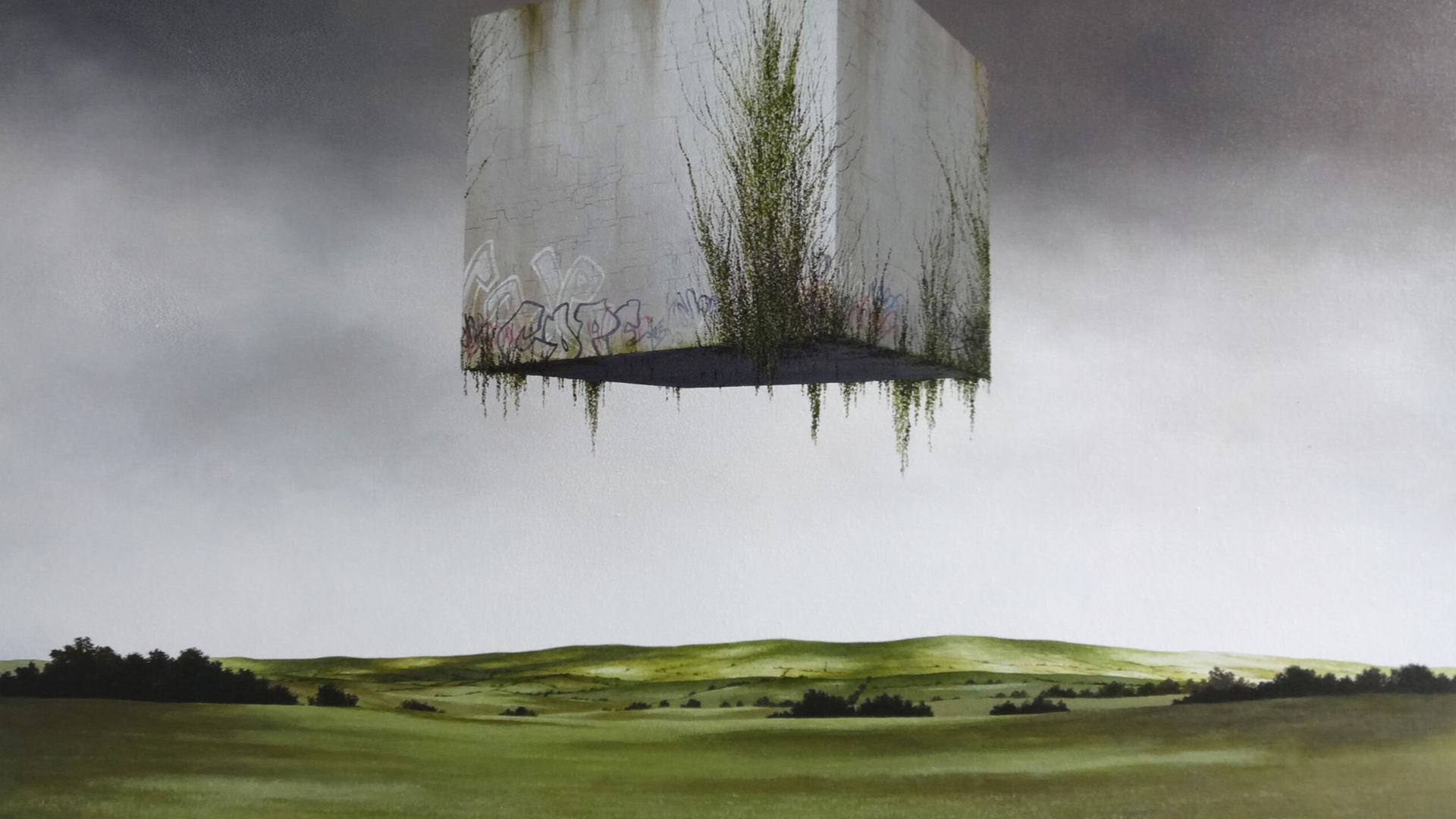

Lee Madgwick paints buildings that breathe—or at least, feel like they might any second. Born in King’s Lynn, England, he studied graphic design before turning his eyes to scenes of abandonment, isolation, and what he calls “imagined realism.” His work sits in that strange zone where urban decay meets quiet fantasy, with a mischievous edge under every crumbling façade.
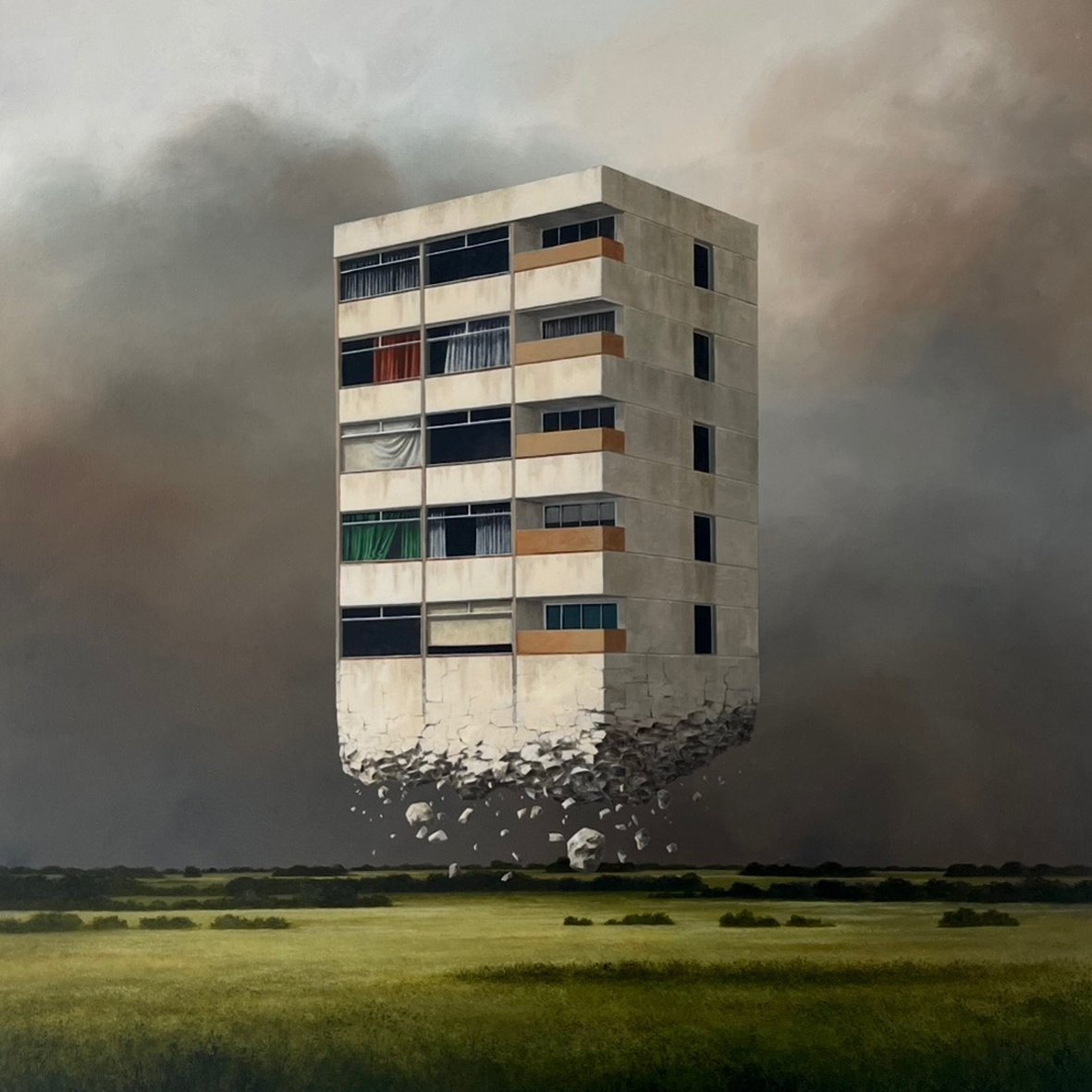
When you see one of Madgwick’s paintings, you catch a glimpse of a structure that’s just slightly off. In Drift, bricks drift away from a minimal shell, floating upward. In Fracture, a monolithic apartment building hovers over green fields, crumbling from beneath. The scenes are silent, deserted, yet they crackle with possibility. There’s no one in sight—but you know someone was here. Or will be.
What I dig most is how he balances nostalgia with menace. The skies are painted with hands and fingertips, full of moody grays that feel alive. Urban architecture—usually rigid and immovable—becomes fragile in his hands. The walls peel, the paint tears, vines creep into corners. Nature and man-made forms war and whisper at once.