What if everything you saw was seven years old?
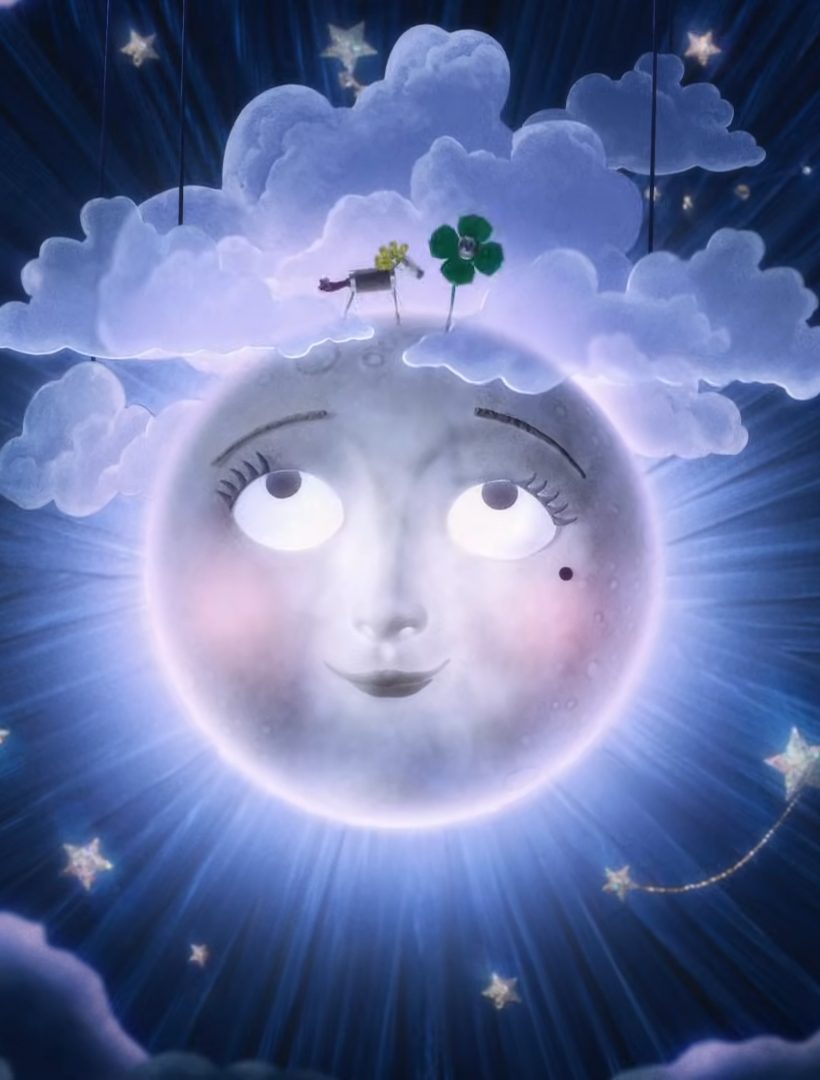
That’s the quietly surreal premise behind Slow Light, a haunting and visually stunning stop-motion short by the Polish duo Katarzyna Kijek and Przemysław Adamski. In just ten minutes, the film takes us through a man’s entire life lived out of sync with the present — his eyes so delayed that every event he witnesses is years behind. The result is part metaphor, part sci-fi fable, and entirely unforgettable.
Crafted using thousands of hand-cut paper silhouettes and multi-plane compositing, Slow Light blends analog technique with meticulous precision. The result is a dreamlike tapestry of layered visuals that feel weighty and ephemeral at the same time — like memories themselves. Every frame carries intention, from the ethereal use of color to the grain of the textures, evoking a lived-in world that’s both ordinary and quietly magical.
There’s no dialogue, and there doesn’t need to be. The story unfolds like a memory — fragmented, nonlinear, almost whispered. We see our protagonist as a child, perplexed by the disconnect between his surroundings and his reactions. We watch him grow up, get married, lose loved ones, and ultimately confront the present — a moment he’s never been able to fully inhabit. It’s a slow-motion tragedy about the danger of always looking backward, and the quiet grief of missing life as it happens.
Rather than hitting us over the head with its message, Slow Light lets it gently emerge. That emotional restraint is powerful — it invites us to reflect instead of react. And for me, that’s what really elevates this piece. It’s not just a technical marvel; it’s a meditation. On perception, on loss, on the way we process time. On how, sometimes, the past keeps echoing long after the moment is gone.
I’ve admired Kijek and Adamski’s work for a while now — their blend of handcrafted visuals and conceptual storytelling feels utterly their own. Slow Light continues that trajectory with an added sense of narrative gravity. It doesn’t just show off technique; it shows how technique can serve a feeling. A sensation. A quietly devastating truth.
Watching it, I couldn’t help but wonder: What would I see if my eyes lagged behind by seven years? Who would still be in my life? What moments would I witness again — not in nostalgia, but in delay?
And maybe more importantly: what am I missing right now, by being too wrapped up in the past?