Troy Brooks: The Beautifully Strange World of Pop Surrealism
Elliott Brooks
Written by Elliott Brooks in Dimensions Art & Design Creative

Troy Brooks: The Beautifully Strange World of Pop Surrealism

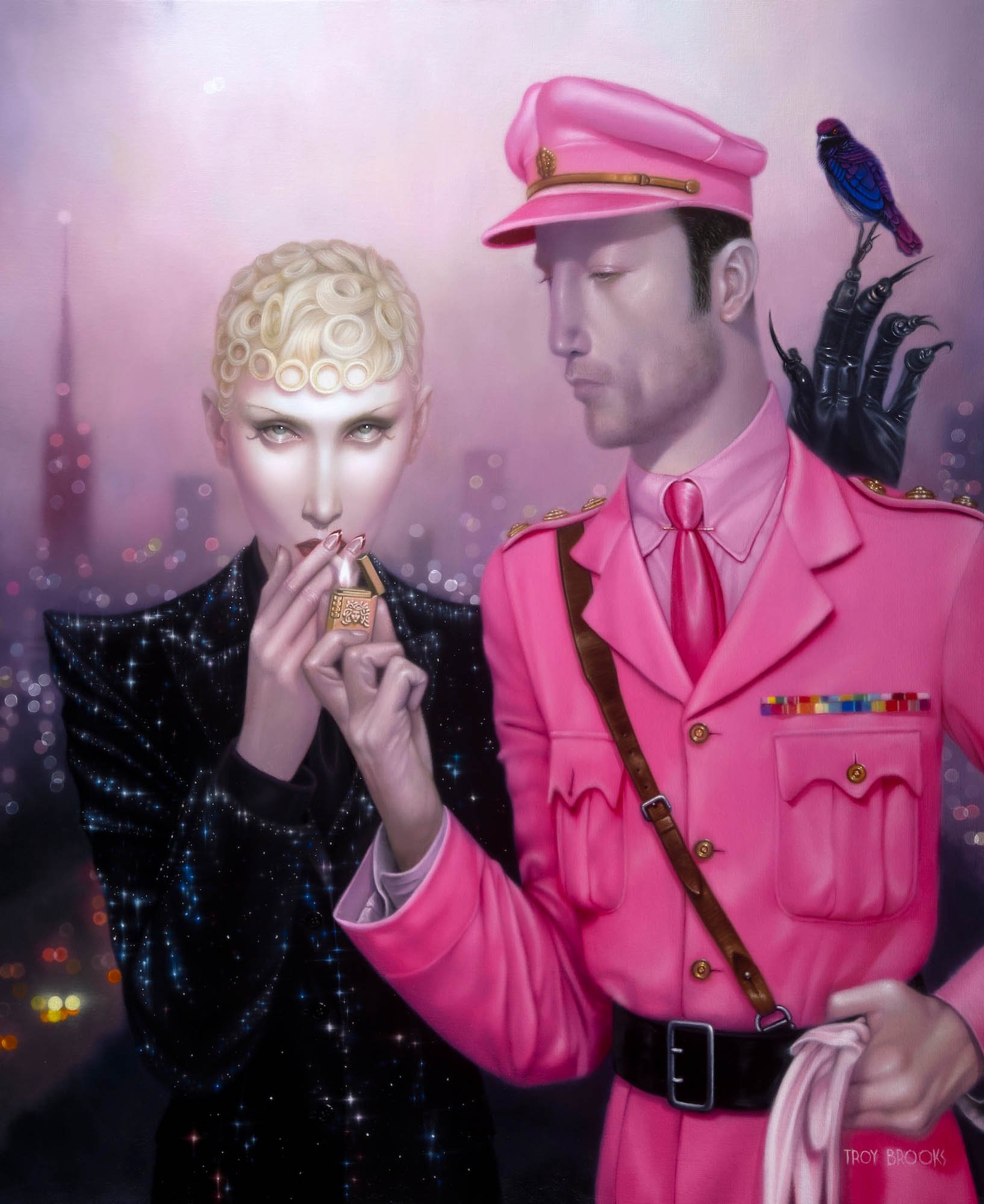
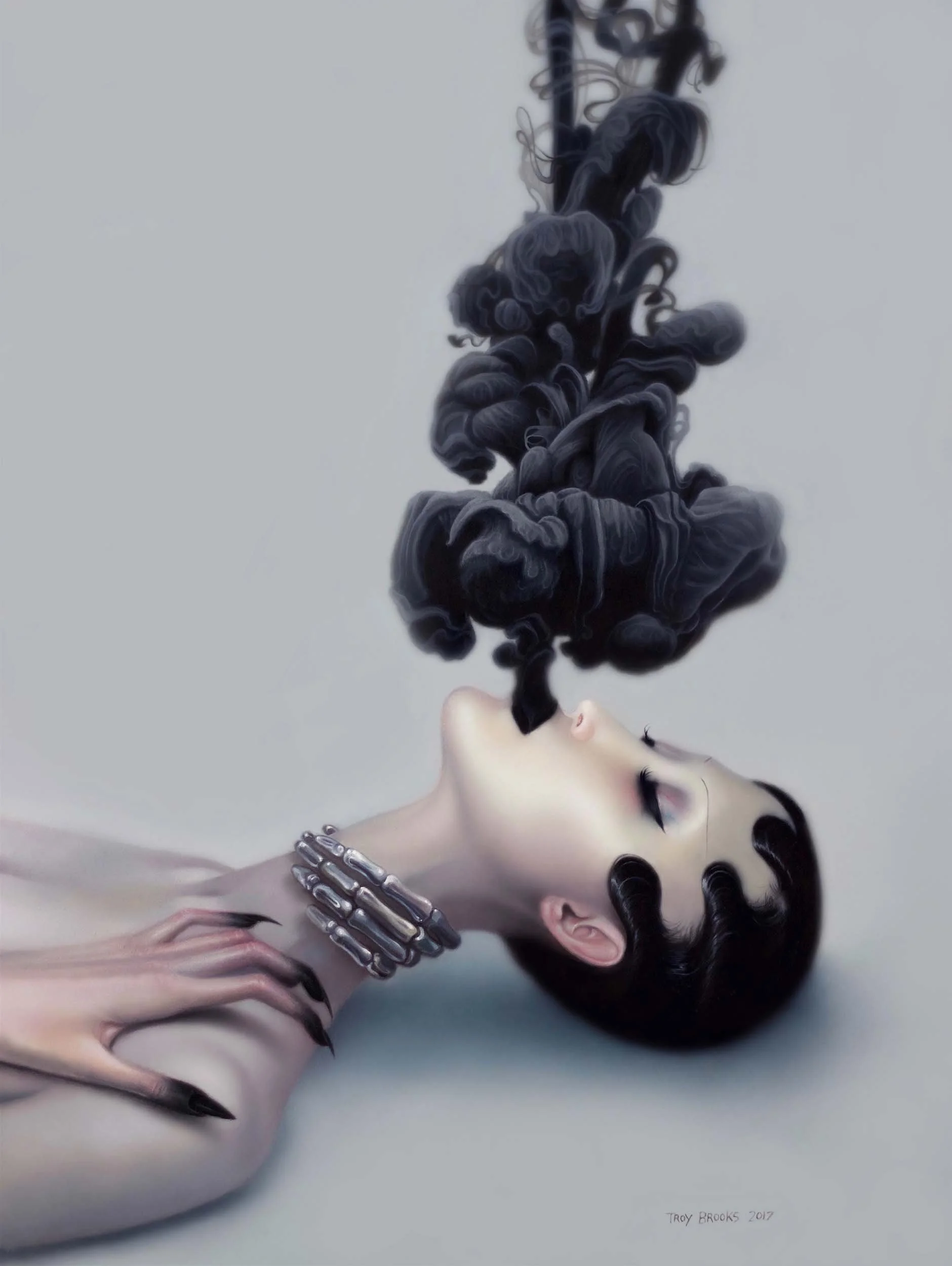
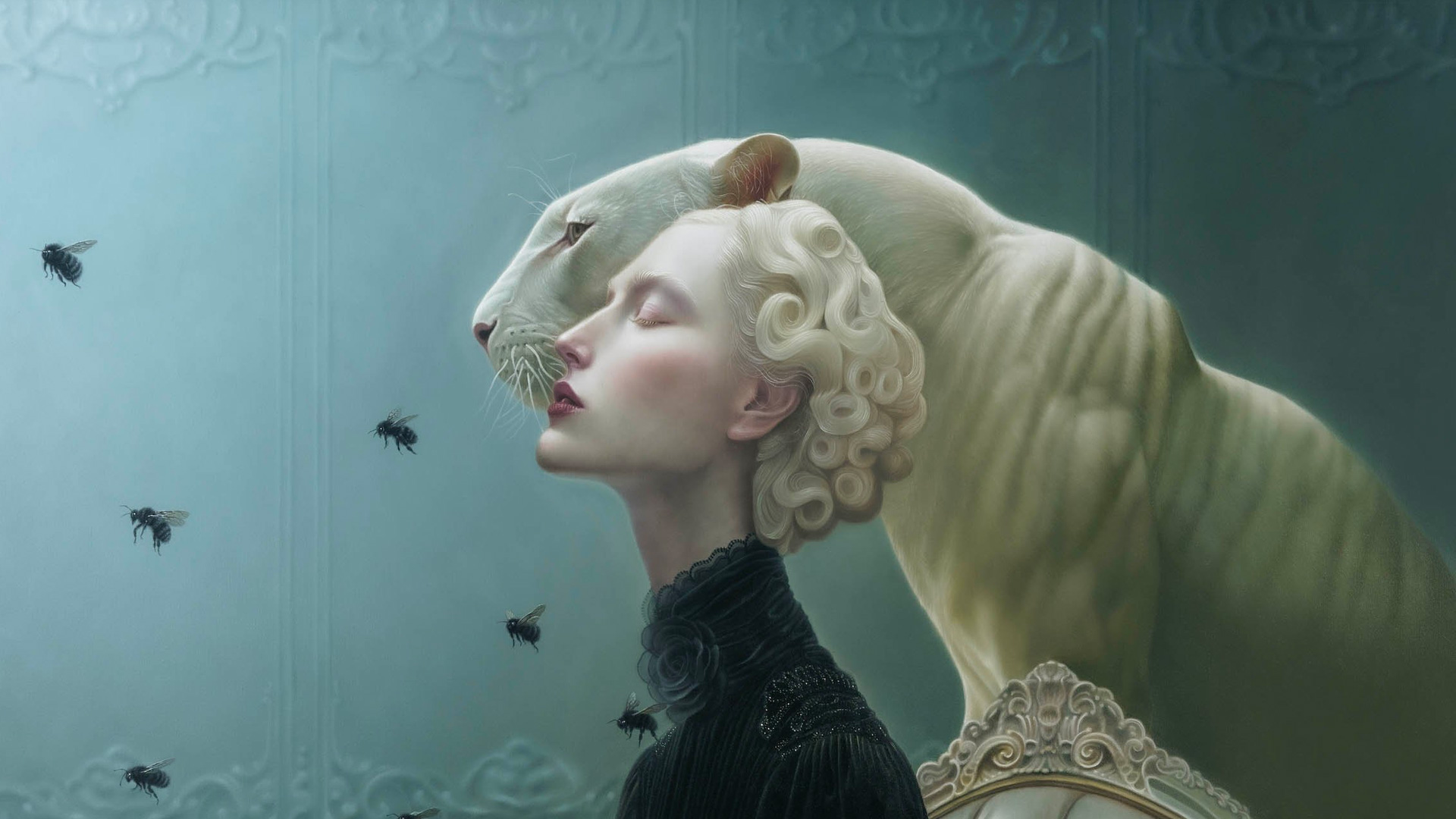
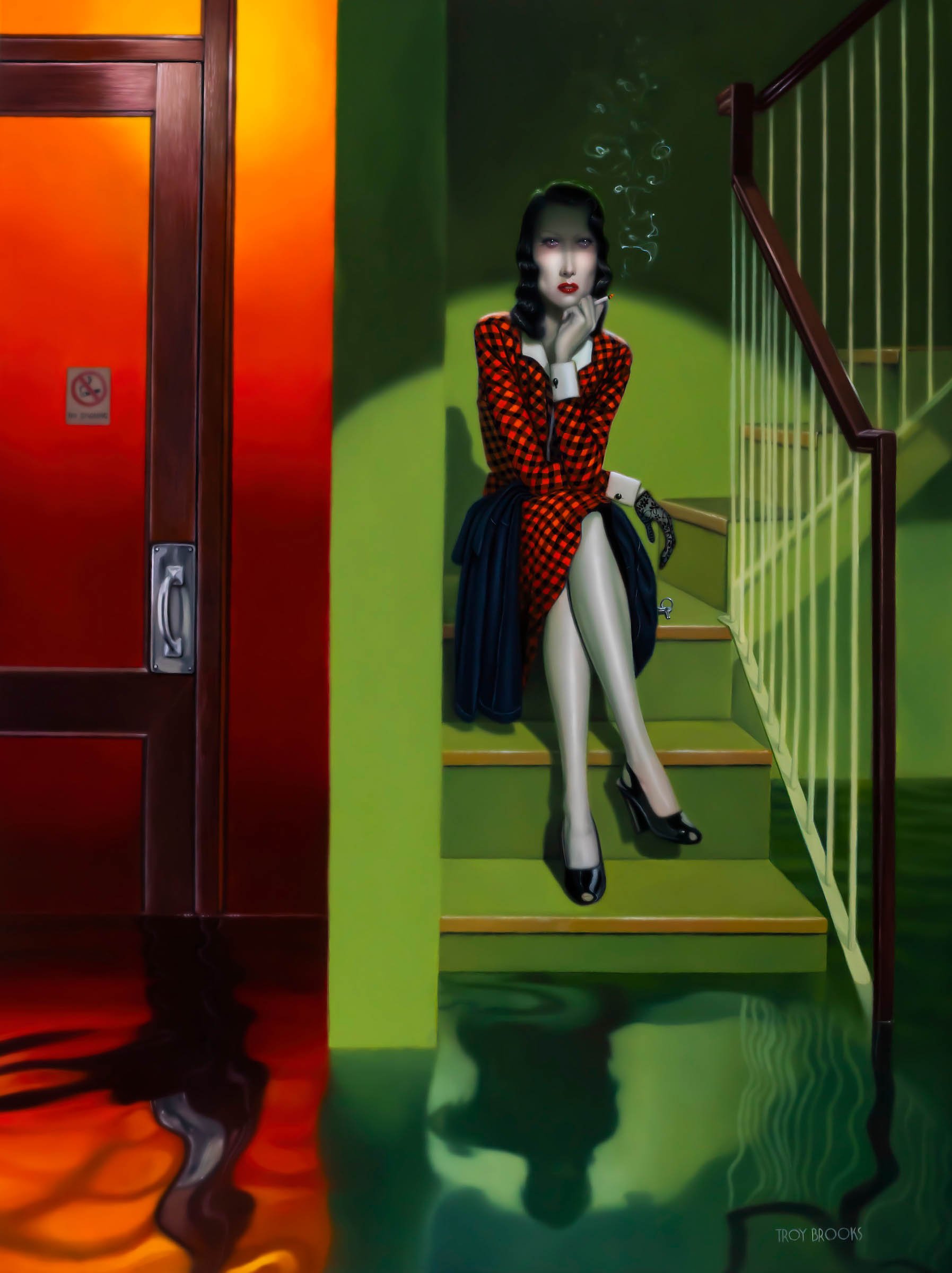
Troy Brooks paints women who seem to belong to another era, though pinning down exactly which one is part of the fun. With their elongated faces, sculpted features, and old Hollywood styling, his subjects have the glamour of classic movie stars and the oddness of characters from a fever dream. They rarely look particularly friendly, either. There’s a cool confidence in their expressions, a sense that these women have their own plans and aren’t especially interested in anyone else’s opinion.

Based in Ontario, Brooks has carved out a distinctive place in contemporary art with his signature Pop Surrealist Noir aesthetic. Working primarily in oil on canvas, he creates meticulously rendered figures surrounded by dramatic lighting, unusual symbolism, and an unmistakable sense of tension. Often called the “Women of Troy,” his protagonists look less like conventional portraits and more like characters caught in a story already in motion.
A Self-Taught Artist With a Distinctive Vision

Brooks has been drawing since he was two years old, growing up alongside his mother, who was also a painter. Despite his early talent, he had little interest in formal art training or becoming a commercial artist. For years, he kept his strange, cryptic pictures largely to himself, unsure whether anyone else would understand them.

His elongated faces eventually became his trademark. Initially, he treated their unusual proportions as mistakes that needed correcting. Then he decided to exaggerate them instead. That choice helped define his visual language. Discovering a painting by fellow artist Ray Caesar also made him realize there might be a place in the fine art world for his peculiar, often confrontational women. Sometimes, the thing you keep trying to fix is precisely what makes your work distinctive.

Troy Brooks. Jericho Rose
Troy Brooks. Meine Bitterkeit
Old Hollywood, Shadows, and Secrets

Brooks’s imagination has long been occupied by classic Hollywood cinema, particularly films and photographs from the 1920s, 1930s, and 1940s. As a child, he spent hours in his local library sketching actresses from old photography books. One early film left a lasting impression: Whatever Happened to Baby Jane?, whose gothic atmosphere and decaying glamour helped shape his artistic sensibility.

Film noir became an especially important influence. Brooks has described how its dramatic lighting and carefully placed shadows can communicate a story without spelling everything out. A shadow across one eye might suggest a secret; darkness covering both could imply a burden. This approach gives his paintings their theatrical quality. Even in refined settings, something feels slightly wrong. You can almost hear the orchestra building toward a revelation.

Women Who Refuse to Behave

Behind the striking silhouettes and vintage-inspired wardrobes lies something deeply personal. Brooks has described his women as expressions of feelings he repressed while growing up, including aspects of himself that others considered too feminine. Bullied as a child for being “like a girl,” he found a powerful outlet in characters who are anything but timid. His painted women are confrontational, self-assured, and unwilling to apologize for taking up space.

That connection helps explain their ambiguous identities and unconventional beauty. They can be glamorous, intimidating, androgynous, or downright bizarre. Some merge with animals, grow wings, or develop distinctly nonhuman features. Others stare directly at the viewer, making it difficult to tell who is observing whom. Rather than offering a fixed definition of femininity, Brooks creates figures who seem to have escaped the boundaries imposed on them. Their power lies partly in the fact that they don’t need to explain themselves.

Troy Brooks. The Lavender Ovum
Troy Brooks. Nimbus
From Mythology to Transformation

Brooks frequently combines human figures with animals, fantastical creatures, and mythological references. His Skinwalker series explored characters whose bodies and identities cross the boundaries between human and otherworldly. He has also drawn on Japanese folklore, including the Shinigami, supernatural beings associated with death and the transition between life and death. These references take his work beyond portraiture and into visual storytelling.

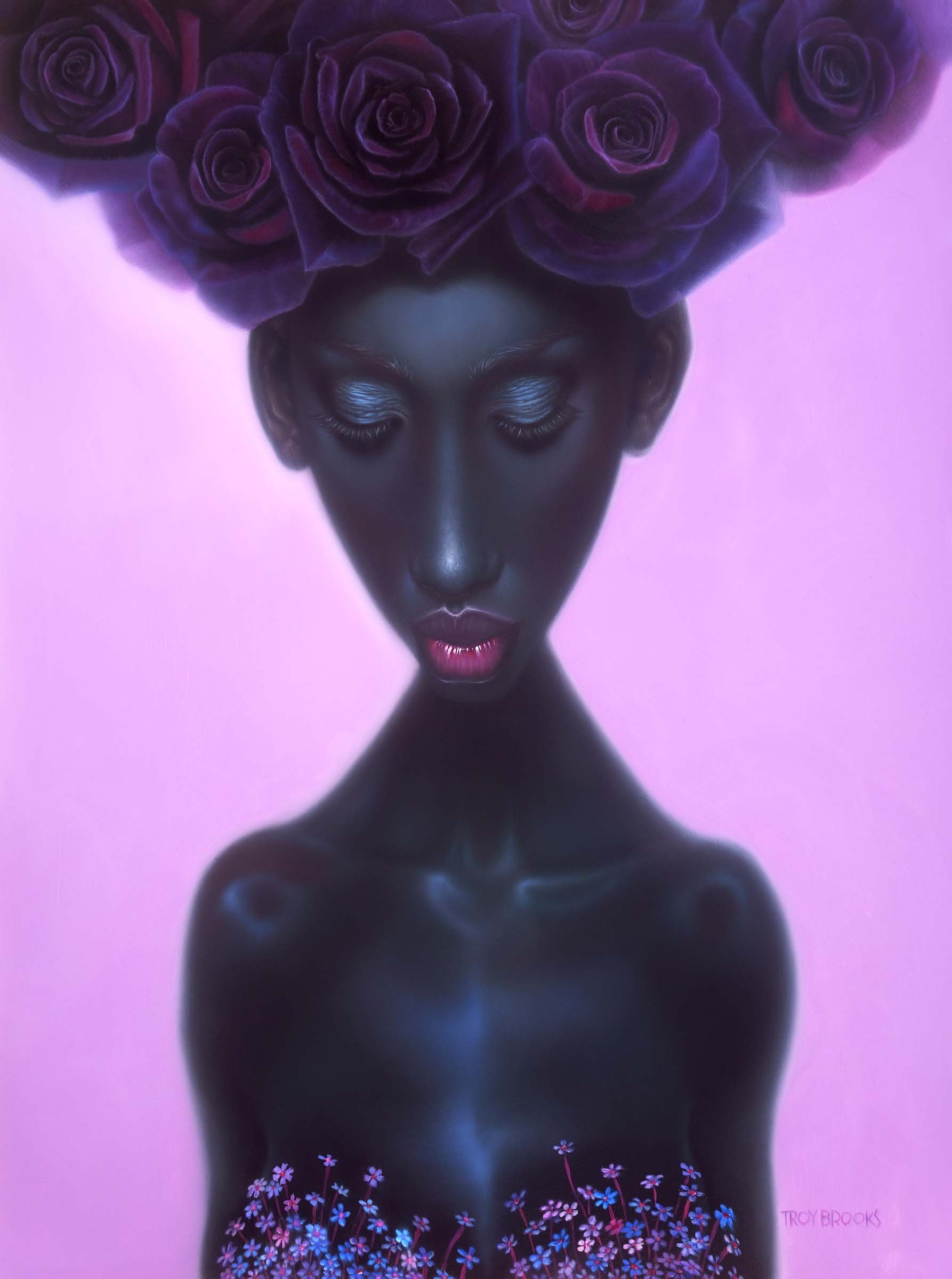
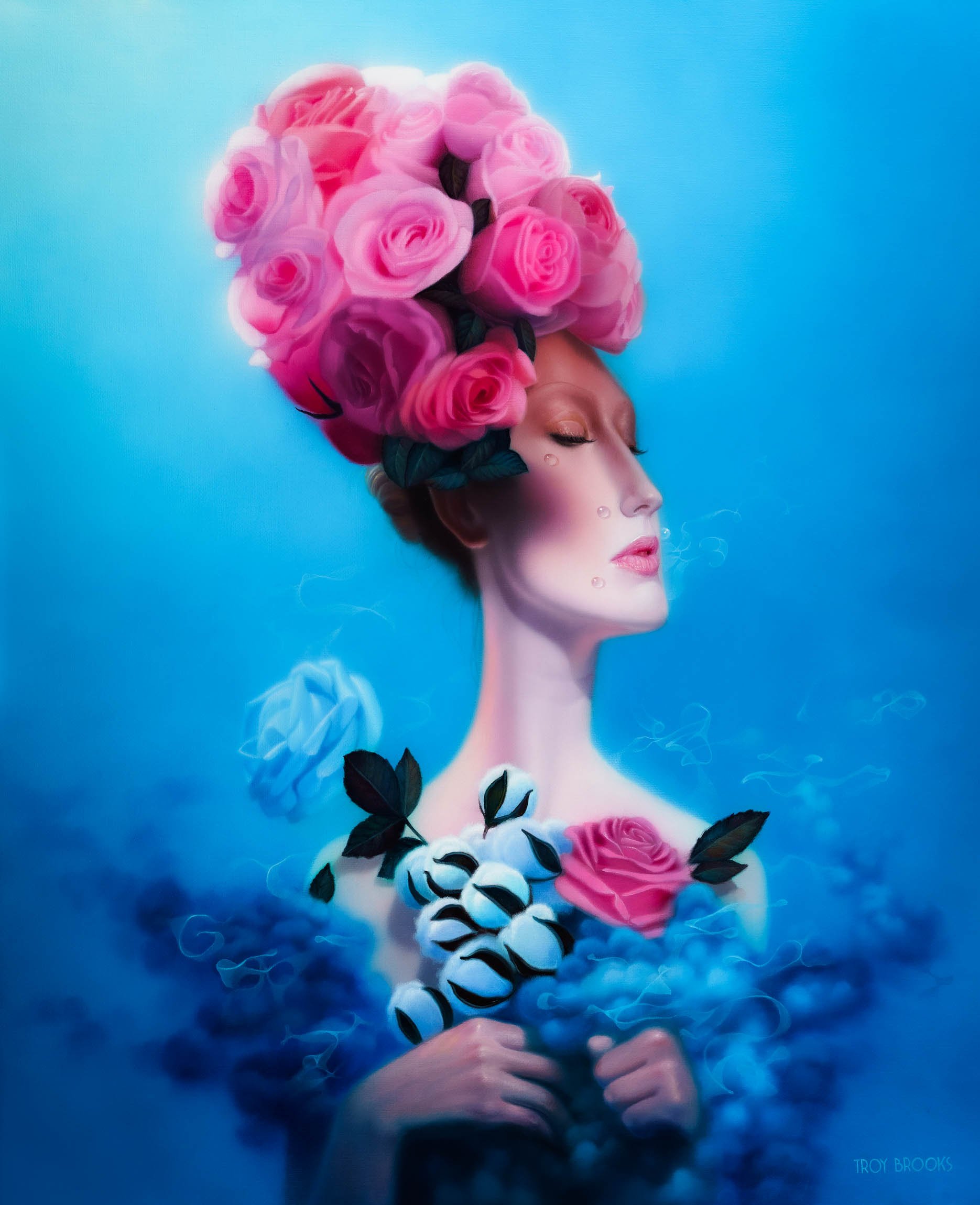
His BLOOM series, presented at Corey Helford Gallery in Los Angeles in 2024, explored transformation from a different perspective. Featuring more than 20 new paintings, the exhibition focused on growth, nature, and moments of quiet recognition. Vivid blues, aquamarines, and blush pinks brought a fresh energy to the familiar elongated figures, while flowers and organic forms filled their surroundings. The atmosphere remained unmistakably Brooks, but there was more room for calm and reflection. Even his strangest characters deserve a moment to breathe.

Brooks’s paintings rarely settle into a single interpretation. A poised woman might appear regal at first, then unsettling a moment later. A beautifully arranged setting can conceal something wild, while an artificial-looking figure expresses surprisingly human emotions. Drawing on cinema, surrealism, and the graphic elegance of Gustav Klimt, Brooks has developed a style that feels entirely his own.

His work has been exhibited internationally, including in New York, Paris, London, Los Angeles, Berlin, and Sydney. Yet its appeal goes beyond technical precision or striking appearances. These paintings invite us into a world where identity remains fluid, beauty can be intimidating, and the most interesting moment is often the one just before everything changes. To explore more of his work, visit Troy Brooks’s official website and step into the strange, glamorous universe of the Women of Troy.

Troy Brooks. Baccara
Scroll