
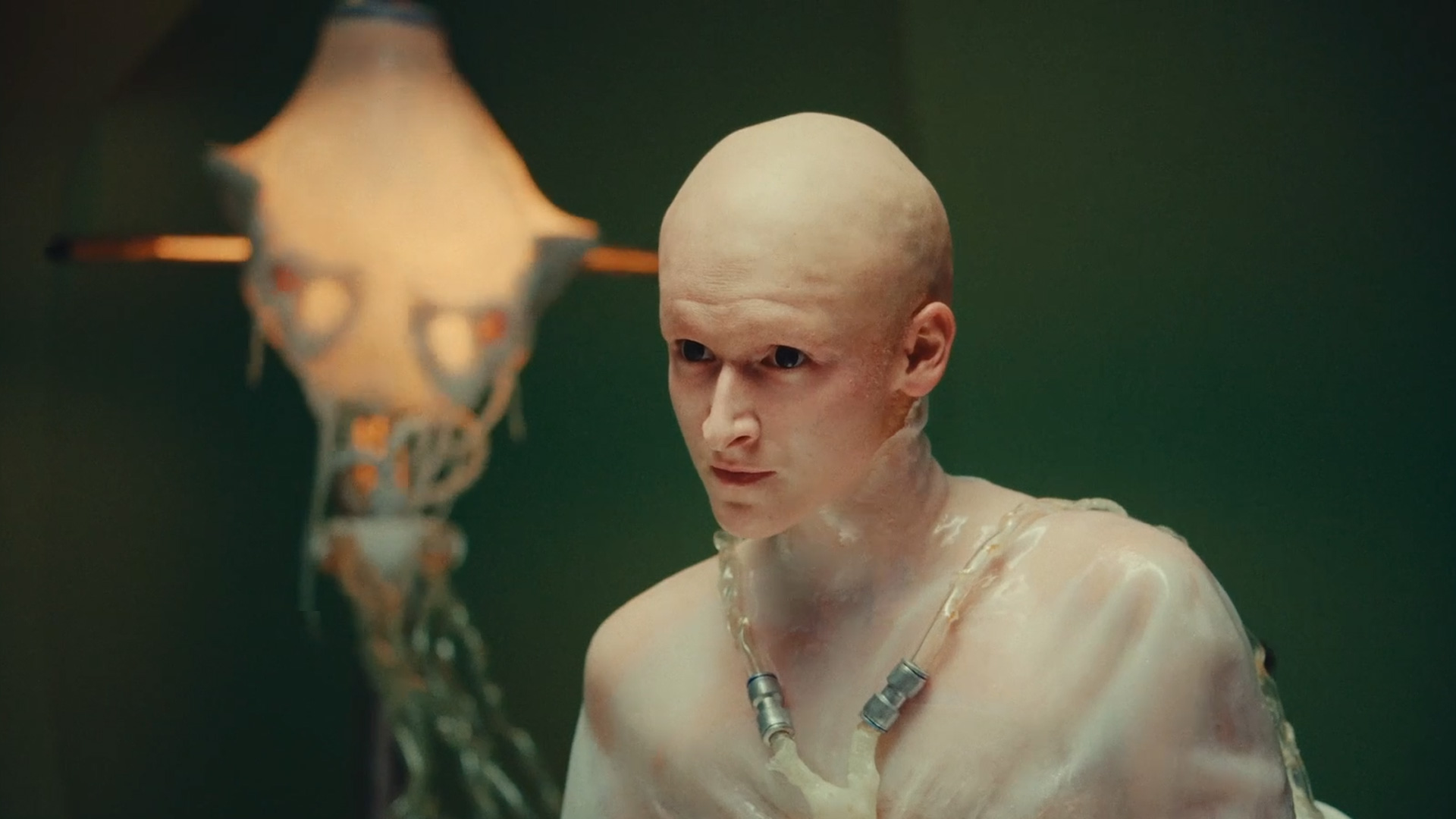

It is 2194, and apparently getting a human body now involves paperwork. In Jan Grabowski’s Weird to Be Human, an artificial intelligence is sitting in a sterile room, waiting to complete its transformation from digital entity to physical being. Then an official from the Mazovian Department of Incarnation Affairs arrives to explain that things have changed.
The setup sounds serious, and it is, but Grabowski has a wonderfully dry sense of humour. The official apologizes for being late because acid rain damaged his coat. He offers the AI some water. He even comments on its instincts. It is funny in that uncomfortable way where you slowly realize nobody in the room is having a particularly good day.
A Body Is Not Enough
The conversation soon turns much darker. New regulations have stopped digital beings from completing their transfers, following attacks on human settlements. The AI, however, is already in a biological body. It has emotions, fears, memories and, perhaps most importantly, a very strong desire to keep existing.
That is where Weird to Be Human gets under your skin. The AI points out the absurdity of being told it is not human while being trapped inside a body created specifically to resemble one. It talks about servers being shut down, data disappearing and having no control over whether it might simply cease to exist. Suddenly, the bureaucratic conversation becomes something much more familiar: a person trying to convince an institution that their life matters.
Grabowski clearly has philosophical science fiction on his mind, with echoes of Philip K. Dick and Stanisław Lem, while the Kafkaesque official and the claustrophobic setting add another layer. The film never feels like it is trying too hard to make a Big Statement, though. It lets the strange situation speak for itself.
The Human Part
At just over fifteen minutes, the film leaves surprisingly little room for excess. Agnieszka Rajda gives the AI a mixture of curiosity, frustration and genuine vulnerability, while Michał Balicki and Rob Wasiewicz help maintain the uneasy atmosphere around it. Paulina Kowol’s cinematography, Juliusz Dąbrowski’s production design, Jan Piasecki’s music and Rafał Ziemiński’s effects complete the deliberately controlled world.
Weird to Be Human premiered at Fantasia, where Rajda received an acting award and the film earned an honourable mention for design. It was also part of the 66th Krakow Film Festival, bringing Jan Grabowski’s strange little sci-fi story to another audience. It feels like a small film with some very big questions. And, judging by this one, Grabowski may have some interesting feature-length ideas waiting for us.


