Amok Island Brings the Wild Side of Nature to the Streets
Elliott Brooks
Written by Elliott Brooks in Dimensions Art & Design

Amok Island Brings the Wild Side of Nature to the Streets

An enormous seahorse on the side of a building might seem like an unexpected sight, but for Amok Island, it makes perfect sense. The Dutch-born artist has spent years bringing marine life, plants, and other creatures into urban spaces, turning ordinary walls into colourful encounters with the natural world.

Born in Amsterdam in 1983 and now based in Fremantle, Western Australia, Amok started painting graffiti as a teenager in 1996. Over time, he moved beyond lettering and began experimenting with different subjects and techniques. His fascination with underwater life goes back to childhood, and drawing fish eventually became his full-time job. Not a bad outcome for someone who once imagined becoming a biologist!
Finding the Animal in the Shapes

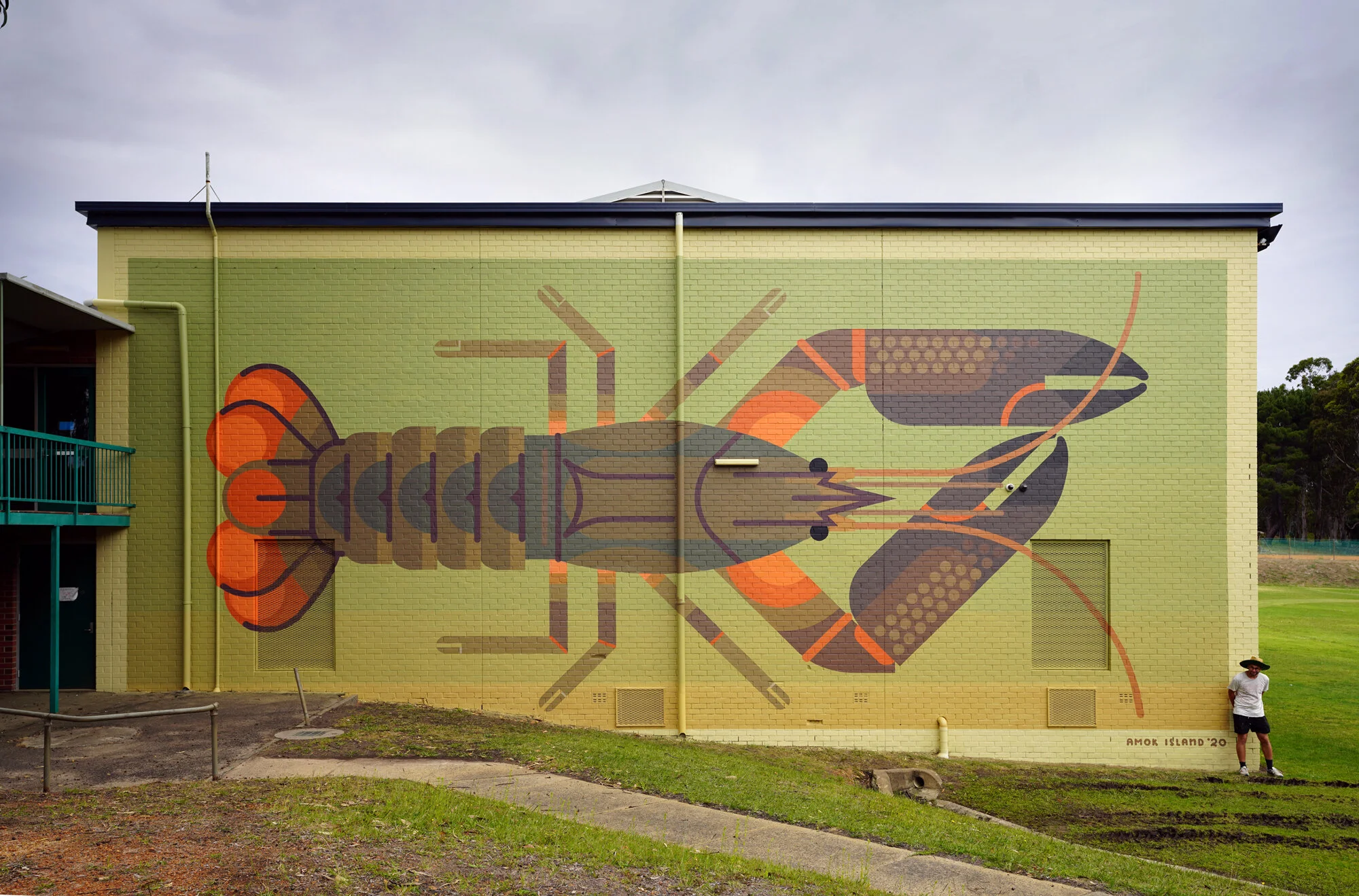
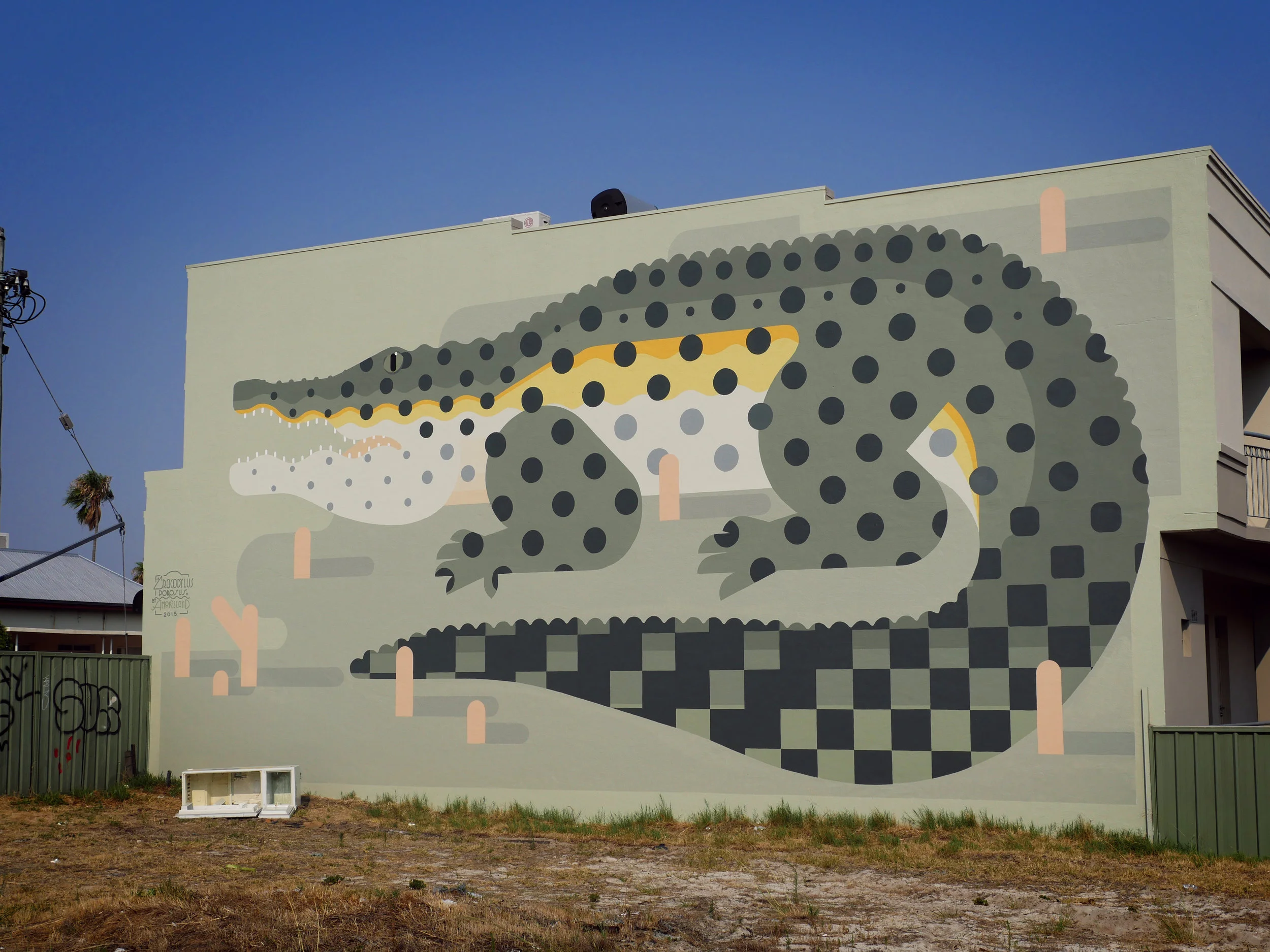
Look closely at an Amok Island mural and you’ll notice that his animals aren’t painted in the usual realistic style. Instead, their bodies are built from geometric shapes, straight lines, and carefully chosen colours. The result feels somewhere between a scientific illustration and a graphic design, with enough detail to make each creature recognisable.

Getting that balance right is the real challenge. Amok has explained that photorealism doesn’t particularly interest him. He’d rather see how far he can simplify an image without losing its character. One of his tricks is to squint at a design and check whether the shapes still form a convincing animal. It’s a simple test, but getting there takes plenty of thought.

Amok Island. Cherax Destructor
Amok Island. Crocodylus Porosus
Inspiration Beneath the Surface

Amok Island doesn’t just look at pictures of wildlife online. He spends plenty of time snorkelling, diving, and taking underwater photographs, often using his own images as references for new work. Sometimes an encounter with a particular creature sparks an idea; other times, he simply comes across a species he hasn’t tried illustrating before. Repetition isn’t really his thing.

His connection to the Great Southern Reef has its own backstory. Growing up in the Netherlands, he became fascinated by the leafy sea dragon through a book. In 2013, after moving to Australia, he finally spotted one in the wild near Esperance. The experience stayed with him, opening up a whole world of underwater inspiration.

Think Big, Paint Bigger

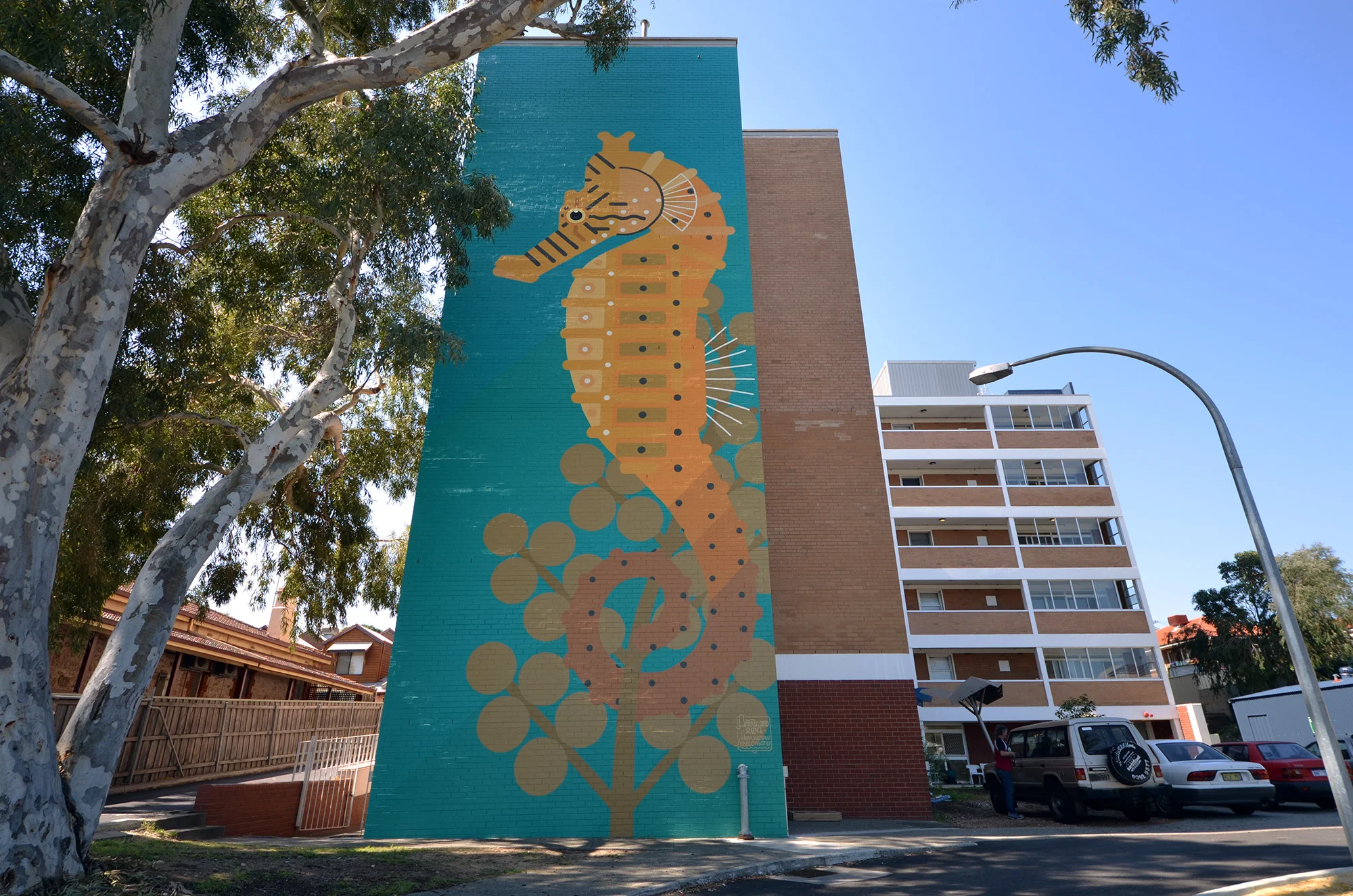
Amok Island has painted murals in more than 25 countries, but some of his most memorable work can be found close to home. In Fremantle, he created a six-storey seahorse depicting Hippocampus subelongatus, a species native to Western Australia. Painting from a small bucket attached to a giant crane sounds like a rather unusual day at the office, but he finished the enormous mural in about three and a half days.

Large-scale painting is his favourite part of the job. He loves the impact of seeing a creature take over an entire wall, especially when he can drive past later and admire the finished work from a distance.

Amok Island. Hippocampus Subelongatus
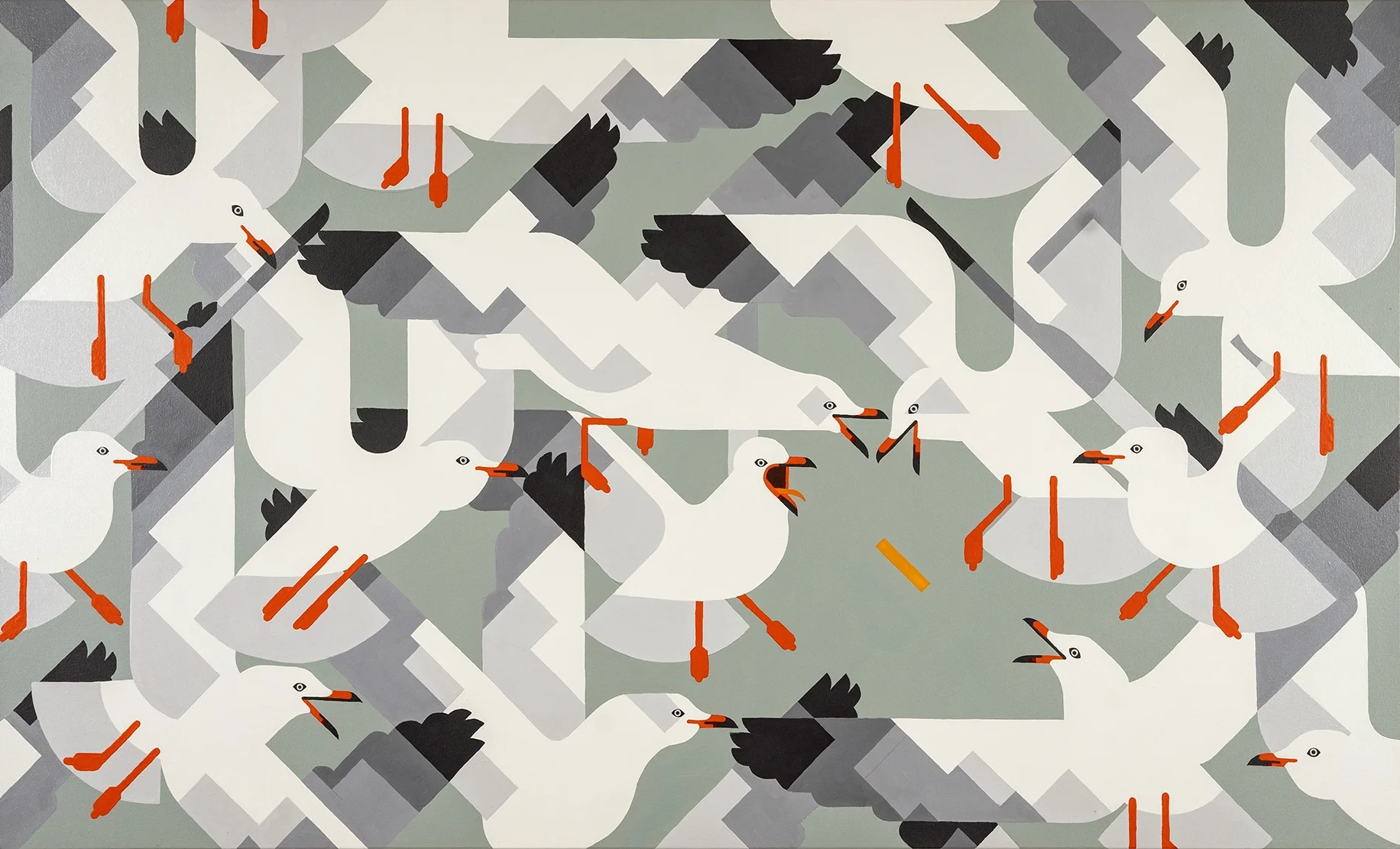
Amok Island. Why won't these birds fuck off?!?
Beyond the Walls

Murals may be his calling card, but Amok Island also paints on canvas, produces screen prints, and creates sculptures using stainless steel and concrete. Some of his projects involve submerging concrete letter forms in marine environments and documenting how nature gradually takes over. It’s a slower, stranger kind of collaboration between art and the natural world.

His process is equally interesting. Rather than sketching ideas on paper, he builds compositions in Adobe Illustrator, combining details from different photographs and adjusting shapes and colours until everything feels right. Only then does he pick up his brush. The digital planning might be meticulous, but the finished work still has the physical presence of paint on a wall.

Conservation runs through Amok Island’s practice, but his murals don’t need to deliver a lecture to make their point. A brightly coloured animal appearing on a neighbourhood wall can be enough to make someone stop, look, and perhaps discover a species they never knew existed. That’s part of the charm: nature turns up somewhere you weren’t expecting it.

Amok’s own career is a reminder that creative paths don’t always follow a tidy plan. After leaving art school, he learned largely through trial and error, gradually building a practice that has taken him around the world. His advice to emerging artists is refreshingly direct: make work you’re proud of and put it out there. Don’t wait for permission. It’s a fitting philosophy for someone who began on the streets and still makes them his canvas.

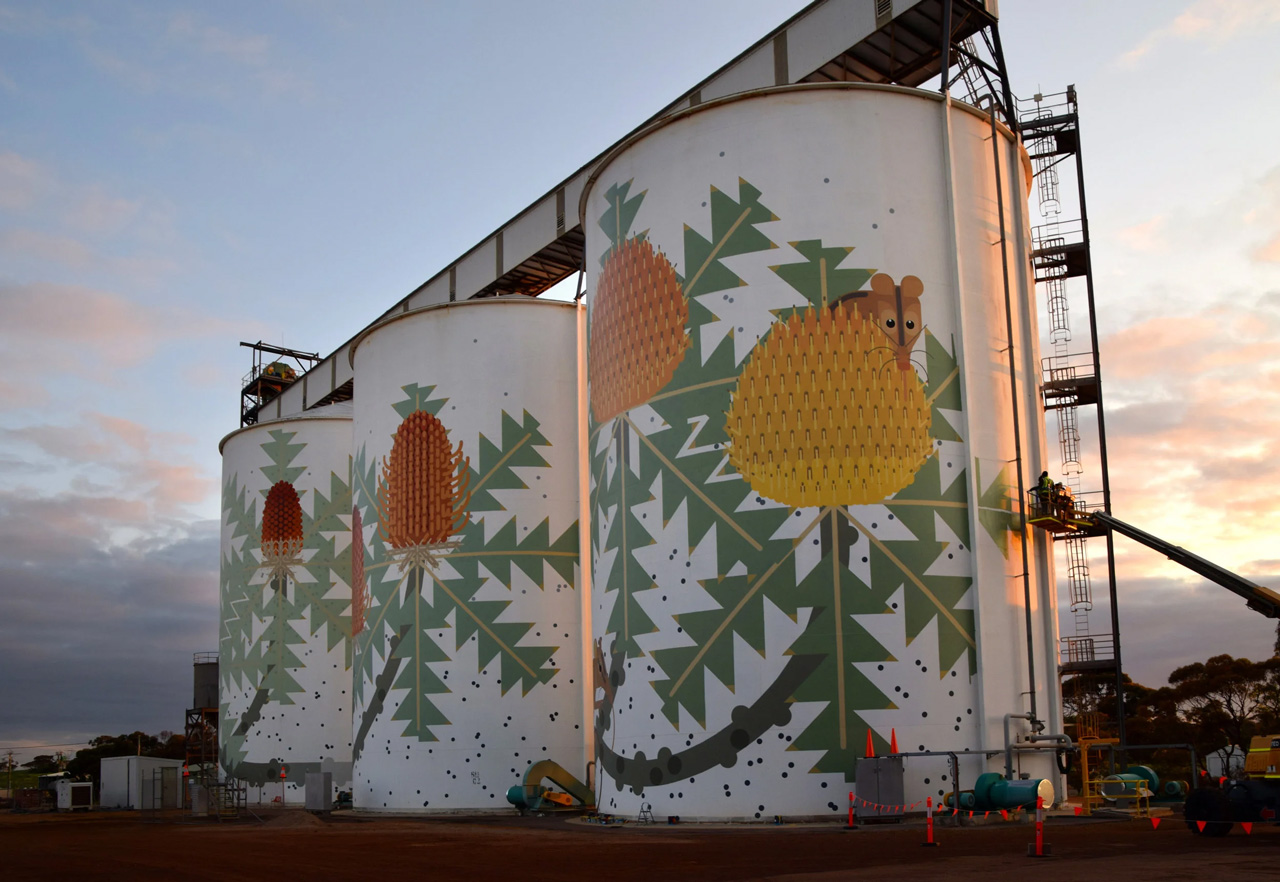
Amok Island. Six Stages of Banksia Baxteri
Scroll