Tanya Gomelskaya Pushes Painting Beyond the Frame
Elliott Brooks
Written by Elliott Brooks in Dimensions Art & Design Creative Painting Sculpture

Tanya Gomelskaya Pushes Painting Beyond the Frame

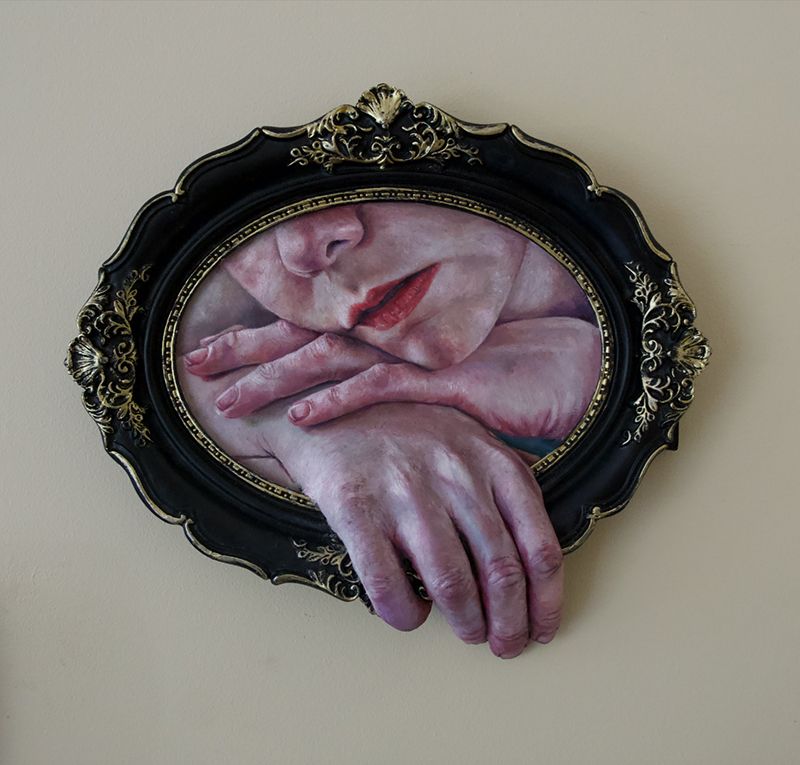
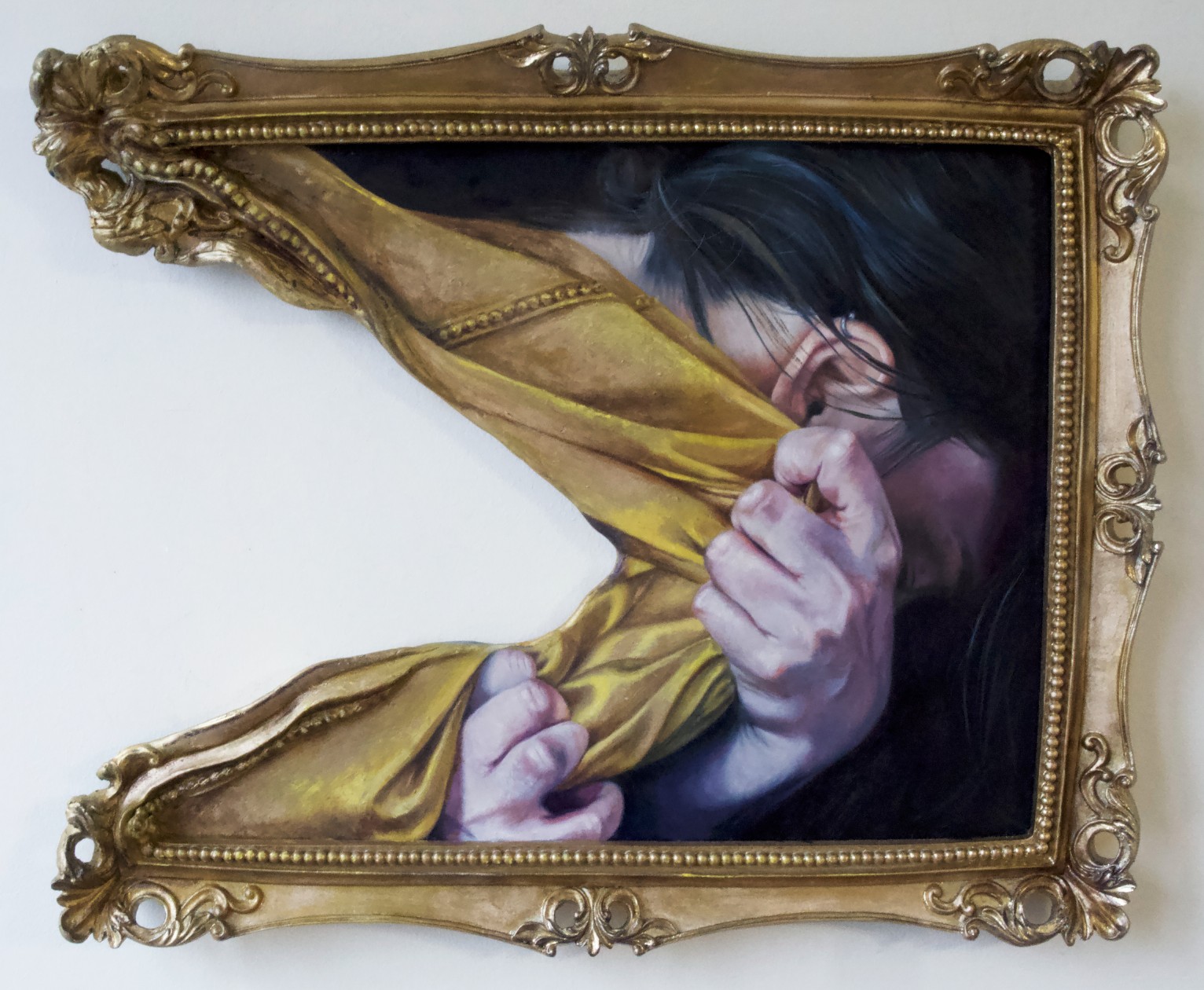
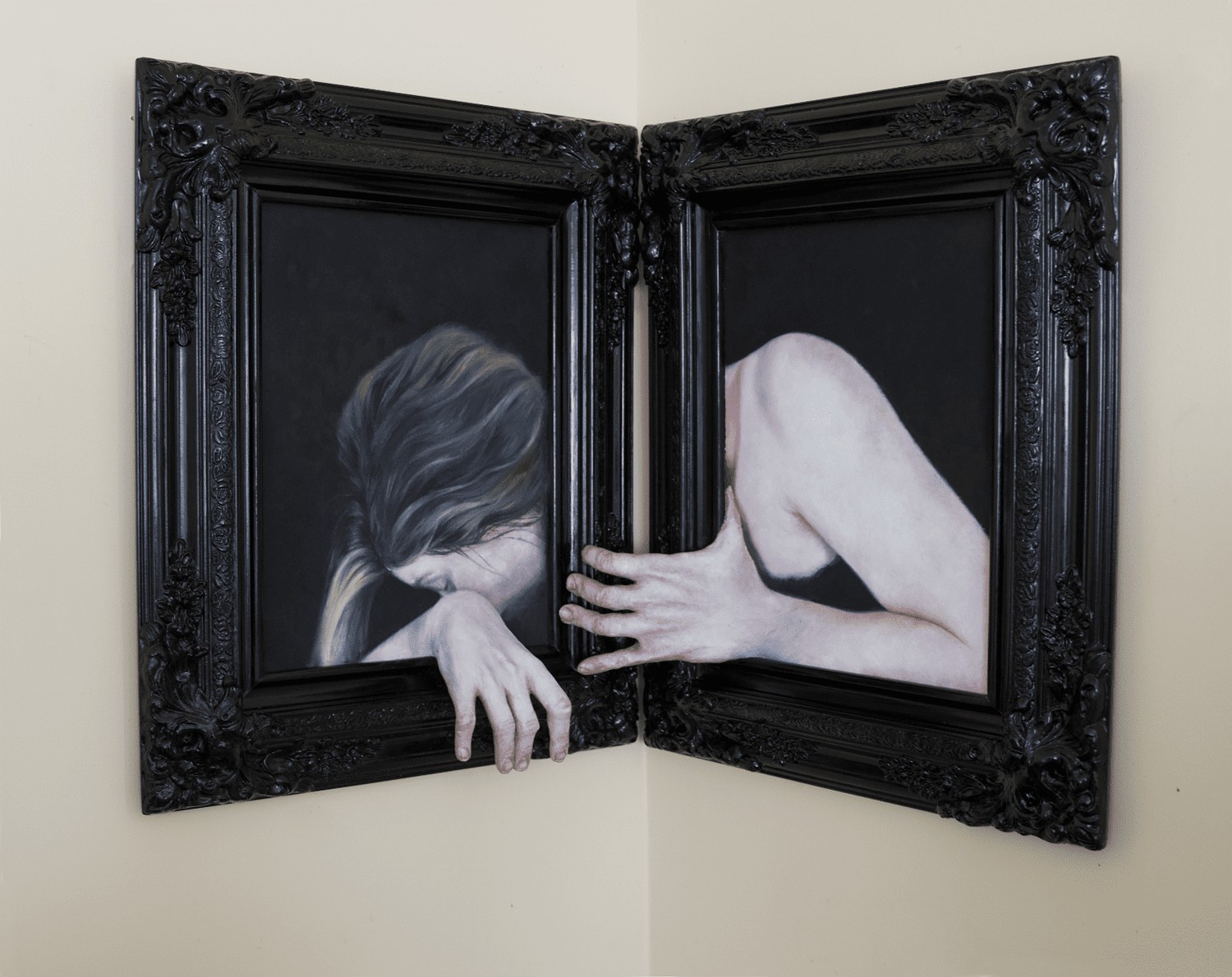
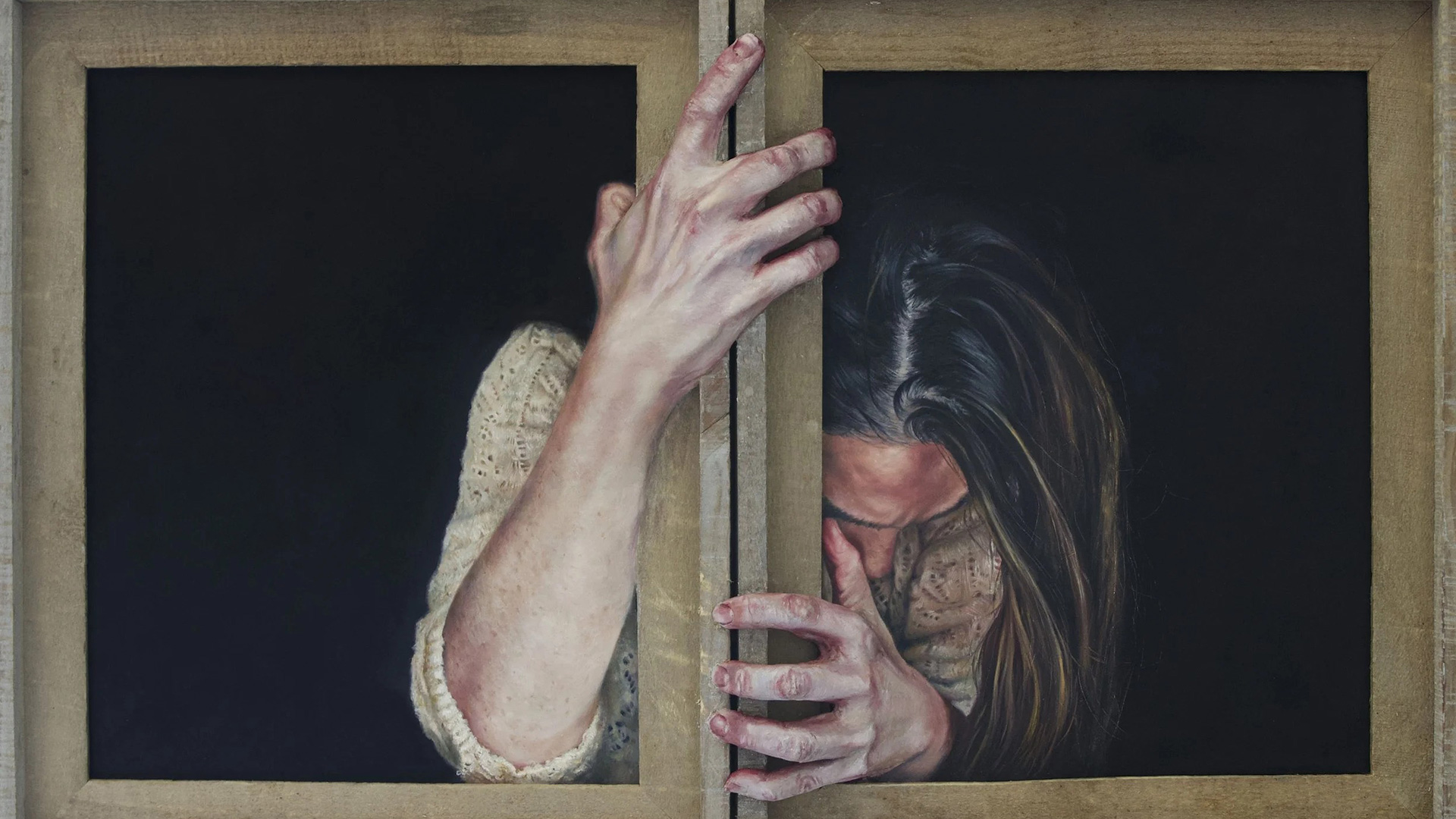
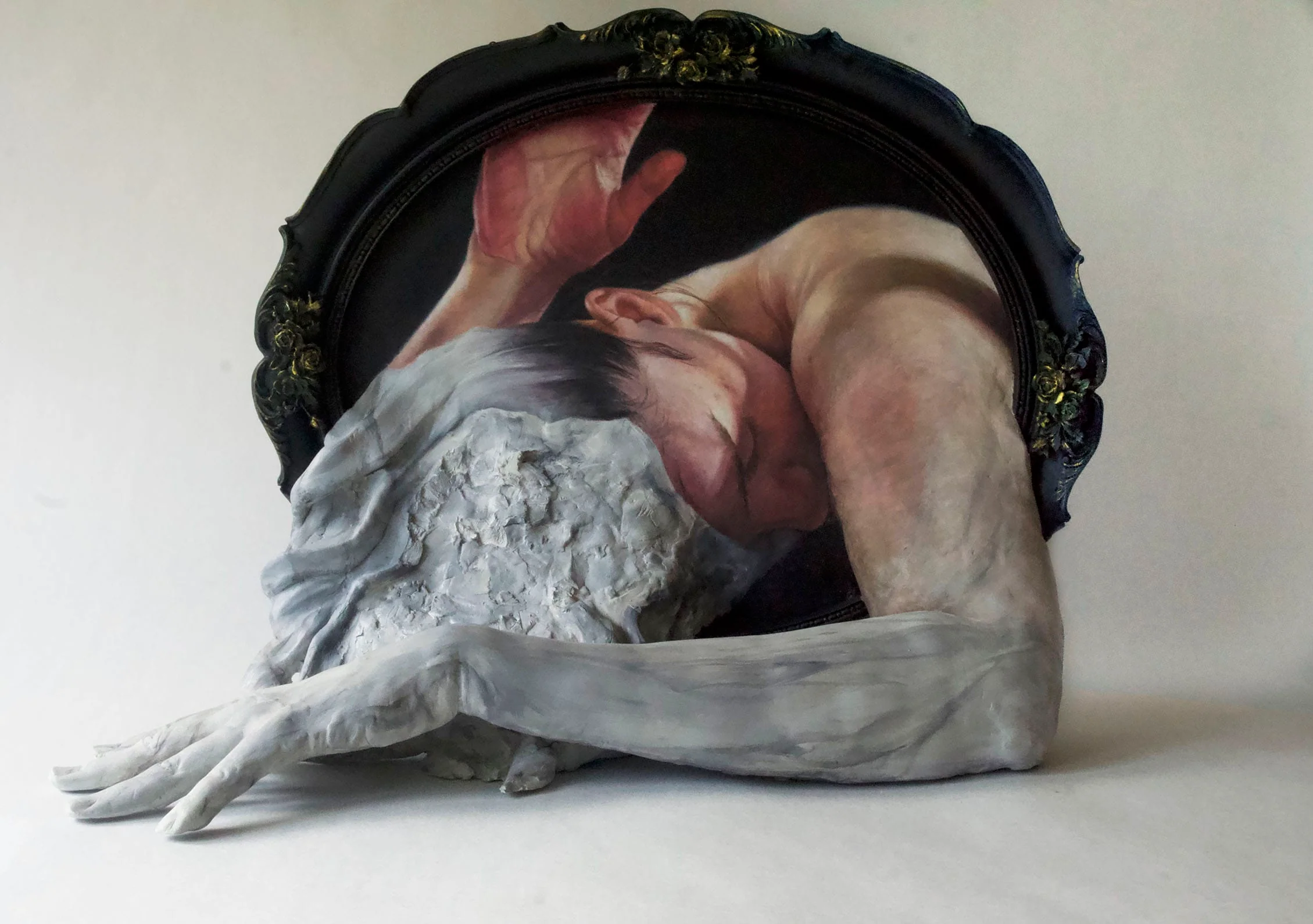
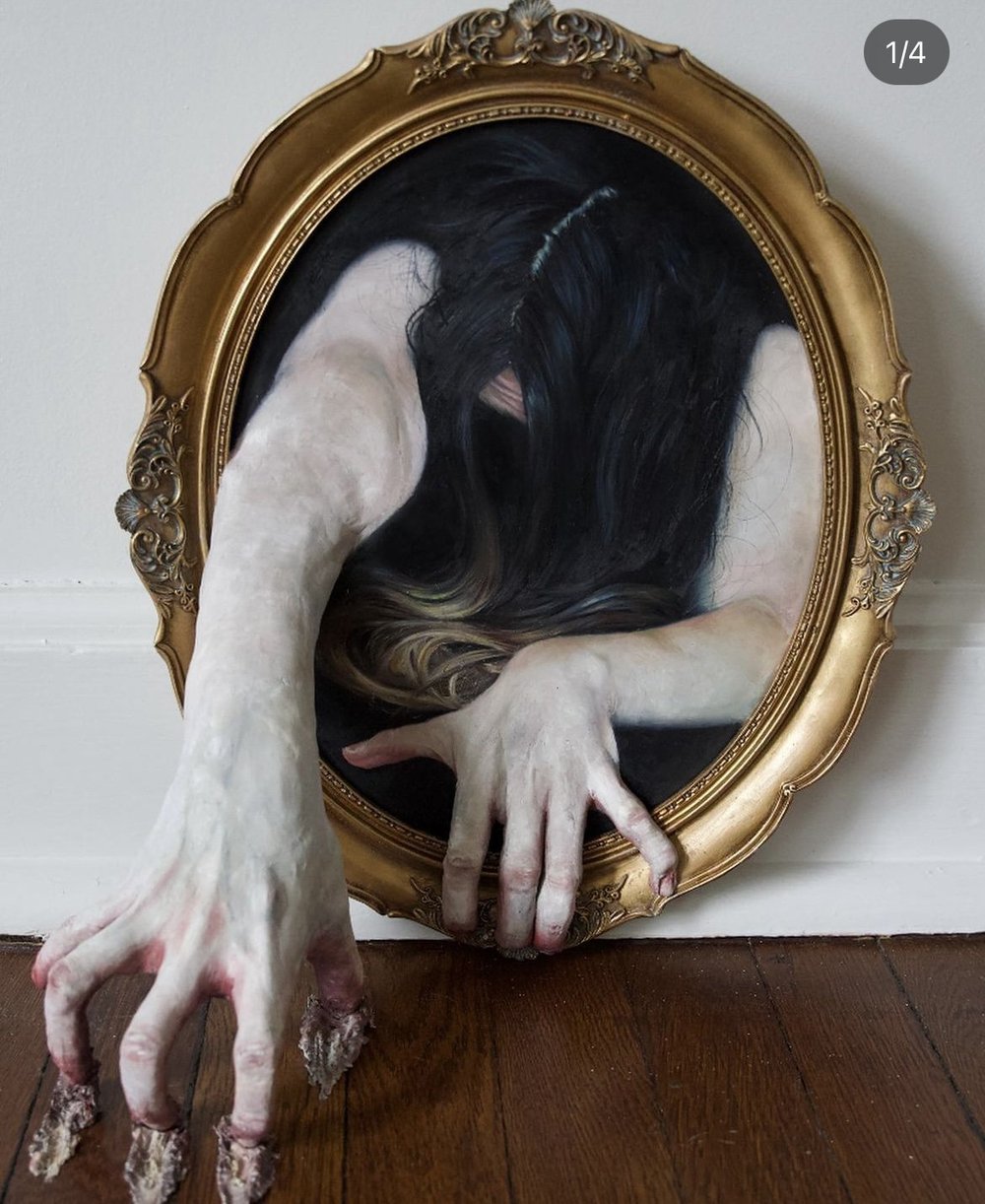
A hand grips the edge of a frame. Another seems to emerge from the painted surface altogether. The boundary between image and object becomes difficult to locate, and that uncertainty is exactly where Tanya Gomelskaya‘s work begins to take hold. Combining meticulous oil painting with sculptural elements, the artist creates figures that seem caught between two dimensions, their bodies reaching into the viewer’s physical space.

For Gomelskaya, this physical rupture reflects something deeply internal. Her paintings explore the tension between anxiety and strength, fear and bravery, self-doubt and confidence, emotions she describes as being held together beneath a composed exterior. The result is work that turns the contradictions of human experience into something we can almost touch.
When the Figure Escapes

Gomelskaya’s figures rarely remain obedient to the surfaces on which they are painted. Hands extend through ornate frames, press against their edges, or appear to claw their way toward the space beyond the artwork. Painted illusion and physical sculpture become inseparable, creating the unsettling sensation that a moment frozen inside the painting is trying to continue into our own world.

That effect is more than a technical feat. The artist uses the physicality of the sculptural elements to express emotional overwhelm, drawing on the familiar sensation of wanting to “crawl out of one’s own skin.” When the painted body appears to strain against its surroundings, the frame becomes a metaphor for psychological and emotional pressure. It is no longer simply the thing that contains the artwork; it becomes part of its meaning.

Tanya Gomelskaya. Fallen
Tanya Gomelskaya. Darling II
The Body as a Landscape of Emotion

Gomelskaya frequently turns to her own body through self-portraiture, using it as a way to examine vulnerability, tension, love, loss, and heartache. Her figures bend, press, and stretch under invisible forces, embodying the strange coexistence of fragility and resilience. The physical body becomes a place where internal experiences can be made visible.

Skin is particularly important to her practice. Gomelskaya has described herself as deeply obsessed with painting it, studying how it stretches over bone, how fingertips become translucent in sunlight, and how unexpected colors appear even in the smallest details. Her painstaking technique is reflected in brushes reduced to only a few hairs, allowing her to build the minute variations of tone and texture that give her figures their remarkable presence.

A Surrealism Rooted in Reality

Born in St. Petersburg in 1988, Gomelskaya moved to the United States when she was five. Art became a refuge while she navigated a new language and culture, and after earning her BFA from SUNY Purchase University, she initially stepped away from her artistic practice to work as a dental assistant. Her return to painting came after moving to Jersey City and encountering its vibrant art community.

That personal history lends another dimension to her surrealism. Her paintings may contain impossible physical situations, but the emotions within them remain immediately recognizable. The elaborate frames, distorted bodies, and sculptural interruptions give form to experiences that are difficult to describe directly, allowing the unreal to become a surprisingly precise language for anxiety, vulnerability, and resilience.

Tanya Gomelskaya. A Quiet Place
Tanya Gomelskaya. Residue
Between Vulnerability and Strength

Gomelskaya’s figures often appear caught between opposing emotional states. Anxiety can exist alongside confidence, vulnerability alongside resilience, and fear alongside the determination to keep moving forward. Rather than presenting these experiences as contradictions that need to be resolved, she allows them to coexist within the same body, giving her subjects a psychological complexity that extends beyond their striking physical presence.

Her interest in these tensions also connects to the way she understands her own practice. Painting becomes a means of processing emotions that are difficult to articulate directly, turning private experiences into something visible and shared. The result is work that can feel intensely personal without becoming closed off, because the emotions embedded in the figures remain recognizable even when their circumstances are surreal.

For Gomelskaya, the frame is no longer a boundary but a threshold, blurring the space between painting and the physical world. The viewer is invited to question where the painting ends and the physical world begins, while the tension between confinement and escape gives each sculptural intervention an emotional charge.

Yet the darkness in these works is never simply about despair. Gomelskaya balances vulnerability with power, fear with courage, and anxiety with strength. Her surreal, hyperrealist approach gives difficult emotions a strange physical beauty, transforming the act of looking into something more intimate: an opportunity to recognize, somewhere in a reaching hand or strained body, a feeling that might otherwise remain invisible.

Tanya Gomelskaya. Misery
Scroll