Michael Gac Levin Recaptures the Spirit of Childhood
Elliott Brooks
Written by Elliott Brooks in Dimensions Art & Design Creative

Michael Gac Levin Recaptures the Spirit of Childhood

A loaf of challah becomes a mountain. A pear develops a personality. Chairs, candles, trees, and traffic signals gather on the same stage, behaving less like ordinary objects than curious characters caught in an unfolding story. Michael Gac Levin’s paintings embrace a world where imagination quietly reshapes reality, inviting viewers to look at familiar things with the openness and curiosity of childhood.

Working from an instinctive drawing practice built on repetition, humor, and chance, the Brooklyn-based artist creates paintings that feel playful at first glance but gradually reveal surprising emotional depth. Influenced by artists such as Philip Guston and Peter Saul, Levin blends cartoon-like imagery with painterly sensitivity, building dreamlike compositions that explore family, memory, and the strange logic through which we make sense of everyday life.
Drawing Before Knowing

Rather than beginning with a carefully planned concept, Levin lets drawing lead the way. His sketchbooks become places where images emerge almost accidentally through repetition. A pear, a candlestick, a loaf of bread, or a kitchen chair may appear dozens of times before gradually evolving into something entirely unexpected. What begins as an ordinary object slowly acquires personality, emotion, and symbolic weight.

Chance plays an essential role in this process. Levin often describes mistakes, unconscious decisions, and visual accidents as creative opportunities rather than problems to correct. Instead of controlling every outcome, he allows his drawings to surprise him, trusting that repetition will reveal meanings that cannot be planned in advance.

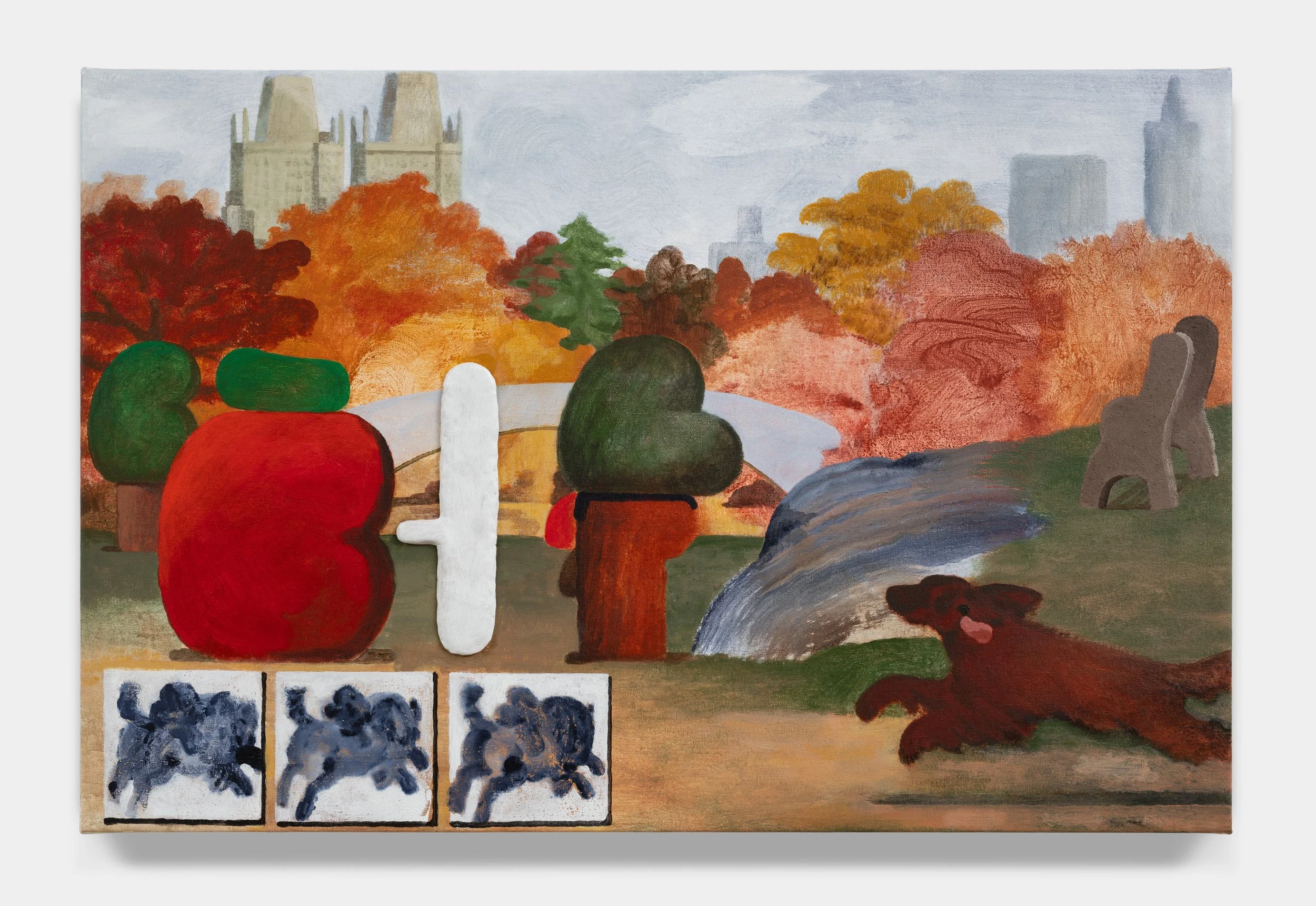
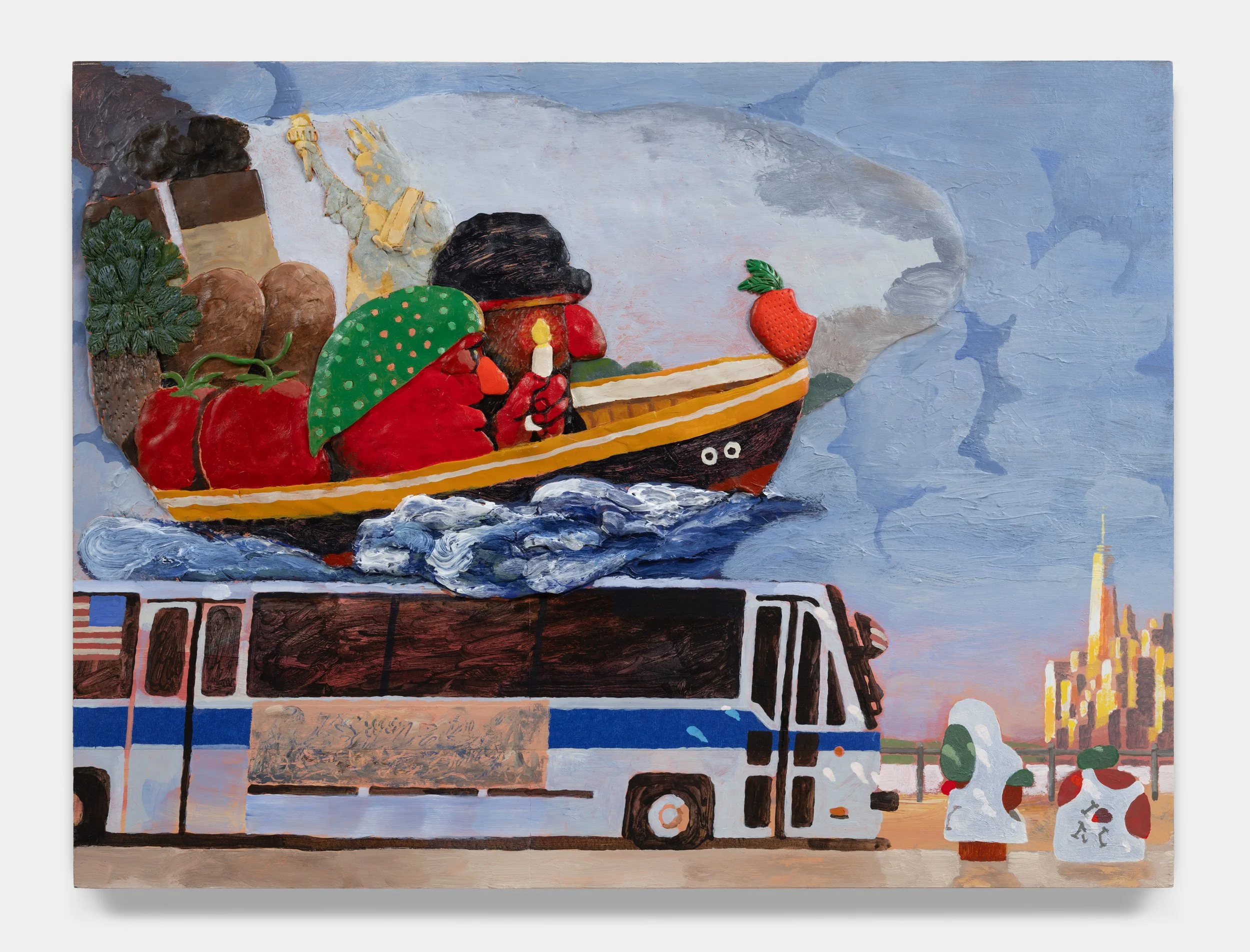
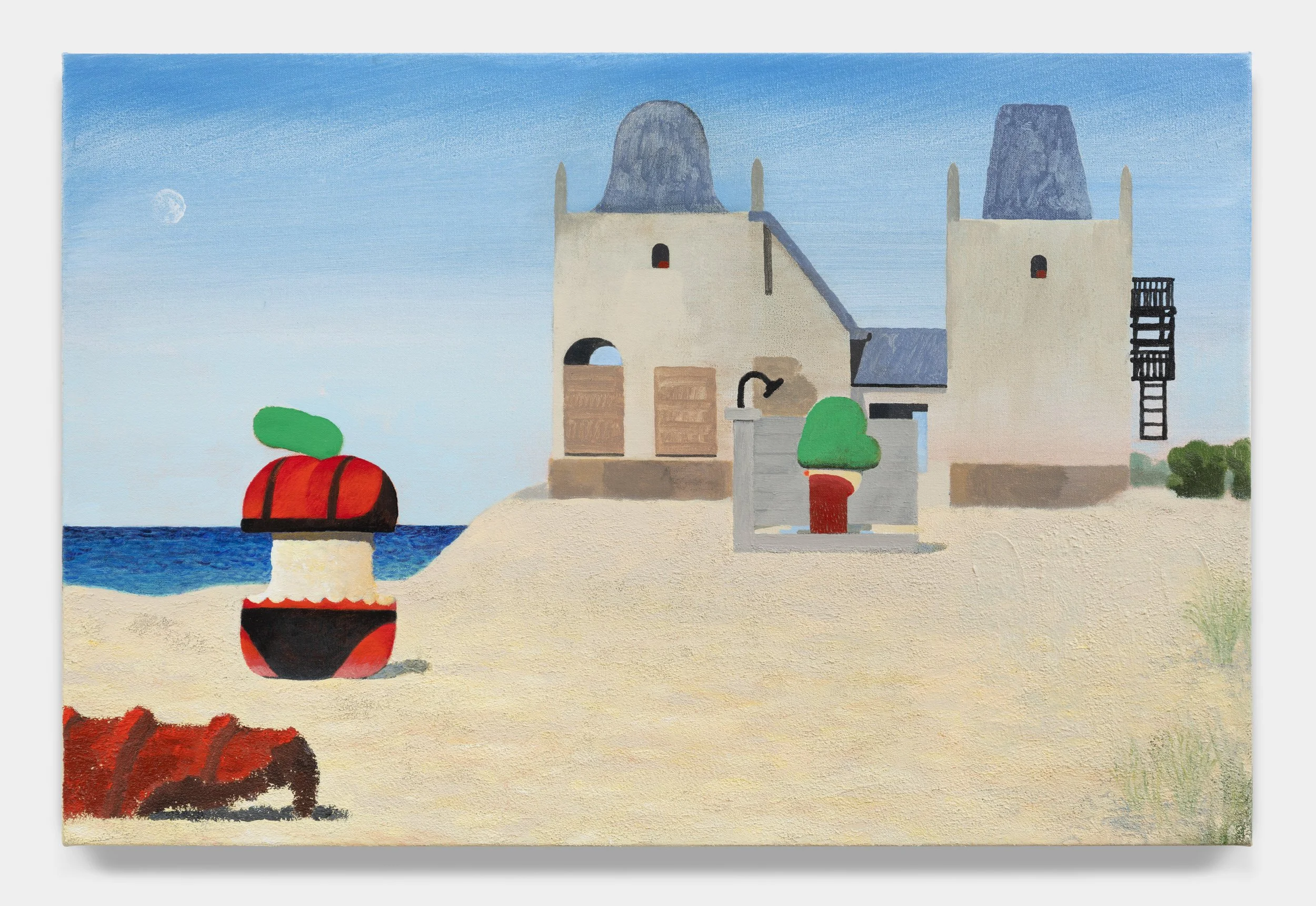
Michael Gac Levin. Harbor
Michael Gac Levin. Beach
A World Where Objects Come Alive

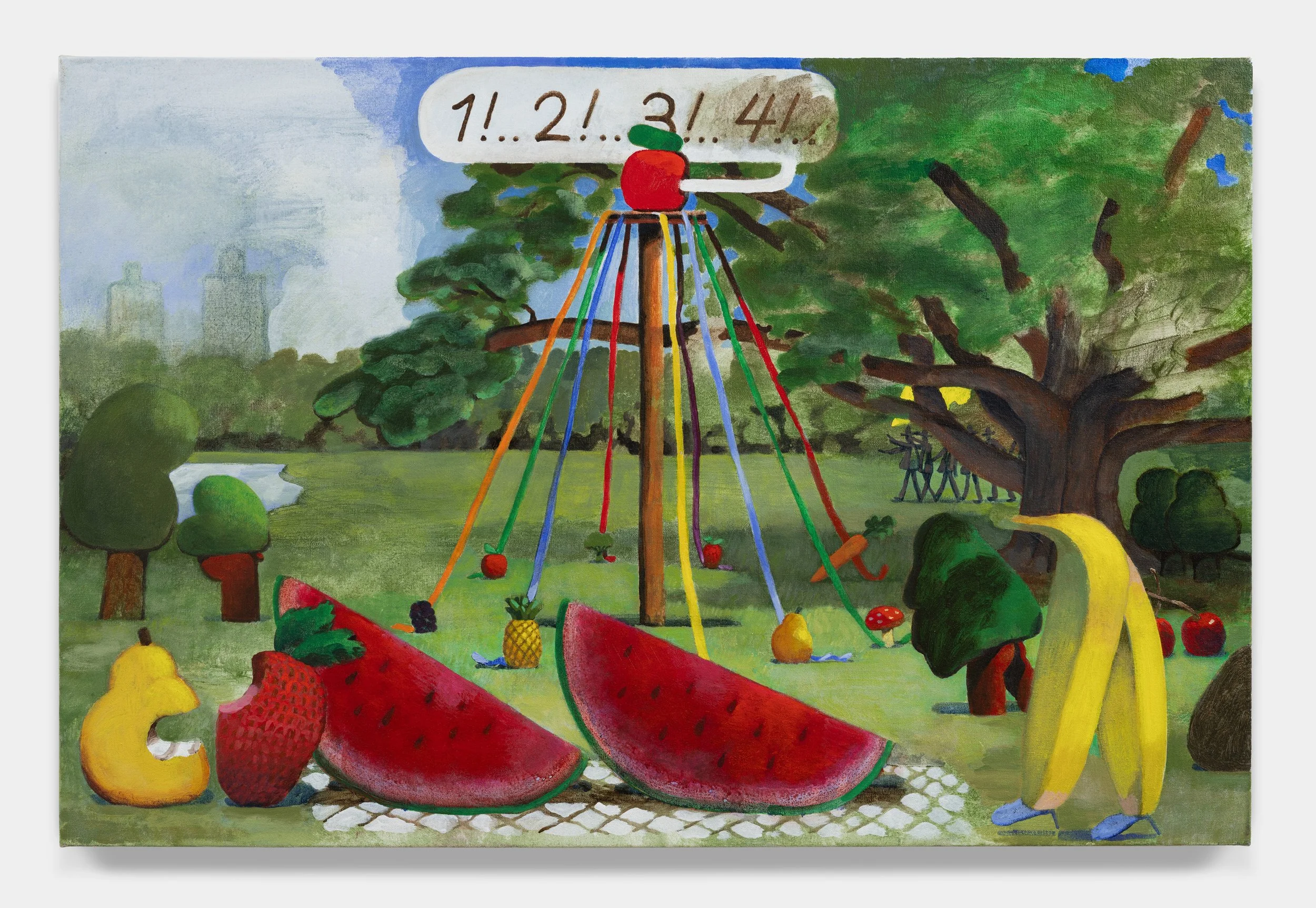
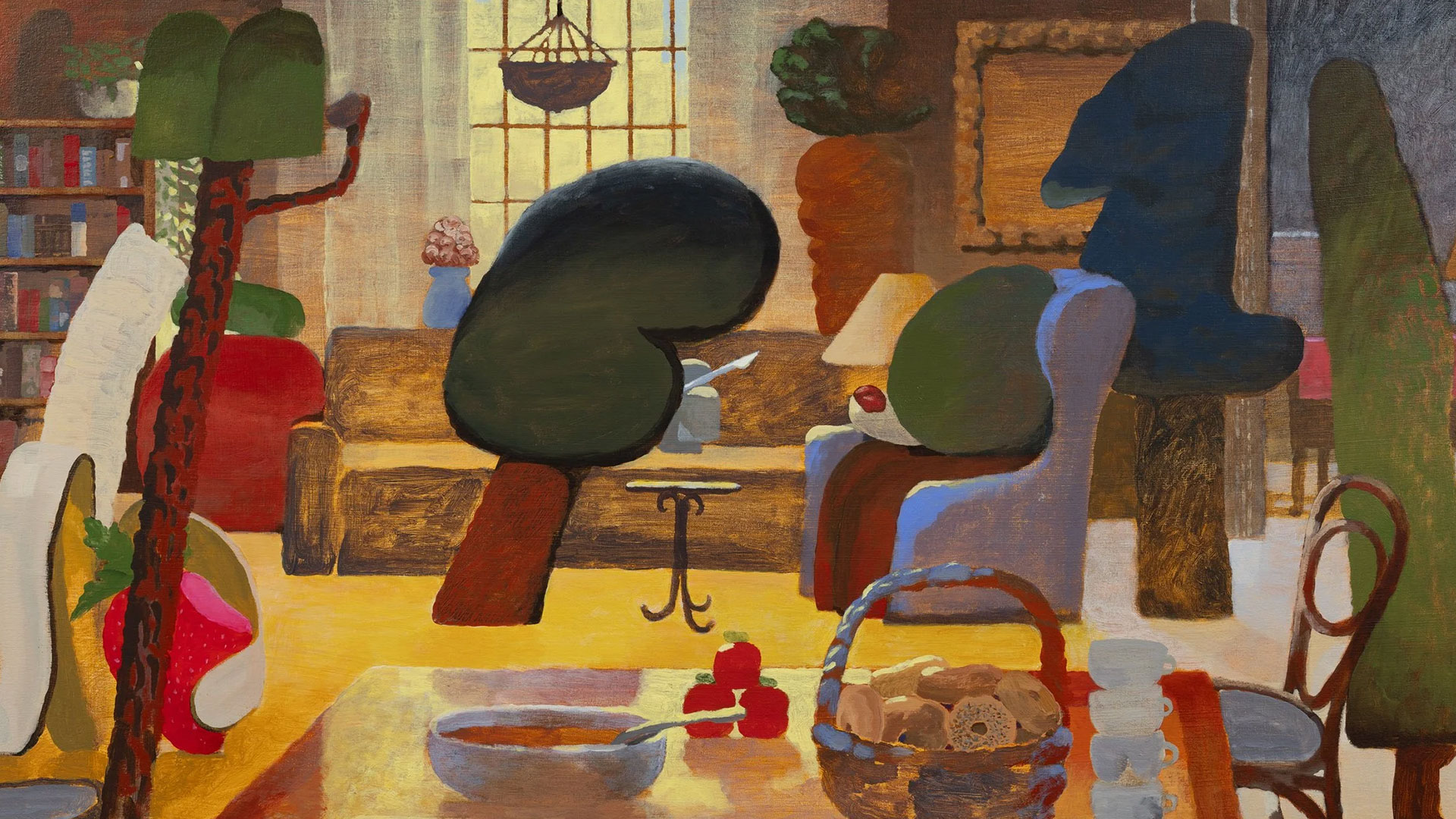
Levin’s paintings rarely follow the rules of ordinary perception. Trees lean toward one another, bread transforms into faces or mountains, and simple household objects become actors in quietly surreal scenes. Everything appears animated, purposeful, and full of possibility, even when its meaning remains delightfully mysterious.

This playful visual language owes something to the symbolic worlds of Philip Guston and the wit of Peter Saul, yet Levin’s paintings remain unmistakably his own. Visual puns, exaggerated proportions, and cartoon-inspired forms create images that are both funny and thoughtful, encouraging viewers to linger between recognition and imagination rather than rushing toward a single interpretation.

Childhood as Creative Territory

Childhood occupies a central place in Levin’s work, not as nostalgia but as a way of understanding the present. Becoming a father transformed both his daily life and his artistic practice, while collaborative drawing with his two young children introduced new ways of seeing the world. Their willingness to experiment, play, and embrace uncertainty became a creative model rather than simply a source of inspiration.

That influence can be felt throughout his paintings. Monumental forms soften into shapes that resemble pillow forts or oversized toys, while dreamlike landscapes seem governed by the same imaginative logic children bring to play. In Levin’s world, curiosity matters more than certainty, and discovery begins by allowing things to become strange again.

Michael Gac Levin. Talkin' Tile

Despite their playful surfaces, Levin’s paintings engage with profound questions about memory, family, identity, and the unconscious. His long-standing interest in psychoanalysis informs the work, particularly the idea that truth often emerges through mistakes, slips, and unexpected associations. Rather than illustrating psychological theories, he lets them quietly shape the evolution of his images.

That balance between humor and mystery gives the work its distinctive character. A painting may provoke a smile because of an absurd visual joke, only to invite deeper reflection moments later. Levin never asks viewers to solve his paintings like puzzles. Instead, he encourages them to experience the same openness, surprise, and sense of wonder that first brought those images into being.

Michael Gac Levin. The Marypole High
Scroll