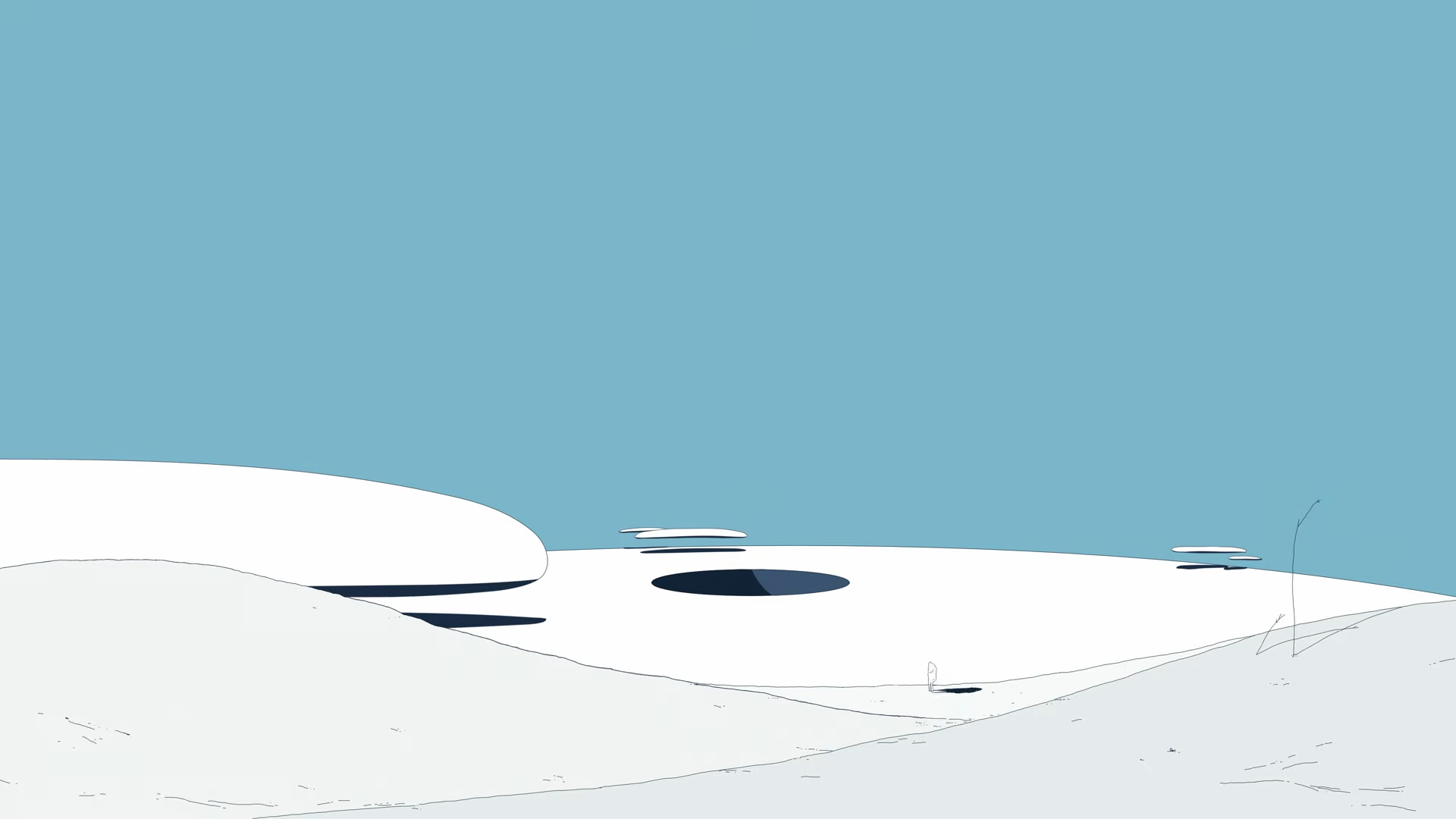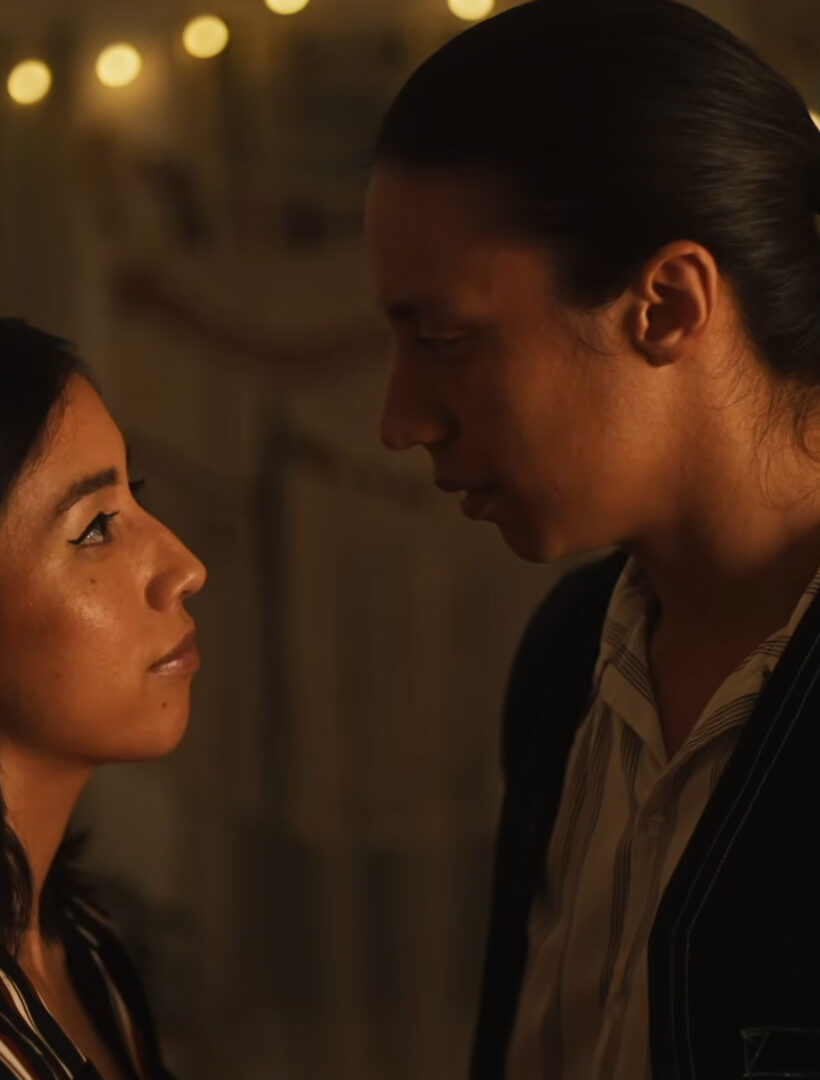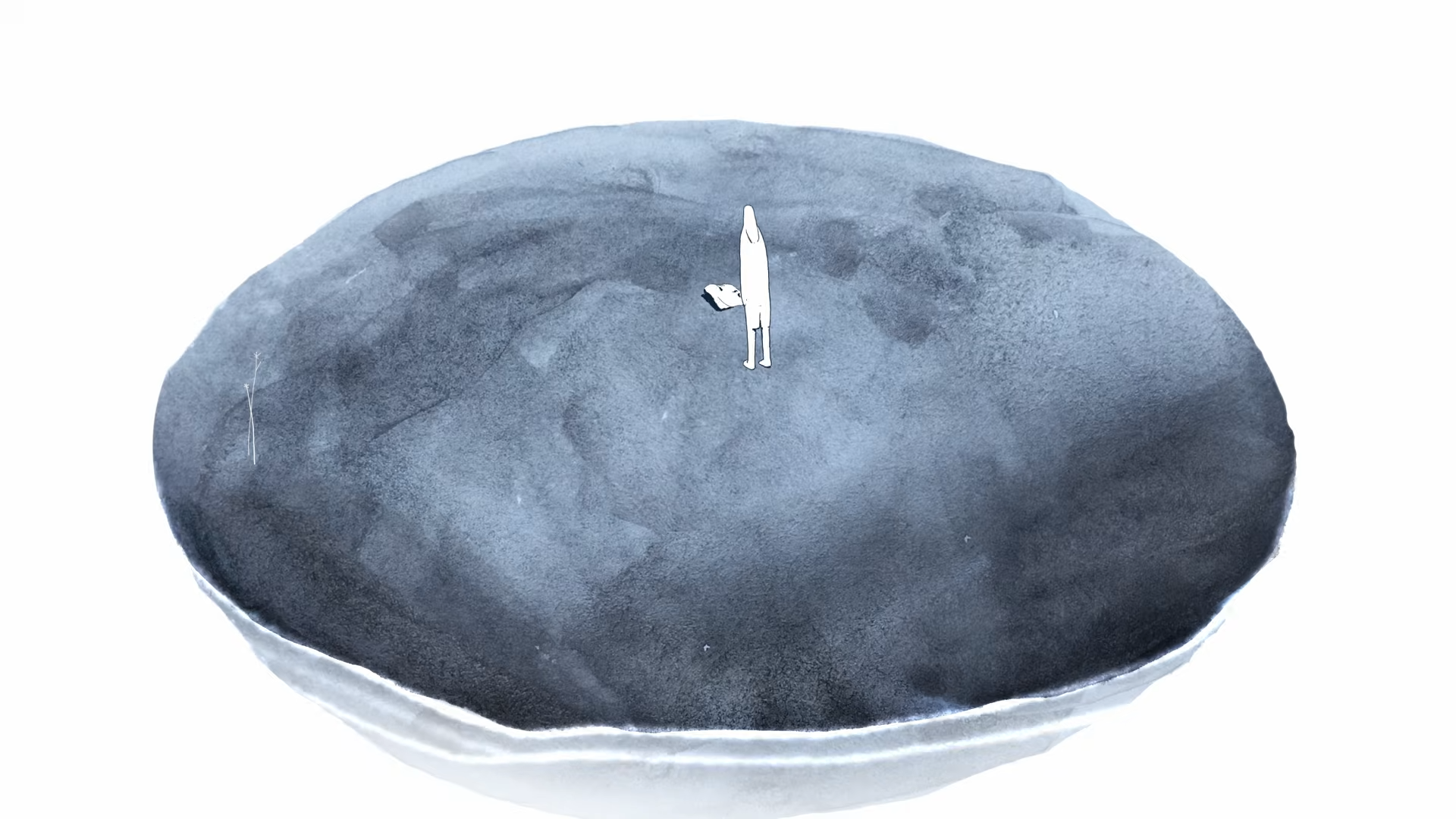

Telsche unfolds like a memory you can’t quite hold onto. Set across an endless stretch of salt flats, this 2D animated short drifts between the real and the imagined, following a young girl as she tries to reconnect with a mother she can no longer fully remember. What begins with a simple, almost surreal image—a stone carved with a familiar face—quickly slips into something deeper, pulling us into a world where memory feels distant, fragile, and just out of reach.
The story is minimal, almost dreamlike. A carved stone, a distant figure, a sudden disappearance into a vast blue void. From there, the film becomes a descent—both literal and emotional—as Telsche dives into underground tunnels filled with water, darkness, and fragments of something once known.
A Visual Language of Loss
What makes Telsche so striking is how it communicates without ever needing to explain itself. There’s no dialogue, no clear answers—just movement, color, and sound working together to express something deeply human.
The film limits itself to just three colors—blue, black, and white—but somehow, it never feels restricted. Instead, those choices create a shifting emotional landscape. Blue becomes water, then emptiness. White feels like both clarity and forgetting. Black swallows everything whole.
The wide shots make Telsche feel impossibly small, almost lost within her own memories. Then, suddenly, the film pulls you closer—intimate, quiet, heavy. It’s this constant push and pull that makes the experience so immersive.