Looking Back Through the Storm: Paul McCartney Photographs 1963–64: Eyes of the Storm
Zoë Marin
Written by Zoë Marin in Beyond the Frame Music Photography

Looking Back Through the Storm: Paul McCartney Photographs 1963–64: Eyes of the Storm

Before the mythology, there were moments.

Before stadiums, before history settled into something fixed and retold, there was movement — trains, hotel rooms, blurred crowds, the restless rhythm of a world just beginning to tilt. What Paul McCartney captured between 1963 and 1964 wasn’t fame as we understand it now, but the sensation of stepping into it while it was still forming.

The exhibition Paul McCartney Photographs 1963–64: Eyes of the Storm, now on view at the Art Gallery of Ontario, gathers more than 250 photographs taken by McCartney at the precise moment Beatlemania began to take hold. Moving across Liverpool, London, Paris, New York, Washington, D.C., and Miami, the images trace a passage — not just geographically, but emotionally — through a time when everything felt immediate, uncontained, and impossibly new.

What makes these photographs so compelling is their perspective. They are not the polished images of celebrity that would come later, nor are they the distant observations of a documentarian. They are inside the experience — immediate and unfiltered — taken from car windows, hotel balconies, dressing rooms, and streets crowded with anticipation. There’s a sense of closeness in these vantage points, as though the camera is moving in step with everything unfolding.

McCartney photographs his bandmates, but also the world surrounding them. Fans press against barriers, strangers are caught mid-glance, and reflections flicker across glass. These fleeting details begin to form something larger: a portrait not just of a band, but of a moment charged with expectation. Even the smallest gestures seem to carry the weight of something about to change.

Paul McCartney. John Lennon. Paris, January 1964
Paul McCartney. George Harrison. Miami Beach, February 1964

There is a looseness to the images, a sense that they were made quickly, instinctively. And yet, within that spontaneity, something quietly observant emerges. McCartney isn’t just recording events — he’s noticing. The way light falls across a face in a passing moment. The geometry of a crowd. The strange stillness that can exist even in the middle of chaos.

The title Eyes of the Storm feels particularly apt. These photographs sit at the center of something that would soon become overwhelming, capturing a rare point of balance before the full force of global fame arrived. There’s an awareness in the images — sometimes playful, sometimes introspective — that suggests McCartney understood, even then, that this moment was temporary.

What also lingers is the intimacy. Despite the scale of what was happening, many of the photographs feel private, almost quiet. A bandmate resting between performances. A view from a hotel room. A reflection caught in glass. These are not images of performance, but of in-between spaces — the fragments that usually disappear between the headlines.

Seen now, decades later, the photographs take on an additional layer. They are not only documents of a cultural shift, but acts of remembering. The grain, the softness, the occasional blur — all of it contributes to a sense of time that feels lived rather than preserved. The images don’t attempt to clarify the past; they allow it to remain slightly out of reach.

Paul McCartney. Ringo Starr. London, January 1964
Paul McCartney, John and George. Paris, 1964

For visitors, the exhibition becomes less about nostalgia and more about proximity. It offers a way of stepping briefly into a moment that has been endlessly mythologized, and seeing it instead as something fluid, uncertain, and human.

For those who feel drawn to that intersection of memory and image, the exhibition offers a rare opportunity to experience these photographs up close. For more information, visit the exhibition website. And to explore more of McCartney’s photographic work and archive, you can visit the artist’s official website.

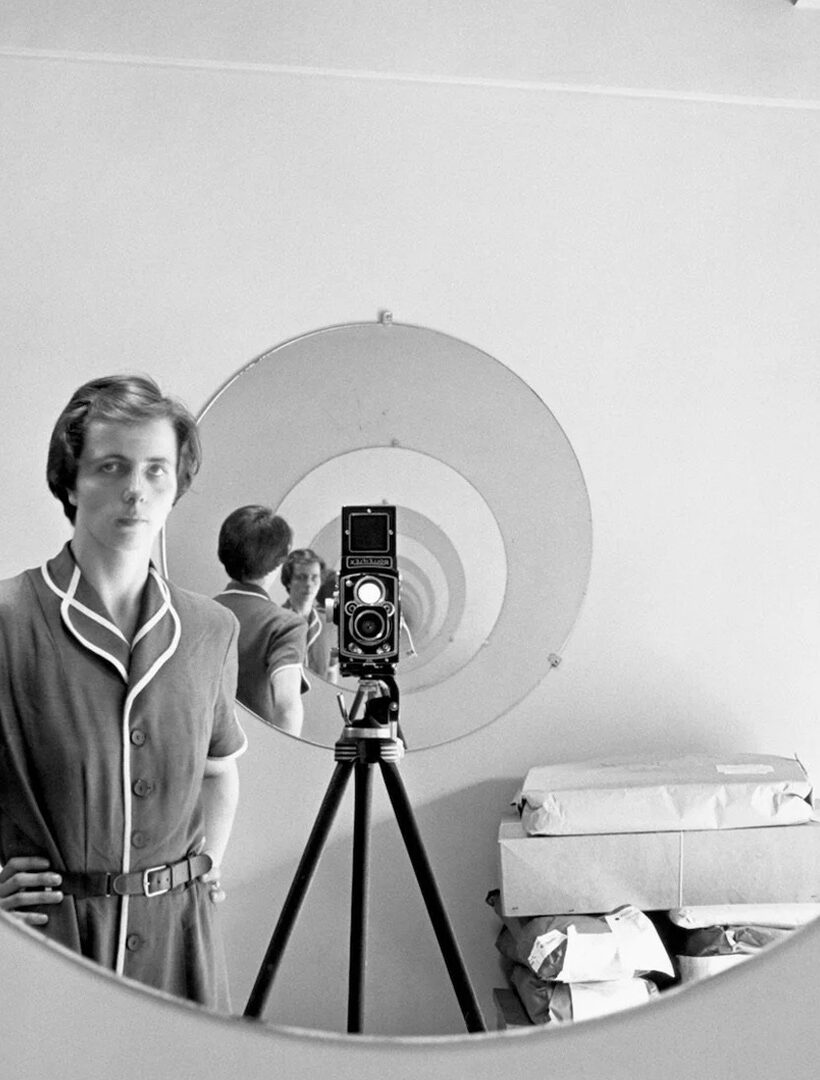
Image at the top of this page: Paul McCartney. Self-portrait. London, 1963.

Paul McCartney, Photographers in Central Park. New York, 1964
Scroll