
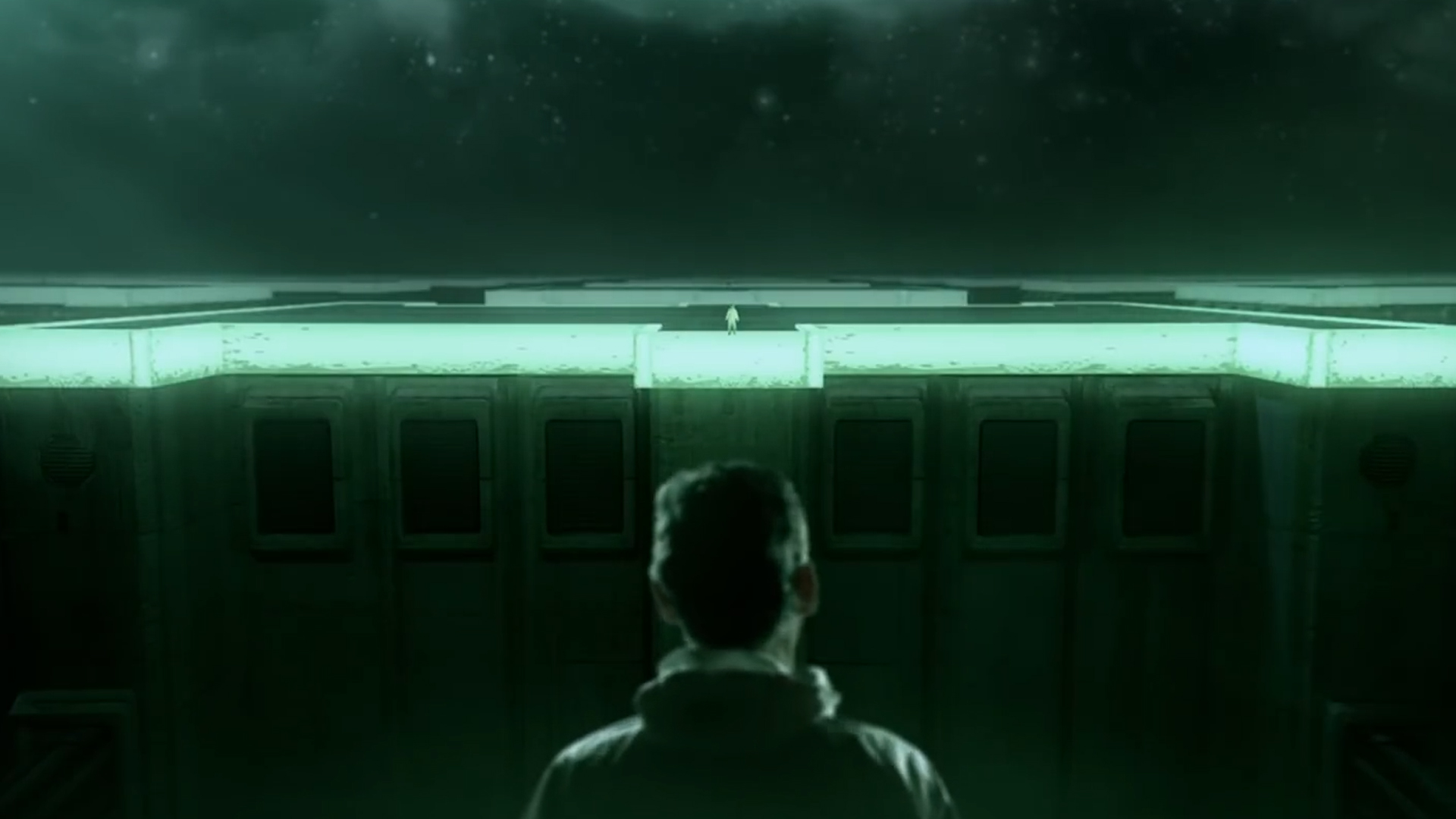

Some short films invite you to watch. Others challenge you to think. Mouse-X, the ambitious sci-fi short from filmmaker Justin Tagg, firmly belongs to the second category—a story designed to linger in your mind long after its final frame.
The premise alone is enough to spark curiosity: a man wakes up in a strange building with no memory of how he got there. As he explores his surroundings, he makes a disturbing discovery—room after room filled with clones of himself, each waking up to the exact same situation. Suddenly, escape isn’t just about finding a door. It’s about confronting the unsettling question at the heart of the film: who are you, if you’re not the only you?
That philosophical thread sits at the core of Mouse-X. Tagg originally began exploring the idea while writing a short story, wrestling with the nature of identity. If a person could be perfectly copied—every physical detail replicated—would the new version still be “you”? And if not, what is it that truly makes a person unique?
From there, the concept expanded into a broader meditation on predictability and human behavior. Tagg often describes the film using the metaphor of a dice: something we perceive as random, but which could theoretically be predicted if every variable were known. In the world of Mouse-X, that idea becomes the foundation for a massive experiment—one where human clones replace laboratory mice as test subjects.
Despite its ambitious ideas, the film was made on a remarkably small budget. The production relied heavily on ingenuity and resourcefulness, with the team even building their own set from scratch. The design deliberately mixes elements from different eras—a 1950s record player, decaying walls, warehouse lighting—to create a world that feels strangely timeless and slightly unsettling.
That attention to visual detail gives Mouse-X a distinctive style that perfectly supports its looping, puzzle-like narrative. As clues slowly emerge and the story folds back on itself, the film becomes less about solving a mystery and more about exploring the philosophical trap at its center.
In just fifteen minutes, Tagg delivers a compact but provocative piece of science fiction—one that encourages multiple viewings and plenty of post-film debate. If the goal was to leave audiences questioning the nature of identity, Mouse-X succeeds brilliantly.
Sometimes the most intriguing stories aren’t the ones that give us answers—but the ones that quietly leave us asking better questions.


