David Blackwood: Myth, Legend, and the Sea’s Memory
Elliott Brooks
Written by Elliott Brooks in Dimensions Art & Design Creative

David Blackwood: Myth, Legend, and the Sea’s Memory

There are artists who depict landscape, and then there are artists who make landscape breathe. David Blackwood belongs firmly in the latter category. His prints don’t simply show Newfoundland’s coast; they inhabit it. Wind cuts across the paper. Ice groans. Figures move through snow not as passive subjects, but as participants in something larger, older, and almost mythic.

At the Art Gallery of Ontario, David Blackwood: Myth & Legend revisits the work of one of Canada’s most important printmakers, whose imagery has shaped how generations understand outport life in Newfoundland and Labrador. Born in Wesleyville in 1941, Blackwood grew up in a fishing community where survival depended on an intimate relationship with the sea. That lived experience would later define his artistic vocabulary.

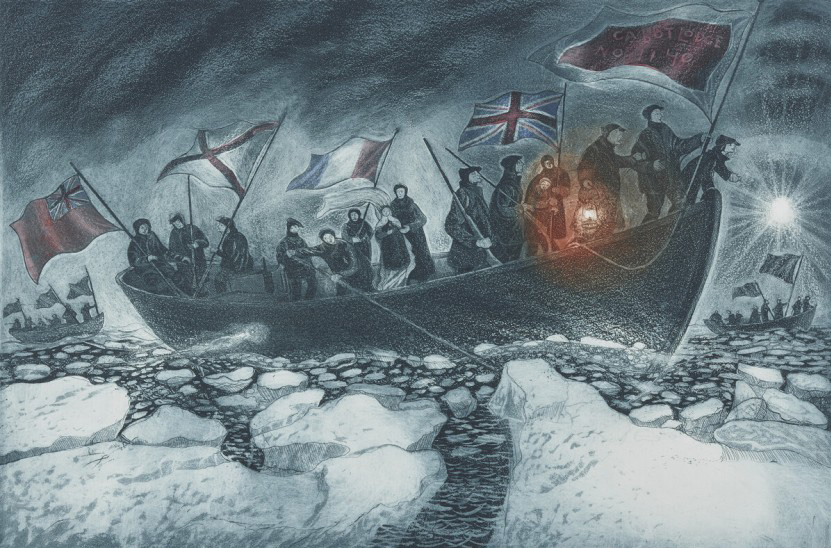
Blackwood is best known for his masterful etchings and lithographs, intricate and atmospheric works that merge folklore, history, and lived memory. His scenes often depict resettlement, sealing voyages, shipwrecks, and spectral gatherings. Yet they resist documentary classification. Instead, they operate in a liminal space between realism and legend. A figure may appear grounded in daily life, while the surrounding composition, with its swirling skies and looming icebergs, lifts the moment into allegory.

What makes his prints so powerful is their theatrical sense of composition. Blackwood understood narrative instinctively. Each plate feels carefully staged without ever seeming artificial. Bodies lean into the wind. Communities gather in ritual. Ships tilt against towering ice. The drama feels elemental rather than exaggerated. You sense that these stories existed long before the print was pulled from the press.
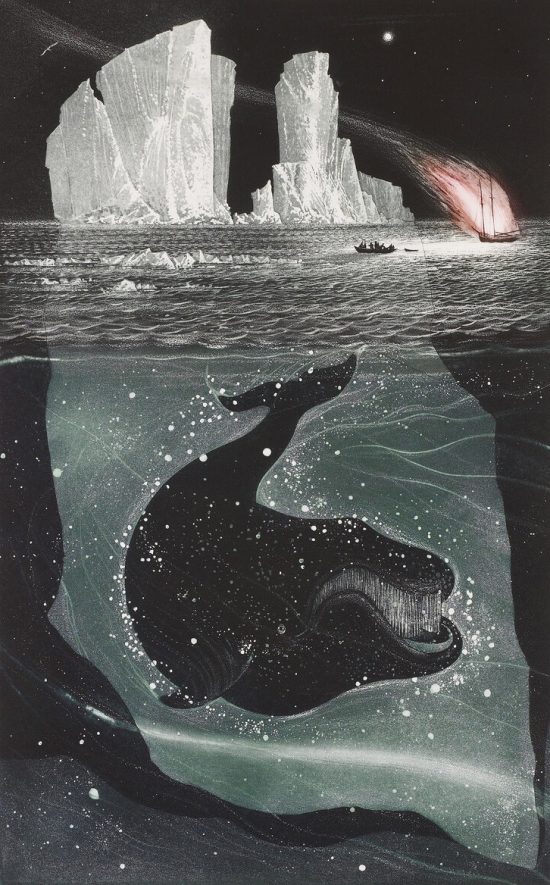
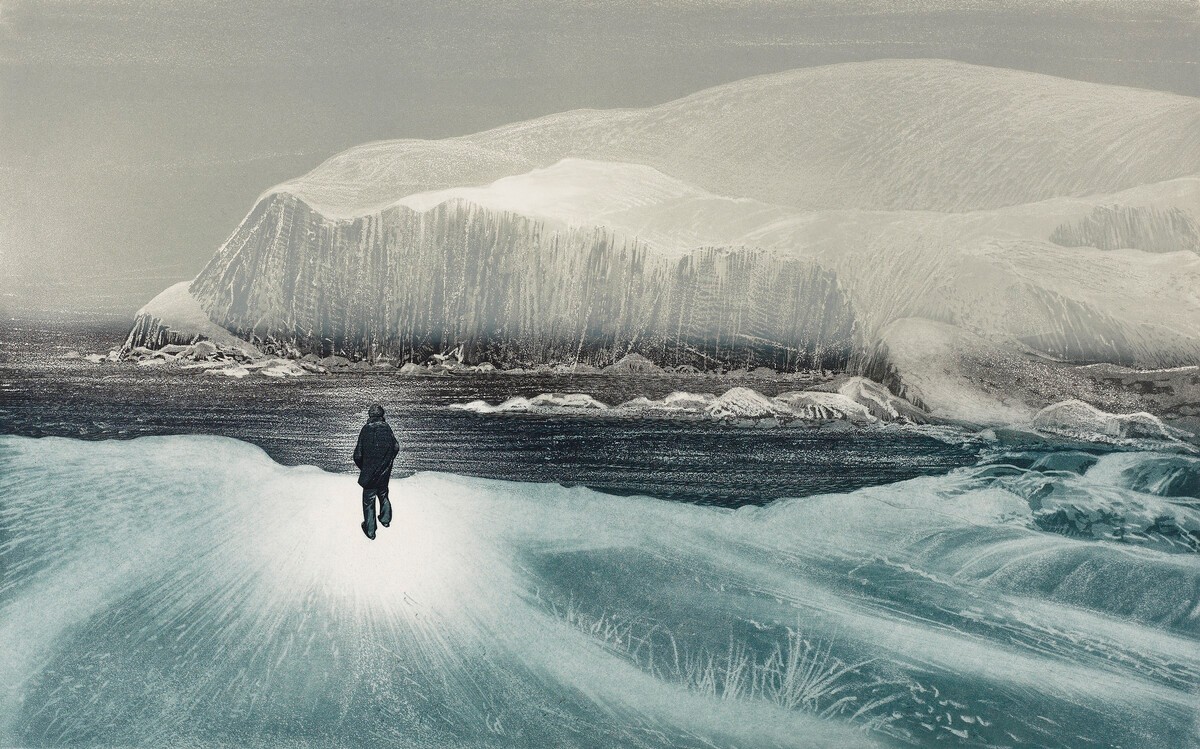
Fire Down On The Labrador, by David Blackwood
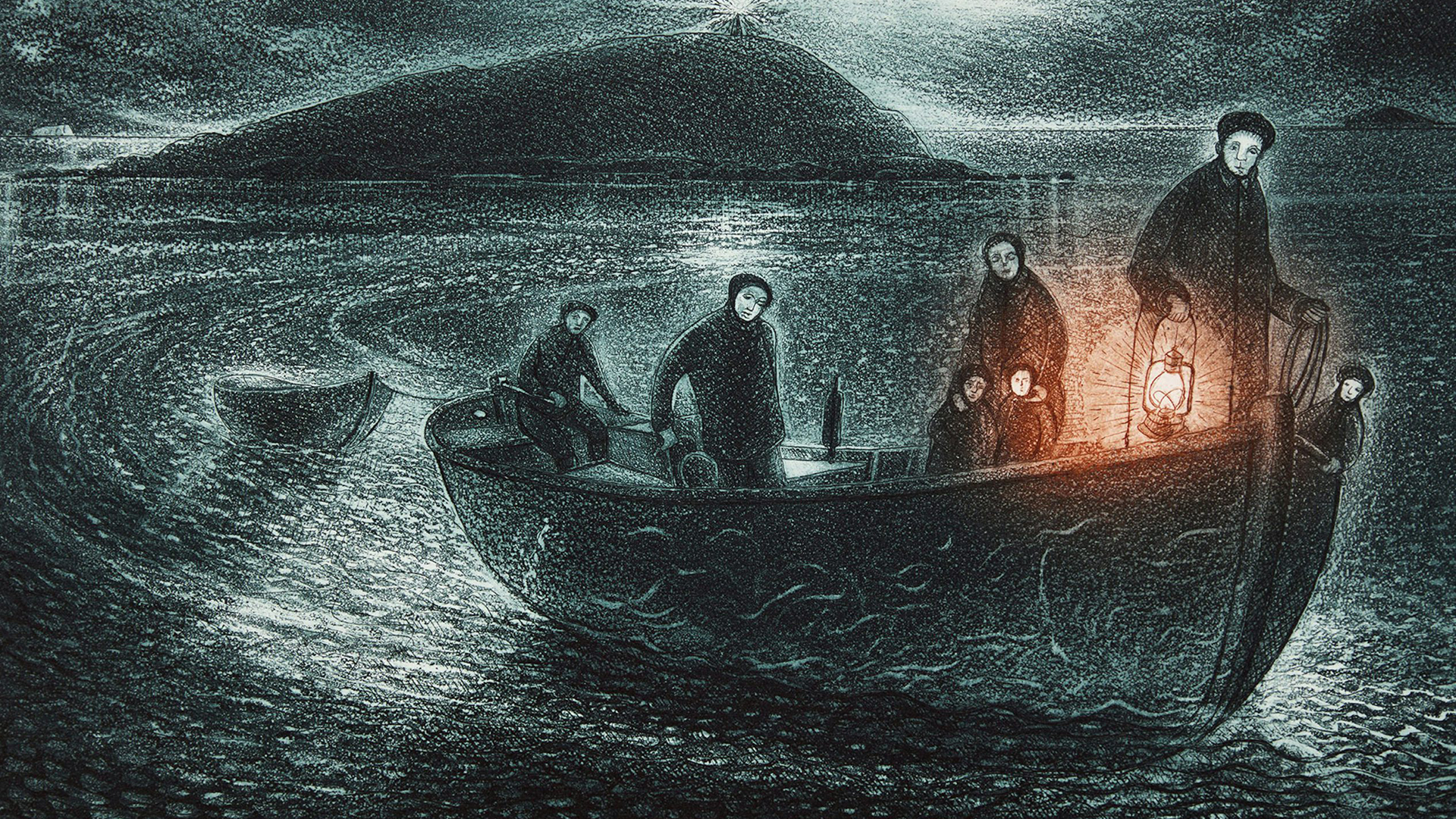
Wedding On Deer Island, by David Blackwood

Technically, his work demonstrates an astonishing command of the medium. Through etching, aquatint, and drypoint, he layered processes to build depth and atmosphere, allowing darkness to feel velvety and light to cut sharply through fog or snow. There’s a sculptural quality to his marks, a tactility that makes you aware of the plate itself. Printmaking, in Blackwood’s hands, becomes both craft and storytelling device.

The exhibition at the AGO underscores how deeply rooted his imagery is in collective memory. Newfoundland’s resettlement programs, the perilous seal hunts, and the isolation of coastal communities are not presented as static history. They are rendered as living mythologies. His figures often feel archetypal—fishermen, mourners, witnesses—yet they remain grounded in real events and specific geographies.

There is also a quiet spiritual dimension in Blackwood’s work. Not religious in a conventional sense, but reverent toward the forces that shape human life: weather, water, migration, endurance. His compositions suggest that landscape itself carries memory, that cliffs and coves remember what communities have endured.

Blackwood’s legacy extends beyond subject matter. He helped reassert printmaking as a vital contemporary medium in Canada, proving that works on paper can hold as much emotional and conceptual weight as large-scale painting. His influence continues to ripple through Canadian art, particularly among artists concerned with place, history, and narrative.

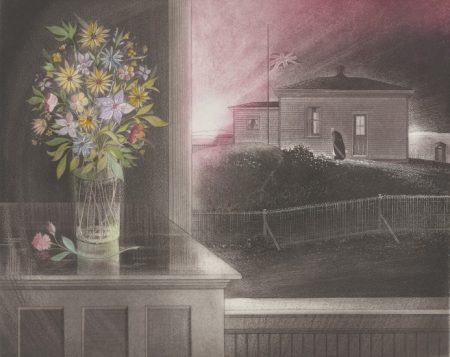
Aunt Gert Hann Home In Wesleyville, by David Blackwood

David Blackwood: Myth & Legend offers viewers a chance to experience these works in person and to stand close enough to see the etched lines and layered tonal shifts that reproductions can never fully convey. The exhibition invites reflection not only on Newfoundland’s past, but on how stories are carried forward through image and material. You can learn more about the show at the Art Gallery of Ontario through its official exhibition page.

January Visit Home, by David Blackwood
Scroll