Material is never just material in Roda Medhat’s work. The Markham-based artist approaches wool, vinyl, neon, and digital fabrication as carriers of memory — surfaces where personal history, cultural translation, and experimentation intersect. His sculptures and textile-inspired installations feel alive in a literal sense: they sag, glow, inflate, flicker, and shift, creating environments where stories seem to unfold through physical transformation rather than fixed imagery.


Written by
Elliott Brooks
in
Dimensions
Art & Design
Creative
Folding Memory: Roda Medhat’s Living Materials
Medhat’s practice sits at a crossroads between craft traditions and contemporary fabrication. Born in Kurdistan and raised in Canada, he often explores how diasporic memory is shaped by distance, research, and reconstruction. Rather than presenting cultural references as static heritage, he treats them as evolving forms. Kurdish textiles, vernacular architecture, children’s books, and archival materials all appear in his work — not as direct reproductions but as translations that pass through scanning, modeling, weaving, and fabrication.
His fascination with materials often begins with curiosity. Medhat has described encountering a new material and immediately wondering how far it can be pushed — how plastic might imitate fabric, or how light might behave like thread. That investigative spirit gives his work a sense of process made visible. Even finished pieces retain a feeling of experimentation, as if they might continue transforming after the viewer leaves.
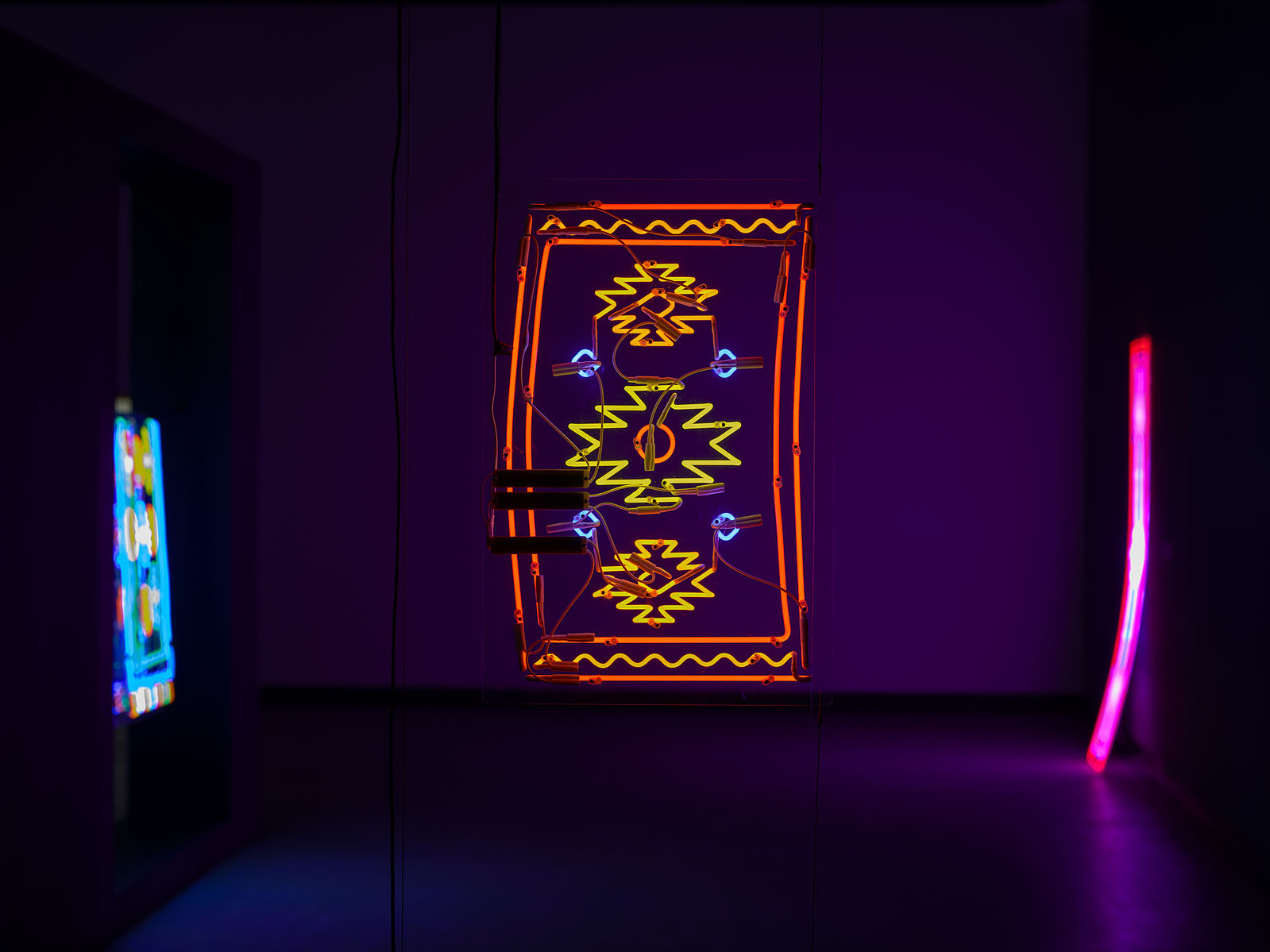
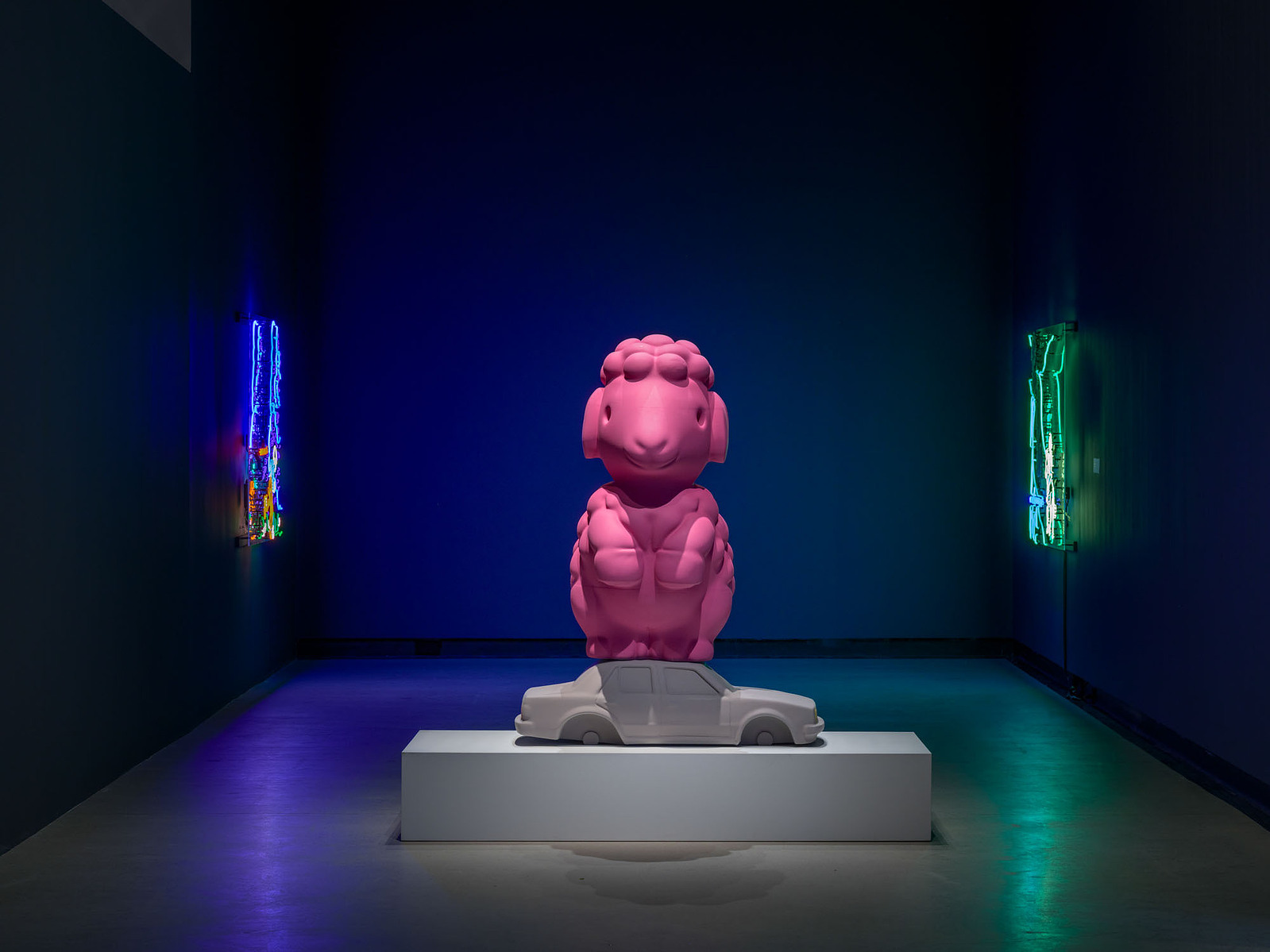
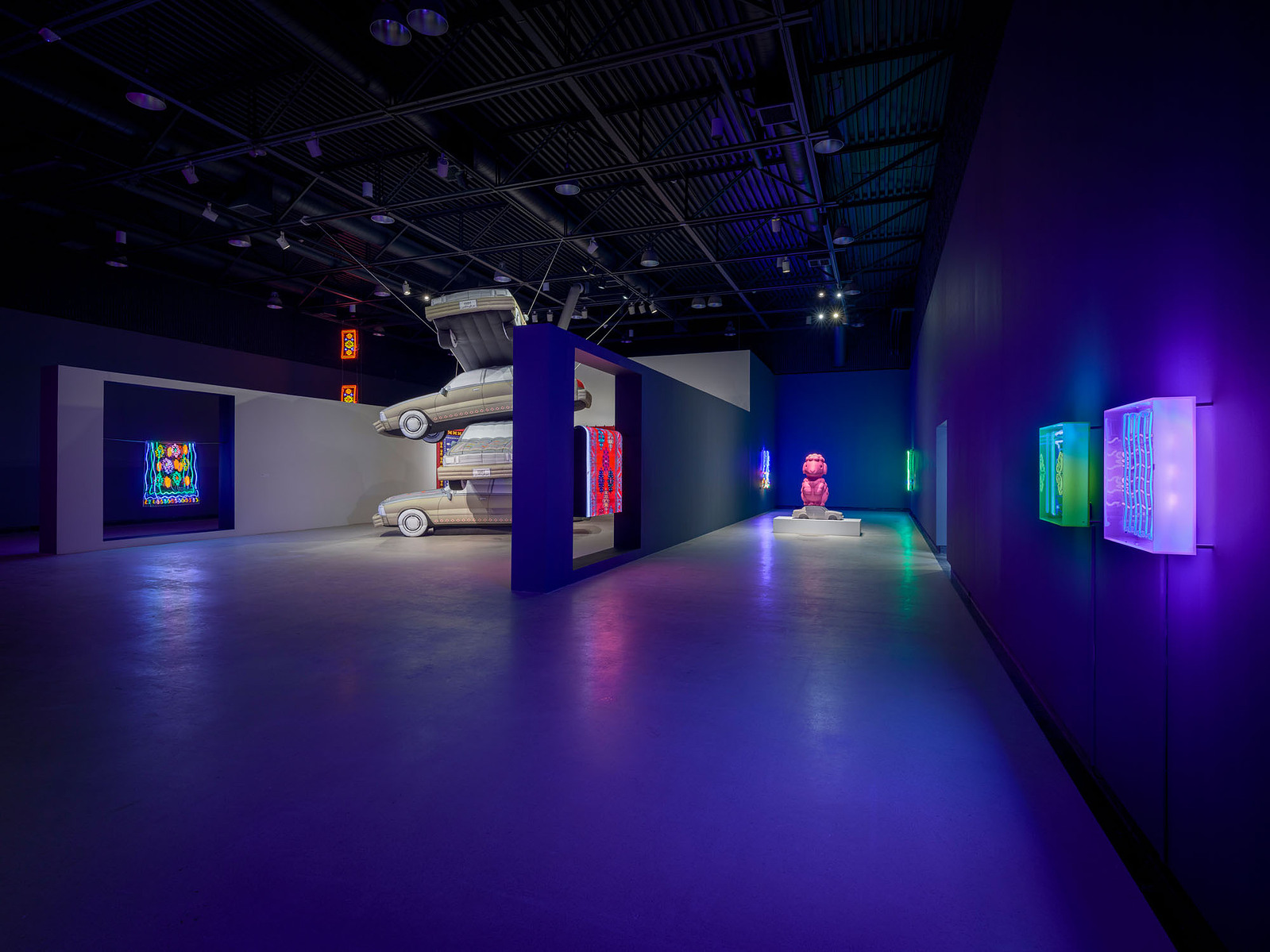
This material-driven approach comes into full focus in Things I Can Fold, Deflate, and Break, his solo exhibition at the Art Gallery of Burlington, on view in the Lee-Chin Family Gallery from January 17 to April 26, 2026. The exhibition divides the gallery into zones of light, sound, and movement, creating a unified environment where textiles and sculptural forms become storytellers. Flickering illumination, the hum of inflatable structures, and shifts from soft wool to glossy plastic guide visitors through a multisensory experience.
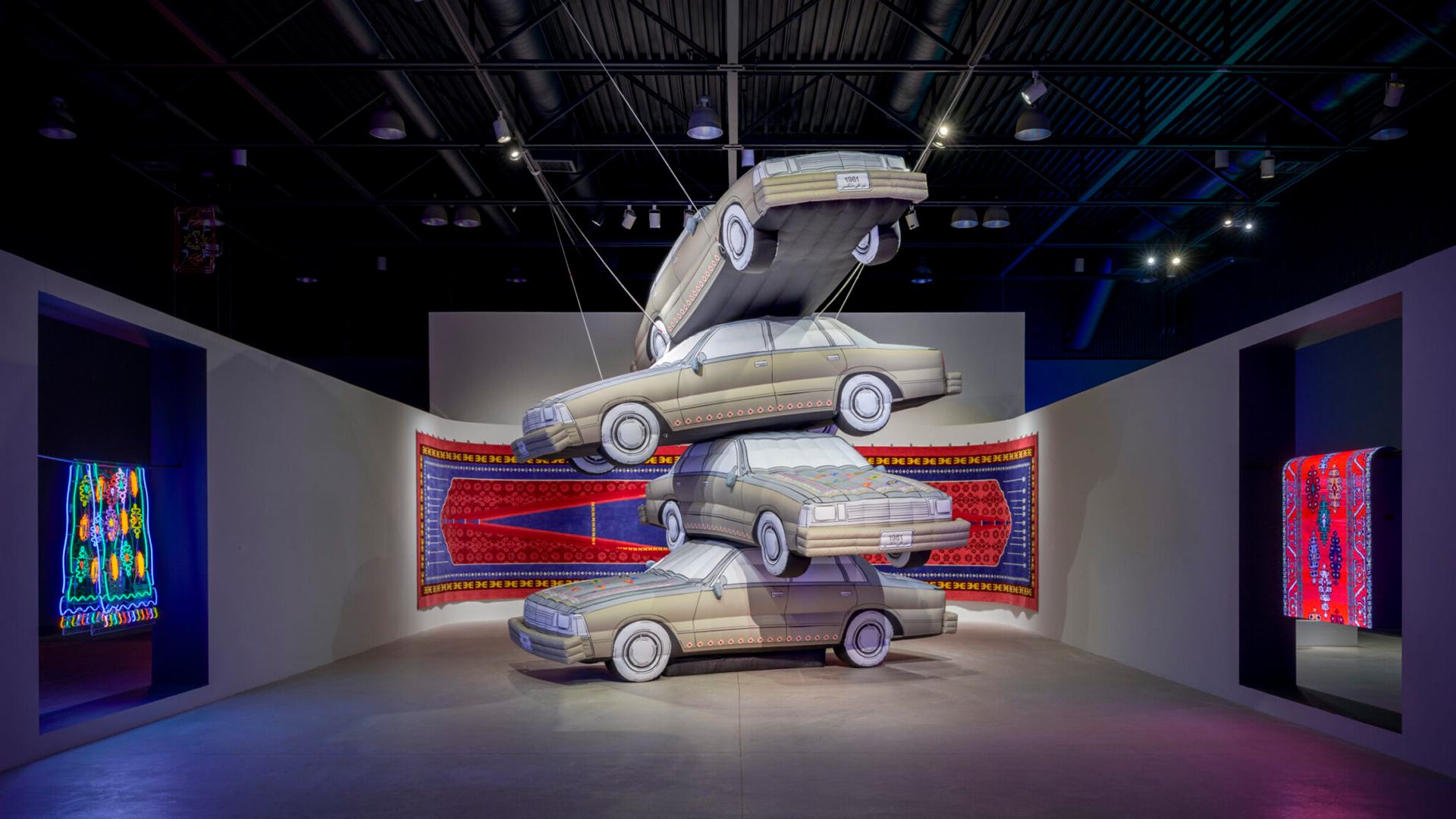
The exhibition makes a striking first impression. A twelve-metre carpet titled Ser-Atah stretches across a wall like a panoramic horizon, while nearby a video work animates the illusion of a vibrating red rug suspended on a clothesline. At the centre stands a towering inflatable sculpture composed of stacked vintage Chevy Malibus — delicate despite their monumental scale, as if they might collapse at any moment. This tension between spectacle and fragility runs throughout the exhibition.
Many works draw directly from Kurdish cultural references. A neon animation reimagines illustrations from a banned Kurdish reading primer, while LED rugs mimic traditional textile patterns with uncanny precision. Medhat has spoken about researching cultural elements he did not personally experience, using the act of making as a way of understanding his own heritage. Through scale, luminosity, and tactile presence, these works bring overlooked histories into the foreground.
Underlying the exhibition is a deep interest in transformation. Patterns migrate between mediums, objects imitate other materials, and fragments reappear at different scales. Rugs seem to breathe, surfaces appear to fold into themselves, and forms hover between solidity and collapse. Rather than presenting finished statements, the works feel like moments within an ongoing process.
Medhat’s installations also invite viewers into that process of discovery. The works are meant to be encountered physically — through movement, proximity, and shifting perspective — so that meaning emerges gradually. His environments collapse the distance between artwork and audience, turning cultural translation into a shared experience rather than a distant narrative.
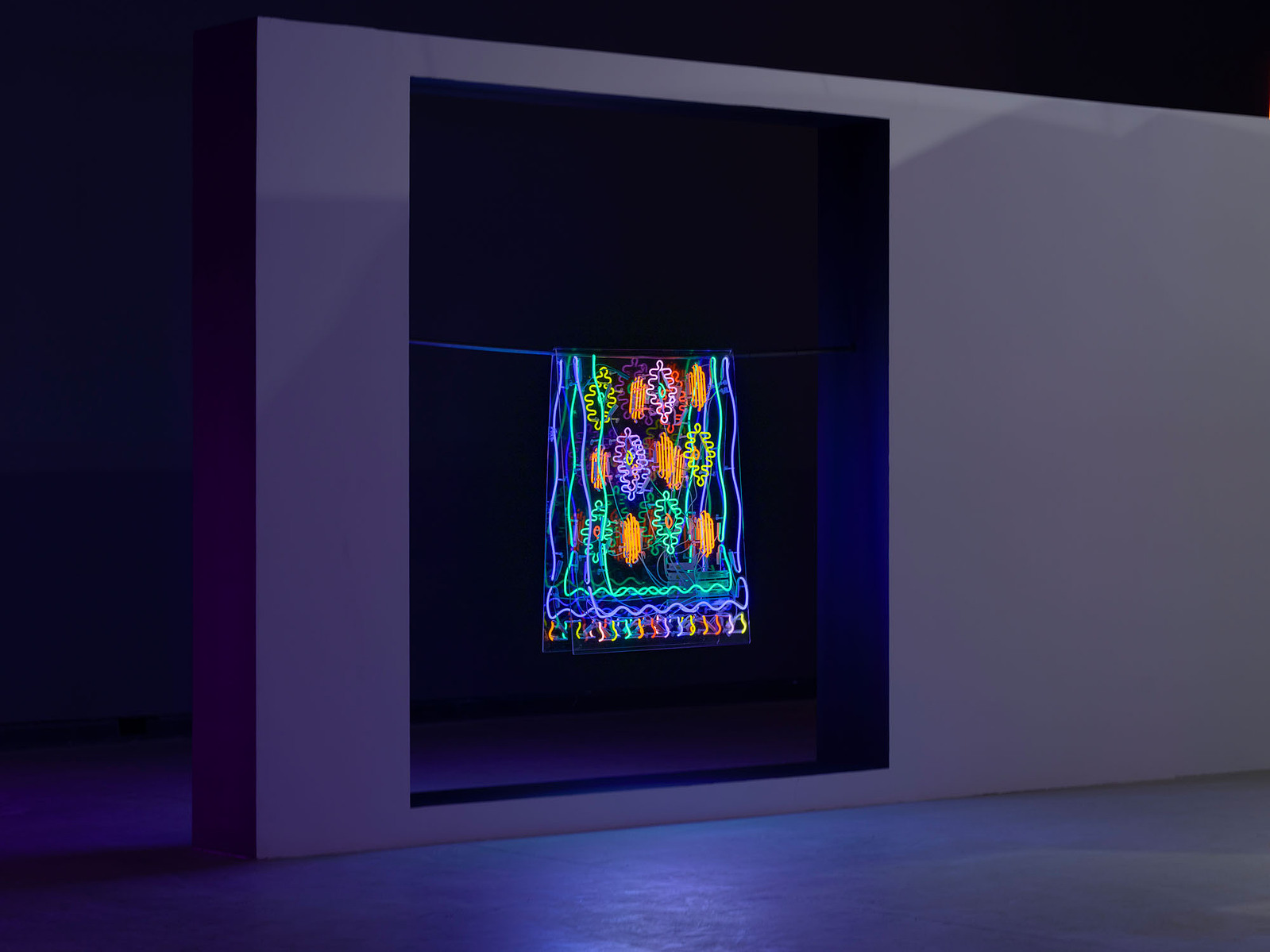
To explore more about the exhibition, visit the Art Gallery of Burlington’s website. And for a broader view of Medhat’s evolving practice, it’s worth spending time with his website, where the same curiosity and material sensitivity continue to unfold.
All photos by Darren Rigo.