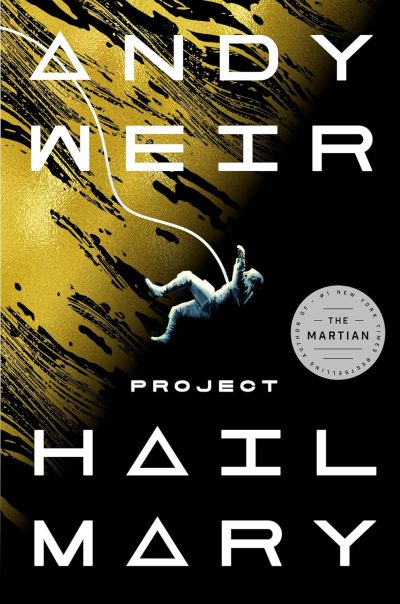

Some books hit you with spectacle. Others sneak up on you, quietly rearranging how you think about courage, curiosity, and what it means to be useful when everything feels impossibly large. Project Hail Mary sits in that rare middle space. It’s sci-fi with blockbuster energy, yes — but it’s also deeply intimate, built around problem-solving, kindness, and the fragile persistence of hope.
Andy Weir introduces us to Ryland Grace at his most disoriented: alone, floating in space, with no memory of who he is or why he’s there. The slow unspooling of his past becomes part of the story’s emotional rhythm. Grace isn’t a classic hero; he’s a former middle-school science teacher with a nervous sense of humor and an instinct to explain things as he understands them. Watching him piece together both his mission and his identity gives the book a gentle humanity that keeps the high-stakes science grounded.
What Project Hail Mary does best is make intelligence feel exciting without turning it cold. Experiments, equations, and theoretical puzzles aren’t presented as obstacles to emotional connection, but as bridges to it. Every breakthrough feels earned, not flashy. Science becomes an act of care — for a planet, for strangers, and eventually for someone entirely unexpected.