The Graphic Intelligence of Rafael Nobre
Elliott Brooks
Written by Elliott Brooks in Dimensions Art & Design Creative

The Graphic Intelligence of Rafael Nobre

There’s something deeply satisfying about restraint done well. The kind that doesn’t shout, doesn’t decorate for decoration’s sake, but instead locks onto an idea and refuses to let go. That’s where Rafael Nobre operates. A Rio-based illustrator and graphic designer, Nobre has built a formidable body of work shaping the visual identities of books—especially literary classics—through a language of silhouettes, limited palettes, and razor-sharp conceptual clarity.

If you’ve ever stopped mid-scroll because a book cover felt inevitable, like it couldn’t possibly look any other way, chances are you’ve already brushed up against Nobre’s thinking. With more than 80 classic titles illustrated and designed, his approach turns interpretation into synthesis. Text becomes image. Concept becomes form. Decoration steps aside so meaning can take the lead.
What sets his work apart is how seamlessly illustration and design talk to each other. For Nobre, these aren’t separate disciplines stitched together at the final hour; they’re a single system. Illustration lives inside design constraints, and design evolves to give illustration the space it deserves. Typography isn’t an afterthought—it’s part of the composition. Color choices aren’t expressive accidents; they’re structural decisions. It’s a dance, and both partners know the steps.

Visually, his work often leans on bold contrasts, flat shapes, and symbolic reductions. He’ll strip an idea down to its skeleton and rebuild it using just a handful of colors. Silhouettes do a lot of heavy lifting, letting negative space speak as loudly as form. And when collage enters the picture, it’s not for nostalgia or texture alone—it’s a way to create unexpected relationships between fragments, to provoke visual tension that illustration alone sometimes can’t.

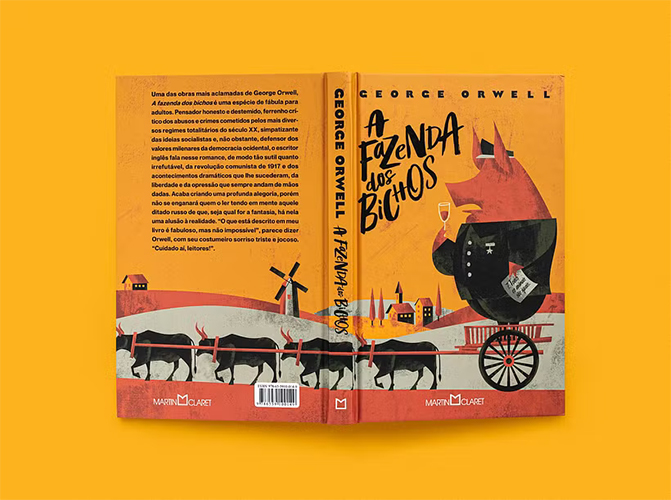
Cover for "Animal Farm". Illustration by Rafael Nobre

His influences trace back to modern art movements like cubism and surrealism, but what’s most interesting is how he filters those references through contemporary graphic design logic. Vector precision meets handmade textures. Digital clarity is softened by analog imperfections. The result feels modern without being cold and expressive without being indulgent.

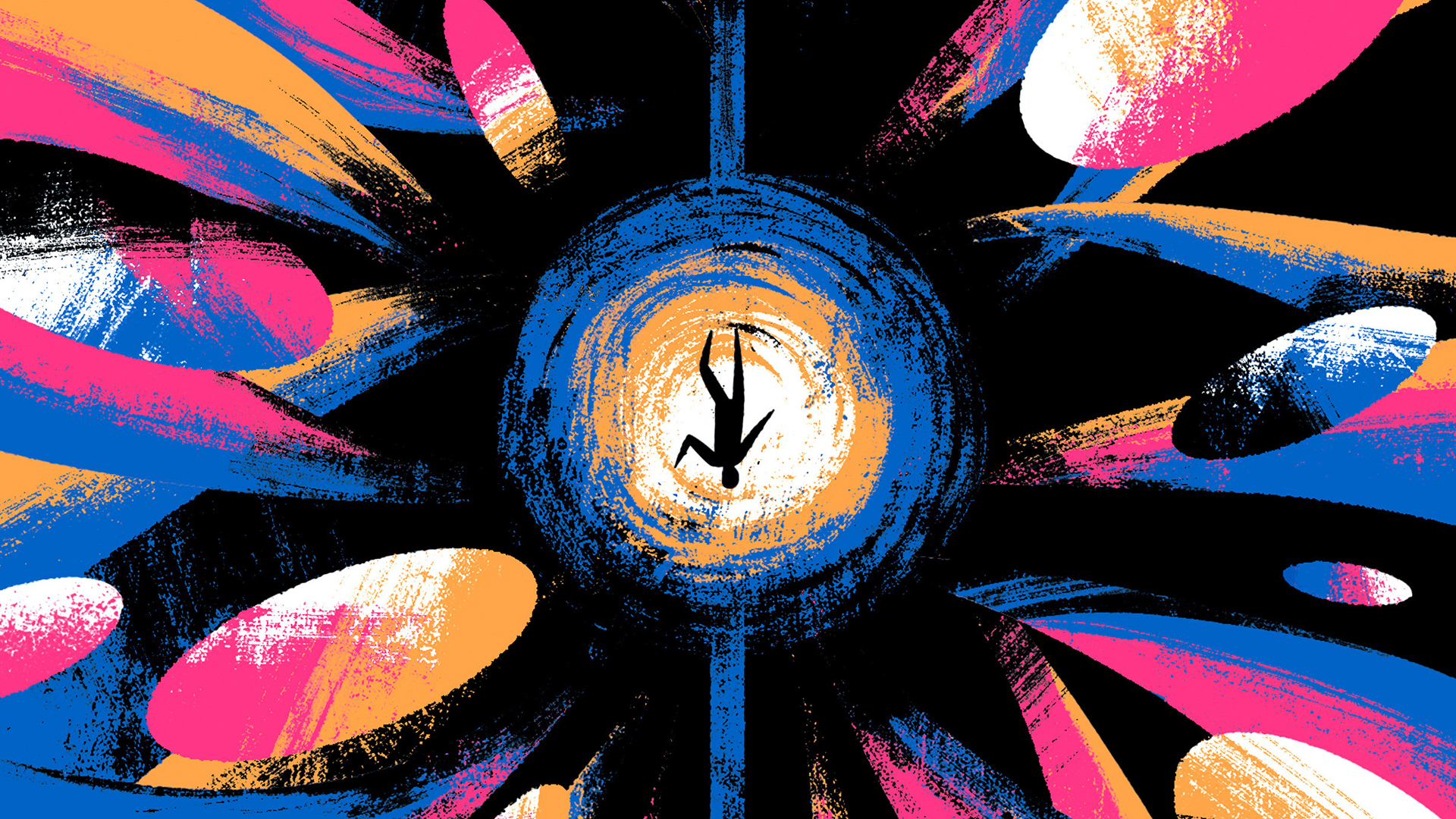
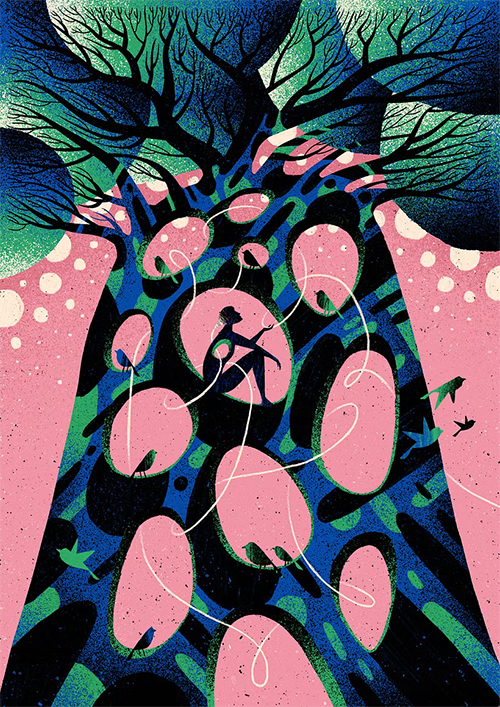
A personal illustration by Rafael Nobre

Designing for literary classics comes with its own unique pressure. These are texts loaded with history, expectation, and countless prior visual interpretations. Nobre approaches this not as a limitation, but as a challenge in translation. The task isn’t to illustrate the plot or echo familiar imagery—it’s to extract the core tension of a book and express it visually, without slipping into cliché. That often means saying less, not more.

Time, as he notes, plays an essential role. Revisiting the same title years apart can produce radically different results, shaped by evolving references, techniques, and personal perspective. Much like literature itself, these covers aren’t fixed objects. They’re reinterpretations—snapshots of how a story can be seen now.

There’s also a quiet pragmatism running through his practice. Deadlines are real. Marketing demands exist. Clients have opinions. Authors have legacies. A successful book cover doesn’t live in a vacuum—it negotiates between creativity and constraint, clarity and intrigue. Nobre’s strength lies in navigating that complexity without diluting the concept. The work remains intelligent, distilled, and confident.

What I admire most is how his covers trust the reader. They don’t overexplain. They invite interpretation. They assume curiosity and reward attention. In a visual culture obsessed with excess, Rafael Nobre’s work is a reminder of the power of subtraction—and how, when done well, fewer elements can carry much heavier meaning.

f you want to see how far thoughtful reduction and graphic precision can go, spend some time with Rafael Nobre’s work over at rafaelnobre.com. It’s a masterclass in concept-driven illustration and book design, where each project reveals a sharp mind at play. Wander slowly, study the details, and let his way of thinking sharpen your own.

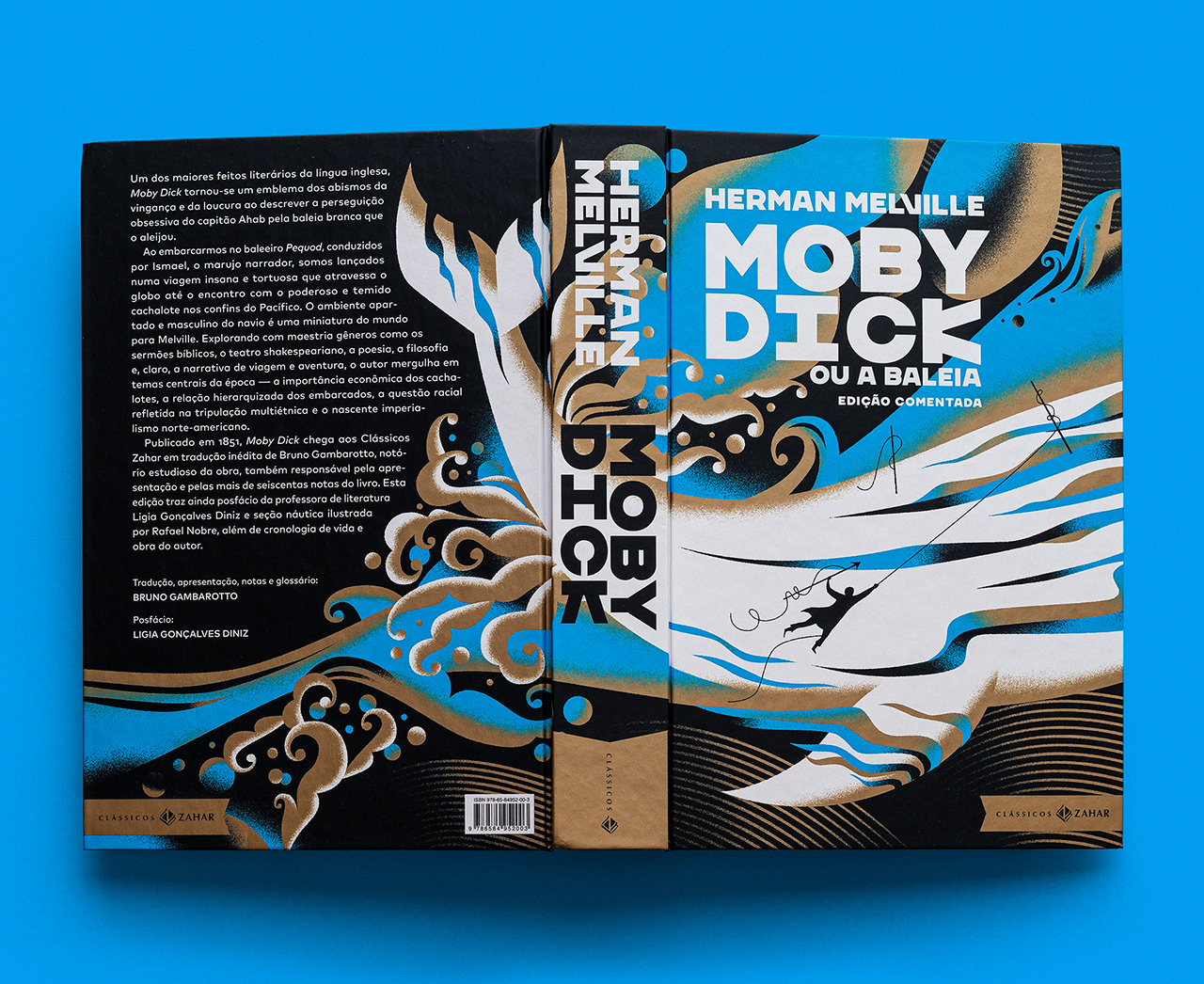
Cover for "Moby Dick", illustrated by Rafael Nobre
Scroll