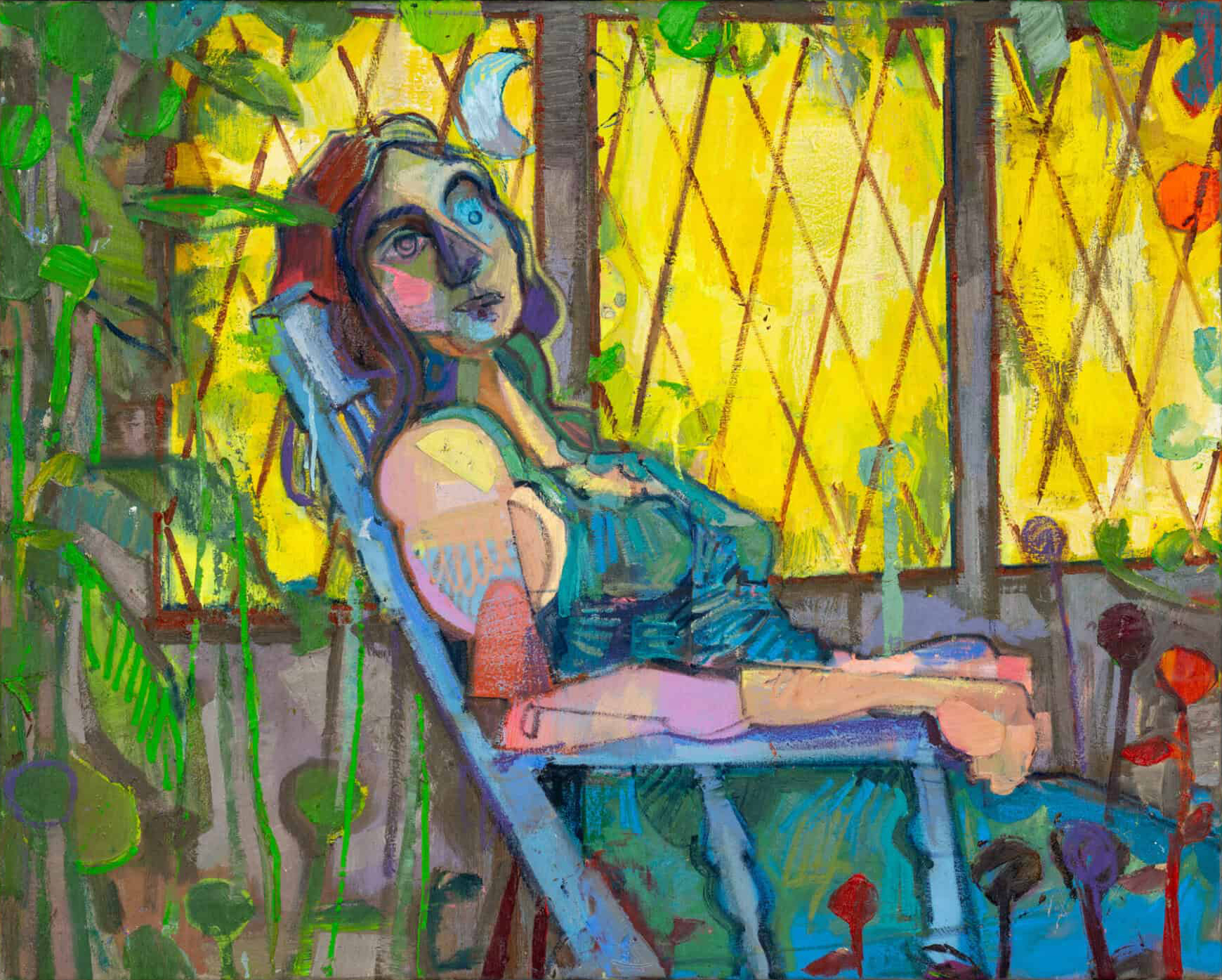
There’s a crack in the wall of “serious portraiture,” and Andrew Salgado wears it like a badge. Hailing originally from Regina, Saskatchewan, this Canadian artist-turned-London-chronicler of selves has a way of turning faces into front-pages of metaphor and identity. Big canvas, bigger motifs, vivid color—and a brush with narrative that bleeds out just enough to keep things wild rather than clean.


Written by
Elliott Brooks
in
Dimensions
Art & Design
Creative
Andrew Salgado: Portraiture on Overdrive
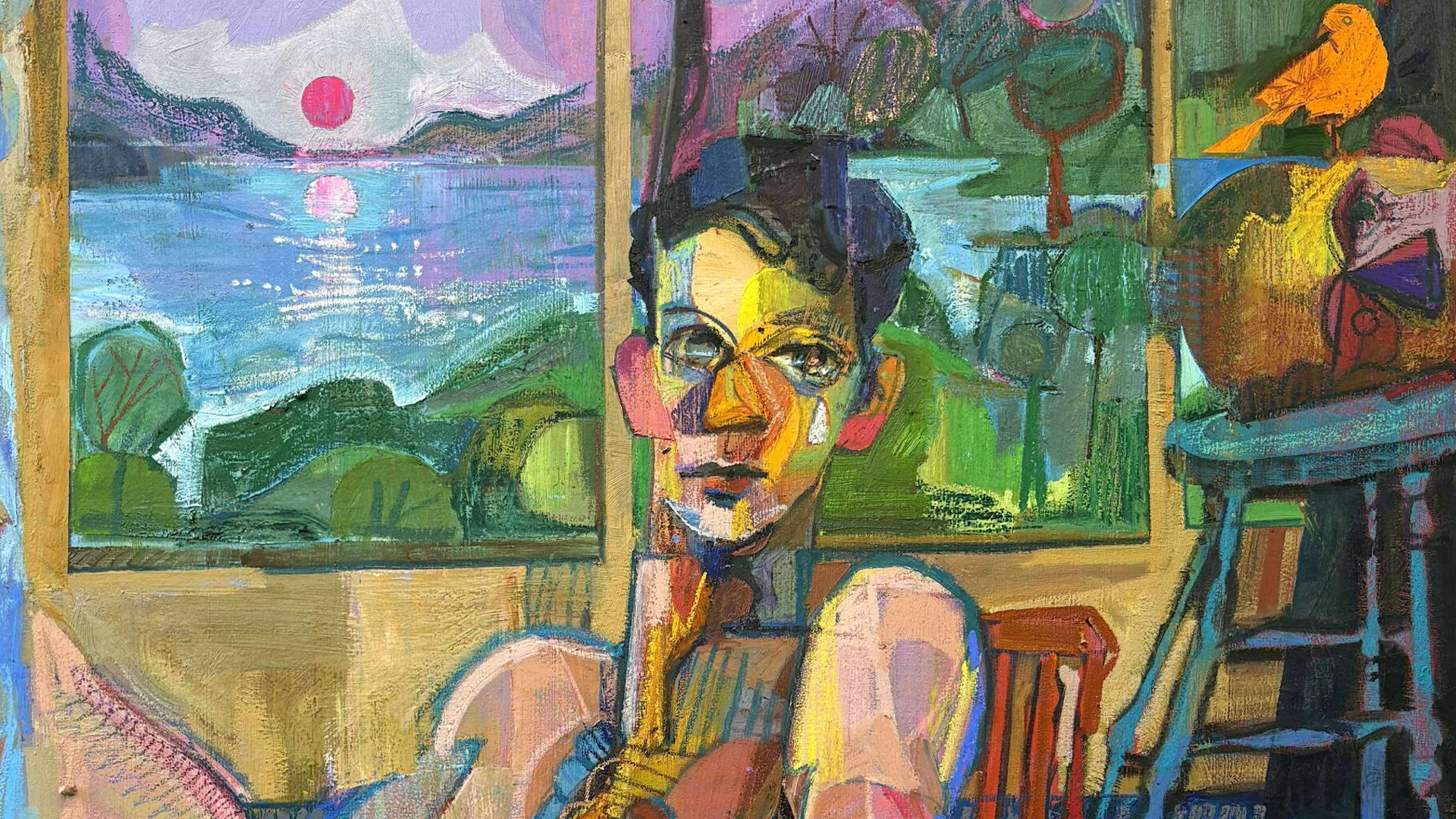
Salgado studied at the University of British Columbia and then landed his MFA at Chelsea College of Art & Design in London. He built a studio practice that brings us portraits of people—but not the kind meant for the coffee table. These are emotionally charged, kinetic, full-tilt paintings where pattern, texture, and symbolic detail crowd in around the central figure. The face remains, but it’s a portal—not a finish line.
Take the self-portrait series, for example. One painting might show a figure whose face is rhythmically broken by brush-marks, patches of exuberant color, and floating motifs that signal more than meets the eye. Another features characters whose bodies tilt like they’ve caught bad news or great revelations—something stirred inside, and it’s not over yet. Salgado once described his work as rooted in storytelling—where the painting becomes the stage, the brush-stroke the actor. The viewer is invited to lean in, to read between texture and tone.
What I love about Salgado’s visuals is the collision between vivid personality and the textures of uncertainty. There’s joy—definite joy—in his palette: saturated pinks, high contrast blues, warm golds—but there’s also a kind of mess, a flicker of anxiety, the trace of something not fully resolved. This edge gives the paintings that charge: they’re portraits, yes, but of people mid-becoming.
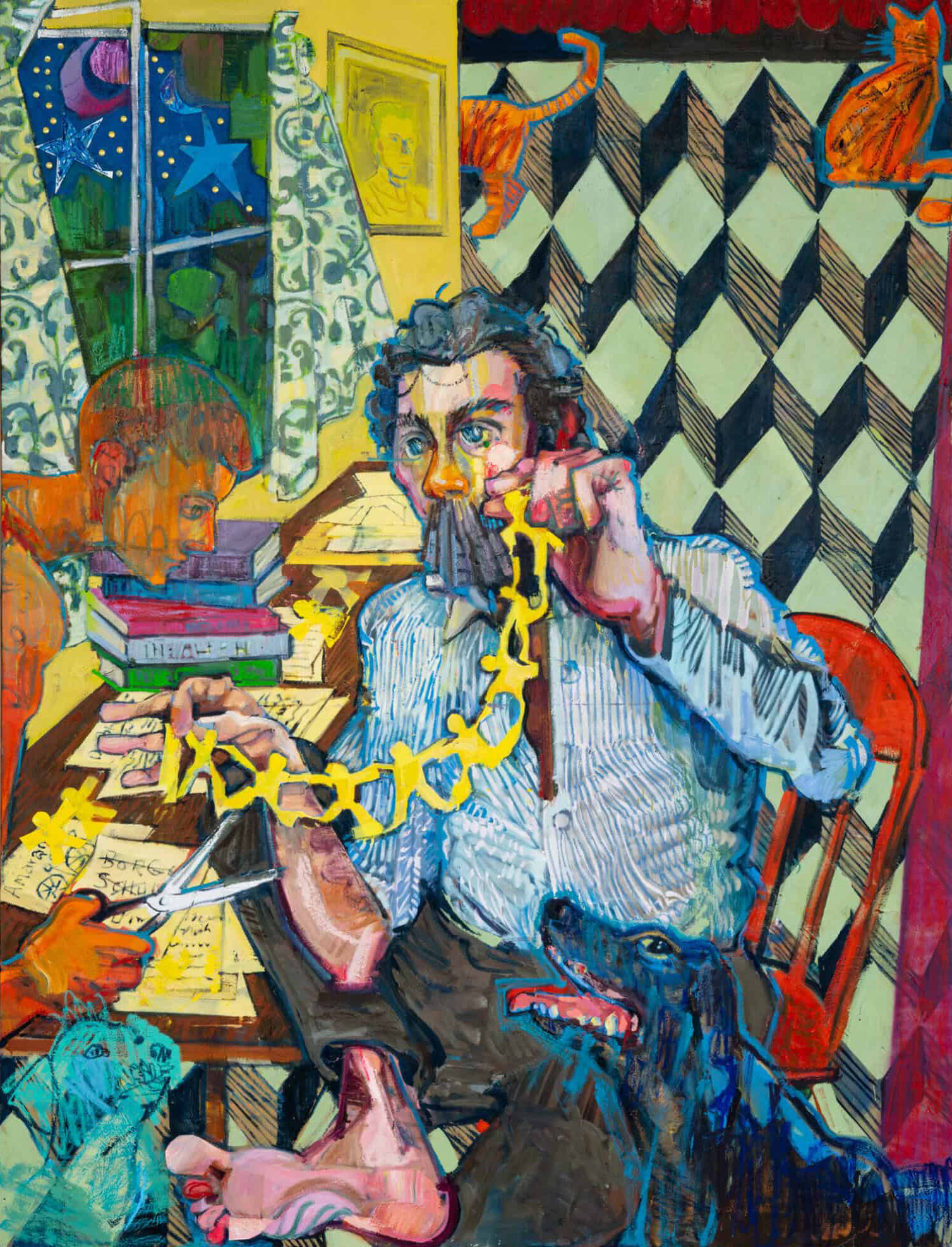
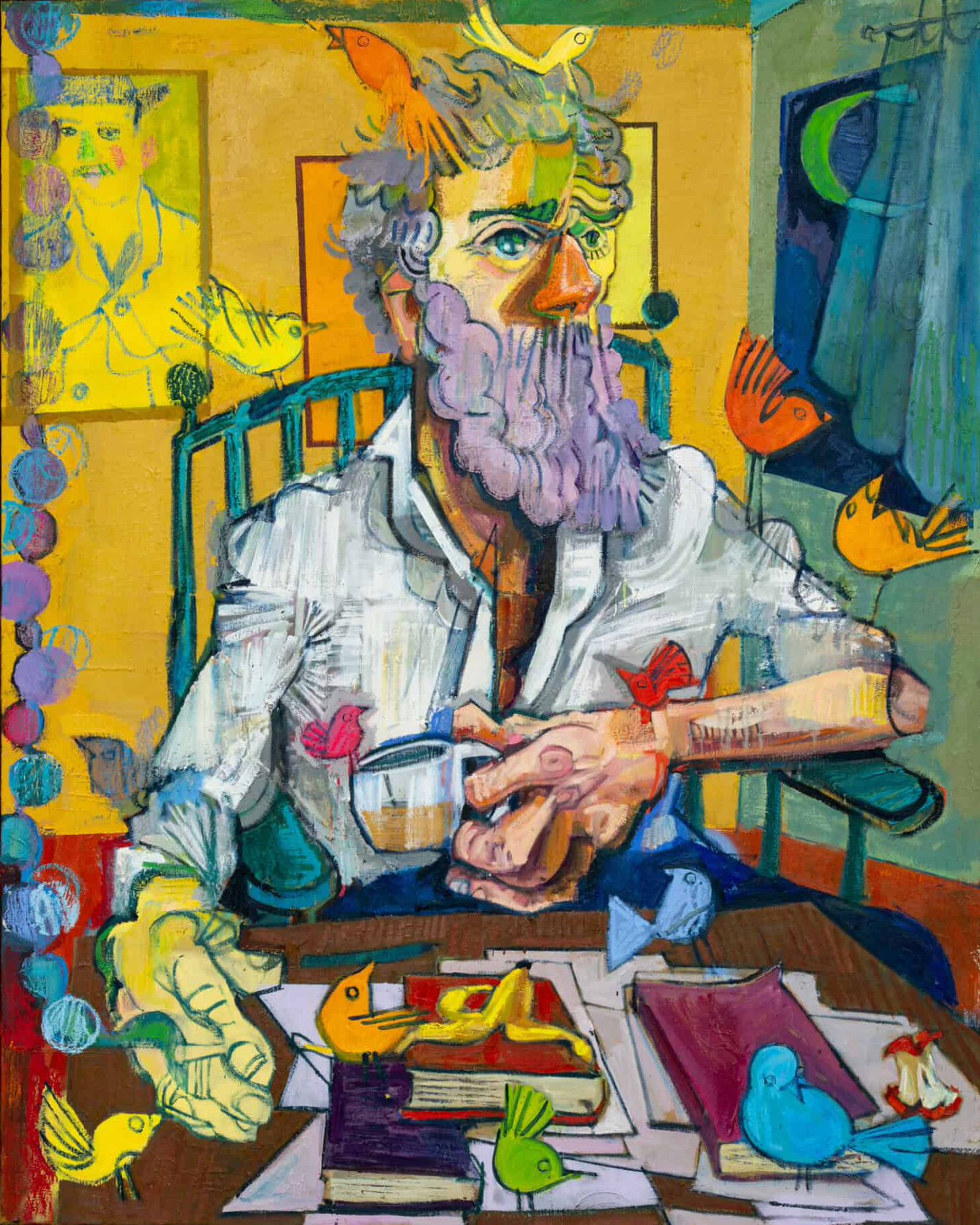
Symbol plays through his works like a second language. Harlequin patterns, low-hanging moons, collaged bits of text, swirling brushstrokes—they build up all around the figure. It’s as though the person in the painting is holding their own myth together, while the world around them tries to write its version of the story. In his recent show Self-Portrait as a Stack of Books (2025), Salgado laid out prints, canvases, and narrative arcs that read like chapters in an autobiography typed in oil paint.
And let’s not forget the craft. Salgado doesn’t hide the scaffolding. The paint is thick, the marks are visible. You can sense the churn of form and abrasion, of making and remaking. In an age when so much image-making is slick, post-processed, flattened, Salgado reminds us what happens when you give a face room to crack, flicker, change.
For artists, designers, illustrators—it’s a lesson in scale and intention. Portraiture doesn’t have to be polite—it can be electric. It doesn’t have to show the final version of someone—it can show the version they’re still becoming. Salgado proves that the human subject is not a calm surface but a landscape of tension, story, and mark-making.
If you want to dive deeper into his evolving universe of bold portraits and narrative paint experiments, swing by andrewsalgado.com. Your gaze will be challenged—and probably delighted.