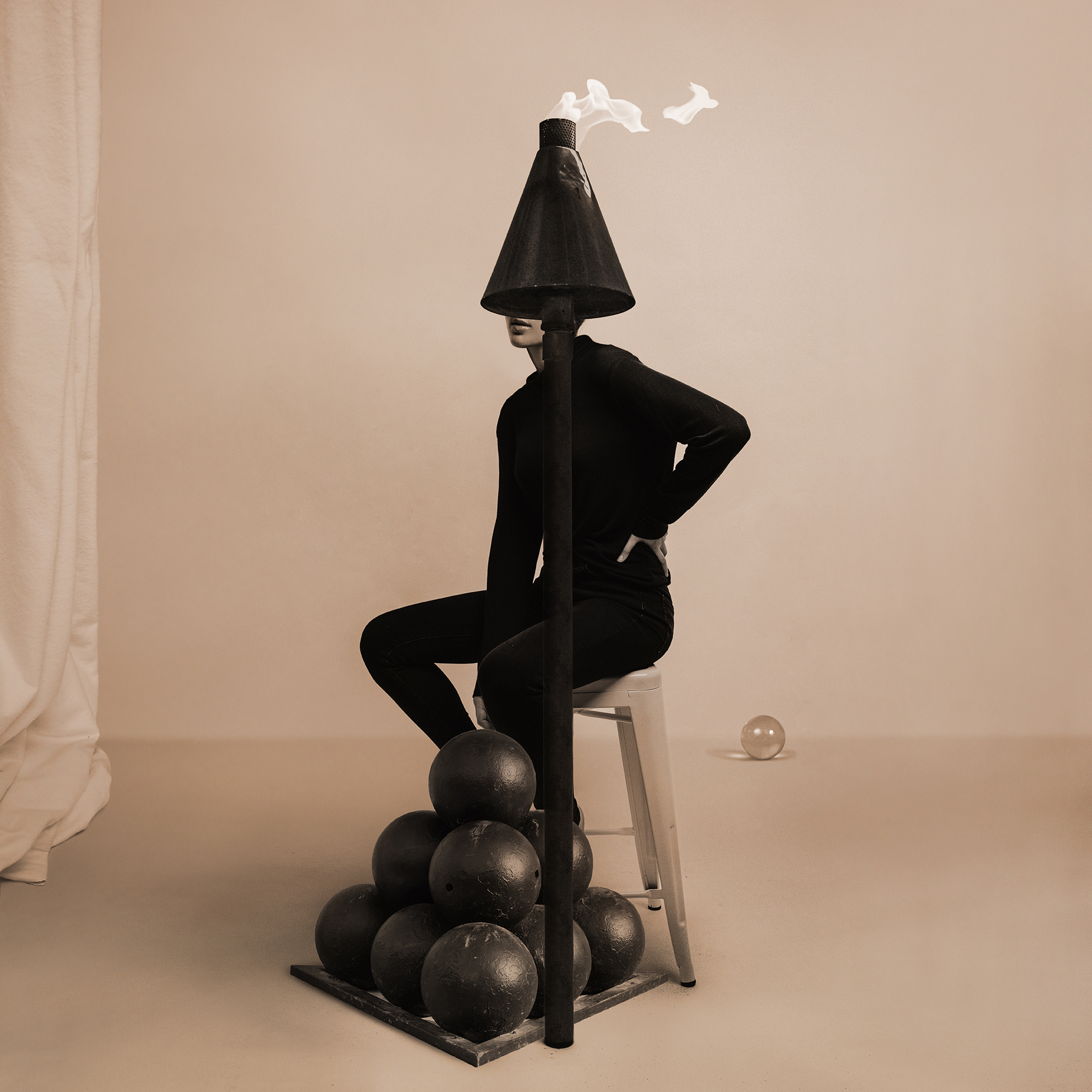
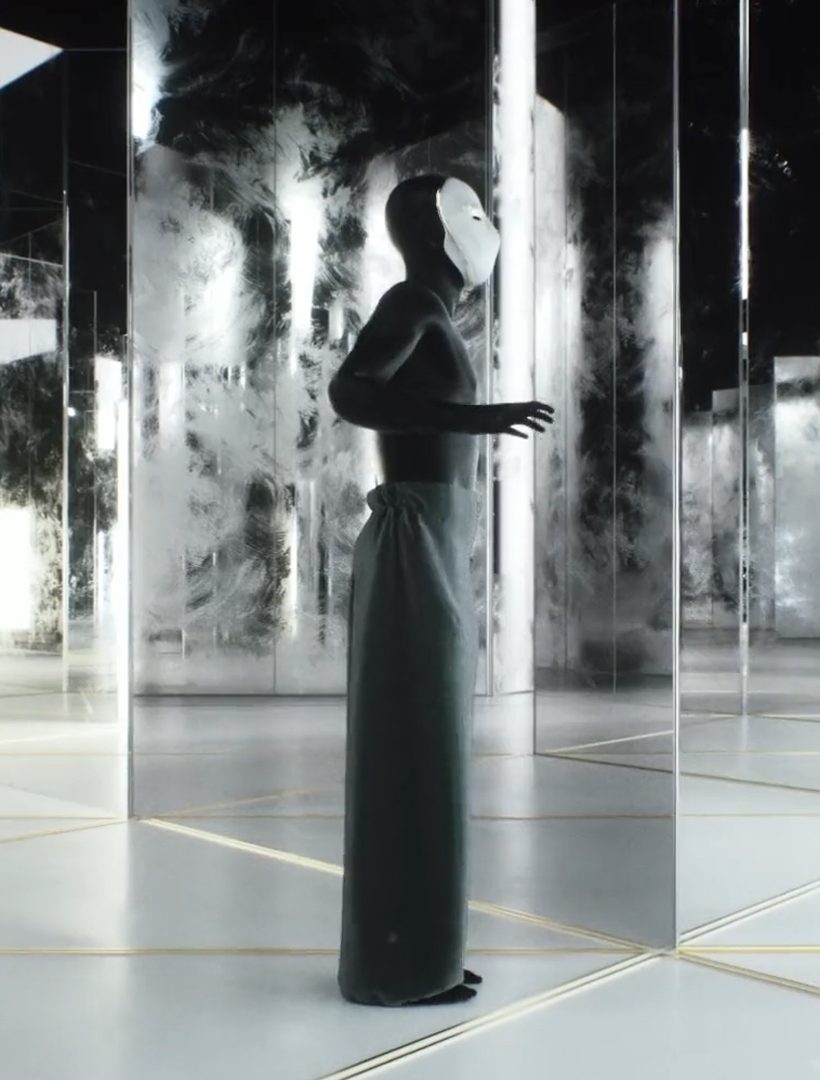
There’s a curious stillness in the work of Jorg Karg—a moment when reproduction becomes ritual, and collage becomes a form of quiet transcendence. The German-based artist crafts photographic collages that feel both familiar and uncanny, merging modern media with echoes of painting, drawing and dream.
Karg describes his practice as “addressing the beholder immediately,” without explanation. He brings present-day visual language into dialogue with long-established ideas of form, color and shape. The quicker we scroll in our image-driven world, the more his work asks us to pause and endure a frame, rather than simply glance. Many of his pieces begin with the physical—models, textures, materials—yet they end up as something else entirely: layered fields of memory, atmosphere and suggestion.
In works such as The Candlelight’s Daughter and Far Away Thunder, you’ll find figures suspended, often barely anchored in space, immersed in monochrome or muted tones, their bodies interrupted by geometric planes or ghostly fragments of light. Citrus and gold set the tone; stillness defines motion. Karg’s process is revelatory: he experiments with clay, wire, stone, broken ceramics, even altered furniture—as raw ingredients for collage. The result isn’t simply surreal—it’s a gathering of time and material, memory and image.
What feels particularly fresh in his work is how he refuses the snap-bait of surrealism for its own sake. Instead of shock, there’s attention. Instead of spectacle, there’s structure. One photograph may hold a figure draped in fabric while the ground beneath is peeled away or fractured by a white line. The line becomes both horizon and wound, both edge and opening. You don’t just see the image—you arrive in it.