
Raúl Cañibano’s photographs are whispers from an island in motion. Born in Havana in 1961 and once working as a welder, Cañibano turned to photography in the 1980s—self-taught and driven by a singular impulse: to capture the fleeting rhythms of Cuba before they vanish into myth or memory.
What stands out in his work is how he blends documentary urgency with mysterious stillness. In series like Tierra Guajira (Country Land), he travels deep into rural Cuba, living alongside peasants, drinking the water they drink, enduring the same days of scarcity and story. He has described his subjects not as subjects but as companions, people whose lives he hopes to honor through the frame. His images of farmland, animals, and weathered faces offer a window into a way of life under pressure—its dignity, its quiet resistance, its shifting form.
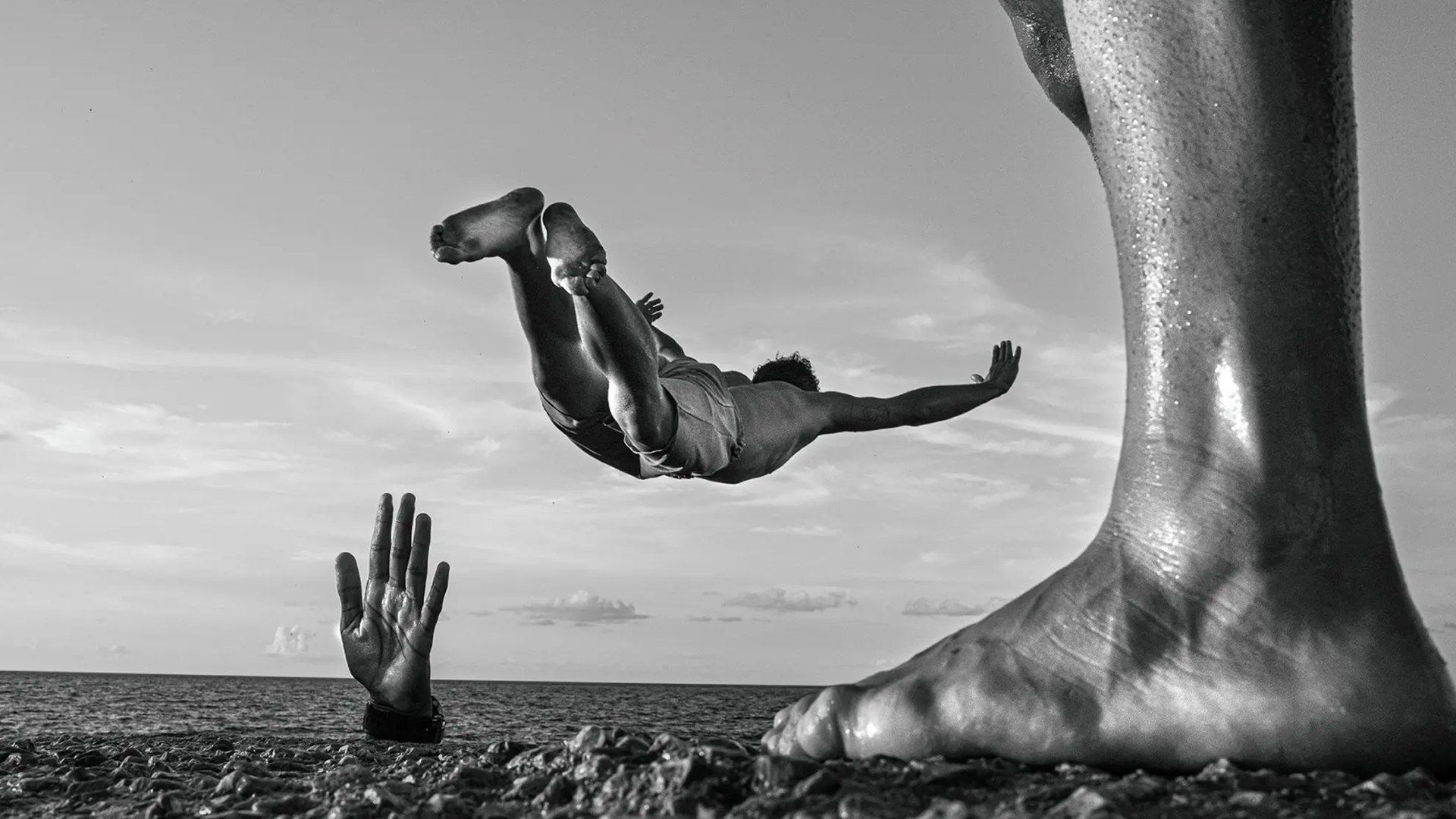
Yet Cañibano also turns his lens toward the crackle and heat of urban Cuba: the Malecón at dusk, children diving into the sea, shadows dancing across peeling facades. Even in the city, the tone remains intimate. He bypasses tourist gloss and goes straight to the threshold of moment and memory, finding beauty in the ordinary and poetry in the worn.