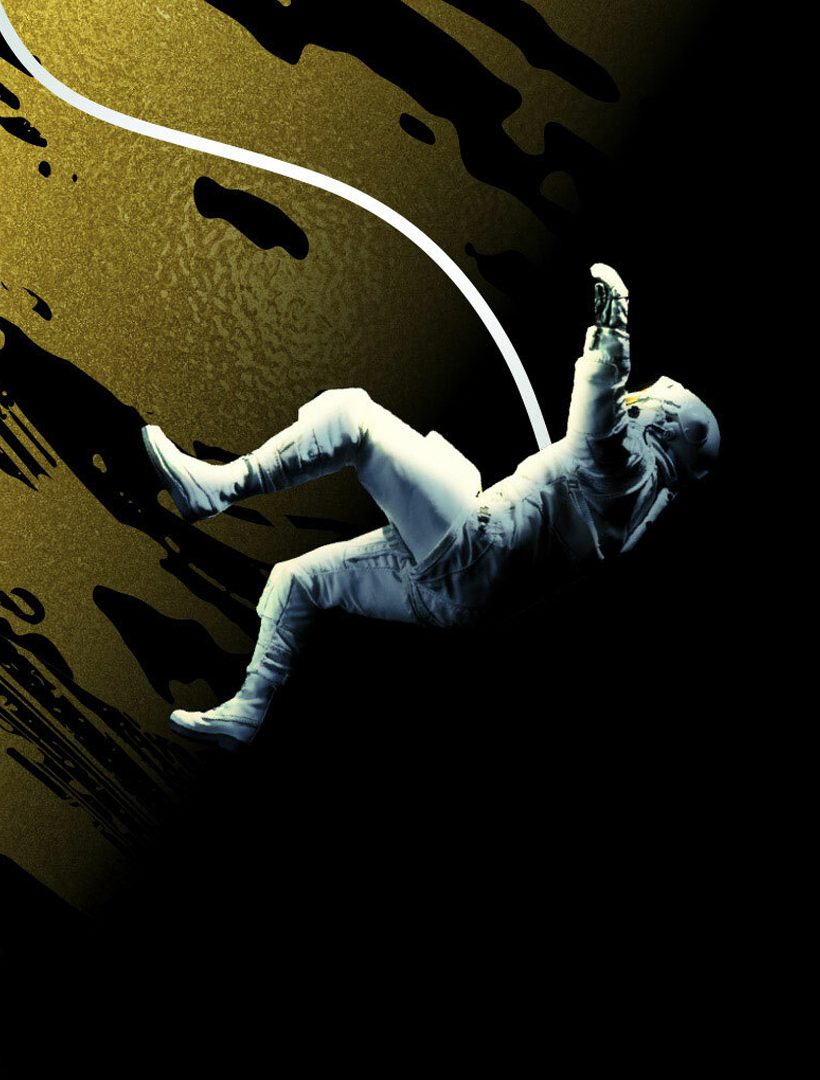
Floating in the void, two elite astronauts wake up to a nightmare: their ship, the USEF SOLIS, is stranded in deep space. Flickering panels, silent alerts, the endless expanse of nothing—the stylized sci-fi short Hyperlight, helmed by Nguyen-Anh Nguyen, drops you into a world where faster-than-light travel becomes a mirror for isolation, regret, and the human cost of chasing horizons.
The film opens with surgical precision. One moment, the crew is drifting; the next, reorientation kicks in. The visuals burn electric—midnight blues mix with glowing white interfaces, cryopods hover, monitors blink. It’s sleek, futuristic, but something familiar registers: the loneliness of a hallway lit only by the hum of machines. As we follow Philip Maeda and Emiliana Newton, we feel the weight of their ambition—and the echo of their mistakes.
What makes Hyperlight linger is its emotional core. Underneath the spacesuit helmets and lens flares, there’s sorrow. When a mission turns on its axis, the film shrinks into the human scale: the moment you realize the price of discovery might be your ability to return. Nguyen doesn’t drown us in exposition. Instead, the story squeezes tension out of quiet beats: a character tapping a frozen viewfinder, a muted conversation after a decision made too quickly, a stare into darkness lit only by distant stars.
Visually, the film pushes polish without losing grit. The production design—hand-painted textures layered with VFX, intimate close-ups breaking up the slickness—is a reminder that even in starships, real people stand behind the screens. The score pulses like heartbeat, each ripple in zero-G amplified by silence around it. It’s craft that shows up in the seams—when a glove catches on a bolt or when the life-support alarm sounds like a second skin.
Thematically, Hyperlight is a caution and a confession. It asks: what happens when you push so far out you forget what you’re running from? When your leap for progress becomes a leap from self? The film feels timely in a world chasing new frontiers—whether in space or technology—but rooted in something more grounded: the cost of ambition, and the space-between-the-missions where meaning fades.
For creators working with constraints—limited runtime, big ideas—Hyperlight is a star-case. It shows how you can turn a small setting into infinite wonder, and how you harness genre to reflect internal fractures. The relentless drive for “what’s next” meets the personal “what did I leave behind” in its final frames, and it’s that tension that stays with you.
If you’ve got a few minutes, set them aside for Hyperlight. Let it sweep you into the void, and maybe when you finish it, you’ll hear the hum of distant engines and feel the quiet ache of someone still floating out there—waiting to come home.