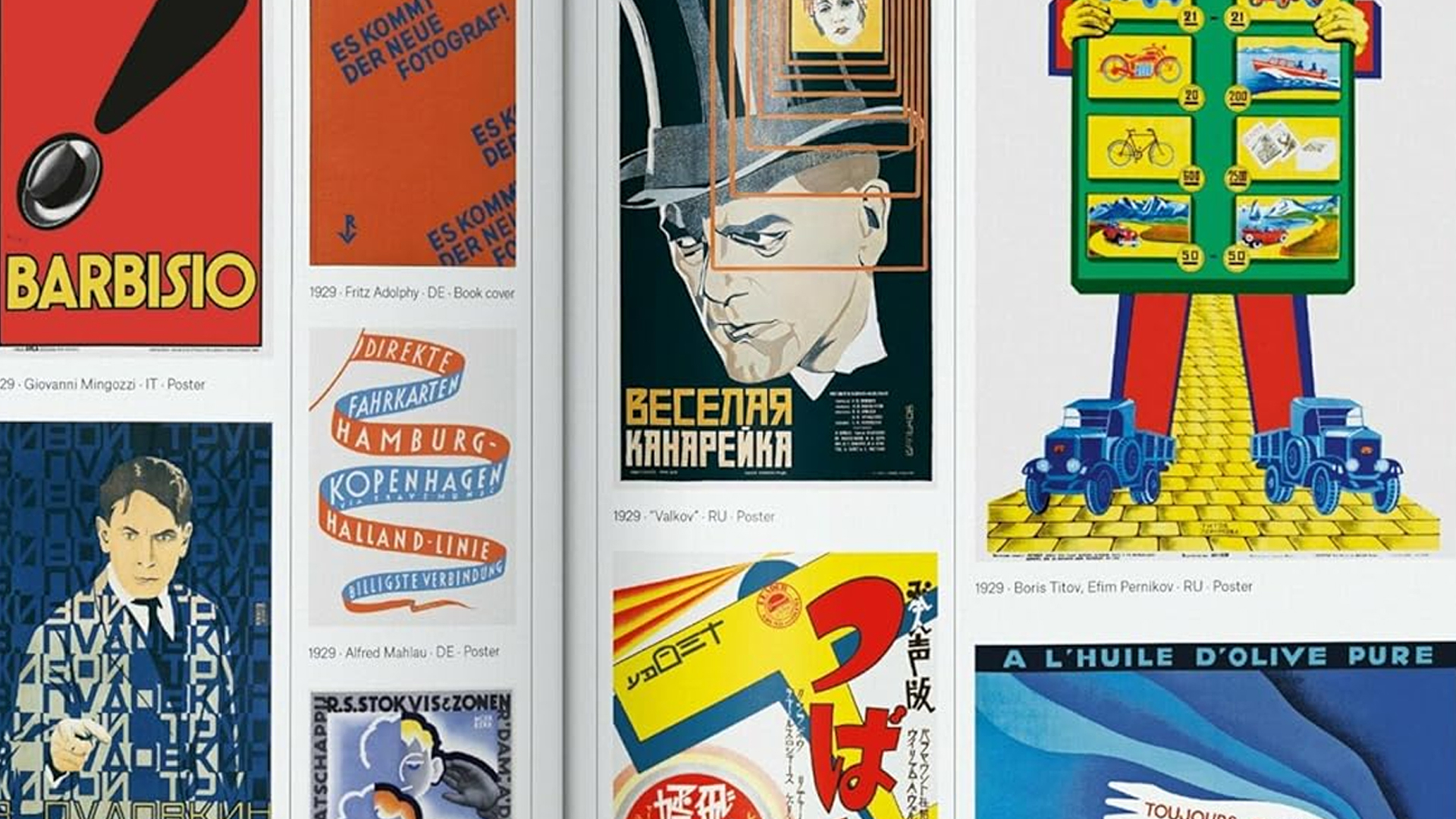

Flip through the pages of The History of Graphic Design. Vol. 1: 1890-1959 and you’ll feel time not just pass, but press. Posters that once hawked chocolate in Art Nouveau flourishes. Corporate logos emerging from the stripped-down machine age. Magazine covers that gestured at modernity before modernity quite found its feet. In this sweeping tome, designer and historian Jens Müller doesn’t just chart aesthetics—he shows how our visual world was built, shaped, and re-shaped by culture, commerce, and technology.
Rather than haphazardly surveying “good design,” Müller arranges the work chronologically, decade by decade, so you can see the ripple effects. The 1890s’ decorative elegance slides into the geometries of the 1920s, which tumble into the industrial confidence of post-war adverts. Each spread is a visual timeline and a cultural mirror. Graphic design, we’re reminded, isn’t wallpaper—it’s shorthand for an era’s values, anxieties, and hopes.
What I found most compelling is how the book elevates design’s hidden players—the unsung sign-makers, magazine art directors, packaging designers—those whose names didn’t hit marquee lights but whose work shaped what we’ve come to expect of brand, image, and identity. The narrative doesn’t treat design as decoration but as foundational communication. A Helvetica “H”, a photomontage poster, an urban subway map—they all act like language. And in understanding them we begin to parse how modern visual culture speaks.