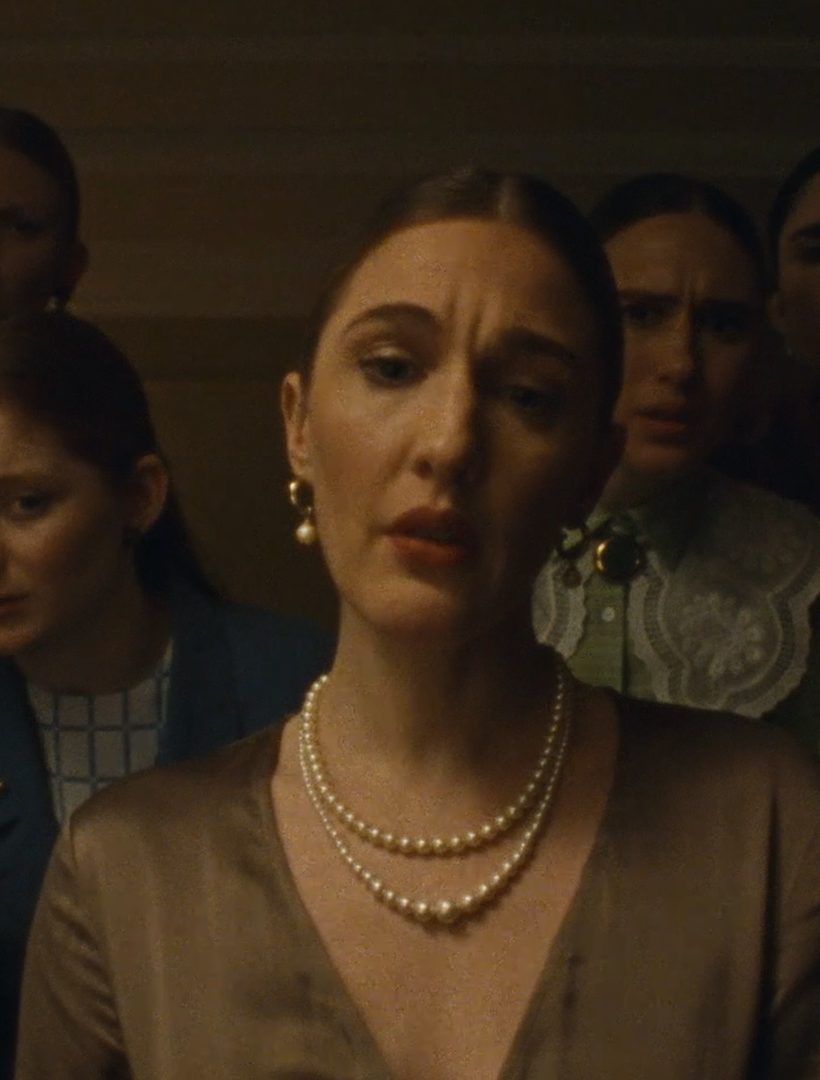
Loop, directed by Stuart Langfield, is a haunting short that explores grief, empathy, and the uneasy space between human emotion and artificial intelligence. The film centers on Beca, a woman participating in an experimental trial where her raw, painful feelings of loss are used to teach an AI how to understand human emotion.
From the outset, the film’s sparse, clinical setting creates a sense of isolation that mirrors Beca’s inner turmoil. The muted colors and stark lighting focus our attention tightly on her emotional journey. Valeriia Polishchuk’s portrayal of Beca is quietly powerful, capturing the subtle shifts of someone trapped in sorrow yet still holding on.
The “loop” in the story refers to the repeated emotional tests Beca undergoes, forcing her to relive her grief over and over. This cyclical structure echoes how grief itself often traps us in repetitive patterns of memory and pain. Yet the film avoids cliché or easy answers. Instead, it respects the complexity of healing and the endurance needed to live with loss.
What sets Loop apart is its nuanced take on the intersection of humanity and technology. The AI isn’t a villain or a savior; it’s a mirror reflecting our attempts to grasp feelings that may be beyond computation. The film quietly asks if machines can truly understand grief or if some parts of the human experience are just too intricate to mimic.
The minimalist direction highlights emotion over spectacle. The camera lingers on Beca’s face, catching fleeting expressions that reveal her vulnerability. The sound design — blending soft electronic pulses with silence — deepens the atmosphere, pulling viewers into her internal world.
Loop offers a rare, tender look at grief. Instead of dramatizing or romanticizing sorrow, it focuses on the slow, often frustrating process of enduring pain and learning to live alongside it. There’s bravery in this honest portrayal — a reminder that healing isn’t about forgetting but about showing up for yourself through the cycles of loss.
This short fits within the growing trend of films exploring human-machine relationships but stands out because of its emotional authenticity. It invites us to reflect on our connections in a digital age where genuine empathy feels both crucial and fragile.
For indie filmmakers and fans of intimate storytelling, Loop is an example of how restraint and nuance can create deep impact. It proves that sometimes the most memorable films aren’t the loudest but the ones that whisper truths we all carry inside.
If you’re drawn to stories that linger and challenge, Loop is a compelling watch that stays with you long after it ends.