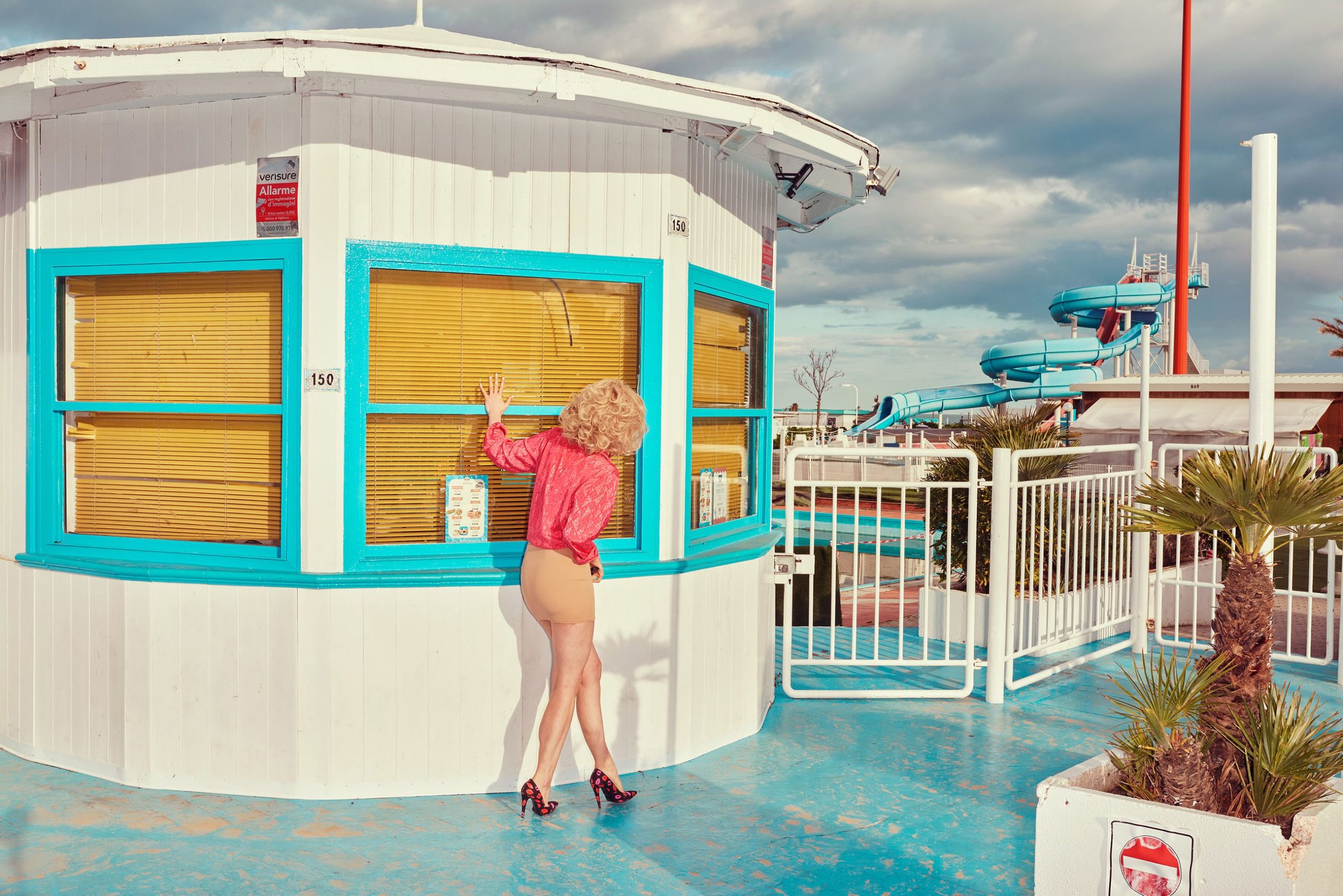
Sunlight floods the frame, but the feeling is anything but warm. In Last Paradise, Canadian artist Kourtney Roy conjures the dissonance between beauty and emptiness—like waking from a sun-drenched dream only to realize the ocean was a mirage. Roy has long been drawn to the uncanny, the staged, the beautiful just past its prime. But in this collaborative project with sound artist Mathias Delplanque, she dives deeper into the fiction of place, mapping out a cinematic odyssey through abandoned vacation resorts that whisper of lost luxury and faded escape.
Shot across Italy, the former Yugoslavia, and North Africa, Last Paradise is a journey through derelict swimming pools, cracked tiles, and lobbies where time stands still. Roy casts herself as both subject and ghost—her presence enigmatic, perfectly styled, and always at odds with the crumbling decadence around her. These are not just portraits or landscapes. They’re tableaux where nostalgia curdles into unease, and glamour is both costume and commentary.
What’s striking is how Roy plays with the language of cinema: the framing, the color grading, the narrative tension that seems to hum beneath each still. You can almost hear the elevator music echoing through empty halls, or the soft thud of a suitcase dropped in a room no longer waiting for guests. And that’s where Delplanque’s audio compositions come in—spatial, ambient, and eerily textured. They don’t accompany the images so much as haunt them.